Prelims: (Geography + CA)
Mains: (GS 1 - Geography; GS 2 - Governance; GS 3 -Technology) |
Why in the News ?
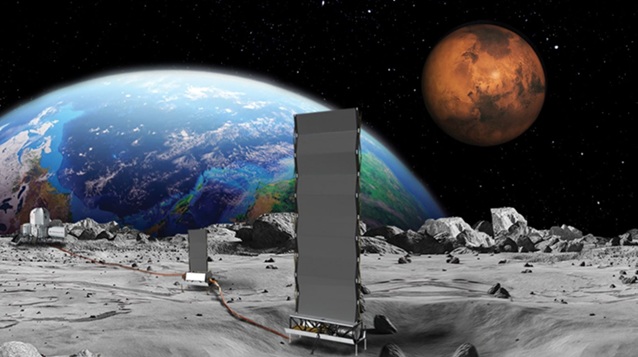
The United States has unveiled a major step in its Lunar Fission Surface Power Project, aiming to install a small fission-based nuclear reactor on the Moon by the early 2030s. Part of NASA’s Artemis Base Camp, this initiative marks the world’s first attempt to deploy a permanent off-Earth nuclear power plant, signaling the beginning of a new era of nuclear-powered space activity.
How Nuclear Technologies Are Transforming Space Exploration
1. Advanced Radioisotope Thermoelectric Generators (RTGs)
- RTGs convert heat from plutonium-238 decay into electricity.
- Offer only a few hundred watts—sufficient for probes (Voyager, New Horizons) but inadequate for human habitats.
- Used for decades for deep-space missions where sunlight is weak.
2. Compact Fission Reactors (10–100 kW)
- Small modular reactors, similar to shipping-container size.
- Can power lunar/Martian habitats, life-support systems, and early industrial facilities.
- Key for long-duration human bases.
3. Nuclear Thermal Propulsion (NTP)
- Reactors heat hydrogen propellant to provide high thrust.
- The U.S. DRACO NTP project will begin tests by 2026.
- Could shorten Earth–Mars travel time by several months.
4. Nuclear Electric Propulsion (NEP)
- Reactors generate electricity to power ion engines.
- Enables efficient, long-term deep-space travel for probes and cargo ships.
Why Nuclear Power is Essential for Space Settlements
Solar Power Limitations
- Lunar nights last 14 Earth days, plunging temperatures to –170°C.
- On Mars, global dust storms can last months, drastically reducing solar output.
- Nuclear power solves the intermittency problem.
Reliability Requirements for Human Bases
Human habitats need 24x7 power for:
- Oxygen regeneration
- Water production
- Habitat heating
- Fuel production (methane, hydrogen)
- Communication and scientific instruments
Only nuclear fission offers consistent base-load power.
Location Independence
- Bases can be built in permanently shadowed craters (rich in water ice) where sunlight never reaches.
- Enables large-scale ISRU operations.
Scaling for Future Industries
- Manufacturing, oxygen plants, agricultural domes, and fuel refineries require megawatt-level energy, impossible with current solar technology.
Legal Framework Governing Nuclear Power in Space
Outer Space Treaty (OST), 1967
- Prohibits nuclear weapons in space.
- Allows peaceful nuclear power systems (reactors, RTGs).
1992 UN Principles on Nuclear Power Sources in Outer Space
- Require safety assessments and risk mitigation.
- Mandate proper disposal of radioactive systems.
Other Relevant Agreements
- 1972 Liability Convention: Defines liability for accidents caused by space objects.
- IAEA & COPUOS guidelines: Offer voluntary safety norms for nuclear missions.
Key Risks and Legal Challenges
1. Environmental Contamination
A reactor leak on the Moon/Mars could:
- Permanently alter pristine environments
- Ruin scientific studies of planetary evolution
- Compromise future habitability
2. “Safety Zones” vs Territorial Claims
- Nuclear reactors require exclusion zones for radiation safety.
- But exclusive zones could allow nations to indirectly claim territory, violating the OST.
3. Increased Geopolitical Tensions
- Nuclear-powered missions may be misinterpreted as weaponization.
- Could lead to mistrust or conflict among spacefaring nations.
4. Absence of Binding Global Safety Standards
- Different nations may conduct risky tests.
- Leads to a “race to the bottom” in safety practices.
The Way Forward: Ensuring a Responsible Nuclear Future in Space
1. Strengthening Legal Norms
- Update 1992 Principles to include NTP, NEP, and modern fission systems.
- Introduce binding safety standards for design, shielding, and disposal.
2. Multilateral Oversight Body
- Create an International Space Nuclear Safety Group (IAEA-like)
- Certify designs and monitor compliance.
3. Clear Incident Response Protocols
- Update the Liability Convention to handle space-based nuclear accidents.
- Define emergency procedures and responsibilities.
4. Safety Zones without Sovereignty Claims
- Create temporary, non-exclusive safety perimeters around reactors.
5. Collaborative Rule-Making
- Include all major space players—US, Russia, China, India, ESA.
- Engage private players (SpaceX, Blue Origin) to ensure feasibility.
FAQs
1. Why is nuclear power preferred over solar power on the Moon ?
Because the Moon experiences 14-day-long nights, making solar unreliable and requiring massive batteries. Nuclear provides constant power.
2. What is NASA’s Lunar Fission Surface Power Project ?
A U.S. initiative to deploy a small fission reactor on the Moon by early 2030s to support Artemis base operations.
3. Are nuclear reactors allowed in space under international law ?
Yes. The Outer Space Treaty bans nuclear weapons but permits peaceful nuclear power systems like reactors or RTGs.
4. What are the major risks of nuclear power in space ?
Radioactive contamination, unsafe testing, territorial disputes from “safety zones,” and potential geopolitical conflict.
5. How can nuclear propulsion help Mars missions ?
NTP and NEP systems can cut travel time, improve safety, and allow heavier cargo missions.
|






 Contact Us
  New Batch : 9555124124/ 7428085757
  Tech Support : 9555124124/ 7428085757