(Preliminary Examination: Current Affairs)
(Mains Examination, General Studies Paper 2: Welfare schemes for vulnerable sections of the population by the Centre and States and their implementation; Mechanisms, Laws, Institutions, and Bodies established for the protection and betterment of these vulnerable sections) |
Context
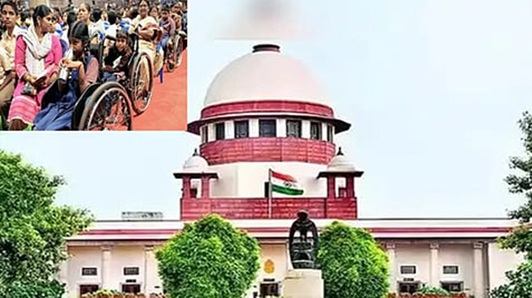
Recently, the Supreme Court asked the Central Government whether a stringent law similar to the SC/ST Atrocities Act could be enacted against those who insult or ridicule persons with disabilities (PwDs). This comment was made during a hearing on a case involving derogatory comments made against persons with disabilities on social media.
Background
- The case relates to a petition filed by the SMA Cure Foundation. The petition protested against insensitive comments made by Samay Raina and some other social media influencers about persons with disabilities.
- SMA Cure Foundation is an organization that works for people affected by the rare disease Spinal Muscular Atrophy (SMA).
Supreme Court Suggestions
- Consider enacting a stricter law, similar to the SC/ST Atrocities Act, against ridicule, insult, or vilification of persons with disabilities.
- Strong legal provisions are needed to protect persons with disabilities from abuse on social media.
- While not punishing YouTube hosts and other influencers, the court directed them to:
- Create at least two programs every month on the success stories of persons with disabilities.
- Instructed them to spread positive messages in society by inviting persons with disabilities on the platform.
- The court called this their "social punishment."
Need for a Stronger PwD Law
- Online trolling, memes, and ridicule against persons with disabilities are on the rise.
- Current laws primarily prohibit discrimination; direct provisions on ridicule and trauma are very limited.
- More stringent penal provisions are necessary to increase social sensitivity and ensure respectful behavior.
- The rapid expansion of the digital space further increases the need for cybersecurity provisions.
Benefits
- Legal protection of the honor and dignity of persons with disabilities will be ensured.
- Abuse of any kind online and offline will be reduced.
- Stricter self-regulation will be encouraged on social media platforms.
- A positive and inclusive attitude towards persons with disabilities will develop in society.
- Awareness about rare diseases like SMA will increase, and more people will join treatment and support campaigns.
Challenges
- The potential for content to go viral quickly on social media.
- Lack of monitoring and content moderation on platforms.
- Lack of sensitivity towards persons with disabilities in society.
- Even when laws exist, enforcement is often weak.
- Technical complexities in identifying and responding to online trolling.
Way Forward
- The central government should consider introducing strict and clear laws against the ridicule of persons with disabilities.
- A mandatory content monitoring policy should be developed for social media platforms.
- Sensitization programs should be conducted in schools, universities, and public institutions.
- A special helpline should be established for prompt reporting and action on cases of online abuse.
- A culture of respect should be fostered in society by promoting inspiring stories of persons with disabilities.




 Contact Us
  New Batch : 9555124124/ 7428085757
  Tech Support : 9555124124/ 7428085757