Prelims: (Environment & Ecology + CA)
Mains: (GS 2 - International Relations, Governance; GS 3 - Environment, Climate Change, Energy) |
Why in News ?
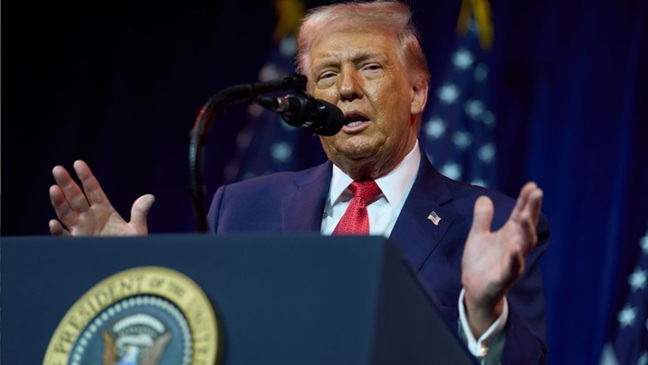
The United States has announced its withdrawal from the UN Framework Convention on Climate Change (UNFCCC) and more than 60 international treaties and organisations, citing misalignment with American national interests.
The exit covers major global climate institutions such as the Intergovernmental Panel on Climate Change (IPCC), the International Solar Alliance (ISA), and the International Renewable Energy Agency (IRENA). This follows the earlier decision by President Donald Trump to withdraw from the Paris Agreement, which will formally take effect after the mandatory one-year notice period. Together, these moves signal a near-total US disengagement from the global climate governance architecture, raising concerns over the future effectiveness of multilateral climate action.
Background: The United States in Global Climate Governance
The United States has historically played a central yet inconsistent role in global climate negotiations.
- It was instrumental in shaping the UNFCCC, which established foundational principles such as common but differentiated responsibilities (CBDR).
- However, its engagement has oscillated between leadership and withdrawal, depending on domestic political priorities.
The latest exit marks the most comprehensive retreat by the US from international climate institutions to date.
The United States’ Emissions Profile
Scale of Emissions
- The US is among the top global emitters of greenhouse gases.
- Territorial CO₂ emissions (2024): ~4.9 billion tonnes
- ~12.7% of global emissions
- Per-capita CO₂ emissions (2024): ~14.6 tonnes
- Significantly higher than the global average
Historical Responsibility
- Largest cumulative emitter of CO₂ from fossil fuels and industry
- Accounts for approximately 24% of historical global emissions
Emissions Composition
- Total GHG emissions (2022): ~6.3 billion tonnes CO₂-equivalent
- Land use and forests offset about 13% as a net carbon sink
This emissions profile underscores the disproportionate impact of US climate policy choices on global outcomes.
US and Climate Action: A Longstanding Love–Hate Relationship
Early Leadership, Limited Commitment
- The US helped conceptualise the UNFCCC
- However, it never ratified the Kyoto Protocol, citing economic concerns over binding emission targets
Architect of Paris, Weak on Delivery
- The US played a pivotal role in shaping the Paris Agreement
- Yet, its domestic emissions reductions and climate finance commitments remained modest
Pre-Trump Engagement
- While imperfect, earlier administrations:
- Accepted climate science
- Invested heavily in climate research
- Promoted clean energy and green investments
Trump Era: From Ambivalence to Undermining
- Open climate scepticism
- Withdrawal from agreements
- Severe cuts to climate research funding
- Downsizing of scientific agencies
These actions weakened global confidence in sustained US climate leadership.
Fallout of the US Exit from Global Climate Institutions
Immediate Impact: Limited but Symbolic
- The world was already off-track on 2030 climate targets
- US contributions to recent multilateral climate action were limited
- Hence, short-term emissions trajectories may not change dramatically
Long-Term Risks
- Prolonged US absence could:
- Undermine multilateral trust
- Delay collective action
- Weaken scientific coordination
Geopolitical Consequences
- The US risks ceding leadership to China, which is rapidly expanding:
- Renewable energy manufacturing
- Clean technology supply chains
- Climate diplomacy influence
Renewable Energy Transition: An Irreversible Momentum
Despite US withdrawal:
- Most countries are committed to renewables for:
- Energy security
- Cost competitiveness
- Solar and wind power are now economically viable
- Expanding fossil fuel production may slow, but not reverse, the transition
By stepping back, the US risks:
- Losing technological leadership
- Undermining its long-term economic and geopolitical interests
Impact on India’s Climate and Energy Transition
Short-Term Relief
- Reduced diplomatic pressure on India for rapid decarbonisation
- Greater policy space to balance development and climate goals
Medium- to Long-Term Risks
- Increased uncertainty in global climate finance
- Potential slowdown in clean technology investments
Setback to India–US Climate Cooperation
Prior to the Trump administration’s renewed withdrawal:
- India–US climate cooperation was strong
- Collaboration covered:
- Solar energy
- Grid modernisation
- Clean technology innovation
The current disengagement is expected to:
- Stall joint initiatives
- Force India to diversify partnerships
International Solar Alliance and Funding Gaps
- The US has exited the International Solar Alliance (ISA), co-founded by India and France at COP21.
- Although the US joined the ISA in 2021 as its 101st member, it:
- Did not provide financial support
- Proposed annual membership fees (2025) remain unimplemented
This raises concerns over:
- Funding predictability
- Momentum of ISA-led initiatives
Way Forward for India
- Deepening cooperation with:
- EU
- Japan
- Global South partners
- Strengthening domestic clean energy ecosystems
- Leveraging multilateral platforms where momentum remains strong
- Reducing over-dependence on any single global partner
FAQs
1. Which climate institutions has the US withdrawn from ?
The US has exited the UNFCCC, IPCC, ISA, IRENA, and several other international climate bodies.
2. Why is the US withdrawal significant globally ?
As a major emitter and historical contributor to climate change, US disengagement weakens multilateral climate cooperation.
3. Does this slow the global energy transition ?
Not fundamentally. Renewable energy momentum remains strong, though leadership and financing may be affected.
4. How does this affect India in the short term ?
It eases immediate pressure on India but introduces uncertainty in climate finance and technology partnerships.
5. What happens to the International Solar Alliance after the US exit ?
While the US contributed little financially, its exit raises questions about long-term funding and political momentum.
|






 Contact Us
  New Batch : 9555124124/ 7428085757
  Tech Support : 9555124124/ 7428085757