
New
GS Foundation (P+M) - Delhi : 10th Feb. 2026, 10:30 AM Spring Sale UPTO 75% + 10% Off GS Foundation (P+M) - Prayagraj : 15th March 2026 Spring Sale UPTO 75% + 10% Off GS Foundation (P+M) - Delhi : 10th Feb. 2026, 10:30 AM GS Foundation (P+M) - Prayagraj : 15th March 2026

Valley of the Kings: Tamil-Brahmi Inscriptions Hint at Ancient India–Egypt Contacts

Prelims: (History & Culture + CA)
Mains: (GS 1 – Indian Culture & Ancient Civilisations; GS 2 – India’s Cultural Diplomacy; GS 3 – Maritime Trade Networks)

Why in the News ?

Two researchers have identified nearly 30 inscriptions in Tamil-Brahmi, Prakrit, and Sanskrit on tombs in the Valley of the Kings, Egypt. The discovery has sparked renewed interest in ancient India–Egypt maritime and cultural linkages, especially during the early historic period.
Background and Context

The discovery of Indian-language inscriptions in Egypt points toward possible transcontinental trade and cultural interactions between the Indian subcontinent and ancient Mediterranean civilisations.

India maintained vibrant maritime trade links with:

  • Egypt
  • The Roman Empire
  • West Asia

Particularly during the Sangam age and early centuries CE, South Indian traders were active across the Red Sea and Mediterranean networks.

If authenticated, the inscriptions could:

  • Strengthen evidence of early Indian merchant presence abroad
  • Expand understanding of Indo-Mediterranean cultural exchange
  • Provide insights into mobility of traders, artisans, and pilgrims

About the Valley of the Kings

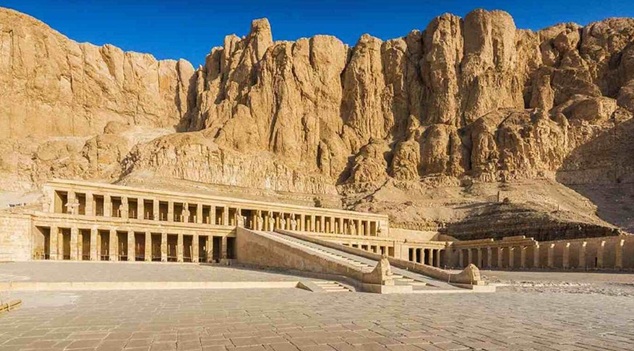
The Valley of the Kings is one of the most important archaeological sites in Egypt.

  • It served as the burial site of pharaohs of ancient Egypt.
  • It formed part of the ancient city of Thebes (modern Luxor).
  • The pharaohs buried here ruled between 1539 and 1077 BCE, during Egypt’s New Kingdom period.

The tombs were:

  • Carved into rocky hillsides
  • Concealed, with only doorways marking their entrance
  • Decorated with elaborate paintings and inscriptions

In 1979, UNESCO designated the Valley of the Kings as part of the World Heritage Site of ancient Thebes.

Tamil-Brahmi and Early Indian Scripts

Tamil-Brahmi Script

  • An early variant of the Brahmi script used to write Old Tamil.
  • Dates back to around the 3rd century BCE.
  • Found in cave inscriptions and trade-related contexts in South India and Sri Lanka.

Prakrit and Sanskrit

  • Prakrit was widely used in inscriptions during the Mauryan and post-Mauryan periods.
  • Sanskrit gained prominence in inscriptions from the early centuries CE onward.

The presence of these scripts in Egypt may indicate:

  • Merchant guild activity
  • Trade caravans
  • Religious or cultural interactions

India–Egypt Maritime Connections

Ancient maritime trade routes connected:

  • South Indian ports such as Muziris (Kerala coast)
  • Red Sea ports in Egypt
  • Mediterranean markets

Indian exports included:

  • Spices
  • Textiles
  • Precious stones
  • Ivory

Roman and Egyptian imports into India included:

  • Gold and silver coins
  • Wine
  • Glassware

Classical texts such as the Periplus of the Erythraean Sea describe robust Indo-Roman trade networks.

Significance of the Discovery

1. Evidence of Early Globalisation

The inscriptions may serve as tangible proof of:

  • Cross-cultural mobility
  • Long-distance trade networks
  • Early forms of global economic integration

2. Cultural Diplomacy and Shared Heritage

Such findings can strengthen:

  • India–Egypt cultural cooperation
  • Academic collaboration
  • Heritage diplomacy

3. Expanding Historical Understanding

If validated, the inscriptions may:

  • Push back timelines of Indian overseas presence
  • Offer new insights into merchant guilds and diasporic communities

4. Maritime History of India

The discovery reinforces India’s historical identity as a maritime trading civilisation with extensive overseas networks.

5. Archaeological and Epigraphic Importance

Epigraphic evidence is crucial because:

  • Inscriptions provide direct historical testimony
  • They reveal names, professions, religious affiliations, and trade details

Challenges and Way Forward

Challenges

  • Authenticating the inscriptions
  • Establishing precise chronology
  • Avoiding speculative historical conclusions
  • Preserving fragile archaeological evidence

Way Forward

  • Collaborative Indo-Egyptian archaeological research
  • Advanced epigraphic analysis and carbon dating
  • Publication in peer-reviewed journals
  • Conservation-focused excavation practices

FAQs

1. What is the Valley of the Kings ?

It is an archaeological site in Egypt where pharaohs of the New Kingdom (1539–1077 BCE) were buried.

2. Why is it in the news ?

Nearly 30 inscriptions in Tamil-Brahmi, Prakrit, and Sanskrit were recently identified at tombs there.

3. Why are Tamil-Brahmi inscriptions significant ?

They suggest possible ancient Indian trade or cultural presence in Egypt.

4. When was the Valley of the Kings declared a World Heritage Site ?

It was designated a UNESCO World Heritage Site in 1979.

5. What does this discovery indicate ?

It may provide evidence of early India–Egypt maritime and cultural connections, subject to further verification.

Have any Query?

Our support team will be happy to assist you!

OR
X


