
- UPSC Exam
- State PCS
- One Day Exam
- Current Affairs
- PT Quiz
- Downlaods
- About Coaching
- Blog
- Videos

| Prelims: (History & Culture + CA) Mains: (GS 1 – Freedom Movement; GS 2 – Fundamental Rights, Secularism, Constitutional Values) |
The Union government’s January 28 directive mandating the singing of all six stanzas of Vande Mataram at official functions has sparked objections from several organisations.
The notification requires:
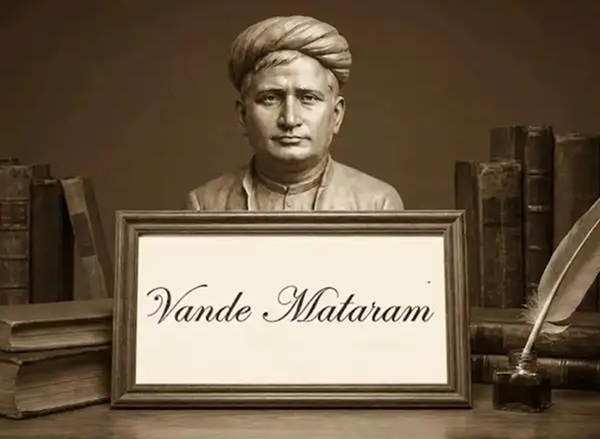
Traditionally, only the first two stanzas have been sung at public functions. The directive comes amid commemorations marking 150 years of the song, reviving debates about its later verses and their religious imagery.
In October 1937:
Correspondence between Jawaharlal Nehru and Subhas Chandra Bose acknowledged apprehensions among sections of the Muslim community.
In 1950:
The recent directive marks a shift towards formalising performance requirements.
Some Muslim scholars object to:
Islam’s principle of strict monotheism prohibits worship of entities other than Allah, making compulsory recitation problematic for adherents.
The third to sixth stanzas include:
Critics argue these verses may alienate non-Hindu communities.
Opponents argue that mandatory singing may:
Supporters maintain that the song is a patriotic expression rather than a religious invocation.
The controversy intensified during Parliament’s 150-year commemoration of Vande Mataram.
The debate reflects broader ideological differences over nationalism and secularism.
1. Reinterpretation of National Symbols
The move signals an effort to revisit historical compromises concerning national symbols.
2. Secularism and Constitutional Values
Raises questions about:
3. Social Cohesion
Public controversy over national symbols may impact communal harmony.
4. Historical Reassessment
The debate revives discussions about the role of freedom movement leaders and past political compromises.
5. Institutional Protocol and Precedent
Formalising recital requirements may influence future norms regarding national symbols.
FAQs1. What is Vande Mataram ? It is India’s National Song, composed by Bankim Chandra Chattopadhyay and adopted in 1950 (first two stanzas). 2. Why is the full version controversial ? The later stanzas contain explicit religious imagery invoking Hindu goddesses, leading to objections from some communities. 3. What did the 1937 Congress decision state ? It recommended that only the first two stanzas be sung at public functions to avoid religious controversy. 4. Is singing Vande Mataram constitutionally mandatory ? There is no constitutional provision mandating its recital; the recent directive formalises protocol at official functions. 5. Why is this issue politically sensitive ? It intersects with debates on nationalism, secularism, religious freedom, and historical interpretation of the freedom movement. |



Our support team will be happy to assist you!

 Contact Us
  New Batch : 9555124124/ 7428085757
  Tech Support : 9555124124/ 7428085757