|
Prelims : Governance + CA
Mains : GS Paper 2 – Social Justice; GS Paper 3 – Science & Technology; Ethics
|
Why in News ?
The issue of doping in sports has once again come into focus due to increasing cases of athletes testing positive for banned substances and the strengthening of anti-doping regulations.
- Rising instances of doping violations have raised concerns about the credibility and integrity of competitive sports
- Authorities are taking stricter measures to ensure compliance with anti-doping norms and fair play principles
- There is growing awareness about the health risks associated with performance-enhancing drugs (PEDs)
- The issue is also linked to governance challenges such as regulation, testing infrastructure, and athlete awareness
This highlights the need for a comprehensive approach to tackle doping, combining regulation, education, and ethical accountability.
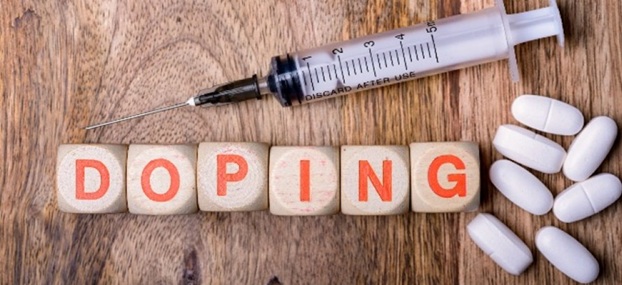
What is Doping in Sports ?
Doping refers to the use of prohibited substances or methods by athletes to artificially enhance their performance.
- It violates the fundamental principle of fair competition, where success should depend on natural ability, training, and discipline
- Doping includes :
- Consumption of banned drugs
- Use of performance-enhancing substances
- Adoption of illegal methods such as blood manipulation
The practice is regulated globally by organizations like the World Anti-Doping Agency (WADA), which maintains a list of banned substances and methods.
Types of Doping
1. Use of Performance-Enhancing Drugs (PEDs)
- Includes substances such as:
- Anabolic steroids
- Stimulants
- Hormones
- These drugs enhance:
- Muscle strength
- Endurance
- Recovery speed
However, they provide an unfair advantage over competitors.
2. Blood Doping
- Involves increasing the number of red blood cells to improve oxygen delivery to muscles
- Methods include :
- Blood transfusions
- Use of erythropoietin (EPO)
This significantly enhances endurance but is highly risky and unethical.
3. Gene Doping
- A modern and emerging form of doping involving :
- Genetic modification to enhance performance
- It is difficult to detect and poses serious ethical and scientific challenges.
4. Use of Prohibited Methods
- Includes :
- Chemical manipulation
- Masking agents to hide drug use
These methods are used to evade detection rather than directly enhance performance.
Causes of Doping in Sports
1. Intense Competition and Pressure to Perform
- Athletes often face immense pressure from :
- Coaches
- Sponsors
- National expectations
- This can push them toward doping as a shortcut to success
2. Financial Incentives
- Success in sports brings:
- Prize money
- Sponsorship deals
- Government incentives
- The lure of financial rewards can encourage unethical practices
3. Lack of Awareness
- Some athletes, especially at lower levels, may unknowingly consume banned substances due to :
- Lack of proper guidance
- Use of contaminated supplements
4. Weak Regulatory Mechanisms
- Inadequate testing infrastructure and enforcement can :
- Increase the chances of doping going undetected
5. Influence of Support Systems
- Coaches, trainers, or medical staff may :
- Encourage or facilitate doping
This reflects systemic issues within sports ecosystems.
Impact of Doping
1. Undermining Fair Play and Integrity of Sports
- Doping creates an unequal playing field, where clean athletes are at a disadvantage
- It erodes public trust in sports competitions
2. Serious Health Risks for Athletes
- Use of banned substances can lead to :
- Hormonal imbalances
- Heart diseases
- Liver damage
- Psychological disorders
- Long-term consequences may be irreversible
3. Damage to Reputation and Career
- Athletes found guilty face :
- Suspension or bans
- Loss of medals and titles
- Public disgrace
4. Impact on National Image
- Repeated doping violations can :
- Tarnish a country’s sporting reputation
- Affect its credibility in international competitions
5. Ethical Concerns
- Doping violates the principles of :
- Honesty
- Integrity
- Respect for rules
It raises fundamental questions about ethics in sports.
Anti-Doping Framework
1. Global Framework
- The World Anti-Doping Agency (WADA) :
- Sets global anti-doping standards
- Publishes the Prohibited List annually
- Monitors compliance by countries
2. National Framework (India)
- India has established :
- The National Anti Doping Agency (NADA)
- Functions include :
- Conducting doping tests
- Educating athletes
- Enforcing anti-doping rules
3. Testing and Enforcement Mechanisms
- Includes :
- In-competition and out-of-competition testing
- Random sampling
- Strict penalties for violations
Challenges in Combating Doping
1. Evolving Nature of Doping Techniques
- New substances and methods are constantly being developed
- Detection technologies often lag behind
2. Limited Awareness Among Athletes
- Especially at grassroots levels
- Lack of education about banned substances
3. Inadequate Testing Infrastructure
- Limited resources for :
- Advanced testing
- Frequent monitoring
4. Legal and Procedural Delays
- Cases may take long to resolve
- Reduces deterrence effect
5. Use of Supplements
- Contaminated supplements can lead to unintentional doping violations
Way Forward
1. Strengthening Awareness and Education
- Conduct regular training programs for :
- Athletes
- Coaches
- Support staff
2. Enhancing Testing Infrastructure
- Invest in :
- Advanced laboratories
- Modern detection technologies
3. Strict Enforcement of Rules
- Ensure :
- Swift action
- Transparent procedures
4. Promoting Ethical Sports Culture
- Encourage values such as :
- Fair play
- Integrity
- Discipline
5. Regulation of Supplements
- Ensure quality control
- Educate athletes about risks
Practice Questions
Prelims
Q. The term “doping” in sports refers to :
(a) Use of advanced training techniques
(b) Consumption of prohibited substances to enhance performance
(c) Adoption of new sports technologies
(d) Use of nutritional supplements
Mains
“Doping in sports is not only a regulatory issue but also an ethical and health concern.” Discuss.
FAQs
Q1. What is doping ?
Use of banned substances to enhance performance.
Q2. Who regulates doping globally ?
World Anti-Doping Agency (WADA).
Q3. What is NADA ?
India’s anti-doping body.
Q4. Why is doping harmful ?
It affects health and undermines fair competition.
Q5. What is a major challenge ?
Evolving doping methods and detection difficulties.
|






 Contact Us
  New Batch : 9555124124/ 7428085757
  Tech Support : 9555124124/ 7428085757