Prelims : Geography; Energy; International Relations
Mains : GS Paper 2 – India and its Neighbourhood; GS Paper 3 – Infrastructure; Energy Security |
Why in News ?
The Lower Arun Hydroelectric Project has emerged as a significant example of deepening India–Nepal cooperation in the hydropower sector, reflecting a broader trend of regional energy integration and strategic infrastructure collaboration in South Asia.
- The project underscores India’s growing involvement in harnessing Nepal’s vast hydropower potential, which remains largely untapped despite the country’s favourable river systems and topography
- It represents a shift from traditional aid-based cooperation to investment-driven, mutually beneficial economic partnerships, where both countries derive long-term strategic and economic gains
- The initiative aligns with India’s larger objective of enhancing regional energy security, cross-border electricity trade, and clean energy transition, while simultaneously strengthening diplomatic ties with its neighbouring countries
- In the context of increasing geopolitical competition in the Himalayan region, such projects also acquire strategic importance by reinforcing India’s presence and influence through infrastructure and economic engagement
Thus, the project is not merely an energy initiative but a multi-dimensional instrument of economic diplomacy, sustainable development, and regional cooperation.
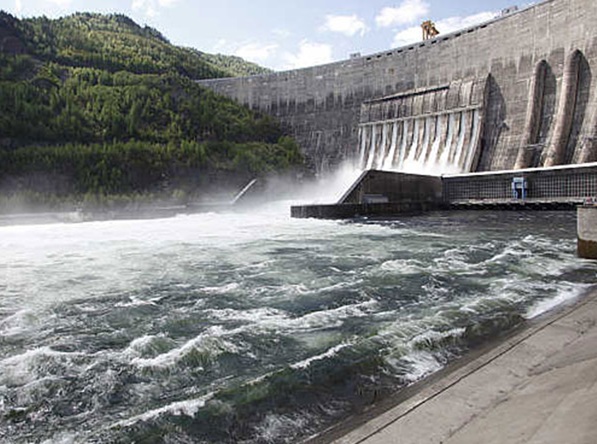
What is the Lower Arun Hydroelectric Project ?
The Lower Arun Hydroelectric Project is a run-of-the-river (RoR) hydropower project located on the Arun River in eastern Nepal, designed to generate electricity by utilising the natural flow of the river without the need for large-scale water storage.
- It has an installed capacity of approximately 670 MW, making it one of the prominent hydropower projects in Nepal’s energy landscape
- The project is situated in the Sankhuwasabha and Bhojpur districts and forms part of the broader Arun river basin development strategy
- It is conceived as a downstream project of the Arun-III Hydropower Project, meaning it will utilise water discharged from the upstream plant to generate additional electricity, thereby maximising energy extraction from the same river system
- The project is being developed by Satluj Jal Vidyut Nigam (SJVN), an Indian public sector undertaking, under a bilateral agreement with the Government of Nepal
Overall, the project represents an effort to optimally harness river resources through integrated and sequential hydropower development.
Key Features of the Project
1. Run-of-the-River (RoR) Design with Reduced Ecological Footprint
- The project adopts a run-of-the-river model, which avoids the construction of large reservoirs and instead relies on the natural flow and gradient of the river to generate electricity
- This design significantly reduces :
- Large-scale submergence of land
- Displacement of local communities
- Ecological disruption compared to traditional dam-based projects
- However, it still requires careful management of :
- Environmental flows to sustain downstream ecosystems
- Seasonal variability in river discharge, which directly affects power generation
Thus, while relatively environment-friendly, the RoR model demands balanced ecological planning and efficient hydrological management.
2. Tandem Development with Arun-III for Optimal Resource Utilisation
- The Lower Arun project is strategically designed to function in tandem with the upstream Arun-III Hydropower Project, enabling cascading utilisation of water resources
- Water released after electricity generation at Arun-III is reused downstream, allowing :
- Multiple stages of energy generation from the same volume of water
- Enhanced overall efficiency of the river basin
- This approach reflects a modern trend in hydropower planning where river systems are developed in an integrated manner rather than through isolated projects
- It ensures :
- Higher energy output
- Better economic viability
- Reduced wastage of natural resources
3. Implementation under Build-Own-Operate-Transfer (BOOT) Model
- The project is being implemented under the BOOT model, wherein the developer :
- Finances and constructs the project
- Operates it for a specified concession period
- Transfers ownership to the host country after completion of the term
- This model benefits Nepal by :
- Reducing upfront financial burden
- Enabling access to foreign investment and expertise
- For India, it provides :
- Long-term returns on investment
- Strategic economic presence in the region
- The BOOT model thus represents a win-win framework combining infrastructure development with international economic cooperation.
4. Advanced Engineering and High-Capacity Infrastructure
- The project incorporates modern engineering features such as :
- Long headrace tunnels to channel water efficiently
- Underground powerhouse facilities to optimise land use and safety
- High-efficiency turbines designed for variable water flow conditions
- These technological components ensure :
- Improved energy efficiency
- Reduced operational losses
- Long-term sustainability of the project
- The use of advanced engineering also reflects India’s growing capabilities in executing complex hydropower projects in challenging terrains like the Himalayas
5. Significant Power Generation Capacity and Export Potential
- With an installed capacity of around 670 MW, the project is expected to :
- Substantially augment Nepal’s electricity generation capacity
- Generate surplus power for export to India
- Cross-border electricity trade enables :
- Revenue generation for Nepal
- Reliable supply of clean energy for India
- This creates a mutually beneficial energy partnership, strengthening regional power connectivity and economic interdependence.
Strategic Significance
1. Strengthening India–Nepal Bilateral Relations through Economic Cooperation
- Hydropower projects like Lower Arun act as pillars of India–Nepal relations by fostering :
- Long-term economic collaboration
- Mutual trust and interdependence
- Such projects shift the bilateral relationship toward :
- Development-oriented engagement
- Shared infrastructure growth
2. Enhancing Regional Energy Security and Integration
- Nepal possesses vast hydropower potential, while India has :
- High and growing energy demand
- The project facilitates :
- Efficient utilisation of regional energy resources
- Development of cross-border electricity markets
- This contributes to :
- Stable and diversified energy supply in South Asia
3. Promoting Clean and Renewable Energy Transition
- Hydropower is a renewable and low-carbon energy source, making the project important for :
- Reducing greenhouse gas emissions
- Meeting climate commitments
- It aligns with global efforts toward :
- Sustainable energy systems
- Transition away from fossil fuels
4. Expanding India’s Strategic Footprint in the Himalayan Region
- Infrastructure investments in Nepal enhance India’s :
- Strategic presence
- Economic influence
- This is particularly important in the context of :
- Competing external interests in the region
5. Strengthening Water Resource Diplomacy
- Shared river systems between India and Nepal require :
- Hydropower projects serve as tools for :
- Building trust
- Managing transboundary water resources effectively
Challenges
1. Environmental and Ecological Concerns
- Even with RoR design, projects can :
- Alter river flow patterns
- Impact aquatic biodiversity
- Requires :
- Strong environmental safeguards
2. Geological and Seismic Risks
- The Himalayan region is :
- Geologically fragile
- Prone to earthquakes and landslides
- These risks complicate :
- Construction and maintenance
3. Social Impact and Local Concerns
- Issues such as:
- Land acquisition
- Livelihood disruption
must be addressed through :
- Inclusive rehabilitation policies
4. Project Delays and Financial Constraints
- Large infrastructure projects often face :
- Cost overruns
- Implementation delays
5. Hydrological Dependence
- Seasonal variation in river flow affects :
- Power generation consistency
Way Forward
1. Strengthening Environmental Governance
- Ensure sustainable practices and ecological balance
2. Enhancing Bilateral Coordination
- Improve policy and institutional cooperation
3. Investing in Advanced Technology
- Use modern techniques for :
4. Promoting Regional Power Integration
- Expand cross-border electricity trade
5. Ensuring Inclusive Development
- Address local community concerns effectively
Practice Questions
Prelims
Q. The Lower Arun Hydroelectric Project is :
(a) A thermal project in India
(b) A run-of-the-river hydropower project in Nepal
(c) A nuclear project
(d) A solar project
Mains
“Cross-border hydropower projects are key instruments of regional cooperation and energy security.” Discuss with reference to the Lower Arun Hydroelectric Project.
FAQs
Q1. Where is the project located ?
On the Arun River in Nepal.
Q2. What type of project is it ?
Run-of-the-river hydropower project.
Q3. Who is developing it ?
Satluj Jal Vidyut Nigam (SJVN).
Q4. What is its capacity ?
Around 670 MW.
Q5. Why is it important ?
It strengthens India–Nepal energy cooperation.
|






 Contact Us
  New Batch : 9555124124/ 7428085757
  Tech Support : 9555124124/ 7428085757