Why is it in Discussion ?
- On 9 June 2026, on the death anniversary of Birsa Munda, various tribal organizations in Jharkhand took a pledge to protect his legacy.
- This development comes at a time when the demand for the delisting of Christian and Muslim converts from the Scheduled Tribe (ST) category has once again gained momentum.
- The debate has brought issues related to tribal identity, religion, land rights, and self-governance to the center of national discourse.
- It has also raised questions about Birsa Munda’s actual ideology and the kind of tribal identity he represented.
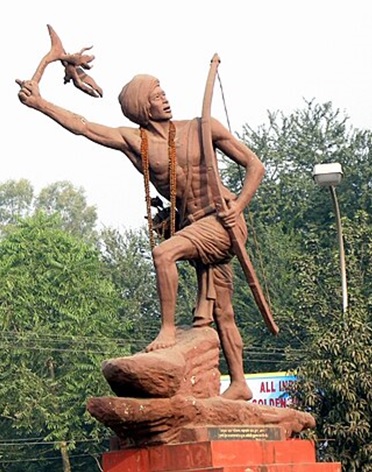
Who was Birsa Munda ?
- Birsa Munda was one of the most influential tribal leaders in Indian history.
- He is revered among tribal communities as “Dharti Aba” (Father of the Earth).
- In the late nineteenth century, he led the Ulgulan (Great Rebellion) against British colonial rule and the exploitation by outsiders, known as Dikus.
- Historians regard him not merely as a rebel leader but also as a religious reformer, social awakener, and political thinker who provided a new direction to tribal society.
Early Life and Social Background
- Birsa Munda was born on 15 November 1875 in Ulihatu village, located in present-day Khunti district of Jharkhand.
- His father, Sugana Munda, had converted to Christianity and was associated with the Sardari Movement.
- This movement sought to protect traditional tribal land rights and resist the growing influence of external landlords.
- Birsa grew up during a period when tribal communities were facing land dispossession, economic exploitation, and social insecurity.
Colonial Land Policies and the Tribal Crisis
Missionary Education and Ideological Transformation
- Birsa Munda received education in missionary schools at Chaibasa, where he was also known by the names Daud (David).
- However, due to differences with church authorities, his association with missionary institutions eventually ended.
- He later came under the influence of Vaishnav traditions for a brief period.
- Ultimately, he developed an independent spiritual worldview rooted in tribal culture, nature, and community values.
Ulgulan: The Great Tribal Resistance Movement
- Ulgulan, meaning “Great Tumult” or “Great Rebellion,” was a mass movement led by Birsa Munda.
- It aimed to challenge British rule, exploitative landlords, and the oppression faced by tribal communities.
- The movement was not limited to land rights; it also sought to defend tribal dignity, cultural identity, and self-governance.
The Struggle of Dombari Buru
- In January 1899, thousands of tribal people gathered at Dombari Buru Hill and openly challenged British authority.
- British forces attempted to suppress the gathering and opened fire on the crowd.
- In tribal collective memory, the incident is remembered as a major massacre.
- Even today, Dombari Buru remains a symbol of tribal resistance and sacrifice.
Arrest and Death
- After months of challenging colonial authority, Birsa Munda was arrested on 3 February 1900 in the forests of Porahat.
- He died in Ranchi Jail on 9 June 1900.
- Colonial records attributed his death to cholera and dysentery.
- However, many tribal communities continue to believe that he was poisoned while in custody.
Impact of Ulgulan and the Chotanagpur Tenancy Act, 1908
- Although the British administration eventually suppressed the Ulgulan movement, it was compelled to introduce land reforms.
- This led to the enactment of the Chotanagpur Tenancy (CNT) Act, 1908, which legally recognized traditional land systems such as Khuntkatti and Bhuinhari.
- The Act sought to prevent the transfer of tribal land to non-tribal populations.
- Even today, it remains one of the strongest legal safeguards for tribal land rights in Jharkhand.
Birsait Religion and Religious Thought
- Moving beyond both Christianity and Vaishnav influences, Birsa Munda developed an independent religious philosophy later known as the Birsait faith.
- It emphasized nature, community life, moral conduct, and social reform.
- His followers worship him as Bhagwan Birsa and Dharti Aba.
- The Birsait faith was neither purely Sarna, nor Hindu, nor Christian; rather, it represented a distinct religious movement rooted in indigenous tribal spiritual traditions.
Tribal Identity and the Contemporary Debate
- The current demand to remove Christian and Muslim converts from the ST list has reignited debates over the meaning of tribal identity.
- Many tribal organizations and descendants of Birsa Munda argue that tribal identity is determined not by religion but by ancestry, community, culture, and land.
- According to this view, despite differences in modes of worship, tribal communities share a common historical, cultural, and territorial heritage.
Influence of Birsa’s Legacy on the Jharkhand Movement
- Historians argue that the ideas of tribal self-rule and self-determination expressed during Ulgulan later provided the ideological foundation for the separate Jharkhand movement.
- Under the leadership of Jaipal Singh Munda, the movement acquired organized political form.
- Its long struggle culminated in the creation of the state of Jharkhand in 2000.
Conclusion
Birsa Munda was not merely the leader of a tribal rebellion; he became a symbol of tribal identity, land rights, cultural autonomy, and self-governance.
His life and struggle demonstrate that tribal identity is shaped not by a religious label but by community, culture, ancestral heritage, nature, and land.
At a time when fresh debates over tribal identity continue to emerge, Birsa Munda’s legacy offers an opportunity to revisit his core ideals of dignity, self-rule, cultural self-reliance, and collective empowerment.






 Contact Us
  New Batch : 9555124124/ 7428085757
  Tech Support : 9555124124/ 7428085757