Why in News?
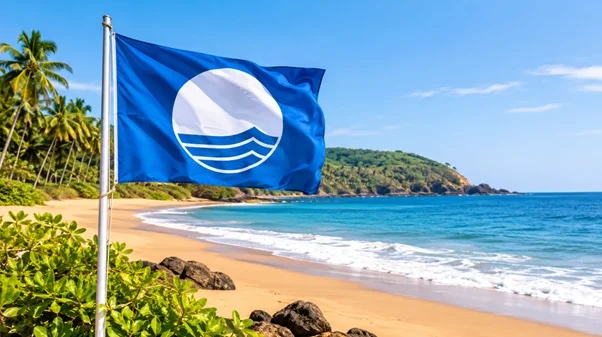
Recently, three beaches in Maharashtra—Ladghar, Guhagar and Shrivardhan—received the prestigious international Blue Flag Certification for the 2026–27 season. This marks the first-ever Blue Flag recognition for beaches in Maharashtra.
- With this development, India has a total of 22 Blue Flag-certified beaches for the 2026–27 season, including nine newly certified beaches and 13 renewed certifications.
- The certification season for the three Maharashtra beaches will begin on November 15, 2026.
Key Highlights
- Ladghar and Guhagar beaches are located in Maharashtra's Ratnagiri district, while Shrivardhan Beach is situated in Raigad district.
- All three beaches are located along the Konkan coast bordering the Arabian Sea.
- The beaches have fulfilled international standards relating to environmental protection, cleanliness, water quality, biodiversity conservation and tourist safety.
- The recognition is expected to promote sustainable tourism, generate local employment and strengthen Maharashtra's coastal economy.
About Blue Flag Certification
Blue Flag Certification is an internationally recognised voluntary eco-label awarded to beaches, marinas and sustainable tourism boats that fulfil prescribed environmental, educational, safety and sustainability standards.
- Origin: The programme originated in France in 1985.
- Global Expansion: It became an international programme in 2001.
- Awarding Organisation: Foundation for Environmental Education (FEE).
- Headquarters: Copenhagen, Denmark.
- Objective: To promote sustainable tourism and environmental conservation through responsible management of coastal and marine resources.
- Validity: The certification is awarded for a specific season and requires continued compliance with prescribed standards.
Criteria for Blue Flag Certification
India's Blue Flag beach certification framework traditionally comprises 33 criteria classified into four major categories:
- Environmental Education and Information: Promoting environmental awareness among tourists and local communities.
- Bathing Water Quality: Ensuring clean and safe bathing water through regular monitoring and pollution control.
- Environmental Management: Ensuring proper waste disposal, sanitation, biodiversity conservation and sustainable infrastructure.
- Safety and Services: Providing lifeguards, first-aid facilities, emergency services and accessible infrastructure.
The Foundation for Environmental Education periodically revises its certification criteria to address emerging environmental and sustainability concerns.
About Foundation for Environmental Education (FEE)
- It is an international non-governmental and non-profit organisation established in 1981.
- It is headquartered in Copenhagen, Denmark.
- It promotes sustainable development through environmental education and awareness.
- Its major programmes include Blue Flag, Green Key, Eco-Schools, Learning About Forests (LEAF) and Young Reporters for the Environment (YRE).
Blue Flag Certification in India
India received Blue Flag Certification for the first time in October 2020, when eight beaches were awarded this international recognition.
India's First Eight Blue Flag-Certified Beaches
|
Beach
|
State/Union Territory
|
|
Shivrajpur
|
Gujarat
|
|
Ghoghla
|
Daman and Diu
|
|
Kasarkod
|
Karnataka
|
|
Padubidri
|
Karnataka
|
|
Kappad
|
Kerala
|
|
Rushikonda
|
Andhra Pradesh
|
|
Golden Beach
|
Odisha
|
|
Radhanagar
|
Andaman and Nicobar Islands
|
For the 2026–27 season, 22 Indian beaches have received Blue Flag recognition, reflecting the country's growing emphasis on sustainable coastal tourism.
Beach Environment and Aesthetics Management Services (BEAMS)
BEAMS is an initiative of the Ministry of Environment, Forest and Climate Change (MoEFCC) aimed at promoting sustainable beach management in India.
- It was introduced under the Integrated Coastal Zone Management (ICZM) Project.
- It has been implemented through the Society of Integrated Coastal Management (SICOM).
- It aims to develop Indian beaches in accordance with international environmental and sustainability standards.
Major Objectives of BEAMS
- Reducing pollution in coastal waters and beach ecosystems.
- Conserving coastal and marine biodiversity.
- Developing sustainable beach infrastructure.
- Ensuring cleanliness, hygiene and tourist safety.
- Promoting environmentally responsible tourism.
- Encouraging local community participation in coastal conservation.
Significance of Blue Flag Certification
- Environmental Conservation: It promotes the protection of marine biodiversity, coastal habitats and natural resources.
- Sustainable Tourism: It encourages tourism activities that minimise environmental degradation.
- Economic Development: It generates employment and business opportunities for coastal communities.
- International Recognition: It strengthens India's position as a global sustainable tourism destination.
- Pollution Management: It promotes scientific waste disposal, wastewater treatment and marine pollution control.
- Blue Economy: It supports the sustainable utilisation of marine and coastal resources.
- Public Health and Safety: It ensures better sanitation, bathing water quality and tourist safety.
Major Challenges
- Increasing marine pollution due to plastic waste and untreated sewage.
- Unregulated tourism and excessive commercialisation of coastal areas.
- Coastal erosion and rising sea levels due to climate change.
- Inadequate waste management and sanitation infrastructure.
- Maintaining international environmental standards throughout the certification period.
- Balancing tourism development with the livelihood interests of traditional fishing communities.
Government Initiatives for Coastal Conservation
- Integrated Coastal Zone Management (ICZM): Promotes sustainable management of coastal resources.
- Coastal Regulation Zone (CRZ) Notification: Regulates developmental activities in coastal areas.
- Swachh Sagar, Surakshit Sagar Campaign: Focuses on coastal cleanliness and marine litter reduction.
- MISHTI Initiative: Promotes mangrove plantation and restoration.
- National Marine Turtle Action Plan: Aims to conserve marine turtles and their habitats.
Way Forward
- Expand the BEAMS Programme to more eligible beaches across India.
- Strengthen coastal waste management and sewage treatment infrastructure.
- Ensure regular monitoring of bathing water quality.
- Promote community-based sustainable tourism.
- Develop climate-resilient coastal infrastructure.
- Strengthen the implementation of Coastal Regulation Zone provisions.
Conclusion
The Blue Flag Certification of three Maharashtra beaches represents a significant milestone in India's efforts towards environmental conservation and sustainable coastal tourism. Integrating ecological protection, tourism development and community participation can strengthen India's blue economy while ensuring the long-term sustainability of coastal ecosystems.
Prelims Practice Question
Q. With reference to Blue Flag Certification, consider the following statements:
- It is awarded by the Foundation for Environmental Education.
- It is awarded exclusively to beaches.
- Bathing water quality is one of its assessment criteria.
Which of the statements given above are correct?
(a) 1 and 2 only
(b) 2 and 3 only
(c) 1 and 3 only
(d) 1, 2 and 3
Mains Practice Question
Q. Discuss the significance of Blue Flag Certification in promoting sustainable coastal tourism and environmental conservation in India.
|
FAQs
Q1. What is Blue Flag Certification?
An international eco-label recognising environmentally sustainable coastal destinations.
Q2. Who awards Blue Flag Certification?
The Denmark-based Foundation for Environmental Education awards it.
Q3. How many Blue Flag beaches are there in India?
India has 22 certified beaches for 2026–27.
Q4. Which Maharashtra beaches received Blue Flag Certification?
Ladghar, Guhagar and Shrivardhan beaches received the certification.
Q5. When did India first receive Blue Flag Certification?
India first received Blue Flag Certification in October 2020.
|