New
Hindi Medium: (Delhi) - GS Foundation (P+M) : 6th July 2026, 6:00 PM Hindi Medium: (Prayagraj) - GS Foundation (P+M) : 5th July 2026, 8:00 AM English Medium: (Delhi) - GS Foundation (P+M) : 20th July 2026 English Medium: (Prayagraj) - GS Foundation (P+M) : 15th July 2026, 8:00 AM Hindi Medium: (Delhi) - GS Foundation (P+M) : 6th July 2026, 6:00 PM Hindi Medium: (Prayagraj) - GS Foundation (P+M) : 5th July 2026, 8:00 AM English Medium: (Delhi) - GS Foundation (P+M) : 20th July 2026 English Medium: (Prayagraj) - GS Foundation (P+M) : 15th July 2026, 8:00 AM

Cabinet Approves Mobile Phone Manufacturing Scheme (MPMS): ₹62,500 Crore Plan to Boost Exports, Jobs and Indian Brands

Prelims

Indian Economy, Government Schemes, Science & Technology (Electronics Manufacturing & Semiconductors), and Current Affairs.

Mains 

GS Paper III : Indian Economy (Industrial Policy, Growth & Employment), Science & Technology (Indigenisation of Technology), Infrastructure, Investment Models, and Effects of Liberalisation on Industrial Growth.

Why in News ?

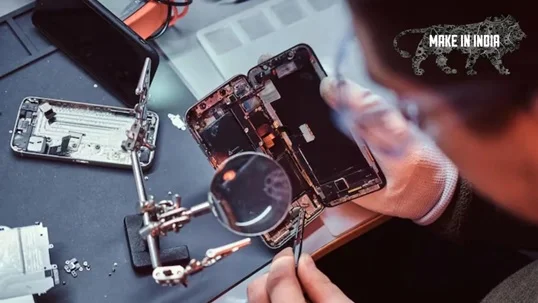
  • The Union Cabinet has approved the Mobile Phone Manufacturing Scheme (MPMS) with a budgetary outlay of ₹62,500 crore. The five-year scheme aims to strengthen India's electronics manufacturing ecosystem, boost smartphone exports, create employment, and promote globally competitive Indian mobile phone brands.
Why is the Scheme Needed ?

  • India continues to depend heavily on imports for high-value electronic components such as semiconductors, display panels, camera modules, sensors, and chipsets. 
  • Domestic manufacturing is still largely concentrated in assembly operations, resulting in relatively low domestic value addition. 
  • The scheme seeks to strengthen India's position in Global Value Chains (GVCs) by promoting domestic manufacturing of components and reducing import dependence.

Key Features of the Mobile Phone Manufacturing Scheme (MPMS)

Duration

  • Implementation Period: FY 2026–27 to FY 2030–31 (Five Years)

Financial Outlay

  • ₹62,500 crore

Objectives

  • Increase domestic mobile phone manufacturing.
  • Reduce dependence on imported components.
  • Develop a robust domestic electronics supply chain.
  • Promote indigenous mobile phone brands.
  • Encourage research, design, and innovation.
  • Increase domestic value addition.
  • Boost exports and employment.

Incentive Structure

  • 2.25%–5% incentive based on incremental mobile phone sales.
  • Additional 1.5% incentive for sourcing key components and sub-assemblies from within India.
  • Additional 3% incentive for investment in Research & Development (R&D) and product design.

Expected Outcomes

  • Mobile phone production worth ₹39 lakh crore over five years.
  • Around 60,000 direct jobs.
  • Significant increase in smartphone exports.
  • Development of globally competitive Indian brands.
  • Higher domestic value addition and lower import dependence.

India's Electronics Manufacturing: Current Status

  • Electronics manufacturing has increased sevenfold over the last decade.
  • Electronics exports have grown elevenfold.
  • Around 99.2% of mobile phones sold in India are manufactured domestically.
  • In 2025, smartphones became India's largest export commodity, surpassing diesel fuel and diamonds.

Significance

  • Supports the Make in India and Atmanirbhar Bharat initiatives.
  • Strengthens India's electronics manufacturing ecosystem.
  • Encourages domestic component manufacturing and higher value addition.
  • Promotes R&D, innovation, and design-led manufacturing.
  • Creates employment opportunities and enhances export competitiveness.
  • Helps position India as a global hub for high-value electronics manufacturing.

Challenges

  • Heavy dependence on imported semiconductor chips and critical electronic components.
  • Intense competition from countries such as China and Vietnam.
  • Need for greater investment in R&D and product design.
  • Infrastructure and logistics bottlenecks.
  • Requirement for a highly skilled workforce.

Related Government Initiatives

  • Make in India
  • Atmanirbhar Bharat Abhiyan
  • Production Linked Incentive (PLI) Scheme
  • India Semiconductor Mission (ISM)
  • Electronics Manufacturing Clusters (EMC) Scheme
  • Scheme for Promotion of Manufacturing of Electronic Components and Semiconductors (SPECS)

Prelims Question

Q. With reference to the Mobile Phone Manufacturing Scheme (MPMS), recently approved by the Union Cabinet, consider the following statements:

  1. The scheme aims to promote domestic manufacturing of mobile phones and electronic components. 
  2. It provides additional incentives for investment in Research & Development (R&D) and product design. 
  3. The scheme seeks to reduce India's dependence on imported electronic components and increase domestic value addition. 
  4. The scheme is implemented by the Ministry of Commerce and Industry. 

Which of the statements given above are correct?

  1. 1, 2 and 3 only
  2. 1 and 4 only
  3. 2 and 3 only
  4. 1, 2, 3 and 4 

Mains Practice Question

Q. The Mobile Phone Manufacturing Scheme (MPMS) is expected to accelerate India's transition into a global electronics manufacturing hub. Discuss the key features of the scheme and evaluate its likely impact on exports, employment, and the 'Make in India' initiative.

FAQs: Mobile Phone Manufacturing Scheme (MPMS)

Q1. What is the Mobile Phone Manufacturing Scheme (MPMS) ?

Answer : The Mobile Phone Manufacturing Scheme (MPMS) is a ₹62,500-crore Central Sector Scheme approved by the Union Cabinet to promote domestic mobile phone manufacturing, strengthen the electronics supply chain, boost exports, generate employment, and support Indian mobile phone brands.

Q2. Why is the scheme important for India ?

Answer : The scheme aims to move India from an assembly-led manufacturing model to a design- and innovation-driven electronics ecosystem, strengthen domestic manufacturing, reduce import dependence, and improve India's position in Global Value Chains (GVCs).

Q3. Which ministry is responsible for implementing the scheme ?

Answer : The Ministry of Electronics and Information Technology (MeitY) is the nodal ministry responsible for implementing the Mobile Phone Manufacturing Scheme.

Q4. How is MPMS different from the earlier PLI Scheme ?

Answer : While the PLI Scheme primarily focused on increasing production and attracting investments, MPMS places greater emphasis on domestic component manufacturing, higher value addition, R&D, product design, and the development of globally competitive Indian brands.

Have any Query?

Our support team will be happy to assist you!

OR