
- UPSC Exam
- State PCS
- One Day Exam
- Current Affairs
- PT Quiz
- Downlaods
- About Coaching
- Blog
- Videos

| Prelims: Environment & Ecology, Climate Change, Wildfires, International Reports. GS Paper III: Environment, Disaster Management, Climate Change, Conservation, and Sustainable |
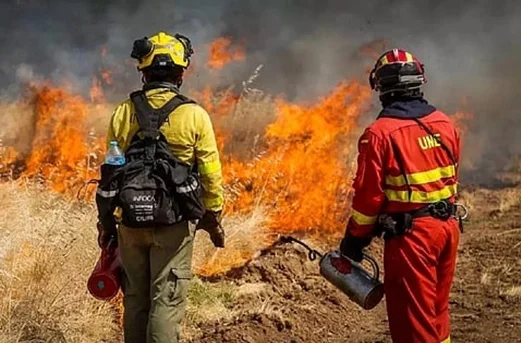
A new study by the World Weather Attribution (WWA) found that human-induced climate change made the wildfire weather in central Spain about 20 times more likely and in south-west France about twice as likely during July 2026.
Prelims QuestionQ. With reference to the World Weather Attribution (WWA), consider the following statements:
Which of the statements given above is/are correct?
Mains QuestionQ. "Climate change is increasing the frequency and intensity of wildfires across the world." Discuss the causes, impacts, and measures required to strengthen wildfire resilience. |
Q1. Why is the WWA report in the news?Answer: The World Weather Attribution (WWA) reported that human-induced climate change made wildfire weather 20 times more likely in central Spain and twice as likely in south-west France during July 2026. Q2. What is the World Weather Attribution (WWA)?Answer: WWA is an international scientific collaboration that studies how human-induced climate change influences extreme weather events, such as heatwaves, floods, droughts, and wildfires. Q3. What caused the severe wildfires in Spain and France?Answer: A combination of rapid vegetation growth, prolonged drought, extreme heat, and successive heatwaves created highly flammable conditions that fueled the wildfires. Q4. What is the Daily Severity Rating (DSR)?Answer: The Daily Severity Rating (DSR) is a wildfire danger index that measures the severity of fire weather by considering temperature, humidity, wind, and dryness, indicating how difficult a wildfire would be to control. Q5. Which areas were most affected by the wildfires?Answer: The worst-affected areas were Ávila, Madrid, Toledo, Guadalajara, and Castellón in Spain, and the Gironde department near Bordeaux in France. |



Our support team will be happy to assist you!

 Contact Us
  New Batch : 9555124124/ 7428085757
  Tech Support : 9555124124/ 7428085757