New
Hindi Medium: (Delhi) - GS Foundation (P+M) : 14th Oct. 2026, 06:00 PM Hindi Medium: (Prayagraj) - GS Foundation (P+M) : 23rd Oct. 2026, 11:00 AM English Medium: (Delhi) - GS Foundation (P+M) : 12th Oct. 2026, 5:30PM English Medium: (Prayagraj) - GS Foundation (P+M) : 19th Aug 2026, 11:00 AM Hindi Medium: (Delhi) - GS Foundation (P+M) : 14th Oct. 2026, 06:00 PM Hindi Medium: (Prayagraj) - GS Foundation (P+M) : 23rd Oct. 2026, 11:00 AM English Medium: (Delhi) - GS Foundation (P+M) : 12th Oct. 2026, 5:30PM English Medium: (Prayagraj) - GS Foundation (P+M) : 19th Aug 2026, 11:00 AM

Current Affairs for 01 October 2026

Sengol: History, Tamil Tradition, and Claims Related to the Transfer of Power in 1947

Why in News?

  • NCERT’s new Class 9 Social Science textbook ‘Understanding Society and Beyond – Part 2’ mentions the Sengol. 
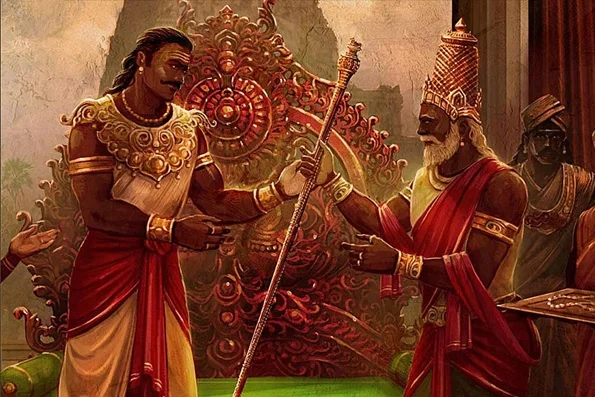
  • The book states that on the occasion of independence on 15 August 1947, a Sengol was presented to then Prime Minister Jawaharlal Nehru by Adheenam saints associated with the Shaivite tradition of Tamil Nadu. 
  • The book describes the Sengol as a cultural symbol of just governance and good governance. 
  • There are differences among historians over whether the Sengol was formally regarded in 1947 as a ‘symbol of the transfer of power’ from British rule to Indian rule. 

What is Sengol?

  • Sengol is a royal sceptre associated with the Tamil tradition. The word ‘Sengol’ is considered to be related to the Tamil word ‘Semmai’, which refers to righteousness, justice, and impartiality. 
  • In Tamil political and literary traditions, the Sengol has been regarded not merely as a symbol of authority but also as a symbol of the ruler’s just governance and responsibility towards the people. 
  • Its concept is also associated with ‘Kodungol’, which refers to unjust or tyrannical rule. 

Significance of Sengol in Tamil Tradition

  • Tamil literature associates the concept of just governance with the Sengol. 
  • The Tirukkural contains a chapter titled ‘Sengonmai’, meaning ‘Right Sceptre’, which emphasises the importance of a ruler governing justly. 
  • Similarly, Tamil literary works such as Silappadikaram also refer to the concepts of justice and kingship. 
  • Thus, in Tamil tradition, the Sengol has been viewed both as a physical sceptre and as an ideal of just governance. 

The 1947 Event of Sengol Being Presented to Nehru

  • On 14 August 1947, on the eve of independence, representatives associated with Thiruvavaduthurai Adheenam presented a Sengol to Jawaharlal Nehru. 
  • According to available accounts, it was approximately five feet long, made of silver with a gold coating, and had a Nandi figure at the top. 
  • Representatives associated with the Adheenam presented it to Nehru along with religious rituals and Thevaram hymns. 
  • It has also been stated that C. Rajagopalachari (Rajaji) suggested such a symbolic ceremony. 
  • There is disagreement over the interpretation of documentary evidence regarding whether it was formally regarded in 1947 as a symbol of the transfer of power from British rule to Indian rule. 

Controversy Over the ‘Transfer of Power’ Claim

  • The Union Government has described the Sengol as a symbol of the transfer of power in 1947. Details associated with the Ministry of Culture have also presented it as a symbol of the transfer of power from colonial rule to the independent Indian state. 
  • On the other hand, some historians have questioned this interpretation. 
  • Historian Rajmohan Gandhi has stated that the private letters, documents, and autobiographical material of Jawaharlal Nehru or C. Rajagopalachari do not provide clear evidence presenting the Sengol as a formal symbol of the transfer of power. 
  • Similarly, available contemporary news reports mention the event of the Sengol being presented to Nehru, but do not clearly describe it as a formal symbol of the transfer of power from British authority to Indian authority. 

Therefore, two things need to be understood separately:

  • First, there is evidence of the Sengol being presented to Nehru in 1947. 
  • Second, whether the event was formally regarded at that time as a symbol of the ‘transfer of power’ remains a matter of historical debate. 

Installation of Sengol in the New Parliament Building in 2023

  • On 28 May 2023, the Sengol was installed in the new Parliament building during its inauguration. 
  • The Union Government presented it as a symbol of just governance, accountability, and the ethical use of power in Indian tradition. 
  • This brought the Sengol back into national discussion and led to renewed debate over its historical significance and the interpretation of the 1947 event. 

Mention of Sengol in the NCERT Textbook

  • The new Class 9 Social Science textbook links the Sengol with the cultural concept of governance and good governance. 
  • According to the book, the use of the Sengol as a symbol of just governance is associated with a more than thousand-year-old Chola tradition. It also mentions the presentation of the Sengol to Nehru in 1947 and its installation in the new Parliament building in 2023. 
  • This mention is significant because the textbook gives space to a historical interpretation of the Sengol that has been questioned by some historians. 

National Motto and Indian Tradition

  • In the same chapter, NCERT links India’s national motto ‘Satyameva Jayate’ to the Mundaka Upanishad. 
  • ‘Satyameva Jayate’ means ‘Truth alone triumphs.’ 
  • The book also mentions the Supreme Court’s motto ‘Yato Dharmastato Jayaḥ’, meaning ‘Where there is Dharma/justice, there is victory.’ It is associated with the tradition of the Mahabharata. 

Concept of Ram Rajya

  • The book also mentions the concept of ‘Ram Rajya’ used by Mahatma Gandhi. 
  • It associates the concept with characteristics such as morality, transparency, compassion, public welfare, and accountable governance. 
  • In this context, Ramayana and Ramcharitmanas are presented as examples within Indian traditions of ideal governance and collective life. 

Viewing Governance as a ‘Sacred Responsibility’

  • According to the NCERT book, from the Vedic period to the Ramayana and Mahabharata, Indian traditions viewed governance not merely as a means of acquiring power but as a ‘sacred responsibility.’ 
  • The book also states that colonial powers imposed their models of governance on Indian societies, and many colonial institutions continued even after independence. 

Traditions Associated with Kings and Deities

The book’s ‘Resistance and Resilience’ chapter also mentions traditional beliefs according to which some kings received swords from deities to resist invasions.

In this context:

  • The book mentions the traditional belief that Annamaraja, the ruler of Bastar, received a sword from Manikya Devi/Danteshwari. 
  • A tradition associated with Kumara Kampana of Vijayanagara mentions a sword given by a goddess. 
  • In the context of Chhatrapati Shivaji Maharaj, the book also mentions the traditional belief that he received a sword from Tulja Bhavani. 

These events are presented in the textbook as traditional beliefs.

Conclusion

  • The Sengol represents an important link between Indian history, Tamil cultural traditions, and modern concepts of governance. 
  • Through the Sengol, ideas such as just governance, accountability of the ruler, and the ethical use of power come to the forefront. 

Frequently Asked Questions (FAQs)

1. What is Sengol?

Answer :- Sengol is a royal sceptre associated with the Tamil tradition. It is considered a symbol of justice, righteous governance, and the ruler’s responsibility towards the people.

2. What does the word ‘Sengol’ mean?

Answer :- The term ‘Sengol’ is associated with the Tamil concept of Semmai, which refers to righteousness, justice, and impartiality. 

Cabinet Approves ₹1.86 Lakh Crore PM DHARA Scheme to Strengthen India’s Renewable Energy Grid

Why in News?

  • The Union Cabinet has approved the Prime Minister Developing Harmony and Accelerating Renewable Energy Access (PM DHARA) Scheme with a total outlay of ₹1,86,405 crore.
  • The scheme aims to strengthen India’s renewable energy transmission and storage infrastructure and will be implemented by State Transmission Utilities (STUs).
  • PM DHARA is designed to address transmission challenges arising from the increasing share of variable renewable energy sources such as solar and wind power.
What is the PM DHARA Scheme?

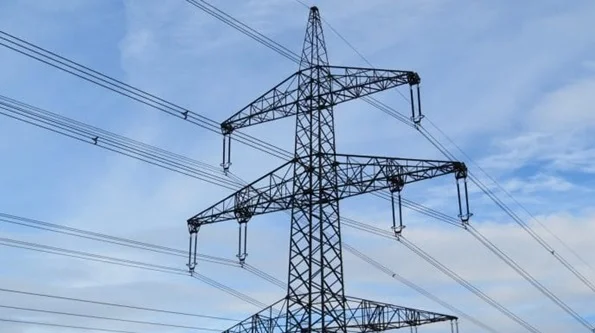
  • The PM DHARA Scheme is a central initiative to expand and upgrade the electricity transmission network in states with significant renewable energy potential.
  • The scheme will help transmit renewable electricity from generation centres to consumption centres and improve the ability of the power grid to manage fluctuations in renewable power generation.
  • The scheme is scheduled to be completed by 2033.

Key Features 

  • Total Outlay: ₹1,86,405 crore
  • Implementation: State Transmission Utilities (STUs)
  • Renewable Energy Transmission Target: 135 GW
  • Battery Energy Storage Systems (BESS): 50 GWh
  • Completion: 2033
  • Of the total allocation, around ₹1,36,378 crore will be used for developing and upgrading transmission infrastructure in states, while ₹50,000 crore will support Battery Energy Storage Systems.
  • The Central Government will provide around ₹54,000 crore and also offset inter-state transmission charges to reduce the financial burden on consumers.

How will PM DHARA Strengthen the Power Grid?

  • Renewable energy sources such as solar and wind are variable in nature. Solar power is generated mainly during the daytime, while wind generation can vary depending on weather and seasonal conditions.
  • This variation can create challenges for maintaining grid stability.

PM DHARA will address these challenges through:

1. New Transmission Lines

  • The scheme will develop new greenfield transmission lines through a Tariff-Based Competitive Bidding (TBCB) process.
  • Under this model, selected private entities can build, own, operate and maintain transmission infrastructure.

2. Upgradation of Existing Infrastructure

  • Existing:
  • Power transmission lines
  • Substations
  • Transmission towers will be upgraded to increase their capacity and improve grid efficiency.
  • This work will be carried out on a cost-plus basis, under which the state utility undertakes the work and receives the actual project cost along with an assured profit margin.

3. Battery Energy Storage

  • The scheme provides for 50 GWh of Battery Energy Storage Systems (BESS).
  • Energy storage can help store electricity when renewable generation is high and supply it when generation falls, thereby improving grid stability.

Why is PM DHARA Important?

  • India is rapidly expanding its renewable energy capacity as part of its clean-energy transition.
  • The government aims to achieve 500 GW of installed non-fossil fuel-based electricity capacity by 2030. As renewable capacity expands, adequate transmission infrastructure is necessary to evacuate and deliver this electricity.
  • Transmission constraints have already affected renewable energy generation. A May 2026 Ember report estimated that India lost around 300 GWh of renewable electricity in the first quarter of 2026 due to transmission constraints.
  • Therefore, strengthening transmission infrastructure is important for making better use of India’s growing renewable energy capacity.

PM DHARA and India’s Renewable Energy Goals

PM DHARA will support India’s renewable energy transition by:

  • Expanding renewable energy transmission capacity.
  • Integrating more solar and wind power into the national grid.
  • Improving grid stability through energy storage.
  • Reducing renewable energy curtailment caused by transmission constraints.
  • Strengthening state-level transmission infrastructure.
  • Supporting India’s target of 500 GW non-fossil fuel capacity by 2030.

Institutional Framework

The implementation of PM DHARA will involve multiple stakeholders, including:

  • Ministry of New and Renewable Energy (MNRE)
  • Ministry of Power
  • Power Grid Corporation of India Limited (POWERGRID)
  • State Governments
  • State Transmission Utilities (STUs)

Challenges 

  • India’s renewable energy expansion faces several transmission-related challenges:
  • Mismatch between generation and consumption: Renewable energy is often generated in resource-rich regions, while major demand centres may be located elsewhere.
  • Variability of renewable energy: Solar and wind generation changes according to time, weather and seasons.
  • Transmission constraints: Insufficient transmission capacity can prevent renewable electricity from reaching the grid or consumers.
  • Need for energy storage: Large-scale storage is required to balance fluctuations in renewable generation.

Conclusion

The PM DHARA Scheme seeks to create a stronger and more flexible electricity transmission system capable of supporting India’s rapidly expanding renewable energy capacity. By combining new transmission infrastructure, upgradation of existing networks and large-scale battery storage, the scheme aims to improve renewable energy integration and strengthen India’s power grid.

Prelims Practice Question

With reference to the PM DHARA Scheme, consider the following statements:

  1. It aims to strengthen renewable energy transmission infrastructure in India.
  2. It includes the deployment of Battery Energy Storage Systems (BESS).
  3. It aims to transmit 135 GW of renewable energy.
  4. It will be implemented exclusively by the Central Government.

Which of the statements given above are correct?

A. 1, 2 and 3 only
B. 1 and 4 only
C. 2 and 3 only
D. 1, 2, 3 and 4

Mains Practice Question

Q. With the increasing share of solar and wind energy in India’s power mix, examine the importance of strengthening transmission infrastructure and energy storage systems. Discuss how schemes such as PM DHARA can address these challenges.

FAQs

Q1. What is the PM DHARA Scheme?

PM DHARA is a government scheme aimed at strengthening renewable energy transmission and energy storage infrastructure across India.

Q2. What is the full form of PM DHARA?

PM DHARA stands for Prime Minister Developing Harmony and Accelerating Renewable Energy Access.

Q3. What is the total outlay of the PM DHARA Scheme?

The scheme has a total outlay of ₹1,86,405 crore.

Q4. What is the renewable energy transmission target under PM DHARA?

The scheme aims to facilitate the transmission of 135 GW of renewable energy.

Q5. How much Battery Energy Storage System (BESS) capacity is planned?

The scheme provides for 50 GWh of Battery Energy Storage Systems (BESS).

upsc english
« »
  • SUN
  • MON
  • TUE
  • WED
  • THU
  • FRI
  • SAT
Have any Query?

Our support team will be happy to assist you!

OR