Why in News?
- NCERT’s new Class 9 Social Science textbook ‘Understanding Society and Beyond – Part 2’ mentions the Sengol.
- The book states that on the occasion of independence on 15 August 1947, a Sengol was presented to then Prime Minister Jawaharlal Nehru by Adheenam saints associated with the Shaivite tradition of Tamil Nadu.
- The book describes the Sengol as a cultural symbol of just governance and good governance.
- There are differences among historians over whether the Sengol was formally regarded in 1947 as a ‘symbol of the transfer of power’ from British rule to Indian rule.
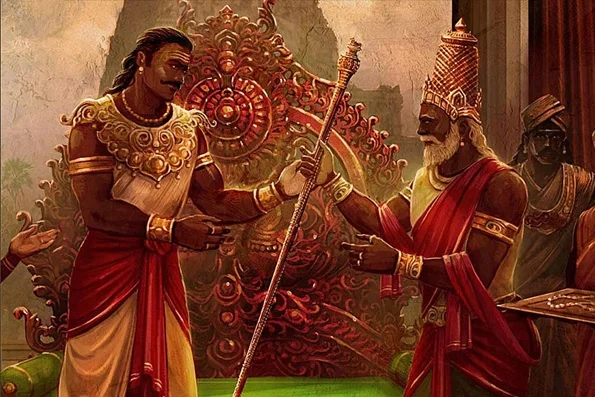
What is Sengol?
- Sengol is a royal sceptre associated with the Tamil tradition. The word ‘Sengol’ is considered to be related to the Tamil word ‘Semmai’, which refers to righteousness, justice, and impartiality.
- In Tamil political and literary traditions, the Sengol has been regarded not merely as a symbol of authority but also as a symbol of the ruler’s just governance and responsibility towards the people.
- Its concept is also associated with ‘Kodungol’, which refers to unjust or tyrannical rule.
Significance of Sengol in Tamil Tradition
- Tamil literature associates the concept of just governance with the Sengol.
- The Tirukkural contains a chapter titled ‘Sengonmai’, meaning ‘Right Sceptre’, which emphasises the importance of a ruler governing justly.
- Similarly, Tamil literary works such as Silappadikaram also refer to the concepts of justice and kingship.
- Thus, in Tamil tradition, the Sengol has been viewed both as a physical sceptre and as an ideal of just governance.
The 1947 Event of Sengol Being Presented to Nehru
- On 14 August 1947, on the eve of independence, representatives associated with Thiruvavaduthurai Adheenam presented a Sengol to Jawaharlal Nehru.
- According to available accounts, it was approximately five feet long, made of silver with a gold coating, and had a Nandi figure at the top.
- Representatives associated with the Adheenam presented it to Nehru along with religious rituals and Thevaram hymns.
- It has also been stated that C. Rajagopalachari (Rajaji) suggested such a symbolic ceremony.
- There is disagreement over the interpretation of documentary evidence regarding whether it was formally regarded in 1947 as a symbol of the transfer of power from British rule to Indian rule.
Controversy Over the ‘Transfer of Power’ Claim
- The Union Government has described the Sengol as a symbol of the transfer of power in 1947. Details associated with the Ministry of Culture have also presented it as a symbol of the transfer of power from colonial rule to the independent Indian state.
- On the other hand, some historians have questioned this interpretation.
- Historian Rajmohan Gandhi has stated that the private letters, documents, and autobiographical material of Jawaharlal Nehru or C. Rajagopalachari do not provide clear evidence presenting the Sengol as a formal symbol of the transfer of power.
- Similarly, available contemporary news reports mention the event of the Sengol being presented to Nehru, but do not clearly describe it as a formal symbol of the transfer of power from British authority to Indian authority.
Therefore, two things need to be understood separately:
- First, there is evidence of the Sengol being presented to Nehru in 1947.
- Second, whether the event was formally regarded at that time as a symbol of the ‘transfer of power’ remains a matter of historical debate.
Installation of Sengol in the New Parliament Building in 2023
- On 28 May 2023, the Sengol was installed in the new Parliament building during its inauguration.
- The Union Government presented it as a symbol of just governance, accountability, and the ethical use of power in Indian tradition.
- This brought the Sengol back into national discussion and led to renewed debate over its historical significance and the interpretation of the 1947 event.
Mention of Sengol in the NCERT Textbook
- The new Class 9 Social Science textbook links the Sengol with the cultural concept of governance and good governance.
- According to the book, the use of the Sengol as a symbol of just governance is associated with a more than thousand-year-old Chola tradition. It also mentions the presentation of the Sengol to Nehru in 1947 and its installation in the new Parliament building in 2023.
- This mention is significant because the textbook gives space to a historical interpretation of the Sengol that has been questioned by some historians.
National Motto and Indian Tradition
- In the same chapter, NCERT links India’s national motto ‘Satyameva Jayate’ to the Mundaka Upanishad.
- ‘Satyameva Jayate’ means ‘Truth alone triumphs.’
- The book also mentions the Supreme Court’s motto ‘Yato Dharmastato Jayaḥ’, meaning ‘Where there is Dharma/justice, there is victory.’ It is associated with the tradition of the Mahabharata.
Concept of Ram Rajya
- The book also mentions the concept of ‘Ram Rajya’ used by Mahatma Gandhi.
- It associates the concept with characteristics such as morality, transparency, compassion, public welfare, and accountable governance.
- In this context, Ramayana and Ramcharitmanas are presented as examples within Indian traditions of ideal governance and collective life.
Viewing Governance as a ‘Sacred Responsibility’
- According to the NCERT book, from the Vedic period to the Ramayana and Mahabharata, Indian traditions viewed governance not merely as a means of acquiring power but as a ‘sacred responsibility.’
- The book also states that colonial powers imposed their models of governance on Indian societies, and many colonial institutions continued even after independence.
Traditions Associated with Kings and Deities
The book’s ‘Resistance and Resilience’ chapter also mentions traditional beliefs according to which some kings received swords from deities to resist invasions.
In this context:
- The book mentions the traditional belief that Annamaraja, the ruler of Bastar, received a sword from Manikya Devi/Danteshwari.
- A tradition associated with Kumara Kampana of Vijayanagara mentions a sword given by a goddess.
- In the context of Chhatrapati Shivaji Maharaj, the book also mentions the traditional belief that he received a sword from Tulja Bhavani.
These events are presented in the textbook as traditional beliefs.
Conclusion
- The Sengol represents an important link between Indian history, Tamil cultural traditions, and modern concepts of governance.
- Through the Sengol, ideas such as just governance, accountability of the ruler, and the ethical use of power come to the forefront.
Frequently Asked Questions (FAQs)
1. What is Sengol?
Answer :- Sengol is a royal sceptre associated with the Tamil tradition. It is considered a symbol of justice, righteous governance, and the ruler’s responsibility towards the people.
2. What does the word ‘Sengol’ mean?
Answer :- The term ‘Sengol’ is associated with the Tamil concept of Semmai, which refers to righteousness, justice, and impartiality.
|




 Contact Us
  New Batch : 9555124124/ 7428085757
  Tech Support : 9555124124/ 7428085757