Why in News?
- The Union Cabinet has approved the Prime Minister Developing Harmony and Accelerating Renewable Energy Access (PM DHARA) Scheme with a total outlay of ₹1,86,405 crore.
- The scheme aims to strengthen India’s renewable energy transmission and storage infrastructure and will be implemented by State Transmission Utilities (STUs).
- PM DHARA is designed to address transmission challenges arising from the increasing share of variable renewable energy sources such as solar and wind power.
What is the PM DHARA Scheme?
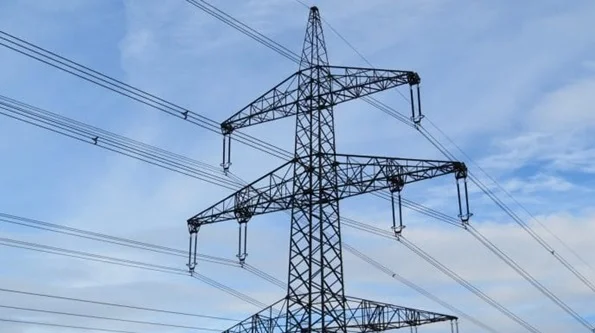
- The PM DHARA Scheme is a central initiative to expand and upgrade the electricity transmission network in states with significant renewable energy potential.
- The scheme will help transmit renewable electricity from generation centres to consumption centres and improve the ability of the power grid to manage fluctuations in renewable power generation.
- The scheme is scheduled to be completed by 2033.
Key Features
- Total Outlay: ₹1,86,405 crore
- Implementation: State Transmission Utilities (STUs)
- Renewable Energy Transmission Target: 135 GW
- Battery Energy Storage Systems (BESS): 50 GWh
- Completion: 2033
- Of the total allocation, around ₹1,36,378 crore will be used for developing and upgrading transmission infrastructure in states, while ₹50,000 crore will support Battery Energy Storage Systems.
- The Central Government will provide around ₹54,000 crore and also offset inter-state transmission charges to reduce the financial burden on consumers.
How will PM DHARA Strengthen the Power Grid?
- Renewable energy sources such as solar and wind are variable in nature. Solar power is generated mainly during the daytime, while wind generation can vary depending on weather and seasonal conditions.
- This variation can create challenges for maintaining grid stability.
PM DHARA will address these challenges through:
1. New Transmission Lines
- The scheme will develop new greenfield transmission lines through a Tariff-Based Competitive Bidding (TBCB) process.
- Under this model, selected private entities can build, own, operate and maintain transmission infrastructure.
2. Upgradation of Existing Infrastructure
- Existing:
- Power transmission lines
- Substations
- Transmission towers will be upgraded to increase their capacity and improve grid efficiency.
- This work will be carried out on a cost-plus basis, under which the state utility undertakes the work and receives the actual project cost along with an assured profit margin.
3. Battery Energy Storage
- The scheme provides for 50 GWh of Battery Energy Storage Systems (BESS).
- Energy storage can help store electricity when renewable generation is high and supply it when generation falls, thereby improving grid stability.
Why is PM DHARA Important?
- India is rapidly expanding its renewable energy capacity as part of its clean-energy transition.
- The government aims to achieve 500 GW of installed non-fossil fuel-based electricity capacity by 2030. As renewable capacity expands, adequate transmission infrastructure is necessary to evacuate and deliver this electricity.
- Transmission constraints have already affected renewable energy generation. A May 2026 Ember report estimated that India lost around 300 GWh of renewable electricity in the first quarter of 2026 due to transmission constraints.
- Therefore, strengthening transmission infrastructure is important for making better use of India’s growing renewable energy capacity.
PM DHARA and India’s Renewable Energy Goals
PM DHARA will support India’s renewable energy transition by:
- Expanding renewable energy transmission capacity.
- Integrating more solar and wind power into the national grid.
- Improving grid stability through energy storage.
- Reducing renewable energy curtailment caused by transmission constraints.
- Strengthening state-level transmission infrastructure.
- Supporting India’s target of 500 GW non-fossil fuel capacity by 2030.
Institutional Framework
The implementation of PM DHARA will involve multiple stakeholders, including:
- Ministry of New and Renewable Energy (MNRE)
- Ministry of Power
- Power Grid Corporation of India Limited (POWERGRID)
- State Governments
- State Transmission Utilities (STUs)
Challenges
- India’s renewable energy expansion faces several transmission-related challenges:
- Mismatch between generation and consumption: Renewable energy is often generated in resource-rich regions, while major demand centres may be located elsewhere.
- Variability of renewable energy: Solar and wind generation changes according to time, weather and seasons.
- Transmission constraints: Insufficient transmission capacity can prevent renewable electricity from reaching the grid or consumers.
- Need for energy storage: Large-scale storage is required to balance fluctuations in renewable generation.
Conclusion
The PM DHARA Scheme seeks to create a stronger and more flexible electricity transmission system capable of supporting India’s rapidly expanding renewable energy capacity. By combining new transmission infrastructure, upgradation of existing networks and large-scale battery storage, the scheme aims to improve renewable energy integration and strengthen India’s power grid.
Prelims Practice Question
With reference to the PM DHARA Scheme, consider the following statements:
- It aims to strengthen renewable energy transmission infrastructure in India.
- It includes the deployment of Battery Energy Storage Systems (BESS).
- It aims to transmit 135 GW of renewable energy.
- It will be implemented exclusively by the Central Government.
Which of the statements given above are correct?
A. 1, 2 and 3 only
B. 1 and 4 only
C. 2 and 3 only
D. 1, 2, 3 and 4
Mains Practice Question
Q. With the increasing share of solar and wind energy in India’s power mix, examine the importance of strengthening transmission infrastructure and energy storage systems. Discuss how schemes such as PM DHARA can address these challenges.
|
FAQs
Q1. What is the PM DHARA Scheme?
PM DHARA is a government scheme aimed at strengthening renewable energy transmission and energy storage infrastructure across India.
Q2. What is the full form of PM DHARA?
PM DHARA stands for Prime Minister Developing Harmony and Accelerating Renewable Energy Access.
Q3. What is the total outlay of the PM DHARA Scheme?
The scheme has a total outlay of ₹1,86,405 crore.
Q4. What is the renewable energy transmission target under PM DHARA?
The scheme aims to facilitate the transmission of 135 GW of renewable energy.
Q5. How much Battery Energy Storage System (BESS) capacity is planned?
The scheme provides for 50 GWh of Battery Energy Storage Systems (BESS).
|






 Contact Us
  New Batch : 9555124124/ 7428085757
  Tech Support : 9555124124/ 7428085757