New
Hindi Medium: (Delhi) - GS Foundation (P+M) : 21st Sept. 2026, 11:30 AM Hindi Medium: (Prayagraj) - GS Foundation (P+M) : 22nd Sept. 2026, 8:00 AM English Medium: (Delhi) - GS Foundation (P+M) : 6th Aug 2026 English Medium: (Prayagraj) - GS Foundation (P+M) : 19th Aug 2026, 11:00 AM Hindi Medium: (Delhi) - GS Foundation (P+M) : 21st Sept. 2026, 11:30 AM Hindi Medium: (Prayagraj) - GS Foundation (P+M) : 22nd Sept. 2026, 8:00 AM English Medium: (Delhi) - GS Foundation (P+M) : 6th Aug 2026 English Medium: (Prayagraj) - GS Foundation (P+M) : 19th Aug 2026, 11:00 AM

Current Affairs for 02 September 2026

World Coconut Day: Theme, History, APCC, ICC, Health Benefits, Economic Significance and Environmental Impact

Why in News?

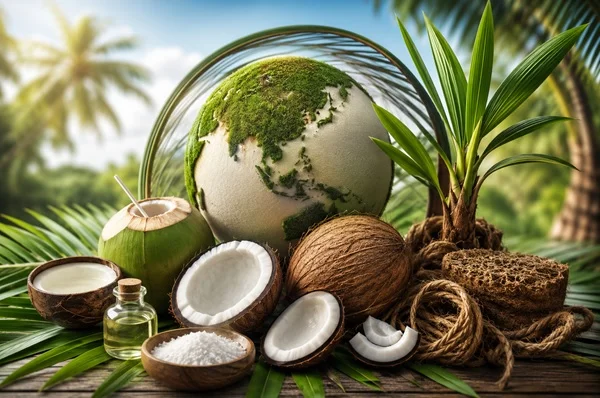
World Coconut Day is observed annually on 2 September. The day commemorates the establishment of the organisation that is today called the International Coconut Community (ICC) and seeks to increase awareness about the contribution of coconut cultivation and coconut-based industries to livelihoods and sustainable development. 
Facts to Remember

Fact

Details

World Coconut Day

2 September

Theme

Coconuts in Times of Uncertainty: Securing Food, Energy, and Livelihoods

Observed since

2009

Historical organisation

Asian Coconut Community (ACC)

Established

2 September 1969

Renamed APCC

1975

Present organisation

International Coconut Community (ICC)

Nature

Intergovernmental organisation

Associated UN body

UN-ESCAP

ICC Secretariat

Jakarta, Indonesia

India

Member country

Current ICC membership

21 countries

ICC members' global share

Over 90% of coconut production and exports

History of World Coconut Day

  • The Asian Coconut Community (ACC) was established on 2 September 1969 under the aegis of UN-ESCAP. In 1975, it became known as the Asian and Pacific Coconut Community (APCC).
  •  Later, reflecting its expanding geographical membership, the organisation was renamed the International Coconut Community (ICC).
  • Therefore, 2 September was chosen for World Coconut Day to commemorate the establishment of this intergovernmental coconut organisation.

1969

Asian Coconut Community (ACC) established

1975

Renamed Asian and Pacific Coconut Community (APCC)

2009

World Coconut Day began to be observed annually

2018

APCC adopted the name International Coconut Community (ICC)

What is APCC?

An intergovernmental organisation of coconut-producing countries established under the aegis of UN-ESCAP. It was created to promote cooperation among coconut-producing countries and improve the development of their coconut industries.

Established

2 September 1969

Original name

Asian Coconut Community (ACC)

Renamed

Asian and Pacific Coconut Community (APCC) in 1975

Nature

Intergovernmental organisation

Established under

UN-ESCAP

Headquarters/Secretariat

Jakarta, Indonesia

Present name

International Coconut Community (ICC)

International Coconut Community (ICC)

  • An intergovernmental organisation bringing together coconut-producing countries for cooperation in production, research, processing, trade, technology and sustainable development.
  • Its Secretariat is located in Jakarta, Indonesia, and the organisation is headed by a Director General.
  • It currently has 21 coconut-producing member countries, which together account for more than 90% of global coconut production and exports of coconut products.
  • The current members are from Asia (India, Indonesia, Malaysia, Philippines, Sri Lanka, Thailand, Vietnam and Timor-Leste), Pacific (Federated States of Micronesia, Fiji, Kiribati, Marshall Islands, Papua New Guinea, Samoa, Solomon Islands, Tonga and Vanuatu) and other members are from Jamaica, Kenya, Côte d’Ivoire and Guyana.

Objectives of ICC/APCC

  • Increase coconut productivity
  • Promote integrated coconut-based farming
  • Encourage sustainable and organic farming
  • Promote product diversification and value addition
  • Encourage research and market promotion
  • Facilitate coconut-related trade
  • Strengthen human-resource development and technology transfer.

India and the International Coconut Community

  • In India, coconut cultivation is particularly important in the southern and coastal regions. Major coconut-growing areas include Kerala, Karnataka, Tamil Nadu and Andhra Pradesh, along with several other coastal and island regions.
  • Coconut cultivation is closely connected with small and marginal farmers, rural employment, food processing, traditional industries and exports.

Why is Coconut Called the “Tree of Life”?

Coconut is often described as the “Tree of Life” because almost every part of the plant can be put to economic or household use.

Coconut water

Beverage

Kernel/meat

Food and coconut milk

Copra

Coconut oil

Husk

Coir and fibre products

Shell

Handicrafts, charcoal and activated carbon

Leaves

Thatching and handicrafts

Wood/trunk

Construction and furniture in suitable applications

Economic Significance of Coconut

  • According to the ICC, coconut is cultivated over 12.2 million hectares in more than 90 countries, producing around 67 billion nuts annually. The global export value of coconut products reached approximately US$19.61 billion in 2024.

Nutritional and Health Benefits of Coconut

  • Coconut Water: Provides fluids and naturally occurring electrolytes, making it a popular beverage, particularly in tropical regions.
  • Coconut Flesh: Fresh coconut meat provides dietary fat and fibre along with small amounts of various micronutrients.
  • Quick Source of Energy: Coconut products contain fats that can provide dietary energy. However, claims that ordinary coconut oil behaves exactly like purified medium-chain triglyceride (MCT) oil are misleading.
  • Coconut Oil: Coconut oil is widely used in cooking, traditional food preparations, cosmetics and personal-care products.

Environmental Importance of Coconut

  • Coconut-based farming systems can support diversified tropical agriculture by allowing compatible crops to be cultivated within coconut plantations.
  • Its by-products also have considerable potential for productive reuse. Coconut husk can be converted into coir, while shells can be used for products such as charcoal and activated carbon.
  • Greater utilisation of such by-products can reduce agricultural waste while creating additional income opportunities.

Prelims MCQ

Q. With reference to World Coconut Day, which of the following statements is correct?

A. It is observed every year on 2 September.

B. The International Coconut Community is headquartered in India.

C. India is not a member of the International Coconut Community.

D. World Coconut Day was first observed in 1969.

Mains Practice Question 

Q. “Coconut is not merely an agricultural crop but an important source of rural livelihoods, value addition and sustainable agriculture.” Discuss the economic and environmental significance of the coconut sector in India.

FAQs

When is World Coconut Day observed?

World Coconut Day is observed every year on 2 September.

When World Coconut Day was first observed?

It has been observed annually since 2009.

What was the full form of APCC?

APCC stood for Asian and Pacific Coconut Community.

What is the present name of APCC?

It is now known as the International Coconut Community (ICC).

What is the scientific name of coconut?

The scientific name of coconut is Cocos nucifera.

UPI in Uzbekistan: NIPL-NIPC Partnership, UZQR, UPI and India’s Global Digital Payment Expansion

Prelims: UPI, NPCI, NPCI International Payments Limited, UZQR, HUMO, NIPC, RBI, Central Bank of Uzbekistan, Digital Public Infrastructure and cross-border digital payments.
Mains: GS Paper II: India-Uzbekistan relations, India-Central Asia relations, Digital diplomacy and International technological cooperation
GS Paper III: Digital economy, Financial technology, Digital Public Infrastructure, Financial inclusion, Payment and settlement systems, Cyber security, Innovation and technology

Why in news?

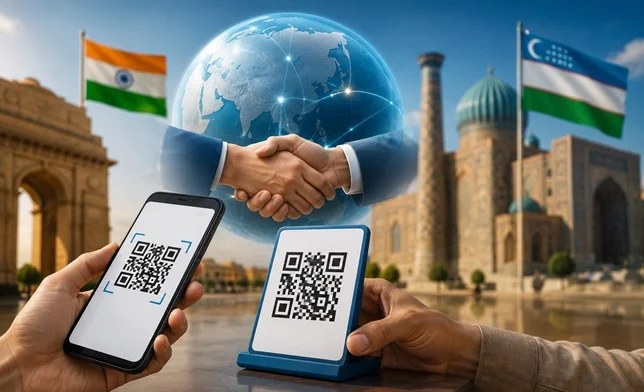
On 30 August 2026, NPCI International Payments Limited signed a commercial agreement with Uzbekistan’s National Interbank Processing Centre JSC (NIPC) to enable UPI-based merchant payments in Uzbekistan.
Key Facts 

Particular

Details

Agreement

NIPL–NIPC Commercial Agreement

Indian organisation

NPCI International Payments Ltd. (NIPL)

Parent organisation

NPCI

Uzbekistan partner

National Interbank Processing Centre JSC (NIPC)

Uzbekistan payment system

HUMO

National QR infrastructure

UZQR

Type of transactions

Person-to-Merchant (P2M)

Indian regulator

Reserve Bank of India (RBI)

Uzbekistan regulator

Central Bank of Uzbekistan (CBU)

Main beneficiaries

Indian tourists, business travellers and students

Payment source

Indian bank accounts through UPI-enabled applications

Key Highlights of the India-Uzbekistan

UPI Agreement

Key Highlights of the India-Uzbekistan UPI Agreement

  • UPI Payments through UZQR: Indian travellers will be able to scan UZQR codes using compatible UPI-enabled applications and make payments to merchants in Uzbekistan.
  • Person-to-Merchant Payments: The arrangement primarily facilitates Person-to-Merchant (P2M) payments. This means an Indian user can pay participating merchants in Uzbekistan directly from an Indian bank account through the UPI ecosystem.
  • Wide Merchant Acceptance: UZQR is Uzbekistan’s national interoperable QR infrastructure mandated by the Central Bank of Uzbekistan. Integration with this infrastructure is intended to provide UPI users with various sectors such as retail, hospitality, tourism and other service merchants.
  • Reduced Dependence on Cash and Cards: Indian travellers will have an additional digital-payment option instead of relying entirely on cash or international payment cards.

How Will UPI Payments in Uzbekistan Work?

  • Indian Traveller UPI-enabled Application Scans Uzbekistan’s UZQR Payment request processed through connected payment infrastructure Amount debited from Indian bank account Merchant in Uzbekistan receives payment

What is UZQR?

  • UZQR is Uzbekistan’s national interoperable QR-code infrastructure for digital payments. Instead of merchants depending on multiple isolated QR-code networks, an interoperable QR infrastructure seeks to provide a common framework through which compatible payment systems can interact.
  • Under the NIPL-NIPC partnership, Indian UPI applications are being connected with this national QR ecosystem for merchant acceptance.

What is HUMO?

  • HUMO is a national payment system of Uzbekistan operated by the National Interbank Processing Centre JSC (NIPC).
  • Under the new arrangement, HUMO has been designated as NIPL’s authorised partner for cross-border merchant acceptance.
  • Its role is therefore crucial in connecting India’s UPI ecosystem with Uzbekistan’s domestic merchant-payment infrastructure.

What is Unified Payments Interface (UPI)?

  • An instant digital-payment system developed by the National Payments Corporation of India (NPCI). It enables users to transfer money between participating bank accounts through mobile applications.
  • UPI was launched in 2016 and has subsequently become one of the central pillars of India’s digital-payment ecosystem.
  • Important features are:
    • Instant bank-to-bank payments
    • Available round the clock
    • Supports Person-to-Person (P2P) and Person-to-Merchant (P2M) payments
    • QR-code-based merchant payments
    • Multiple bank accounts can be accessed through compatible applications
    • Designed for fast and convenient digital transactions

What is National Payments Corporation of India (NPCI)?

  • An umbrella organisation for operating retail payment and settlement systems in India. It was established as an initiative of the Reserve Bank of India (RBI) and the Indian Banks’ Association (IBA) under the provisions of the Payment and Settlement Systems Act, 2007.
  • Important NPCI-associated payment products and systems include UPI, RuPay, Immediate Payment Service (IMPS), Bharat Bill Payment System, National Automated Clearing House (NACH) and Aadhaar Enabled Payment System (AePS). 

International Expansion of UPI

  • According to the Ministry of Finance announcement, UPI was already accepted in 10 countries (Singapore, United Arab Emirates, France, Mauritius, Nepal, Bhutan, Qatar, Sri Lanka, Cambodia, and Greece) before the Uzbekistan arrangement. The Uzbekistan partnership further expands the international footprint of the UPI ecosystem.

Why is the Uzbekistan Partnership Important?

  • Expansion of India’s Digital Public Infrastructure: India has increasingly promoted its digital platforms and payment technologies as part of its broader Digital Public Infrastructure (DPI) approach. The Uzbekistan partnership demonstrates how Indian digital-payment technology can interact with another country’s domestic payment infrastructure.
  • Benefits for Indian Students: Indian students studying or staying in Uzbekistan can potentially benefit from familiar UPI-based merchant payments.
  • Promotion of Tourism: Convenient digital-payment facilities can improve the travel experience. A tourist who can use a familiar payment application may face fewer difficulties in paying for hotels, restaurants, retail purchases and services.
  • Strengthening India-Uzbekistan Relations: India and Uzbekistan also decided to elevate their relationship to a Comprehensive Strategic Partnership, alongside cooperation in areas such as tourism, minerals, education, environment, culture and economic engagement.

Strategic Significance for India

  • Digital Diplomacy: UPI is increasingly emerging as an instrument of India’s digital diplomacy. By partnering with other countries, India can demonstrate its capabilities in developing scalable and interoperable digital-payment systems.
  • FinTech Leadership: The internationalisation of UPI strengthens India’s position in the global FinTech and digital-payments ecosystem.
  • UPI and Digital Public Infrastructure: India’s DPI ecosystem broadly includes platforms supporting Digital Identity (Aadhaar), Digital Payments (UPI), Digital Documents (DigiLocker) and Consent-based financial data sharing (Account Aggregator framework). 

Challenges in Internationalising UPI

  • Regulatory Differences: Every country has its own banking, payment, foreign-exchange and data-protection regulations. Cross-border payment systems therefore require regulatory coordination.
  • Currency Conversion: Cross-border payments involve conversion between currencies, making exchange-rate transparency and settlement mechanisms important.
  • Cyber security: As digital-payment networks expand internationally, protection against fraud, cyber-attacks and unauthorised transactions becomes increasingly important.
  • Consumer Protection: Clear mechanisms are needed for failed transactions, refunds, disputes, fraud reporting and grievance redressal.
  • Merchant and Consumer Awareness: The success of cross-border UPI acceptance ultimately depends on widespread merchant acceptance and awareness among travellers.

Prelims MCQ

Q. With reference to the recent expansion of UPI in Uzbekistan, consider the following statements:

  1. NIPL has partnered with Uzbekistan’s NIPC.
  2. Indian travellers will be able to make UPI payments by scanning Uzbekistan’s UZQR.
  3. HUMO is a national payment system of Uzbekistan.

Which of the statements given above are correct?

A. 1 and 2 only

B. 2 and 3 only

C. 1 and 3 only

D. 1, 2 and 3

Mains Practice Question 

Q. “The international expansion of UPI is transforming India’s Digital Public Infrastructure into an instrument of economic and digital diplomacy.” Discuss with reference to the growing global acceptance of UPI. 

FAQs

What is the recent NIPL–NIPC agreement?

It is an agreement to enable UPI-based merchant payments in Uzbekistan through UZQR.

What is UZQR?

UZQR is Uzbekistan’s national interoperable QR-code payment infrastructure.

What is HUMO?

HUMO is a national payment system of Uzbekistan, operated by the NIPC.

What is NIPL?

 NIPL is the international arm of NPCI and promotes Indian payment solutions such as UPI and RuPay globally.

Which regulators approved the arrangement?

The arrangement received regulatory approvals from the RBI and the Central Bank of Uzbekistan.

AstroRad Vest: Protection from Space Radiation

What is AstroRad?

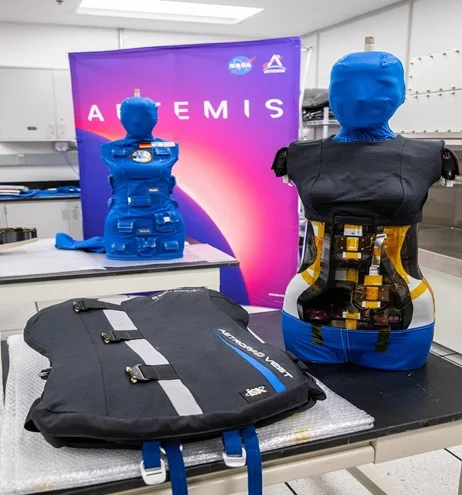
AstroRad is a wearable radiation-shielding vest developed for astronauts by the Israeli company StemRad, in collaboration with Lockheed Martin and space agencies. Its primary purpose is to protect astronauts travelling beyond Earth’s magnetic field from solar radiation.
Key Features of AstroRad

  • Main Objective: Protects astronauts from harmful solar particles and radiation. 
  • Targeted Areas: Provides greater protection to sensitive areas such as the chest, abdomen, and pelvis
  • Sensitive Tissues: Prioritises protection of organs and tissues such as the lungs, bone marrow, colon, stomach, breasts, and ovaries
  • Special Material: Uses a hydrogen-rich polymer that can effectively reduce exposure to high-energy particles and limit secondary radiation. 
  • Smart Shielding: Uses protective layers of varying thickness to provide maximum protection with minimum weight
  • Scale-like Structure: Individual shielding elements are arranged in a scale-like structure, allowing astronauts to move comfortably. 
  • Weight Reduction: Instead of heavily shielding the entire spacecraft, protection is concentrated around the body's most vulnerable areas. 

Testing by NASA

  • 2019–2020: AstroRad was tested by astronauts aboard the International Space Station (ISS)
  • 2022: It was tested during NASA’s Artemis I mission using two human-body-like mannequins, Helga and Zohar

Studies based on data from Artemis I found that AstroRad:

  • Could reduce effective radiation exposure by about 60% during a solar storm similar to the 1972 event
  • Could reduce radiation exposure by about 40% during a solar storm similar to the 1989 event

Significance

  • AstroRad could enhance astronaut safety during future Moon and Mars missions
  • During solar storms, it may allow astronauts to continue certain activities instead of having to remain completely inside heavily shielded shelters.

Limitation

  • AstroRad is primarily designed to provide protection against Solar Particle Events (SPEs)
  • Protection against Galactic Cosmic Rays (GCRs), which originate outside the Solar System, remains a major challenge.

Frequently Asked Questions (FAQs): AstroRad Vest

1. What is AstroRad?

Answer:- AstroRad is a wearable radiation-shielding vest designed to protect astronauts from harmful space radiation, particularly solar particle events.

2. Who developed the AstroRad Vest?

Answer:-  It was developed by the Israeli company StemRad in collaboration with Lockheed Martin and space agencies.

3. What is the main purpose of AstroRad?

Answer :-Its main purpose is to reduce astronauts’ exposure to dangerous solar radiation during missions beyond Earth’s protective magnetic field.

Ramon Magsaysay Award 2026 Winners: Full List, Contributions and Awardees of India

Why in News?

  • The Ramon Magsaysay Award Foundation (RMAF) has announced the three recipients of the 2026 Ramon Magsaysay Award Tommy Koh , Bo Kyi  and Runa Khan. 
  • The awardees were announced on 31 August 2026. They will formally receive the award on 15 November 2026 at the Metropolitan Theater in Manila, Philippines. The award includes a medallion, an inscribed certificate and a cash prize.

Key Facts

Particular

Details

Award

Ramon Magsaysay Award

Established

1957

First Awards

1958

Presented

Ramon Magsaysay

Named After

Ramon Magsaysay (7th President of the Philippines)

Administered by

Ramon Magsaysay Award Foundation

Headquarters/Ceremony Country

Philippines

Popularly Known As

“Asia's Nobel Prize”

2026 Awardees

Tommy Koh, Bo Kyi and Runa Khan

  1. ceremony Location

15 November 2026, Manila

2026 Winners at a Glance

Winner

Country

Major Contribution

Tommy Koh

Singapore

International diplomacy, international law and UNCLOS

Bo Kyi

Myanmar

Democracy, political prisoners and human rights

Runa Khan

Bangladesh

Humanitarian development, healthcare and climate resilience

About the Ramon Magsaysay Award

  • The Ramon Magsaysay Award is one of Asia's most prestigious honours for public service and is widely described as “Asia's Nobel Prize.”
  • It recognises individuals and organisations that demonstrate “greatness of spirit” through selfless service to the peoples of Asia.
  • Ramon Magsaysay, after whom the award is named, was President of the Philippines from 1953 until his death in a plane crash in 1957.

Who are the 2026 Ramon Magsaysay Award Winners?

Tommy Koh (Singapore)

    • Tommy Koh, 88, is a prominent Singaporean diplomat, lawyer and legal scholar. The Foundation has recognised him for decades of work advancing international cooperation, dialogue, justice and peaceful resolution of disputes
    • He served as Singapore's Permanent Representative to the United Nations during two periods (1968-1971 and 1974-1984). 
    • He served as President of the Third United Nations Conference on the Law of the Sea and played an important role in bringing the negotiations to a successful conclusion. The convention was adopted in 1982. 
    • Koh also chaired negotiations connected with the 1992 UN Earth Summit, chaired the High-Level Task Force that drafted the ASEAN Charter in 2007 and contributed extensively to academia, public policy and international law.

Bo Kyi (Myanmar)

    • Bo Kyi, 61, is a Myanmar human-rights activist, former political prisoner and prominent campaigner for democracy.
    • The Foundation has recognised his sustained work for truth, accountability, justice, political prisoners and human dignity in Myanmar.
    • In 2000, Bo Kyi and other former political prisoners established the Assistance Association for Political Prisoners (AAPP). The organisation works to document political imprisonment and human-rights violations, support political prisoners and their families, record abuses under military rule and bring international attention to political detainees in Myanmar. 
    • Bo Kyi has also advocated for the release of political prisoners, including former Myanmar leader Aung San Suu Kyi.

Runa Khan (Bangladesh)

    • Runa Khan, 67, is a Bangladeshi social entrepreneur and humanitarian.
    • She has been recognised for her work among some of Bangladesh's poorest and most geographically isolated communities, particularly those affected by river erosion, poverty, disasters and climate change.
    • Khan founded Friendship in 2002 to support remote and underserved communities. Its early work involved using a hospital ship to deliver healthcare to people living on remote sandbar islands, locally known as chars, along the Jamuna River.

India and the Ramon Magsaysay Award

  • The Ramon Magsaysay Award has a strong connection with India because several prominent Indians and Indian organisations have received the honour over the decades. Well-known Indian recipients include figures such as Vinoba Bhave, Mother Teresa, Satyajit Ray, M.S. Subbulakshmi, Jayaprakash Narayan, Verghese Kurien, Arvind Kejriwal, Sandeep Pandey, Bezwada Wilson, Ravish Kumar and Sonam Wangchuk, among others.
  • In 2025, the Indian non-profit Foundation to Educate Girls Globally (Educate Girls) was among the Ramon Magsaysay Award recipients.

Prelims MCQ

Q. Who among the following is a recipient of the Ramon Magsaysay Award 2026?

A. Tommy Koh

B. António Guterres

C. José Ramos-Horta

D. Muhammad Yunus

Mains Practice Question 

Q. Discuss the importance of UNCLOS in maintaining a rules-based maritime order in the Indo-Pacific. In this context, highlight the contribution of Singaporean diplomat Tommy Koh.

FAQs

Who won the Ramon Magsaysay Award in 2026?

The 2026 awardees are Tommy Koh of Singapore, Runa Khan of Bangladesh and Bo Kyi of Myanmar.

What is the Ramon Magsaysay Award?

It is a prestigious Asian award recognising individuals and organisations demonstrating transformative leadership and selfless service to the peoples of Asia.

Why is it called “Asia's Nobel Prize”?

The Ramon Magsaysay Award is widely referred to by this popular description because of its prestige and recognition of outstanding public service and leadership in Asia.

When was the Ramon Magsaysay Award established?

The Ramon Magsaysay Award Foundation was established in 1957, while the first awards were presented in 1958.

Who was Ramon Magsaysay?

Ramon Magsaysay was the seventh President of the Philippines, serving from 1953 until his death in 1957.

Ghepan Glacial Lake: Rising GLOF Risk in Himachal Pradesh

Prelims: Geography | Environment | Glaciers | Disaster Management
Mains: GS-I – Physical Geography | GS-III – Environment & Disaster Management

Why in News?

An Early Warning System (EWS) is scheduled to be installed at Ghepan Lake in September 2026. The system is expected to continuously monitor conditions around the lake and provide timely alerts in case indicators point towards a possible GLOF.
About Ghepan Glacial Lake

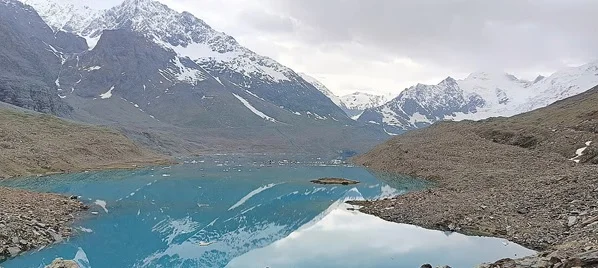
  • Ghepan Glacial Lake, also known as Ghepang Ghat Glacial Lake, is a high-altitude glacial lake located in the Lahaul region of Lahaul-Spiti district, Himachal Pradesh.
  • The lake lies at an elevation of approximately 4,068–4,070 metres above mean sea level in the upper reaches of the Chandra sub-basin of the Indus river system.
  • It is located above Sissu village, one of the important settlements in the Lahaul Valley.
  • The lake is associated with Ghepan or Raja Ghepan, the revered protector deity of the Lahaul Valley. This gives the lake significance not only from a geographical and environmental perspective but also from the point of view of local culture.
  • The turquoise-coloured lake, surrounded by glaciers and high Himalayan terrain, has also emerged as a trekking destination.

Why is Ghepan Lake Becoming a Concern?

  • The major concern is the rapid expansion of the glacial lake as the glacier retreats.
  • An official Himachal Pradesh disaster-management assessment using satellite imagery found that the lake's water-spread area increased from approximately 36.49 hectares in 1989 to 101.30 hectares in 2022.
  • This represents an increase of around 178%.
  • Such rapid expansion is important because a larger lake can store a much greater volume of water behind its natural moraine barrier.
  • As glaciers retreat under warming conditions, meltwater can accumulate in depressions created near the glacier. Many such lakes are held back by relatively loose accumulations of rocks, sediments and glacial debris known as moraines.

Unlike engineered dams, moraine barriers can be unstable and vulnerable to sudden failure.

How Can a GLOF Occur at Ghepan Lake?

  • Several mechanisms can potentially destabilise a high-altitude glacial lake.
  • An ice avalanche, rockfall or landslide entering the lake can generate a large displacement wave. This wave may overtop the moraine barrier holding the lake.
  • Continuous glacier melting can also increase the volume of water stored in the lake and place additional pressure on its natural barrier.
  • Extreme rainfall, slope instability, earthquakes and degradation of ice contained within moraine structures can further increase the possibility of failure.
  • In the case of Ghepan Lake, the surrounding slopes are susceptible to avalanches and mass movements. This makes monitoring particularly important.

Why Could a Ghepan GLOF Be Dangerous?

  • The geography downstream of Ghepan Lake increases the potential consequences of a sudden outburst.
  • Sissu village lies roughly 11 km downstream and around 1,000 metres below the lake.
  • The Sissu Nalla descends through steep Himalayan terrain before joining the Chandra River.
  • According to risk assessments, the steep gradient and narrow channel can contribute to greater flow depths and high-energy flood conditions during a possible GLOF.
  • Therefore, the concern is not simply the amount of water stored in the lake. The combination of high elevation, steep relief, narrow valleys and downstream settlements can amplify the destructive potential of an outburst.

Lessons from the Recent Nepal Himalayan Disaster

  • The recent catastrophic glacier-related flood affecting the Nepal-China Himalayan region has again demonstrated how quickly a cryospheric hazard can turn into a cascading disaster.
  • A glacier or ice-rock collapse can trigger debris movement, temporarily block rivers, create unstable lakes and eventually generate destructive downstream flooding.
  • Such events can damage roads, bridges, hydropower projects, electricity networks and communication infrastructure while simultaneously making rescue operations more difficult.
  • The important lesson for India is therefore to shift disaster management from post-disaster response to pre-disaster risk reduction.
  • For vulnerable Himalayan lakes such as Ghepan, continuous monitoring and early warning are essential.

Early Warning System at Ghepan Lake

  • The planned Early Warning System represents an important move towards technology-based disaster preparedness.
  • Instead of depending entirely on occasional field visits, an EWS can help authorities continuously assess changing conditions and issue alerts when predefined danger indicators are detected.

Monitoring of vulnerable glacial lakes can involve:

  • Satellite Remote Sensing: To observe changes in lake area and surrounding glaciers.
  • Automatic Weather Stations: To monitor temperature, precipitation and other meteorological variables.
  • Water-Level Sensors: To identify abnormal changes in lake levels.
  • Cameras: To provide visual monitoring of the lake and surrounding slopes.
  • Communication Systems: To transmit warnings quickly to administrative authorities and downstream communities.

The ultimate objective should be to connect scientific monitoring with last-mile warning and evacuation systems.

Why the Western Himalayas are Vulnerable

  • The Western Himalayan region combines several physical conditions that increase disaster vulnerability.
  • The Himalayas are geologically young and tectonically active mountains characterised by steep slopes and fragile geological formations.
  • Climate change adds another layer of risk by influencing glaciers, snow cover, permafrost and extreme precipitation.
  • At the same time, roads, tunnels, hydropower projects, tourism facilities and settlements are increasingly concentrated within narrow river valleys.
  • Consequently, relatively localised high-altitude hazards can produce much wider downstream consequences.
  • This creates the possibility of a cascading Himalayan disaster, where one natural event triggers several interconnected failures.

Challenges in Managing GLOF Risk

  • The first major challenge is accessibility. Many vulnerable lakes are located thousands of metres above sea level in remote terrain, making installation and maintenance of instruments difficult.
  • Second, glacial environments are extremely dynamic. Lake size, glacier movement, moraine stability and surrounding slopes can change over relatively short periods.
  • Third, satellite monitoring cannot always provide continuous real-time information because of cloud cover, revisit intervals and other limitations.
  • Fourth, warning systems must ultimately reach downstream residents quickly. A technologically sophisticated monitoring system is of little use if the last-mile communication network fails.
  • Finally, Himalayan river systems frequently cross political boundaries. This makes transboundary hydrological and cryospheric data sharing increasingly important.

Way Forward

  • India should move towards a Himalayan Glacial Risk Management Framework rather than treating individual GLOFs as isolated disasters.
  • High-risk glacial lakes should be continuously classified and prioritised according to their probability of failure and potential downstream exposure.
  • Remote-sensing observations should be supplemented by field-based measurements wherever feasible.

Prelims MCQ

Q. Consider the following statements regarding Ghepan Glacial Lake:

  1. It is located in the Lahaul-Spiti district of Himachal Pradesh.
  2. Its drainage ultimately forms part of the Indus River system.
  3. Sissu Nalla emerging from the lake joins the Chandra River.

Which of the statements given above are correct?

(a) 1 and 2 only
(b) 2 and 3 only
(c) 1 and 3 only
(d) 1, 2 and 3

Mains Question

“The expansion of glacial lakes is transforming climate change into a major disaster-management challenge in the Indian Himalayan Region.” Critically examine with reference to Ghepan Glacial Lake.

Bihar and Jharkhand Sign MoU on Sone River Water Sharing

Prelims: Sone River, Ganga River System, Inter-State Water Sharing, Bihar–Jharkhand.
Mains – GS II: Cooperative Federalism, Centre-State Relations, Inter-State Water Disputes.
Mains – GS III: Water Resources, Irrigation and Water Management.
Keywords: Sone River, Bihar–Jharkhand MoU, Water Sharing, Cooperative Federalism, Irrigation, Drinking Water.

Why in News?

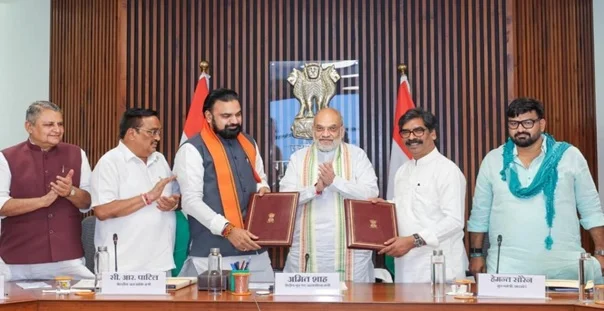
  • Bihar and Jharkhand signed a Memorandum of Understanding (MoU) on 31 August 2026 for sharing the waters of the Sone River.

Key Points

  • The agreement was signed by Bihar Chief Minister Samrat Choudhary and Jharkhand Chief Minister Hemant Soren
  • It was signed in New Delhi in the presence of Union Home Minister Amit Shah and Union Jal Shakti Minister C. R. Patil. 
  • According to the Union Home Ministry, the agreement resolves a long-pending water-sharing issue between the two states.

Key Highlights of the Agreement

  • Bihar and Jharkhand signed an MoU for sharing Sone River water. 
  • The agreement aims to ensure adequate water for irrigation and drinking purposes in both states. 
  • It is expected to benefit lakhs of farmers by improving irrigation facilities. 
  • Several districts of Bihar and Jharkhand are expected to benefit from improved water availability. 
  • The agreement seeks to resolve a long-pending water-sharing issue between the two states. 
  • It has been highlighted as an example of cooperative federalism, based on coordination between the Centre and states.

Areas Expected to Benefit

Bihar

The agreement will improve irrigation and drinking-water availability in Bhojpur, Buxar, Rohtas, Kaimur, Aurangabad, Arwal, Gaya and Patna districts, supporting agriculture and rural livelihoods.

Jharkhand

In Jharkhand, Palamu, Garhwa and adjoining areas are expected to benefit from improved water availability for irrigation and drinking purposes.

Significance of the Agreement

  • Resolves a Long-Pending Issue: Provides a negotiated solution to the water-sharing issue between Bihar and Jharkhand. 
  • Boosts Irrigation: Ensures better water availability for irrigation, benefiting lakhs of farmers in both states. 
  • Improves Drinking-Water Supply: Helps provide adequate drinking water to people in the beneficiary regions. 
  • Supports Rural Development: Better irrigation can increase agricultural productivity and strengthen rural livelihoods. 
  • Promotes Cooperative Federalism: Highlights cooperation between the Centre and states in resolving inter-state water issues through dialogue and consensus.

About Sone River

  • The Sone (Son) River is an important river of central and eastern India and a major right-bank tributary of the Ganga.
  • It originates near Amarkantak in Madhya Pradesh and flows through parts of central and eastern India before joining the Ganga in Bihar.
  • The river and its associated irrigation infrastructure have historically played an important role in supporting agriculture in parts of Bihar and adjoining regions.

Fourth Major Inter-State Water Agreement of 2026

The Bihar–Jharkhand Sone River MoU is the fourth major inter-state water agreement of 2026, reflecting efforts to resolve long-pending water-related issues through cooperation and consensus.

  • 16 June – Kishau Multipurpose Dam Project: Concerned states reached a consensus on the long-pending project. 
  • 29 June – Rajasthan–Haryana Agreement: An agreement was signed for the Yamuna Water Project. 
  • 7 July – Narmada Award States: Maharashtra, Gujarat, Rajasthan and Madhya Pradesh reached an agreement on pending payment-related issues. 
  • 31 August – Bihar–Jharkhand Agreement: An MoU was signed for sharing Sone River water. 

These agreements highlight the growing importance of inter-state coordination and cooperative federalism in water-resource management.

Inter-State Water Disputes in India

What is an Inter-State Water Dispute?

  • It arises when two or more states disagree over the sharing, use or control of an inter-state river's water
  • Disputes may involve water sharing, irrigation, drinking water, dams or release of river water

Constitutional Provisions

  • Entry 17, State List: Water and irrigation are primarily State subjects
  • Entry 56, Union List: Parliament can regulate and develop inter-state rivers and river valleys in the public interest. 
  • Article 262: Empowers Parliament to make laws for resolving inter-state river-water disputes

Important Laws

  • Inter-State River Water Disputes Act, 1956: Provides for Water Disputes Tribunals to adjudicate unresolved disputes. 
  • River Boards Act, 1956: Provides for River Boards for the regulation and development of inter-state rivers and river valleys

Who Handles Water Disputes?

  • The Ministry of Jal Shakti is the main Union ministry dealing with inter-state river-water matters. 
  • If negotiations fail, the Central Government can constitute a Water Disputes Tribunal under the 1956 Act.

Role of the Supreme Court

  • Under Article 262, Parliament can exclude the jurisdiction of the Supreme Court and other courts in inter-state river-water disputes. The Inter-State River Water Disputes Act, 1956 contains such a provision.

Conclusion

The Bihar–Jharkhand Sone River water-sharing MoU marks an important step in resolving a long-pending inter-state water issue. It will support irrigation, drinking-water availability and rural development in both states. The agreement also highlights the importance of cooperative federalism and inter-state coordination in managing India’s shared water resources.

Prelims Practice Question 

Q1. The recently signed Bihar–Jharkhand MoU is related to the sharing of water of which river?

A. Damodar
B. Sone
C. Kosi
D. Gandak

Mains Practice Questions

“The Bihar–Jharkhand Sone River water-sharing agreement is an example of cooperative federalism in water-resource management.” Discuss.

FAQs

Q1. What is the Bihar–Jharkhand Sone River MoU?

It is an agreement between Bihar and Jharkhand for sharing Sone River water for irrigation and drinking purposes.

Q2. When was the MoU signed?

It was signed on 31 August 2026.

Q3. Where does the Sone River originate?

The Sone River originates near Amarkantak in Madhya Pradesh.

Q4. Sone River is a tributary of which river?

It is a right-bank tributary of the Ganga River.

Q5. Which areas will benefit from the agreement?

It will benefit several districts of Bihar, including Bhojpur, Buxar, Rohtas and Kaimur, and areas such as Palamu and Garhwa in Jharkhand.

India’s GDP Grows 7.8% in Q1 FY 2026-27 Despite Global Headwinds

Prelims + Mains: GS Paper III – Indian Economy, Growth and Development, National Income

Why in News?

The Ministry of Statistics and Programme Implementation (MoSPI) released the Quarterly Estimates of Gross Domestic Product (GDP) for Q1 of FY 2026-27 on 31 August 2026.
Key Highlights of Q1 FY 2026-27

Indicator

Q1 FY 2026-27

Q1 FY 2025-26

Real GDP

₹81.36 lakh crore

₹75.46 lakh crore

Real GDP Growth

7.8%

6.9%

Nominal GDP

₹88.27 lakh crore

₹80.00 lakh crore

Nominal GDP Growth

10.3%

8.1%

Real GVA

₹73.82 lakh crore

₹68.21 lakh crore

Real GVA Growth

8.2%

Nominal GVA

₹80.53 lakh crore

₹72.24 lakh crore

Nominal GVA Growth

11.5%

Understanding GDP and GVA

  • Gross Domestic Product (GDP) represents the monetary value of all final goods and services produced within the domestic territory of a country during a specified period. It is one of the most widely used indicators for assessing the overall size and growth of an economy.
  • Gross Value Added (GVA) measures the value created by different producers and sectors after deducting intermediate consumption. While GDP provides the overall picture of economic activity, GVA helps understand which sectors are contributing to economic growth.

Their relationship can broadly be expressed as:

GDP = GVA + Taxes on Products – Subsidies on Products

Real GDP vs Nominal GDP

  • Real GDP is calculated at constant prices. By removing the effect of price changes, it provides a clearer picture of changes in the actual volume of economic production. This is why the headline economic growth rate is generally expressed in terms of Real GDP.
  • Nominal GDP, on the other hand, is calculated at current market prices. It reflects changes in both production and prices.

In Q1 FY 2026-27, India’s Real GDP grew by 7.8%, whereas Nominal GDP expanded by 10.3%.

Sectoral Performance of the Indian Economy

The latest data show that economic growth was not confined to a single segment. All three broad sectors recorded positive growth, although their performance differed considerably.

Primary Sector: Agriculture Provides Support

The primary sector grew by 2.9% at constant prices during Q1 FY 2026-27. The broad sector includes agriculture, livestock, forestry and fishing, along with mining and quarrying.

Within it, Agriculture and Allied activities recorded growth of 3.6%.

Agricultural growth has significance beyond its direct contribution to GVA because a large section of India’s population continues to depend on the rural economy. Better agricultural performance can strengthen rural incomes, consumption demand and food security.

However, the primary sector grew significantly slower than industry and services, highlighting the continuing structural differences in the economy.

Secondary Sector: Strong Industrial Momentum

  • The secondary sector grew by 8.6% at constant prices, indicating strong activity in manufacturing, construction, electricity, gas, water supply and other utility services.
  • Several high-frequency indicators support this trend. Cement production increased by 8.9%, finished steel consumption by 8.3%, and infrastructure and construction goods by 7.2%. The IIP electricity indicator recorded 9.3% growth.
  • An important development was the 15.2% growth in capital goods production. Capital goods are used to produce other goods and services, making their production an important indicator of investment and capacity creation in the economy.

Tertiary Sector: Major Driver of Growth

  • The tertiary sector grew by 10.0%, making it the fastest-growing broad sector during the quarter.
  • Services such as trade, hotels, transport, communication, financial services, real estate, IT, professional services, public administration and defence form part of this broad sector.
  • Particularly notable was the performance of Financial, Real Estate, IT and Professional Services, which recorded growth of 12.1%.
  • The figures underline the continuing role of services as a major engine of India’s economic growth.

What Drove India’s 7.8% GDP Growth?

  • The first major factor was the strong performance of services. With the tertiary sector growing at 10%, services provided substantial momentum to overall economic activity.
  • The second factor was the 8.6% expansion of the secondary sector. Strong industrial and infrastructure activity is important not merely for current growth but also for expanding the economy’s future productive capacity.
  • Investment-related indicators also remained strong. Capital goods production increased by 15.2%, indicating continued activity related to investment and capacity building.
  • Transport-related indicators showed significant expansion. Commercial vehicle sales grew by 18.3%, while goods transport vehicle registrations increased by 20.1% and passenger transport vehicle registrations by 13.9%.
  • The external sector also recorded high year-on-year growth. Exports of goods and services increased by 25.8%, while imports increased by 30.5%. Exports of transport goods increased by 52.2%, while machinery equipment exports grew by 31.9%.
  • These indicators together suggest that the 7.8% GDP expansion was supported by multiple components of economic activity rather than a single isolated factor.

New GDP Series with Base Year 2022-23

  • One of the most important developments for UPSC preparation is that India is now using 2022-23 as the base year for its National Accounts series, replacing the earlier 2011-12 series.
  • MoSPI released the new series of annual and quarterly National Accounts estimates on 27 February 2026.
  • A base year acts as the reference year for measuring economic output at constant prices. Since the structure of an economy changes over time, periodic revision is necessary to capture new industries, technological changes, changing consumption patterns and shifts in relative prices.
  • The new series incorporates updated data sources and methodological improvements, including the Output Producer Price Index (PPI), Banking Services Price Index (BkSPI), the new IIP series with base year 2022-23 and updated administrative data.
  • Therefore, the base-year revision is not simply a statistical change. It is intended to make national income estimates more representative of the contemporary structure of the Indian economy.

How Does MoSPI Calculate Quarterly GDP?

  • Quarterly GDP estimates are compiled using the Benchmark-Indicator Methodology.
  • Under this approach, estimates from the previous financial year are extrapolated using indicators representing the performance of different sectors of the economy.
  • MoSPI uses a wide range of information, including crop production, livestock and fish production, IIP, GST-related data, steel consumption, vehicle sales and registrations, railway and port traffic, air traffic, banking information, government finances and price indices.
  • The methodology for the new 2022-23 series broadly follows the standards contained in the IMF Quarterly National Accounts Manual, 2017.

Why is the 7.8% GDP Growth Significant?

  • The growth rate assumes importance because it was achieved amid global economic and geopolitical uncertainty. International conflicts, energy-market volatility, trade disruptions and supply-chain pressures can affect domestic economies through multiple channels.
  • The data also indicate relatively broad-based growth. Services remained the leading contributor, but the secondary sector also recorded strong growth while agriculture and allied activities remained positive.
  • The performance of the secondary sector is particularly important for India’s long-term development. A strong manufacturing and construction base can complement India’s services strength while supporting infrastructure creation, productive capacity and employment.
  • Sustained economic expansion can also increase government revenue potential by widening the tax base, creating greater fiscal space for infrastructure, welfare and human-capital development.

Way Forward

  • India needs to sustain its strength in services while expanding its manufacturing capabilities. Greater private investment, infrastructure development, efficient logistics and technological adoption can help raise productivity.
  • Greater attention to labour-intensive manufacturing and skill development will be important for converting economic expansion into employment opportunities.

Prelims MCQs

Q1. What was India’s Real GDP growth rate during Q1 FY 2026-27?

A. 6.9%
B. 7.2%
C. 7.8%
D. 8.2%

Mains Question

“India’s economy is growing at nearly twice the pace of the global economy.” Critically examine the key drivers behind this growth and assess its sustainability and inclusiveness.

FAQs

What was India’s GDP growth in Q1 FY 2026-27?

India’s Real GDP grew by 7.8% during April-June 2026 and was estimated at ₹81.36 lakh crore at constant 2022-23 prices.

What was India’s Real GVA growth?Real GVA grew by 8.2% to ₹73.82 lakh crore.

Which broad sector grew the fastest?

The tertiary sector, with growth of 10.0%.

What is the new base year for India’s GDP series?

The new base year is 2022-23, replacing 2011-12.

Who releases India’s GDP estimates?

The estimates are released by the National Statistics Office (NSO), Ministry of Statistics and Programme Implementation (MoSPI).

upsc english
« »
  • SUN
  • MON
  • TUE
  • WED
  • THU
  • FRI
  • SAT
Have any Query?

Our support team will be happy to assist you!

OR