New
GS Foundation (P+M) - Delhi : 19th Jan. 2026, 11:30 AM Spring Sale UPTO 75% + 10% Off, Valid Till : 6th Feb., 2026 GS Foundation (P+M) - Prayagraj : 09th Jan. 2026, 11:00 AM Spring Sale UPTO 75% + 10% Off, Valid Till : 6th Feb., 2026 GS Foundation (P+M) - Delhi : 19th Jan. 2026, 11:30 AM GS Foundation (P+M) - Prayagraj : 09th Jan. 2026, 11:00 AM

Current Affairs for 04 February 2026

Solid Waste Management Rules, 2026: Towards a Circular and Decentralised Urban Waste System

Prelims: (Environment + CA)
Mains: (GS 3 – Environment & Ecology, Urban Development, Sustainable Development)

Why in News ?

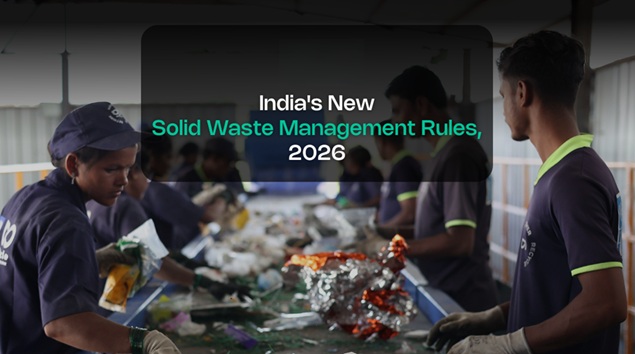
The Solid Waste Management (SWM) Rules, 2026, notified by the Union Ministry of Environment, Forest and Climate Change, will come into force on April 1, 2026, replacing the 2016 framework. The new rules comprehensively overhaul waste management by urban and rural local bodies, emphasising waste reduction, reuse, segregation, and at-source processing.

By discouraging dependence on large landfills and dumping yards, the rules seek to promote decentralised, sustainable, and circular approaches to managing India’s rapidly growing solid waste challenge.
Rationale Behind the Introduction of New Rules

According to the Central Pollution Control Board (CPCB) data for 2023–24, India faces a severe solid waste crisis:

  • Annual waste generation: Over 620 lakh tonnes
  • Daily waste generation: ~1.85 lakh tonnes
  • Daily waste collection: ~1.79 lakh tonnes
  • Daily waste processing/treatment: ~1.14 lakh tonnes
  • Daily landfilling: ~39,629 tonnes

Despite the Solid Waste Management Rules, 2016, large volumes of waste remain poorly segregated and end up in landfills, leading to environmental degradation and public health risks.

The SWM Rules, 2026 aim to:

  • Reduce dependence on landfills,
  • Improve segregation and accountability,
  • Shift towards a circular economy, where waste is treated as a resource,
  • Strengthen compliance through penalties and digital monitoring.

How Are the 2026 Rules Different from the 2016 Rules ?

While retaining core principles such as segregation, recycling, and scientific disposal, the 2026 Rules introduce stricter obligations, expanded segregation, and stronger enforcement mechanisms.

1. Introduction of a Waste Hierarchy

  • The new rules formally introduce a waste hierarchy:
    • Prevention → Reduction → Reuse → Recycling → Recovery → Disposal (last resort)
  • This signals a decisive shift away from landfill-centric waste management.

2. Four-Way Waste Segregation

The earlier wet–dry classification is expanded to a four-way segregation system:

  • Wet waste: Biodegradable household waste
  • Dry waste: Recyclables like paper, plastic, metal, and glass
  • Sanitary waste: Sanitary napkins, tampons, condoms
  • Special-care waste: Medicines, paint cans, bulbs, tube lights, and other hazardous or sensitive items

Urban local bodies (ULBs) must provide infrastructure support, including:

  • Green bins for wet waste,
  • Blue bins for dry waste, and
  • Red bins for sanitary waste, especially in public toilets.

3. Enhanced Responsibilities of Bulk Waste Generators

Who are Bulk Waste Generators ?

Entities meeting any one of the following:

  • Built-up area of 20,000 sq m or more, or
  • Water consumption of 40,000 litres/day or more, or
  • Waste generation of 100 kg/day or more.

This includes:

  • Housing societies and gated communities,
  • Malls, hotels, restaurants,
  • Colleges, universities, hostels,
  • Government departments and large townships.

New Obligations:

  • Mandatory segregation at source,
  • Handover of recyclable waste to authorised entities,
  • All gated communities, RWAs, hotels, restaurants, and institutions with over 5,000 sq m area must comply within one year.

This represents a significant tightening compared to the weaker enforcement under the 2016 Rules.

4. Polluter Pays Principle and Environmental Compensation

The rules introduce environmental compensation for:

  • Failure to register on the centralised portal,
  • False reporting or submission of forged documents,
  • Improper waste handling and segregation.

Additionally:

  • Higher landfill fees will be imposed on mixed or unsegregated waste,
  • Landfilling is made financially disincentivising.

The CPCB is tasked with framing detailed guidelines on compensation and penalties, marking a shift from advisory compliance to deterrence-based regulation.

5. Centralised Tracking and Digital Monitoring System

A centralised online portal will track:

  • Waste generation,
  • Collection,
  • Transportation,
  • Processing,
  • Disposal.

Mandatory registration is required for:

  • Bulk waste generators,
  • Urban and rural local bodies,
  • Waste transporters and processors,
  • Waste pickers,
  • Railways, airports, SEZs, and large authorities.

This addresses data gaps and weak monitoring mechanisms observed under the 2016 framework.

Impact on Bulk Generators Including Housing Societies

Under the new rules, bulk waste generators are placed under an extended responsibility regime, similar to the Extended Producer Responsibility (EPR) framework for electronic and plastic waste.

This framework will become operational once ULBs notify by-laws by March 2027.

1. Mandatory Registration and Certification-Based Compliance

Bulk generators must:

  • Register on the centralised portal,
  • Submit mandatory waste accounting data,
  • Follow certification-based compliance, replacing the earlier self-declaration system.

2. Segregation and On-Site Waste Processing Obligations

  • Mandatory four-way segregation,
  • Strong emphasis on at-source processing of wet waste, preferably through:
    • On-site composting, or
    • Other approved decentralised methods.

3. Alternative Compliance through Certification

Where on-site processing is not feasible, bulk generators may:

  • Procure compliance certificates from:
    • Urban local bodies, or
    • Authorised waste processing facilities.

These certificates will serve as proof of scientific waste processing.

4. Annual Reporting and Penalties

  • Annual returns to be filed by June 30 each year,
  • Returns must detail:
    • Quantity of waste generated,
    • Mode of processing,
    • Certificates procured,
  • Non-compliance will attract environmental compensation.

Implications of SWM Rules, 2026 for Landfills

The 2026 Rules aim to end India’s long-standing dependence on landfills.

  • Landfills are to be used only as a last resort, and exclusively for:
    • Non-usable,
    • Non-recyclable,
    • Non-energy-recoverable waste.

This marks a decisive shift away from dumping mixed waste, which has historically led to massive garbage mounds and environmental contamination.

Mapping and Remediation of Legacy Landfills

All ULBs must:

  • Map existing legacy landfills and dumpsites by October 31, 2026,
  • Prepare time-bound remediation action plans.

Remediation methods include:

  • Bioremediation: Using microbes to reduce waste volume and odour,
  • Biomining: Scientific excavation of old waste to recover usable materials and reduce landfill mass.

These measures aim to reclaim land, reduce pollution, and eliminate long-standing garbage mountains.

Energy Recovery from High-Calorific Waste

The rules mandate that waste with a calorific value of 1,500 kcal/kg or more must be diverted for energy recovery.

Methods include:

  • Refuse-Derived Fuel (RDF) production,
  • Co-processing in cement kilns and thermal power plants.

High-calorific waste includes plastic waste, agricultural residues, and kitchen waste.

Industries are assigned progressive substitution targets:

  • 6% initially,
  • Scaling up to 15% within six years.

This creates assured demand for waste-derived fuels and strengthens the waste-to-energy ecosystem.

FAQs

When will the Solid Waste Management Rules, 2026 come into force ?

They will come into force on April 1, 2026, replacing the 2016 Rules.

What is the new segregation system under the 2026 Rules ?

four-way segregation system: wet, dry, sanitary, and special-care waste.

Who qualifies as a bulk waste generator under the new rules ?

Entities generating 100 kg/day or more of waste, or having built-up area ≥ 20,000 sq m, or water use ≥ 40,000 litres/day.

How do the new rules affect landfills ?

Landfills are to be used only as a last resort, with mandatory remediation of legacy dumpsites and diversion of high-calorific waste for energy recovery.

What role does digital monitoring play in the new framework ?

A centralised online portal will track waste generation, collection, processing, and disposal, ensuring transparency and accountability.

Karimpuzha Wildlife Sanctuary: Biodiversity Hotspot Strengthening Kerala’s Conservation Landscape

Prelims: (Environment + CA)
Mains: (GS 3 – Environment, Biodiversity, Conservation; GS 1 – Indian Society, Tribal Communities)

Why in News ?

A recent faunal survey in the Karimpuzha Wildlife Sanctuary has significantly expanded the biodiversity records of Kerala’s youngest protected area.
The findings underscore the sanctuary’s ecological importance and reinforce its role in regional conservation, especially within the Nilgiri Biosphere Reserve and Nilambur Elephant Reserve.

Background and Context

  • Kerala has one of India’s most extensive networks of protected areas, owing to its location within the Western Ghats, a UNESCO-recognised biodiversity hotspot.
  • The establishment of newer sanctuaries like Karimpuzha reflects:
    • Increasing recognition of ecologically fragile landscapes,
    • The need to conserve wildlife corridors,
    • Protection of endemic and endangered species.
  • The recent faunal survey highlights:
    • Previously undocumented species presence,
    • The ecological richness of the area,
    • The importance of scientific monitoring for conservation planning.

Location and Geographical Significance

  • State: Kerala
  • Physiography: Located on the western slopes of the Nilgiris, part of the Western Ghats mountain system.
  • River System:
    • Named after the Karimpuzha River, a tributary of the Chaliyar River.
    • Biosphere and Elephant Reserve Linkages:
    • Forms part of the Nilgiri Biosphere Reserve (NBR).
    • Falls within the Nilambur Elephant Reserve (ER), one of the four elephant reserves notified in India.
  • Boundaries:
    • Shares its eastern boundary with Mukurthi National Park (Tamil Nadu).
    • Shares its southern boundary with Silent Valley National Park (Kerala).
  • These linkages make Karimpuzha a critical ecological corridor in the Western Ghats landscape.

Ecological Features

Vegetation

  • Karimpuzha is unique in Kerala as it encompasses all seven forest types found in the state:
    • Evergreen rainforest,
    • Semi-evergreen forest,
    • Moist deciduous forest,
    • Subtropical savannah,
    • Subtropical hill forest,
    • Montane wet temperate forest (shola),
    • Montane wet grasslands.

Flora

  • Supports rich and diverse plant life, including:
    • Commercially and ecologically important species such as teak, rosewood, and bamboo,
    • A wide range of medicinal plants,
    • Numerous endemic orchids and other rare flora.
  • This floral diversity contributes to:
    • Ecosystem resilience,
    • Traditional medicine systems,
    • Carbon sequestration and climate regulation.

Fauna

  • The sanctuary harbours a wide variety of fauna, including:
    • Endangered and flagship species:
      • Nilgiri Tahr,
      • Lion-tailed macaque,
      • Asian elephant,
      • Tiger,
      • Leopard,
      • Sloth bear,
      • Gaur (Indian bison).
  • Avifauna:
    • Rich bird diversity, including endemic and migratory species.
  • Aquatic fauna:
    • Pristine streams shelter endangered fish species such as the Malabar Mahseer.
  • The recent faunal survey has:
    • Added new species records,
    • Strengthened the scientific understanding of the sanctuary’s biodiversity value.

Human Dimension: Indigenous Communities

  • The Cholanaikans, a nomadic tribal group often referred to as the “cave men of Kerala,” inhabit the sanctuary.
  • They are classified as a Particularly Vulnerable Tribal Group (PVTG) by the Government of India.
  • Their lifestyle is:
    • Closely integrated with the forest ecosystem,
    • Based on hunting-gathering, forest produce, and traditional ecological knowledge.
  • Conservation efforts in Karimpuzha thus require:
    • A rights-based, participatory approach,
    • Integration of tribal welfare with biodiversity protection.

Conservation Significance

  • Biodiversity Conservation:
    • Protects a wide spectrum of Western Ghats flora and fauna, including several endangered and endemic species.
  • Ecological Connectivity:
    • Strengthens wildlife corridors between Silent Valley, Mukurthi, and Nilambur landscapes.
  • Elephant Conservation:
    • As part of the Nilambur Elephant Reserve, it plays a vital role in:
    • Elephant migration routes,
    • Reducing human-elephant conflict through habitat continuity.
  • Climate Regulation:
    • Dense forests contribute to:
      • Carbon sequestration,
      • Watershed protection,
      • Regional climate moderation.
  • Cultural and Social Significance:
    • Safeguards the habitat and cultural heritage of the Cholanaikan tribe.

Challenges and Way Forward

Key Challenges

  • Human-wildlife conflict, especially involving elephants and large carnivores.
  • Developmental pressures in surrounding landscapes.
  • Balancing conservation with tribal rights and livelihoods.
  • Need for continuous biodiversity monitoring.

Way Forward

  • Strengthening scientific research and long-term ecological monitoring.
  • Enhancing community-based conservation, involving indigenous communities as stakeholders.
  • Ensuring corridor protection to maintain landscape connectivity.
  • Promoting eco-sensitive zone (ESZ) regulations and sustainable livelihood alternatives.
  • Integrating conservation policy with tribal welfare, education, and healthcare initiatives.

FAQs

1. Where is Karimpuzha Wildlife Sanctuary located ?

It is located in Kerala, on the western slopes of the Nilgiris, within the Western Ghats region.

2. Why is Karimpuzha ecologically significant ?

It encompasses all seven forest types found in Kerala and supports endangered species such as the Nilgiri Tahr, lion-tailed macaque, elephants, and Malabar Mahseer.

3. What is the role of Karimpuzha in elephant conservation ?

It forms part of the Nilambur Elephant Reserve and serves as a critical corridor for elephant movement, helping reduce habitat fragmentation.

4. Who are the indigenous people living in the sanctuary ?

The Cholanaikans, classified as a Particularly Vulnerable Tribal Group (PVTG), live within the sanctuary and maintain a forest-dependent lifestyle.

5. How does Karimpuzha contribute to biodiversity conservation in India ?

It strengthens ecological connectivity within the Nilgiri Biosphere Reserve, protects endemic and endangered species, and supports climate regulation and watershed protection.

Capital Punishment in India: Appellate Corrections Expose Deep Trial-Level Failures

Prelims: (Polity & Governance + CA)
Mains: (GS 2 – Governance, Judiciary, Constitution; GS 4 – Ethics in Public Administration)

Why in News ?

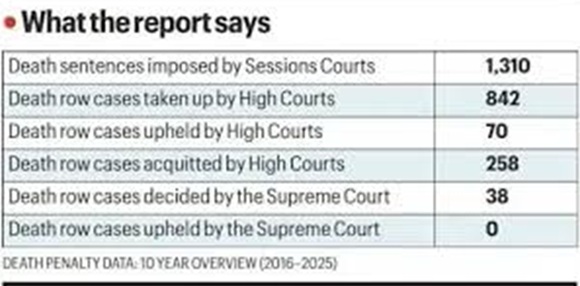
A decade-long study (2016–2025) by the Square Circle Clinic, NALSAR University of Law, reveals systemic flaws in death penalty sentencing in India.
While trial courts frequently impose death sentences, appellate courts (High Courts and the Supreme Court) overturn, commute, or acquit in the overwhelming majority of cases, indicating widespread errors and unjustified convictions at the trial stage.
The findings have major implications for criminal justice reform, due process, Article 21, and capital punishment jurisprudence.
Death Penalty in India

Meaning

  • The death penalty is a legal punishment for the most heinous crimes such as:
    • Murder,
    • Gang rape of minors,
    • Terrorism-related offences.
  • It is constitutionally restricted to the “rarest of rare” cases under the IPC/CrPC framework.

Confirmation and Appellate Review

  • A death sentence passed by a Sessions Court must be confirmed by the High Court.
  • The convict has a right to:
    • Appeal to the Supreme Court,
    • Seek review and curative petitions,
    • Seek executive clemency.

Exceptions

  • Death penalty cannot be imposed on:
    • Individuals who were below 18 years at the time of the offence.
  • Execution is generally avoided for:
    • Pregnant women.

Bharatiya Nyaya Sanhita (BNS), 2023

  • Retains capital punishment for heinous crimes.
  • Continues to restrict its application to the “rarest of rare” cases.

Constitutional and Legal Framework

Constitutional Provisions

  • Article 21:
    • Death penalty is not per se unconstitutional, provided the procedure is fair, just, and reasonable.
  • Articles 14 and 19:
    • Though challenged, capital punishment has been upheld as constitutionally valid.
  • Article 72:
    • Empowers the President to grant pardons, reprieves, respites, or commute sentences, including death sentences.

Judicial Precedents (Key Cases)

  • Jagmohan Singh v. State of UP (1973):
    • Upheld the constitutionality of the death penalty.
  • Bachan Singh v. State of Punjab (1980):
    • Established the “rarest of rare” doctrine.
  • Machhi Singh v. State of Punjab (1983):
    • Laid down guiding categories for applying the doctrine.
  • Mithu v. State of Punjab (1983):
    • Struck down mandatory death penalties (e.g., Section 303 IPC) as unconstitutional.

Judicial Discretion

  • Courts must balance:
    • Aggravating factors: Brutality, premeditation, threat to society.
    • Mitigating factors: Age, mental health, socio-economic background, possibility of reform and rehabilitation.

Key Findings of the Report

1. Stark Disparity Between Trial and Appellate Courts

  • 2025 data:
    • Sessions Courts awarded 128 death sentences in 94 cases.
    • High Courts overturned death sentences in nearly 90% of cases.
    • Supreme Court acquitted the accused in over 50% of cases (10 out of 19).
  • This reflects a systemic pattern, not isolated errors, of wrongful or unjustified convictions.

2. Growing Death Row Population Despite Fewer Confirmations

  • 574 persons on death row as of December 31, 2025 — the highest since 2016.
  • Paradox:
    • Appellate courts show increasing restraint,
    • Yet trial courts continue imposing death sentences at scale.

3. Supreme Court’s Evolving Due Process Jurisprudence

  • 2022 Guidelines:
    • Trial courts must consider:
      • Psychological evaluation reports,
      • Probation officer reports,
      • Prison conduct records,
      • Evidence on potential for reform.
  • Vasanta Sampat Dupare v. Union of India (2025):
    • Sentencing hearings declared an essential part of a fair trial.
    • Non-compliance violates Articles 14 and 21.
    • Allowed reopening of sentencing hearings even after exhaustion of appeals.
    • Reflects a constitutional shift towards mitigation-centric and procedural fairness-based sentencing.

4. Persistent Non-Compliance at the Sessions Court Level

  • In 2025, trial courts failed to comply with Supreme Court guidelines in:
    • 79 out of 83 cases — a 95.18% non-compliance rate.
  • Sentencing often:
    • Occurred on the same day as conviction (18 cases),
    • Within five days in over two-thirds of cases.
  • Such haste prevents:
    • Collection of mental health records,
    • Proper investigation into social background,
    • Effective presentation of mitigating circumstances.

5. Legislative Expansion vs Judicial Retrenchment

  • While higher judiciary shows increasing caution, legislatures have:
    • Expanded the scope of capital punishment through statutory amendments.
  • This reflects a disconnect between legislative intent and judicial constitutionalism.

6. Rise of Life Imprisonment Without Remission

  • Appellate courts increasingly commute death sentences to:
    • Fixed-term imprisonment or whole-life imprisonment without remission.
  • The report flags this as:
    • A poorly regulated and arbitrary sentencing category.
  • Such sentences:
    • Remove the possibility of remission,
    • Deprive prisoners of hope,
    • Undermine human dignity under Article 21.

7. Geographical and Offence-Wise Trends

  • States with highest death row population:
    • Uttar Pradesh (highest),
    • Followed by Gujarat, Haryana, Maharashtra, Kerala, and Karnataka.
  • Women:
    • Constituted 4.18% of death row inmates in 2025.
  • Major offences:
    • Murder simpliciter,
    • Murder involving sexual offences.

Challenges Highlighted and Way Forward

Key Challenges

  • Systemic failure of trial courts to follow constitutional safeguards.
  • High risk of wrongful convictions, especially in capital cases.
  • Arbitrary use of life imprisonment without remission.
  • Gap between evolving constitutional jurisprudence and ground-level judicial practice.
  • Legislative push towards harsher punishments amid judicial caution.

Way Forward

  • Mandatory and enforceable implementation of the Supreme Court’s 2022 sentencing guidelines.
  • Capacity-building and sensitisation of trial judges on mitigation and sentencing hearings.
  • Development of a clear statutory framework governing life imprisonment without remission.
  • Strengthening legal aid, defence representation, and investigative standards in capital cases.
  • Aligning legislative policy with constitutional values of:
    • Fair trial,
    • Proportionality,
    • Human dignity.

FAQs

1. What is the “rarest of rare” doctrine ?

It is a judicial principle that restricts the death penalty to only the most exceptional cases where life imprisonment is inadequate, based on a balance of aggravating and mitigating factors.

2. Why are appellate courts overturning most death sentences ?

Because trial courts frequently fail to follow due process, properly assess mitigating factors, or conduct adequate sentencing hearings, leading to unjust or erroneous convictions.

3. Is the death penalty unconstitutional in India ?

No. The Supreme Court has upheld its constitutionality under Article 21, provided the procedure followed is fair, just, and reasonable.

4. What is life imprisonment without remission, and why is it controversial ?

It is a sentence where the convict is imprisoned for life with no possibility of remission. It is controversial due to lack of statutory regulation and concerns over human dignity and hope for reform.

5. What reforms are needed in India’s death penalty framework ?

Key reforms include strict enforcement of sentencing guidelines, better judicial training, stronger legal aid, statutory regulation of life without remission, and alignment of laws with constitutional values.

India–U.S. Trade Understanding 2026: Rebalancing Commerce, Deepening Strategic Ties

Prelims: (Economy + CA)
Mains: (GS 2 – International Relations, GS 3 – Indian Economy, Trade & External Sector)

Why in News ?

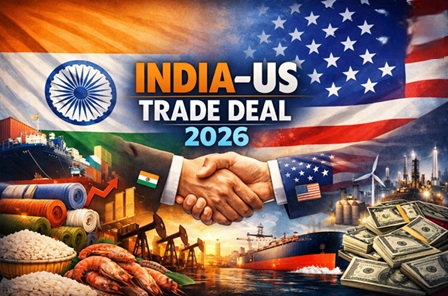
India has committed to importing goods worth $100 billion annually from the United States for five years as part of a broader trade understanding that also involves significant tariff reductions by the U.S.
The move comes after a phase of escalating trade tensions, particularly the U.S. decision in August 2025 to raise tariffs on Indian goods to 50%, and marks a major recalibration of bilateral economic relations.
Background and Context: India–U.S. Trade Relations

  • India and the United States share a rapidly expanding trade relationship, driven by:
    • Strategic convergence,
    • Supply chain diversification,
    • Geopolitical realignments.
  • The U.S. is India’s largest trading partner, particularly in:
    • Services,
    • Pharmaceuticals,
    • Engineering goods,
    • IT and digital services.
  • However, trade relations have also been marked by:
    • Disputes over tariffs,
    • Market access barriers,
    • Digital trade regulation,
    • Agricultural imports and subsidies.

Escalation and Negotiation Trigger

  • In August 2025, the U.S. imposed 50% tariffs on several Indian goods, citing:
    • Persistent trade imbalances,
    • Market access concerns.
  • This escalation:
    • Threatened India’s export competitiveness,
    • Heightened uncertainty for Indian exporters and investors.
  • The 2026 trade understanding emerges as a de-escalatory and stabilising mechanism, seeking to:
    • Restore predictability,
    • Protect domestic sensitivities,
    • Reinforce strategic trust.

Key Features of the India–U.S. Trade Deal 2026

1. Large-Scale Import Commitment

  • India has committed to importing $100 billion worth of U.S. goods annually for five years, more than double the $45.62 billion imported in FY25.
  • Major import categories include:
    • Energy products (oil, gas, coal),
    • Aircraft and aircraft parts,
    • Technology and high-value manufactured goods,
    • Precious metals,
    • Nuclear-related equipment,
    • Selected agricultural products.

2. Tariff Reduction by the United States

  • The U.S. has agreed to reduce tariffs on Indian goods to 18%, down from the earlier 50%.
  • This significantly:
    • Restores market access,
    • Enhances export competitiveness in:
      • Engineering goods,
      • Textiles,
      • Auto components,
      • Pharmaceuticals.

3. Protection of Sensitive Sectors

  • India has maintained explicit protection for:
    • Genetically modified (GM) agricultural products,
    • Dairy,
    • Poultry,
    • Maize, cereals, and corn.
  • This calibrated approach reflects:
    • India’s commitment to food security,
    • Protection of small and marginal farmers,
    • Continuity with India’s long-standing agricultural trade policy.

Agriculture and Market Access Framework

  • India has allowed quota-based or limited access for select commodities such as:
    • Cotton,
    • Pulses,
    • Chestnuts,
    • Onions.
  • Market access has also been extended to:
    • Apples,
    • Wine,
    • Spirits,
    • Beer — products already permitted under India’s agreements with partners like the EU and New Zealand.
  • The government has reiterated that:
    • No compromise has been made on farmer welfare, and
    • Safeguards remain in place to prevent market distortion.

Strategic and Economic Significance

1. Addressing Trade Imbalances

  • The deal seeks to:
    • Reduce persistent U.S. trade deficits, particularly in goods and agriculture.
  • For India, it:
    • Eases tariff pressure,
    • Ensures continued access to the world’s largest consumer market.

2. Energy Security and Diversification

  • Large-scale imports of:
    • Oil,
    • Natural gas,
    • Coal,
  • Support India’s:
    • Energy diversification strategy,
    • Reduction of dependence on geopolitically volatile regions,
    • Long-term supply stability.

3. Industrial and Technological Upgradation

  • Increased imports of:
    • Aircraft,
    • Advanced machinery,
    • Nuclear and high-tech equipment,
  • Can:
    • Support infrastructure development,
    • Enable technology transfer,
    • Strengthen domestic manufacturing capacity.

4. Geopolitical and Strategic Alignment

  • Beyond economics, the deal:
    • Reinforces India–U.S. strategic alignment,
    • Reflects growing convergence amid:
      • Global supply chain reconfiguration,
      • Decoupling pressures,
      • Strategic competition with China.
  • Trade is increasingly being used as a:
    • Tool of diplomacy,
    • Instrument of strategic reassurance and partnership consolidation.

Concerns and Criticism

1. Fiscal and Trade Deficit Risks

  • Fixed import commitments may:
    • Constrain India’s trade flexibility,
    • Widen the merchandise trade deficit if exports do not grow proportionately.

2. Farmer and MSME Concerns

  • Farmer organisations fear:
    • That surplus U.S. agricultural produce could seek deeper market access over time,
    • Potentially affecting domestic prices, incomes, and livelihoods.
  • MSMEs worry about:
    • Increased competition from high-value manufactured imports.

3. Absence of a Formal Free Trade Agreement (FTA)

  • Despite its scale, the deal:
    • Falls short of a comprehensive FTA,
    • Lacks a robust dispute resolution mechanism,
    • Leaves uncertainty about long-term enforceability and institutional oversight.

Way Forward

  • India must:
    • Closely monitor implementation and ensure safeguard clauses remain effective.
  • Simultaneously, it should:
  • Push for export expansion in:
    • Services,
    • Manufacturing,
    • Digital trade,
    • Technology and innovation sectors.
  • Strengthening:
    • Domestic productivity,
    • Competitiveness,
    • Supply chain resilience,
  • Will be critical to maximising gains and ensuring that trade liberalisation aligns with national development priorities.

FAQs

1. What is the core feature of the India–U.S. Trade Deal 2026 ?

India’s commitment to import $100 billion worth of U.S. goods annually for five years, alongside U.S. tariff reductions on Indian exports.

2. Why is this deal strategically significant for India ?

It strengthens India–U.S. geopolitical alignment, enhances energy security, and reinforces India’s position in global supply chain realignment.

3. How does the deal affect Indian farmers ?

While limited agricultural market access is provided, India has protected sensitive sectors and maintained safeguards to ensure farmer welfare.

4. Why is the absence of a formal FTA a concern ?

Without an FTA, the arrangement lacks strong legal enforceability, institutional dispute resolution, and long-term certainty.

5. What should India focus on going forward ?

Expanding exports, strengthening domestic competitiveness, safeguarding vulnerable sectors, and aligning trade policy with development and constitutional values.

Frozen Embryo Donation Debate: Delhi HC Examines ART Law’s Restrictions

Prelims: (Polity & Governance + CA)
Mains: (GS 2 – Judiciary, Fundamental Rights, Social Justice; GS 4 – Ethics)

Why in News ?

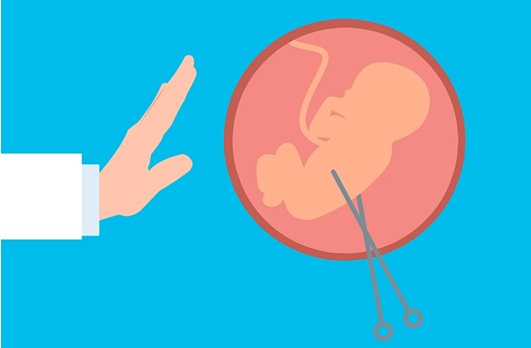
The Delhi High Court has issued notice on a Public Interest Litigation (PIL) challenging provisions of the Assisted Reproductive Technology (Regulation) Act, 2021 and its Rules, which mandate that unused frozen embryos cannot be donated to another infertile couple, even with full consent. Instead, such embryos must either be donated for research or “allowed to perish” after a storage period of 10 years.

The petition questions the ethical, legal, and constitutional validity of forcing viable embryos to be destroyed when willing recipient couples exist.
What the Law Allows

The ART Act, 2021 permits:

  • Altruistic donation of sperm and eggs under regulated conditions.
  • Donor-assisted IVF, including double-donor IVF, where embryos created from donor sperm and donor eggs are implanted in a commissioning couple.
  • In such cases, the child has no genetic link with either parent, and the law explicitly recognises this form of non-genetic parenthood.

However, despite allowing donor-based embryo creation, the law does not permit the donation of surplus frozen embryos to another infertile couple for reproductive use.

How the Prohibition Works

The ban on embryo donation arises from how multiple provisions of the ART Act and its Rules operate together:

  • Embryos tied to the original couple: Clinics can preserve unused embryos only for the commissioning couple and are prohibited from transferring them to any other person.
  • Limited scope of embryo transfer: Transfer is allowed only when the same couple seeks to use its own embryos for personal reproductive purposes, and only with regulatory approval.
  • Mandatory endpoint after 10 years: Under Section 28(2), embryos can be stored for up to 10 years. After this, they must either:
    • Be donated for research, or
    • Be “allowed to perish”.
  • Consent forms reinforce the restriction: Official consent formats do not offer embryo donation to another couple as an option, effectively closing that pathway.

Fresh vs Frozen Embryos: The Core Contradiction

The petition highlights a central inconsistency in the law:

  • Fresh donor embryos are allowed: The ART Act permits embryos created from donor sperm and donor eggs to be transferred to a commissioning couple, even though the child has no genetic link to the parents.
  • Frozen embryos are biologically equivalent: Once thawed, frozen embryos are biologically identical to fresh embryos and are routinely used in IVF with comparable success rates.
  • Different legal treatment: Despite this equivalence, frozen embryos are barred from being transferred to another couple for reproductive use.
  • Alleged double standard: The plea argues that the law accepts genetic non-linearity in fresh donor embryos but rejects the same principle for existing frozen embryos, creating a legal and ethical inconsistency.

The Constitutional Challenge to the ART Law

The petition invokes Articles 14 and 21 of the Constitution:

Article 14 – Equality Before Law

  • The law distinguishes between couples allowed to receive fresh donor embryos and those barred from receiving frozen embryos.
  • In both cases, the child has no genetic link to the parents.
  • The plea argues that this classification lacks an intelligible differentia and a rational nexus with the law’s objectives, making it arbitrary.

Article 21 – Reproductive Autonomy

  • Reproductive choices, including how and whether to have a child, fall within the right to life, dignity, and privacy.
  • Blocking embryo donation is argued to be an unjustified intrusion into decisional autonomy.

Compulsory Destruction as a Core Concern

  • The requirement that viable embryos be “allowed to perish” after 10 years is described as a legislative absurdity, especially when consenting recipient couples exist.

Why the Case Matters

The case raises significant social, ethical, and policy concerns:

  • Scale of infertility: An estimated 27–30 million couples in India face infertility, making access to assisted reproduction a major public health issue.
  • Limits of existing options: IVF is expensive and often requires multiple cycles, while adoption involves long waiting periods and procedural hurdles.
  • Embryo donation as an alternative: Regulated embryo donation could offer a middle path, allowing couples to experience pregnancy and childbirth.
  • Equity and access: Wealthier couples can access embryo donation abroad, while others cannot, turning reproductive choice into a function of economic privilege rather than medical need.

FAQs

What is the main legal issue in the frozen embryo donation case ?

Whether the law can mandate the destruction of viable frozen embryos instead of allowing their donation to infertile couples with consent.

Which law is under judicial scrutiny ?

The Assisted Reproductive Technology (Regulation) Act, 2021 and its Rules.

Why is the law considered inconsistent ?

Because it allows fresh donor embryos to be transferred to couples but prohibits the donation of frozen embryos, despite biological equivalence.

What constitutional rights are being invoked ?

Article 14 (equality before law) and Article 21 (right to life, dignity, and reproductive autonomy).

Why does this case matter socially ?

It affects millions of infertile couples by potentially expanding access to reproductive options while addressing ethical and equity concerns.

« »
  • SUN
  • MON
  • TUE
  • WED
  • THU
  • FRI
  • SAT
Have any Query?

Our support team will be happy to assist you!

OR
X