New
GS Foundation (P+M) - Delhi : 19th Jan. 2026, 11:30 AM Spring Sale UPTO 75% + 10% Off, Valid Till : 6th Feb., 2026 GS Foundation (P+M) - Prayagraj : 09th Jan. 2026, 11:00 AM Spring Sale UPTO 75% + 10% Off, Valid Till : 6th Feb., 2026 GS Foundation (P+M) - Delhi : 19th Jan. 2026, 11:30 AM GS Foundation (P+M) - Prayagraj : 09th Jan. 2026, 11:00 AM

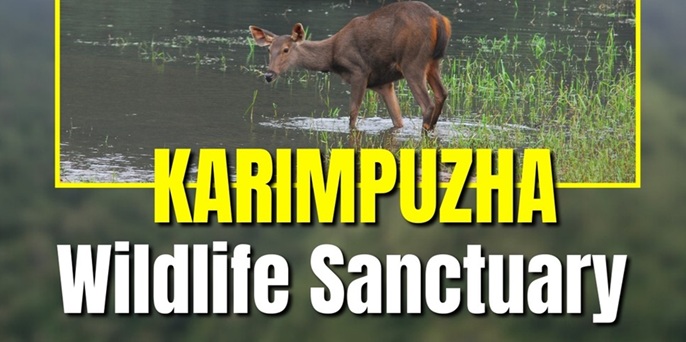
Karimpuzha Wildlife Sanctuary: Biodiversity Hotspot Strengthening Kerala’s Conservation Landscape

Prelims: (Environment + CA)
Mains: (GS 3 – Environment, Biodiversity, Conservation; GS 1 – Indian Society, Tribal Communities)

Why in News ?

A recent faunal survey in the Karimpuzha Wildlife Sanctuary has significantly expanded the biodiversity records of Kerala’s youngest protected area.
The findings underscore the sanctuary’s ecological importance and reinforce its role in regional conservation, especially within the Nilgiri Biosphere Reserve and Nilambur Elephant Reserve.
Background and Context

  • Kerala has one of India’s most extensive networks of protected areas, owing to its location within the Western Ghats, a UNESCO-recognised biodiversity hotspot.
  • The establishment of newer sanctuaries like Karimpuzha reflects:
    • Increasing recognition of ecologically fragile landscapes,
    • The need to conserve wildlife corridors,
    • Protection of endemic and endangered species.
  • The recent faunal survey highlights:
    • Previously undocumented species presence,
    • The ecological richness of the area,
    • The importance of scientific monitoring for conservation planning.

Location and Geographical Significance

  • State: Kerala
  • Physiography: Located on the western slopes of the Nilgiris, part of the Western Ghats mountain system.
  • River System:
    • Named after the Karimpuzha River, a tributary of the Chaliyar River.
    • Biosphere and Elephant Reserve Linkages:
    • Forms part of the Nilgiri Biosphere Reserve (NBR).
    • Falls within the Nilambur Elephant Reserve (ER), one of the four elephant reserves notified in India.
  • Boundaries:
    • Shares its eastern boundary with Mukurthi National Park (Tamil Nadu).
    • Shares its southern boundary with Silent Valley National Park (Kerala).
  • These linkages make Karimpuzha a critical ecological corridor in the Western Ghats landscape.

Ecological Features

Vegetation

  • Karimpuzha is unique in Kerala as it encompasses all seven forest types found in the state:
    • Evergreen rainforest,
    • Semi-evergreen forest,
    • Moist deciduous forest,
    • Subtropical savannah,
    • Subtropical hill forest,
    • Montane wet temperate forest (shola),
    • Montane wet grasslands.

Flora

  • Supports rich and diverse plant life, including:
    • Commercially and ecologically important species such as teak, rosewood, and bamboo,
    • A wide range of medicinal plants,
    • Numerous endemic orchids and other rare flora.
  • This floral diversity contributes to:
    • Ecosystem resilience,
    • Traditional medicine systems,
    • Carbon sequestration and climate regulation.

Fauna

  • The sanctuary harbours a wide variety of fauna, including:
    • Endangered and flagship species:
      • Nilgiri Tahr,
      • Lion-tailed macaque,
      • Asian elephant,
      • Tiger,
      • Leopard,
      • Sloth bear,
      • Gaur (Indian bison).
  • Avifauna:
    • Rich bird diversity, including endemic and migratory species.
  • Aquatic fauna:
    • Pristine streams shelter endangered fish species such as the Malabar Mahseer.
  • The recent faunal survey has:
    • Added new species records,
    • Strengthened the scientific understanding of the sanctuary’s biodiversity value.

Human Dimension: Indigenous Communities

  • The Cholanaikans, a nomadic tribal group often referred to as the “cave men of Kerala,” inhabit the sanctuary.
  • They are classified as a Particularly Vulnerable Tribal Group (PVTG) by the Government of India.
  • Their lifestyle is:
    • Closely integrated with the forest ecosystem,
    • Based on hunting-gathering, forest produce, and traditional ecological knowledge.
  • Conservation efforts in Karimpuzha thus require:
    • A rights-based, participatory approach,
    • Integration of tribal welfare with biodiversity protection.

Conservation Significance

  • Biodiversity Conservation:
    • Protects a wide spectrum of Western Ghats flora and fauna, including several endangered and endemic species.
  • Ecological Connectivity:
    • Strengthens wildlife corridors between Silent Valley, Mukurthi, and Nilambur landscapes.
  • Elephant Conservation:
    • As part of the Nilambur Elephant Reserve, it plays a vital role in:
    • Elephant migration routes,
    • Reducing human-elephant conflict through habitat continuity.
  • Climate Regulation:
    • Dense forests contribute to:
      • Carbon sequestration,
      • Watershed protection,
      • Regional climate moderation.
  • Cultural and Social Significance:
    • Safeguards the habitat and cultural heritage of the Cholanaikan tribe.

Challenges and Way Forward

Key Challenges

  • Human-wildlife conflict, especially involving elephants and large carnivores.
  • Developmental pressures in surrounding landscapes.
  • Balancing conservation with tribal rights and livelihoods.
  • Need for continuous biodiversity monitoring.

Way Forward

  • Strengthening scientific research and long-term ecological monitoring.
  • Enhancing community-based conservation, involving indigenous communities as stakeholders.
  • Ensuring corridor protection to maintain landscape connectivity.
  • Promoting eco-sensitive zone (ESZ) regulations and sustainable livelihood alternatives.
  • Integrating conservation policy with tribal welfare, education, and healthcare initiatives.

FAQs

1. Where is Karimpuzha Wildlife Sanctuary located ?

It is located in Kerala, on the western slopes of the Nilgiris, within the Western Ghats region.

2. Why is Karimpuzha ecologically significant ?

It encompasses all seven forest types found in Kerala and supports endangered species such as the Nilgiri Tahr, lion-tailed macaque, elephants, and Malabar Mahseer.

3. What is the role of Karimpuzha in elephant conservation ?

It forms part of the Nilambur Elephant Reserve and serves as a critical corridor for elephant movement, helping reduce habitat fragmentation.

4. Who are the indigenous people living in the sanctuary ?

The Cholanaikans, classified as a Particularly Vulnerable Tribal Group (PVTG), live within the sanctuary and maintain a forest-dependent lifestyle.

5. How does Karimpuzha contribute to biodiversity conservation in India ?

It strengthens ecological connectivity within the Nilgiri Biosphere Reserve, protects endemic and endangered species, and supports climate regulation and watershed protection.

Have any Query?

Our support team will be happy to assist you!

OR