New
GS Foundation (P+M) - Delhi : 19th Jan. 2026, 11:30 AM GS Foundation (P+M) - Prayagraj : 09th Jan. 2026, 11:00 AM GS Foundation (P+M) - Delhi : 19th Jan. 2026, 11:30 AM GS Foundation (P+M) - Prayagraj : 09th Jan. 2026, 11:00 AM

Current Affairs for 05 January 2026

India’s Airport Monetisation Push: Promise, Pitfalls and Policy Choices

Prelims: (Economy + Infrastructure + CA)
Mains: (GS 2 - Governance, Regulatory Institutions; GS 3 - Infrastructure, Public–Private Partnership, Civil Aviation)

Why in News ?

The Union government has advanced the third round of airport privatisation, proposing to lease 11 Airports Authority of India (AAI) airports to private operators under the Public–Private Partnership (PPP) model. The move is part of India’s broader effort to monetise public infrastructure and expand aviation capacity.

Background & Context: Airport Privatisation in India

Airport privatisation in India aims to improve efficiency, attract private investment, and reduce the fiscal burden on the government.

  • Most airports are owned and operated by the Airports Authority of India (AAI), which manages both:
    • Aeronautical assets (runways, terminals, ATC services)
    • Non-aeronautical assets (retail, parking, advertising, real estate)
  • The process began in the early 2000s with the privatisation of Delhi and Mumbai airports, followed by greenfield PPP airports such as Bengaluru and Hyderabad.
  • In 2019, six AAI airports were privatised, marking a shift from revenue-sharing to a per-passenger fee model.

The current round represents a new phase by introducing bundling of metro and non-metro airports.

Objectives of Airport Privatisation

The key objectives include:

  • Improving service quality and passenger experience
  • Modernising airport infrastructure through private investment
  • Enhancing operational efficiency and managerial flexibility
  • Expanding non-aeronautical revenue streams to cross-subsidise passenger charges

Privatisation is also linked to India’s long-term aviation growth strategy. With only around 6% of Indians using air travel, expanding airport capacity is seen as essential for economic growth, tourism, and regional connectivity.

Third Round of Airport Privatisation

  • Covers 11 airports, grouped into five bundled packages
  • Airports handle 0.1–1 million passengers annually
  • Selected based on:
    • Traffic potential
    • Growth projections
    • Geographic proximity

Once cleared by the Public Private Partnership Appraisal Committee (PPPAC) and the Union Cabinet, bidding is expected to begin around 2026.

This round aligns with the National Monetisation Pipeline (NMP), under which privatisation of 25 airports was projected to raise over ₹20,000 crore. However, aviation monetisation has lagged behind roads and railways, prompting renewed policy push.

Revenue Models and Regulatory Framework

Revenue Model Shift

  • Earlier: Revenue-sharing with AAI
  • Now: Per-passenger fee paid by operators, indexed annually

While this provides predictable revenue to AAI, it raises concerns over higher user charges for passengers.

Regulatory Oversight

  • Airport tariffs are regulated by the Airport Economic Regulatory Authority (AERA)
  • AERA approves:
    • User Development Fees (UDF)
    • Landing and parking charges
    • Other aeronautical tariffs

Non-aeronautical revenues are intended to offset passenger costs, but disputes persist over under-reporting of such revenues.

Emerging Concerns and Criticism

Market Concentration

  • A single corporate group controls a large share of major airports
  • Raises fears of monopoly or duopoly, weakening airline bargaining power

Passenger Cost Burden

  • In some privatised airports, user charges and ancillary fees have risen sharply
  • Complaints include:
    • Congestion
    • High taxi fares
    • Limited accessibility services
    • Perceived decline in service quality

Regulatory Response

  • AERA is moving towards service-linked tariff regulation
  • Penalties proposed for failure to meet benchmarks such as:
    • Security wait times
    • Check-in duration
    • Passenger assistance standards

Analysis: Why Airport Privatisation Matters

  • Reflects India’s shift towards asset monetisation for infrastructure financing
  • Highlights trade-offs between efficiency gains and public interest
  • Tests the strength of regulatory institutions like AERA
  • Raises questions about competition, affordability, and service quality

Airport privatisation is not just an economic reform but a governance challenge.

Way Forward

  • Ensure transparent and competitive bidding processes
  • Impose safeguards against excessive market concentration
  • Strengthen AERA’s regulatory and enforcement capacity
  • Link tariffs clearly with service-quality outcomes
  • Protect consumer interests while encouraging private investment

Balancing private efficiency with public accountability will determine the success of airport privatisation.

FAQs

Q1. Why is the government privatising airports ?

To improve efficiency, attract private investment, and reduce fiscal burden while expanding aviation capacity.

Q2. What is new in the third round of airport privatisation ?

Bundling of metro and non-metro airports and alignment with the National Monetisation Pipeline.

Q3. Who regulates airport tariffs in India ?

The Airport Economic Regulatory Authority (AERA).

Q4. What are the main concerns with airport privatisation ?

Market concentration, rising passenger charges, and service-quality issues.

Q5. How can passenger interests be protected ?

Through strong regulation, service-linked tariffs, competition safeguards, and transparency.

Smart Aquaculture for the Future

Prelims: (Economy + CA)
Mains: (GS 2 – Governance; GS 3 - Agriculture, Fisheries, Food Security, Economy)

Why in News ?

The Union Minister for Fisheries, Animal Husbandry and Dairying is set to inaugurate a state-of-the-art Re-circulatory Aquaculture System (RAS) facility in Hyderabad, Telangana. The initiative reflects India’s push towards technology-driven, sustainable aquaculture under the Blue Economy framework.
Background & Context

India is the third-largest fish-producing country in the world and aquaculture plays a crucial role in nutritional security, rural livelihoods, and exports. However, traditional aquaculture faces challenges such as:

  • High water consumption
  • Disease outbreaks
  • Environmental pollution
  • Land constraints near urban centres

To address these limitations, advanced aquaculture technologies like Re-circulatory Aquaculture Systems are being promoted to ensure resource efficiency, biosecurity, and sustainability.

What is a Re-circulatory Aquaculture System (RAS) ?

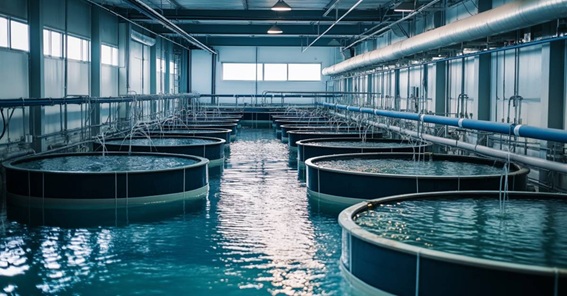
A Re-circulatory Aquaculture System is a closed-loop aquaculture technology in which water is continuously recycled and reused after undergoing mechanical and biological filtration.

The system removes suspended solids, toxic metabolites such as ammonia and nitrites, and pathogens, thereby maintaining optimal water quality for fish growth with minimal freshwater usage.

Key Features of Re-circulatory Aquaculture Systems

  • High-Density Fish Culture: Supports intensive aquaculture by maintaining precise control over water parameters.
  • Closed-Loop Operation: Water is recycled after filtration, significantly reducing water consumption compared to traditional pond systems.
  • Advanced Filtration Mechanism: Mechanical filters remove solid waste
    • Biological filters break down harmful metabolites
  • Automated Monitoring: Real-time monitoring of water quality, fish health, and disease indicators reduces manual intervention.
  • Enhanced Biosecurity: Prevents entry of pathogens from external water sources, lowering disease risk.
  • Flexible Location: Can be established indoors, in urban areas, or in regions lacking natural water bodies.

How RAS Differs from Conventional Aquaculture

Aspect

Conventional Aquaculture

RAS

Water Use

High

Very Low

Stocking Density

Low to Moderate

Very High

Disease Risk

High

Low

Land Requirement

Large

Minimal

Environmental Impact

Higher

Controlled & Low

Species Suitable for RAS

RAS can be used for culturing:

  • Tilapia
  • Catfish
  • Shrimp
  • Trout
  • Ornamental fish

This versatility makes RAS suitable for both food fish production and high-value aquaculture.

Significance for India’s Fisheries Sector

  • Water Conservation: Aligns with sustainable water management goals.
  • Urban and Peri-Urban Aquaculture: Enables fish production closer to consumption centres, reducing transport costs.
  • Disease Control: Reduces losses due to outbreaks, a major challenge in aquaculture.
  • Boost to Blue Economy: Supports value addition, exports, and livelihood diversification.
  • Climate Resilience: Less dependent on climatic variability compared to open water systems.

Government Initiatives Supporting RAS

  • Pradhan Mantri Matsya Sampada Yojana (PMMSY) promotes modern aquaculture infrastructure.
  • Establishment of Smart Green Aquaculture Farms and Research Institutes.
  • Focus on technology adoption, skill development, and private sector participation.

The Hyderabad facility serves as a demonstration and research hub for advanced aquaculture practices.

Challenges Associated with RAS

  • High initial capital investment
  • Need for technical expertise and skilled manpower
  • Dependence on uninterrupted power supply
  • Limited awareness among small and marginal fish farmers

Analysis: Why RAS Matters

  • Represents a shift from extensive to precision aquaculture
  • Balances productivity with environmental sustainability
  • Strengthens food security while conserving resources
  • Positions India for next-generation aquaculture exports

RAS reflects the future trajectory of India’s fisheries sector.

Way Forward

  • Provide targeted subsidies and credit support for RAS adoption
  • Strengthen training and capacity-building programmes
  • Promote public–private partnerships in aquaculture technology
  • Integrate renewable energy solutions to reduce operating costs
  • Scale up pilot projects for wider replication

FAQs

Q1. What is the main advantage of Re-circulatory Aquaculture Systems ?

They allow high-density fish farming with minimal water usage and strong biosecurity.

Q2. How does RAS conserve water ?

By continuously recycling and treating water within a closed-loop system.

Q3. Can RAS be set up in urban areas ?

Yes, RAS can operate indoors and in areas without natural water bodies.

Q4. Which government scheme supports RAS in India ?

The Pradhan Mantri Matsya Sampada Yojana (PMMSY).

Q5. What is the biggest challenge in adopting RAS ?

High initial costs and the need for technical expertise.

Cultural Repatriation as Statecraft: Piprahwa Relics and India’s Buddhist Soft Power

Prelims: (Culture + International Relations + CA)
Mains: (GS 1: Indian Culture, Heritage; GS 2: Foreign Policy, Cultural Diplomacy)

Why in News ?      

The Prime Minister inaugurated “The Light and The Lotus: Relics of the Awakened One”, an international exposition of the sacred Piprahwa relics in New Delhi. The event followed the successful repatriation of priceless Buddhist relics that had been taken out of India during the colonial era and were nearly auctioned abroad, highlighting India’s evolving strategy of heritage diplomacy and peace-based soft power.

Background & Context

India’s foreign policy increasingly leverages its civilisational heritage as a source of soft power, particularly through Buddhism, which connects India with large parts of Asia and beyond. In recent years, India has focused on reclaiming looted antiquities, protecting sacred heritage, and positioning itself as a moral leader in global affairs.

The Piprahwa episode demonstrates a non-coercive diplomatic model, combining legal assertion, ethical reasoning, and private-public cooperation to safeguard global cultural heritage.

Significance of the Prime Minister’s Message

Strength with Humanity

  • The Prime Minister underscored that strength is necessary against enemies of humanity, but dialogue and peace must guide conflict resolution.
  • This reflects India’s doctrine of strategic restraint combined with moral leadership.

Buddha’s Philosophy as India’s Worldview

  • The Buddha’s message of coexistence over domination was projected as India’s guiding principle in the 21st century.
  • The civilisational ideal of “Sarvajan Hitaya, Sarvajan Sukhaya” was reaffirmed as India’s ethical compass.

Piprahwa Relics: Historical Background

Discovery and Composition

  • Excavated in 1898 by William Claxton Peppé from a Buddhist stupa at Piprahwa (Siddharthnagar district, Uttar Pradesh), near the India–Nepal border.
  • The relics include:
    • 349 gemstones (pearls, rubies, sapphires, topaz, gold sheets)
    • Bone fragments and ash believed to be of Lord Buddha
    • Reliquaries, sandstone coffers, and soapstone and crystal caskets

Colonial-Era Dispossession

  • Under the Indian Treasure Trove Act, 1878, the British Crown claimed most relics.
  • A portion remained with the Peppé family, held privately for over 127 years, reflecting colonial inequities in heritage ownership.

Rescue from Auction and Repatriation (2025)

Threat of Auction

  • Sotheby’s Hong Kong listed the relics for auction in 2025, with an estimated value exceeding USD 100 million.
  • The relics were treated as antique collectibles, disregarding their sacred and civilisational significance.

India’s Response

  • The Ministry of Culture issued a legal notice demanding the auction’s withdrawal.
  • India asserted that the relics are inalienable religious and cultural heritage, protected under domestic law and international conventions.
  • The Archaeological Survey of India (ASI) and diplomatic channels were mobilised.

Innovative Resolution

  • The Godrej Group purchased the collection and facilitated its return to India.
  • The relics were loaned to the National Museum for five years.
  • This avoided ethical dilemmas associated with the State commercially purchasing sacred antiquities.

Shared Buddhist Heritage and India’s Soft Power

Global Spiritual Connect

  • The relics have inspired millions during exhibitions in Thailand, Mongolia, Vietnam, Russia, and other countries.
  • Indian diplomats are often revered as representatives of the “Land of Buddha”, enhancing India’s moral stature.

Symbolic Diplomacy

  • India has gifted Bodhi tree saplings to countries such as China, Japan, Korea, and Mongolia.
  • A notable example is a Bodhi tree in Hiroshima, symbolising peace and reconciliation after nuclear devastation.

Preservation of Buddhist Heritage

International Initiatives

  • Restoration of 11 pagodas in Bagan (Myanmar)
  • Post-earthquake assistance to Nepal’s heritage sites

Domestic Efforts

  • Development of the Buddhist Circuit connecting major pilgrimage centres
  • Promotion of Pali as a classical language
  • Infrastructure upgrades to improve accessibility and conservation of Buddhist sites

Challenges and Way Ahead

  • Colonial-era legal ambiguities: Strengthen global cooperation on cultural property protection
  • Grey areas in international law: Proactively use diplomacy and soft power for repatriation
  • Commercialisation of sacred objects: Balance legal, ethical, and spiritual dimensions
  • Limited enforceability of UNESCO conventions for pre-1970 removals

Way forward includes creating a global database of alienated Indian antiquities and expanding cultural diplomacy through Buddhism, yoga, and civilisational narratives.

Analysis: Why the Piprahwa Episode Matters

  • Demonstrates non-coercive, values-based diplomacy
  • Reinforces India’s role as custodian of Buddhist heritage
  • Strengthens India’s soft power in Asia and beyond
  • Sets a model for ethical recovery of sacred artefacts

FAQs

Q1. Why are the Piprahwa relics considered sacred ?

They include bone fragments and ash believed to be of Lord Buddha, making them objects of deep religious reverence.

Q2. Why was the auction of the relics controversial ?

Because sacred Buddhist relics were treated as commercial collectibles, ignoring their religious and cultural significance.

Q3. How does this episode reflect India’s soft power ?

It showcases India’s ability to influence global perceptions through cultural heritage, moral authority, and diplomacy.

Q4. What role did private actors play in repatriation ?

The Godrej Group enabled the return without commercialising sacred heritage.

Q5. How does Buddhism strengthen India’s foreign policy ?

Buddhism provides a shared civilisational link with many countries, reinforcing peace-based diplomacy and cultural goodwill.

Venezuela Under Fire: US Intervention and the Maduro Flashpoint

Prelims: (International Relations + CA)
Mains: (GS 2 - International Relations; GS 3 - Security)

Why in News ?

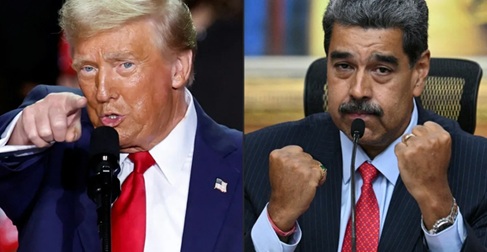
The United States has launched a large-scale military operation in Venezuela, capturing President Nicolás Maduro and transferring him and his wife to the US, where they have been charged in New York with drug trafficking and weapons-related offences. The operation marks a dramatic escalation in US–Venezuela tensions and raises serious questions about sovereignty, regime change, and international law.
Background & Context

Relations between the US and Venezuela have been adversarial for over two decades, particularly since the rise of Hugo Chávez and the consolidation of a socialist political order hostile to US interests. Under Nicolás Maduro, Venezuela has faced economic collapse, international sanctions, political repression, and mass migration.

The latest US action goes beyond sanctions and diplomatic isolation, signalling a shift towards direct coercive intervention, reminiscent of Cold War–era regime change strategies in Latin America.

Why Did the US Attack Venezuela ?

The US has cited migration, drugs, and narco-terrorism as the primary justifications for its operation against the Maduro regime.

Migration Crisis Narrative

  • US President Donald Trump has repeatedly linked Venezuela to rising migration at the US southern border.
  • Since 2013, nearly 8 million Venezuelans have fled economic collapse and political repression, mostly to Latin American neighbours.
  • Trump has alleged that the Maduro government deliberately released prisoners and psychiatric inmates into migration flows—claims strongly denied by Caracas.

Drugs and ‘Narco-Terrorism’ Claims

  • Washington claims Venezuela is a major transit hub for cocaine, contributing to the US fentanyl crisis.
  • The US designated Tren de Aragua and the Cartel de los Soles as Foreign Terrorist Organisations (FTOs).
  • Trump has accused Maduro himself of leading the Cartel de los Soles.

Venezuela’s Response

The Venezuelan government has rejected all allegations, arguing that the US is weaponising the “war on drugs” to justify regime change, rather than addressing root causes of migration or narcotics trafficking.

India’s Diplomatic Dilemma After US Action in Venezuela

The US operation has placed India in a delicate position between its partnership with Washington and its long-standing commitment to sovereignty, non-intervention, and international law.

  • India generally avoids public positions on geographically distant conflicts.
  • However, as a leading voice of the Global South, expectations are rising for India to articulate concerns over unilateral military actions.
  • New Delhi is balancing principle with pragmatism amid ongoing strategic and economic engagements with the US.

US–India Context: Trade and Strategic Frictions

  • India and the US are negotiating a bilateral trade deal amid tensions following 50% US tariffs, including a 25% penalty linked to India’s purchase of Russian oil.
  • India has reduced Russian oil imports but feels selectively targeted, as similar penalties were not imposed on China or Europe.

MEA Advisory

The Ministry of External Affairs has issued an advisory urging Indian nationals in Venezuela to:

  • Avoid non-essential travel
  • Restrict movement
  • Remain in contact with the Indian Embassy in Caracas

Given muted reactions from major G20 countries and ongoing negotiations with Washington, India has so far avoided an official statement.

India–Venezuela Ties: Limited but Historic

Energy-Centric Relationship

India once imported substantial volumes of Venezuelan crude oil. However, trade declined sharply after US sanctions.

Trade Trend:

  • 2019–20: USD 6,397 million (imports: USD 6,057 million)
  • 2020–21: USD 1,271 million (imports: USD 714 million)
  • 2021–22: USD 424 million (imports: USD 89 million)
  • 2022–23: USD 431 million (imports: USD 253 million)

High-Level Engagements

  • 2005: Hugo Chávez visited India; met PM Manmohan Singh
  • 2012: Nicolás Maduro visited India for India–CELAC Troika meet
  • 2013: India sent Sachin Pilot to Chávez’s state funeral
  • 2023: Venezuelan Vice President Delcy Rodríguez attended CII–LAC Conclave in India

Low Stakes, High Principles

  • Indian diaspora in Venezuela is minimal (under 100 people).
  • Yet, concerns over precedent-setting US interventionism elevate the issue’s diplomatic significance for India.
  • Normative stakes outweigh material interests.

Global Reactions: Mixed Signals

  • Russia: Condemned the US move as an act of armed aggression
  • European Union: Called for respect for international law and the UN Charter
  • Chile: Expressed concern and condemnation of US military action
  • Colombia: Voiced deep concern over regional destabilisation

The absence of a unified global response highlights fractures in the international system.

What Lies Ahead for Venezuela After US Intervention ?

  • President Trump stated that the US would temporarily run Venezuela until a “safe and judicious transition” is achieved.
  • He dismissed opposition leader María Corina Machado, despite her party’s claim that Edmundo González Urrutia won the 2024 election.
  • Trump emphasised an economic agenda:
    • Entry of US oil companies
    • Repair of infrastructure
    • Oil extraction and global sales
    • Cost recovery with revenue-sharing

He did not rule out the deployment of US troops, suggesting a potentially prolonged and force-backed transition.

Analysis: Why This Development Matters

  • Raises serious questions about state sovereignty and international law
  • Revives regime-change doctrines in contemporary geopolitics
  • Sets precedents for unilateral interventions under security pretexts
  • Tests India’s ability to balance partnerships with principled diplomacy

The episode reflects growing instability in the post–Cold War international order.

Way Forward

  • Reaffirm commitment to the UN Charter and non-intervention
  • Encourage multilateral mediation rather than unilateral action
  • Protect Indian nationals and economic interests
  • Use diplomatic channels to uphold global norms
  • Strengthen Global South consensus on sovereignty and rule-based order

FAQs

Q1. Why did the US justify its action against Venezuela ?

The US cited migration pressures, drug trafficking, and alleged narco-terrorism links involving the Maduro regime.

Q2. How has Venezuela responded to US allegations ?

Venezuela has rejected them as baseless and accused the US of pursuing regime change.

Q3. Why is this development significant for India ?

It raises concerns over sovereignty and international law while testing India’s diplomatic balance with the US.

Q4. What is the status of India–Venezuela relations ?

Relations are limited but historically significant, primarily centred on energy and diplomatic engagement.

Q5. What are the possible outcomes for Venezuela ?

Potential scenarios include prolonged US oversight, economic restructuring led by US firms, or extended instability.

« »
  • SUN
  • MON
  • TUE
  • WED
  • THU
  • FRI
  • SAT
Have any Query?

Our support team will be happy to assist you!

OR