New
Hindi Medium - GS Foundation (P+M) - Delhi : 11th June 2026, 6:30 AM Hindi Medium - GS Foundation (P+M) - Prayagraj : 6th June 2026, 5:30 PM Hindi Medium - GS Foundation (P+M) - Delhi : 11th June 2026, 6:30 AM Hindi Medium - GS Foundation (P+M) - Prayagraj : 6th June 2026, 5:30 PM

Current Affairs for 05 May 2026

What is Hantavirus? Transmission, Symptoms, Risk Groups, Treatment and Prevention

Why in News?

  • A suspected outbreak of Hantavirus Pulmonary Syndrome (HPS) on a cruise ship in the Atlantic Ocean has caused panic. 
  • So far, 3 deaths have been reported and several passengers are ill. 
  • The WHO and South African health authorities have confirmed the cases. 
  • One patient is in critical condition in the ICU, and the ship has been restricted near the Cape Verde coast to prevent further spread. 

Hantavirus

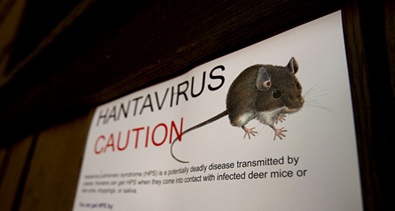
Hantavirus is a rare but highly dangerous virus mainly transmitted from rodents (especially rats and mice) to humans.

It can cause two serious diseases :

  • Hantavirus Pulmonary Syndrome (HPS) – affects the lungs 
  • Hemorrhagic Fever with Renal Syndrome (HFRS) – affects the kidneys 

Both conditions can become life-threatening with a high mortality rate.
Transmission

Hantavirus spreads mainly through :

  • Airborne transmission (aerosols) :
    Inhalation of virus particles from dried rodent urine, droppings, or saliva. 
  • Direct contact :
    Touching infected rodents or their contaminated surroundings. 
  • Rare cases :
    Rodent bites. 

 Human-to-human transmission is extremely rare.

Symptoms

1. Early stage (within 1–8 weeks of exposure) :

  • Fever and chills 
  • Muscle pain 
  • Severe fatigue 
  • Headache 
  • Nausea, vomiting, sometimes diarrhea 

2. Severe stage (HPS development) :

  • Difficulty in breathing 
  • Severe cough 
  • Chest tightness 
  • Fluid accumulation in lungs (pulmonary edema) 
  • Respiratory and heart failure in critical cases 

High-Risk Groups

  • Farmers and agricultural workers 
  • Construction workers 
  • People living or working in forest/camping areas 
  • Individuals exposed to rodent-infested environments 
  • Young children, pregnant women, and immunocompromised individuals 

Treatment

There is no specific antiviral treatment for hantavirus. Management is mainly supportive :

  • Oxygen therapy 
  • ICU care in severe cases 
  • Ventilator support if required 
  • Fluid and electrolyte balance management 

Prevention

Prevention focuses on hygiene and rodent control :

  • Keep homes and workplaces free from rodents 
  • Store food in sealed containers 
  • Seal cracks, holes, and entry points in buildings 
  • Use masks and gloves while cleaning rodent-infested areas 
  • Avoid dry sweeping; use wet cleaning methods to prevent aerosol spread

India’s Major Achievement in Renewable Energy – 5 Years Ahead of the Paris Agreement Target

India has achieved a significant milestone in the global energy transition by crossing 50% of its total installed electricity capacity from non-fossil fuel sources as of April 2026. This achievement comes five years ahead of its 2030 target under the Paris Agreement.

The country’s non-fossil capacity has reached around 283 GW, including 274.68 GW from renewable sources and about 8.78 GW from nuclear energy, out of a total installed capacity exceeding 520 GW.

Solar and Wind Energy Growth

Solar energy has led India’s clean energy expansion :

  • Solar Power : 150.26 GW (a ~50-fold increase from 2.82 GW in 2014) 
  • Wind Energy : 56.09 GW 
  • Large Hydro : 51.41 GW 
  • Small Hydro : 5.17 GW 
  • Bioenergy : 11.75 GW 

In FY 2025–26 alone, India added a record 55.3 GW of non-fossil capacity.
In February 2026, renewable power generation (excluding large hydro) reached 25,295 million units (MU), marking a 25% year-on-year increase.

Impact of AI and Data Centers

The rapid expansion of AI and data centers is significantly increasing electricity demand.
A 100 MW data center consumes as much electricity as thousands of households and requires 24×7 reliable power.

This is driving a new energy “super-cycle”, boosting investments in :

  • Renewable energy parks (Solar + Storage) 
  • Battery storage systems 
  • High-voltage transmission infrastructure 

Global Comparison

  • China : ~2258 GW renewable capacity (world leader) 
  • United States : ~468 GW 
  • European Union : Solar 300+ GW, Wind 220+ GW 
  • India : 250+ GW (3rd globally) 

India stands out for its fast growth rate, though coal dependence still persists.

Policies and Government Initiatives

  • PM-KUSUM Scheme (2019) : Solarization of agriculture 
  • Rooftop Solar Programme : Promoting household solar generation 
  • Hybrid Projects (Solar + Wind) : Ensuring stable supply 
  • Battery Storage Support : Via Viability Gap Funding 
  • Private Sector Participation : Companies like Adani Group and Reliance Industries accelerating expansion

Geothermal Energy: A New Frontier

India has initiated its first geothermal project in Gujarat, utilizing abandoned oil and gas wells.

  • Potential output : ~450 kW continuous energy 
  • Future role : Reliable baseload clean energy source 

Rising Energy Demand

India’s per capita energy consumption is still low, but expected to grow rapidly due to :

  • Economic growth 
  • Urbanization 
  • Digital infrastructure (AI, data centers) 

Thus, India must balance energy expansion with green transition.

Key Challenges

  • Grid integration (intermittency of solar/wind) 
  • Land acquisition issues 
  • Massive financing requirements (hundreds of billions of dollars) 
  • Continued reliance on coal for baseload power 
  • Supply chain constraints and project delays 

Way Forward

  • Expand battery storage and pumped hydro 
  • Strengthen Green Energy Corridors & HVDC transmission 
  • Promote Green Hydrogen Mission 
  • Scale up Electric Vehicle (EV) ecosystem 
  • Boost domestic manufacturing (solar modules, batteries) 
  • Ensure reliable green power for data centers 

Long-Term Targets

  • 500 GW non-fossil capacity by 2030 
  • Net-zero emissions by 2070 — achieving a balance where total greenhouse gas emissions are offset, resulting in zero net emissions.

'Undeclared emergency' in West Bengal tea gardens

Why in the News ?

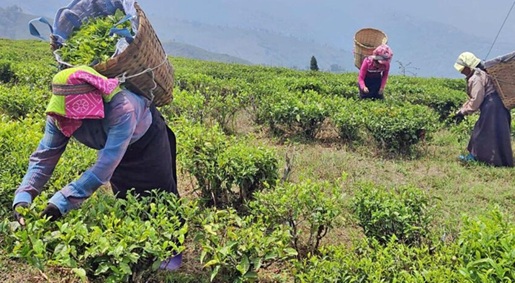
The labor exploitation hidden behind the lush greenery of West Bengal's tea plantations is now resonating internationally. Workers, led by the West Bengal Tea Workers Committee (PBCMS), have filed a formal complaint with the International Labor Organization (ILO). This complaint is not limited to wages; it is a grim account of decades of systematic exploitation, structural discrimination, and human rights violations.
What is ILO Article 24 ?

  • Article 24 of the ILO Constitution is a powerful legal tool. It empowers any industrial organization (employers or workers) to file a complaint against a member country that has ratified an international labor convention but fails to implement it on the ground.
  • In this case, the Indian government is accused of ignoring international standards related to minimum wages, discrimination, and social security.

Key points of exploitation: A human tragedy

  • The picture workers paint of the plantations resembles modern-day slavery.
  • Starvation and malnutrition : The death of an Adivasi worker from starvation in 2024 has put the entire system under scrutiny.
  • Economic violence : Unpaid wages, provident fund (PF), and gratuity have not been paid for years.
  • The scourge of landlessness : Despite working for generations, tea workers lack ownership of their land.
  • Tourism versus displacement : Plantation lands are being diverted for commercial use in the name of 'tea tourism,' increasing the risk of worker displacement.

Health Report: Alarming Statistics

  • Recent surveys have revealed that the health situation in tea plantations is akin to a "serious emergency" :
    • BMI crisis : 44% of workers surveyed had a body mass index (BMI) of less than 17, which medically qualifies as severe malnutrition.
    • Invisible epidemic : Nearly 20,000 workers are suffering from problems such as anemia, weakness, and underweight, which are directly linked to low income and inadequate food.

Structural and Caste Discrimination

  • The report highlights that this exploitation is not just economic, but also gender and caste based :
    • Neglect of women workers : Women constitute the majority of the plantation workforce, but are excluded from decision-making processes and higher positions.
    • Tribal communities : Most workers in plantations are from tribal or Dalit communities. They are trapped in a system of "bonded labor" without legal protection.

Failure of Regulatory Mechanisms: Silence of the Central and State Governments

  • PBCMS attributes this crisis to administrative failures at two levels :
    • Central Government (Tea Act 1953) : The Central Government has the power to take over the management of distressed plantations, but this power has not been exercised.
    • State Government (Minimum Wage) : No legal framework for minimum wages has yet been established for tea workers in West Bengal, which is a constitutional failure.
    • Weak Inspection : The Labor Department's inspection mechanisms have been rendered "ineffective" under industrial pressure.

Repressive Policies: Attempts to Stifle Unions

  • Workers say they face repression when they speak out for their rights :
    • Filing of false criminal cases against protesters.
    • Intimidation and workplace harassment by plantation management.
    • This is a direct violation of the ILO principle of “freedom of association”.

Conclusion:

This struggle of tea plantation workers is no longer just a fight for wages, but a fight for human dignity. This complaint, filed under ILO Article 24, is a warning to the global community. "The dignity of labor cannot remain confined to papers and slogans. As long as the last plantation worker goes to bed hungry, India's claims of economic development remain incomplete."

« »
  • SUN
  • MON
  • TUE
  • WED
  • THU
  • FRI
  • SAT
Have any Query?

Our support team will be happy to assist you!

OR