New
Hindi Medium: (Delhi) - GS Foundation (P+M) : 21st Sept. 2026, 11:30 AM Hindi Medium: (Prayagraj) - GS Foundation (P+M) : 22nd Sept. 2026, 8:00 AM English Medium: (Delhi) - GS Foundation (P+M) : 6th Aug 2026 English Medium: (Prayagraj) - GS Foundation (P+M) : 19th Aug 2026, 11:00 AM Hindi Medium: (Delhi) - GS Foundation (P+M) : 21st Sept. 2026, 11:30 AM Hindi Medium: (Prayagraj) - GS Foundation (P+M) : 22nd Sept. 2026, 8:00 AM English Medium: (Delhi) - GS Foundation (P+M) : 6th Aug 2026 English Medium: (Prayagraj) - GS Foundation (P+M) : 19th Aug 2026, 11:00 AM

Current Affairs for 09 September 2026

Dedicated Freight Corridors: Transforming India’s Freight Transportation Network

Prelims: Dedicated Freight Corridors, Eastern DFC, Western DFC, DFCCIL, JNPT, Rail Freight, Double-Stack Container Trains
Mains: GS Paper III – Infrastructure, Railways, Logistics, Industrial Development and Economic Growth

Why in News?

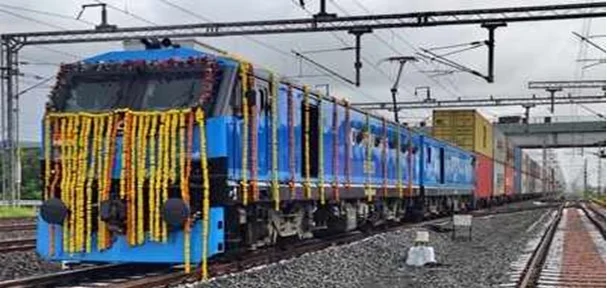
Prime Minister Narendra Modi has described the completion of India’s more than 2,800-km Eastern and Western Dedicated Freight Corridors (DFCs) as a historic milestone for the country’s transport infrastructure.
Background

  • India has one of the world’s largest railway networks, but passenger and freight trains have traditionally operated on the same railway tracks. Since passenger trains generally receive operational priority, freight trains often face delays and lower average speeds.
  • Rapid industrialisation, growing container traffic and increasing demand for faster movement of goods created the need for a separate high-capacity freight railway network.
  • To address this challenge, the Government of India developed the Dedicated Freight Corridor (DFC) programme, implemented through the Dedicated Freight Corridor Corporation of India Limited (DFCCIL) under the Ministry of Railways.

What are Dedicated Freight Corridors?

  • Dedicated Freight Corridors are railway routes developed primarily for the movement of goods and freight trains.
  • Unlike conventional railway lines, where passenger and freight services share the same tracks, DFCs provide specialised infrastructure for freight transportation. They are designed to accommodate longer and heavier trains, improve freight speeds and provide more reliable movement of cargo.
  • The corridors are particularly important for connecting major manufacturing regions, industrial clusters, logistics hubs and ports.

India’s Dedicated Freight Corridor Network

India’s existing DFC network consists of two major corridors — the Eastern Dedicated Freight Corridor (EDFC) and the Western Dedicated Freight Corridor (WDFC). Together, they cover approximately 2,843 km.

Eastern Dedicated Freight Corridor (EDFC)

  • The Eastern Dedicated Freight Corridor is approximately 1,337 km long.
  • It begins at New Sahnewal near Ludhiana in Punjab and passes through Haryana and Uttar Pradesh before reaching New Sonnagar in Bihar.
  • The corridor serves the heavily industrialised and densely populated northern and eastern parts of India. It is particularly important for the movement of bulk commodities and industrial freight.

Western Dedicated Freight Corridor (WDFC)

  • The Western Dedicated Freight Corridor is approximately 1,506 km long.
  • It starts from New Dadri in Uttar Pradesh and passes through Haryana, Rajasthan and Gujarat before reaching Jawaharlal Nehru Port in Maharashtra.
  • The corridor provides a major rail freight connection between the industrial and manufacturing centres of northern and western India and one of the country’s most important container ports.

Importance of Double-Stack Container Trains

  • Double-stack container technology is one of the important features of the Western Dedicated Freight Corridor.
  • In a double-stack train, containers are placed in two vertical levels on specially designed wagons. This allows substantially more cargo to be transported by a single train.
  • Higher carrying capacity means fewer train movements are required for transporting the same amount of freight, helping improve the productivity of railway infrastructure.

Significance for the Indian Economy

  • Manufacturing Competitiveness: Reliable and cheaper transportation can reduce the cost of moving raw materials and finished products, making Indian manufacturing more competitive.
  • Export Promotion: Improved connectivity between industrial centres and ports can reduce export transit times and strengthen India’s participation in global supply chains.
  • Industrial Development: Regions located around DFC stations, logistics parks and industrial corridors can attract new manufacturing, warehousing and logistics investments.
  • Multimodal Logistics: DFCs can be integrated with highways, ports, industrial corridors and multimodal logistics parks, creating a more efficient national transportation network.
  • Energy and Environmental Benefits: Greater use of railways for long-distance freight transportation can reduce dependence on road-based trucking, potentially lowering fuel consumption and transport-related emissions.

DFCs and India’s Industrial Corridors

  • The importance of Dedicated Freight Corridors goes beyond railway transportation. They can act as the transportation backbone for major industrial corridors.
  • The Western DFC, for example, supports industrial and logistics development along the Delhi–Mumbai economic region, while the Eastern DFC strengthens connectivity across the industrial and resource-rich regions of northern and eastern India.
  • This integration can promote the development of manufacturing clusters, warehouses, logistics parks and new industrial centres around major freight nodes.

What is the Next Dedicated Freight Corridor?

  • The government has also announced plans for another Dedicated Freight Corridor connecting Dankuni in West Bengal with western India, passing through important industrial and mineral-producing regions.
  • Such expansion would further strengthen the national freight network and improve connectivity between eastern India’s industrial and mineral regions and western ports and manufacturing centres.
  • The development of additional corridors would gradually transform the DFC programme from two major railway routes into a broader national freight network.

Challenges

  • Despite their potential, the full economic benefits of Dedicated Freight Corridors will depend on several factors.
  • Last-mile connectivity between factories, freight terminals and DFC stations needs continuous improvement. DFCs must also be effectively integrated with ports, highways, warehouses and multimodal logistics parks.
  • Another challenge is encouraging industries to shift a larger share of freight from roads to railways. Efficient terminal operations, competitive freight tariffs and reliable schedules will therefore remain important.
  • Land acquisition, maintenance of specialised infrastructure and development of complementary industrial ecosystems will also influence the long-term success of future corridors.

Way Forward

  • India should now focus on maximising the utilisation of the completed Eastern and Western Dedicated Freight Corridors while expanding connectivity to major industrial clusters and ports.
  • Greater integration with PM Gati Shakti, industrial corridors, multimodal logistics parks, highways and port infrastructure can multiply the economic impact of DFCs.

Prelims MCQ

Q. Consider the following statements regarding Dedicated Freight Corridors (DFCs) in India:

  1. The Western Dedicated Freight Corridor connects Dadri with Jawaharlal Nehru Port.
  2. The Eastern Dedicated Freight Corridor extends up to Sonnagar in Bihar.
  3. Double-stack container train operations are an important feature of the Western Dedicated Freight Corridor.

Which of the statements given above are correct?

A. 1 and 2 only
B. 2 and 3 only
C. 1 and 3 only
D. 1, 2 and 3

Mains Question

“Dedicated Freight Corridors can transform not only India’s railway freight system but also its wider manufacturing and logistics ecosystem.” Discuss.

FAQs

What is a Dedicated Freight Corridor?

A Dedicated Freight Corridor is a railway route developed primarily for freight trains. It provides specialised infrastructure for faster, heavier and more reliable movement of goods.

How many major Dedicated Freight Corridors are operational in India?

India has two major completed corridors — the Eastern Dedicated Freight Corridor and the Western Dedicated Freight Corridor.

What is the total length of the Eastern and Western DFCs?

Together, the two corridors cover approximately 2,843 km.

Why is the Western DFC important?

The Western DFC connects major industrial regions of northern and western India with Jawaharlal Nehru Port and supports high-capacity double-stack container operations.

How will DFCs benefit passenger trains?

By transferring freight traffic to dedicated tracks, DFCs release capacity on conventional railway lines, which can be used for passenger and other railway services.

Virtual Private Network (VPN): How It Works, Major Uses and Security Concerns

Why in News?

  • Authorities in Doda district of Jammu & Kashmir have imposed a complete ban on the use of Virtual Private Networks (VPNs) for two months
  • The decision has been taken citing concerns related to cybersecurity, unlawful activities, public order and national security.


What is a Virtual Private Network (VPN)?

  • A Virtual Private Network (VPN) is a technology that creates a secure and encrypted connection between a user's device and the internet.
  • It routes internet traffic through a VPN server, which helps protect data from unauthorized interception and can hide the user's actual IP address from websites and online services.

How Does a VPN Work?

  1. The user's device connects to a VPN server. 
  2. Data travelling between the device and VPN server is encrypted
  3. Internet traffic is routed through the VPN server. 
  4. Websites generally see the VPN server's IP address instead of the user's actual IP address. 
  5. This provides greater privacy and security while using the internet. 

Major Uses of VPNs

  • Protecting online data and privacy 
  • Securing connections over public Wi-Fi networks 
  • Providing employees with secure remote access to an organization's internal network 
  • Accessing organizational databases and software from different locations 
  • Masking the user's IP address 
  • Bypassing certain geographical restrictions 

Why Can VPNs Create Security Concerns?

VPNs have many legitimate uses, but authorities can also be concerned about their potential misuse. According to the Doda administration, VPNs were allegedly being used to circumvent cyber restrictions and access prohibited digital content.

The administration stated that such activities could potentially be used for:

  • Circumventing lawful cyber restrictions 
  • Disseminating inflammatory content 
  • Coordinating activities that may disturb law and order 
  • Facilitating unlawful or anti-national activities 

Therefore, the administration described the restriction as a preventive measure to protect public tranquillity and national security.

Who Does the Ban Apply To?

The prohibition applies to:

  • Individuals 
  • Institutions 
  • Cyber cafés 
  • Business entities 
  • Internet Service Providers (ISPs) 

However, VPN use specifically authorised by the government through official orders is exempted from the restriction.

Does a VPN Provide Complete Anonymity?

  • A VPN can improve online privacy by encrypting traffic and masking the user's IP address, but it does not guarantee complete anonymity.
  • The level of privacy also depends on factors such as the VPN provider's logging practices, security standards and data-handling policies.

FAQ – Virtual Private Network (VPN)

Q1. What is a VPN?

Answer: A VPN is a technology that provides a secure and encrypted connection over the internet and helps hide the user’s actual IP address.

Q2. How does a VPN work?

Answer: A VPN encrypts data between the user’s device and the VPN server and routes internet traffic through the VPN server.

Q3. What are the major uses of a VPN?

Answer: Protecting online privacy, securing connections over public Wi-Fi, providing secure remote access to organizational networks, and masking the IP address.

Q4. Why can VPNs create security concerns?

Answer: VPNs can be misused to bypass lawful cyber restrictions, access prohibited content, and facilitate activities that may affect law and order.

72nd National Film Awards 2026: Statue of Unity to Host Ceremony for 92 Award Winners

Prelims: National Film Awards, Statue of Unity, Directorate of Film Festivals, Ministry of Information & Broadcasting
Mains: Indian Cinema, Cultural Diplomacy, National Integration, Tourism and Soft Power
Keywords: 72nd National Film Awards, Statue of Unity, Ekta Nagar, Narmada District, Indian Cinema, Sardar Vallabhbhai Patel, Cultural Soft Power, Film Awards, Gujarat Tourism, Creative Economy

Why in News?

  • The 72nd National Film Awards ceremony will be held on 22 September 2026 at the Statue of Unity, Ekta Nagar, Gujarat.
  • A total of 92 National Film Award winners are scheduled to be felicitated during the ceremony. A special German aluminium structural dome with seating arrangements for around 1,000 guests will be erected at the Statue of Unity Bus Bay area.

Key Highlights of the Ceremony

  • Event: 72nd National Film Awards Ceremony 
  • Date: 22 September 2026 
  • Venue: Statue of Unity, Ekta Nagar, Gujarat 
  • Award Winners: 92 
  • Expected Seating Capacity: Around 1,000 guests 
  • Special Infrastructure: German aluminium structural dome 
  • Venue Area: Statue of Unity Bus Bay 

The ceremony is being planned as a major national-level event, with special arrangements for security, protocol, dignitary movement, venue management and infrastructure.

Preparations for the National Event

A high-level meeting was held under the chairmanship of Narmada District Collector Ganga Singh to review preparations for the ceremony.

The administration discussed several important aspects, including:

  • Security arrangements 
  • Protocol management 
  • Arrival and departure of dignitaries 
  • Venue management 
  • Infrastructure requirements 
  • Coordination among government departments 

The Gujarat Government and Narmada district administration are coordinating preparations for the event.

National Film Awards

  • The National Film Awards are among India's most prestigious honours in the field of cinema. They recognise excellence in Indian filmmaking across different languages, regions and categories.
  • The awards seek to encourage films of aesthetic and technical excellence, social relevance and cultural significance, while recognising outstanding contributions by filmmakers, actors, technicians and other cinema professionals.

History of National Film Awards

  • The National Film Awards were instituted in 1954. Initially, they were known as the State Awards for Films.
  • Over time, the scope of the awards expanded to recognise the diversity of Indian cinema, including feature films, non-feature films and contributions to different aspects of filmmaking.
  • The awards have emerged as an important national platform for recognising cinema produced across India's linguistic and regional landscape.

Major Categories

The National Film Awards broadly recognise excellence in areas such as:

  • Feature Films
  • Non-Feature Films
  • Acting
  • Direction
  • Screenplay
  • Cinematography
  • Music
  • Editing
  • Sound Design
  • Regional Cinema

The awards therefore recognise not only popular performers but also the technical and creative professionals involved in filmmaking.

72nd National Film Awards 2026 – Complete Winners List

Feature Films Category

Award Category

Winner

Film / Work

Best Feature Film

Article 370

Best Actor

Kartik Aaryan

Chandu Champion

Best Actor

Mammootty

Bramayugam

Best Actress

Yami Gautam

Article 370

Best Director

Rajkumar Periasamy

Amaran

Best Supporting Actress

Ropashree Varkady

Mithya

Best Supporting Actress

Sachana Namidass

Maharaja

Best Supporting Actor

Sanjay Mishra

Bhakshak

Best Feature Film Providing Wholesome Entertainment

Kalki 2898 AD

Best Film Promoting National, Social and Environmental Values

Captain Miller

Best Debut Film of a Director

Swatantrya Veer Savarkar

Best Children’s Film

35 Chinna Katha Kaadu

Best Child Artist

Riddhiman Banerjee

Best Child Artist

Tapomoy Deb

Best Child Artist

Gitashree Chakraborty

Best Child Artist

Arundev Pothula

Best Child Artist

Athish S Shetty

Best Cinematography

Shehnad Jalal

Bramayugam

Best Screenplay – Original

Sukumar

Pushpa 2

Best Screenplay – Adapted

Yogesh Deshpande

Swargandharva Sudhir Phadke

Best Dialogue Writer

Venky Atluri

Lucky Baskhar

Best Production Design

Nitin Zihani Choudhary

Kalki 2898 AD

Best Action Direction

Anl Arasu

Maharaja

Best Make-Up Artist

P Ravi Kumar

Committee Kurrollu

Best Costume Design

Deepali Noor & Sheetal Sharma

Pushpa 2

Best Music Direction

Shashwat Sachdev

Article 370

Best Background Music

GV Prakash

Amaran

Best Lyrics

Manoj Muntashir

Maidaan

Best Male Playback Singer

Abhay Jodhpurkar – “Gharat Ganpati”

Navasachi Gauri Mazi

Best Female Playback Singer

Vaikom Vijayalakshmi – “Angu Vaana Konilu”

ARM

Best Choreography

Vijay Ganguly

Stree 2

Best Sound Design

Manas Choudhury

Bhool Bhulaiyaa 3

Best Editing

R Kalaivannan

Amaran

Best Assamese Film

Juiphool

Best Bengali Film

Chalchitra Ekhon

Best Hindi Film

Srikanth

Best Kannada Film

Mithya

Best Malayalam Film

Feminichi Fathima

Best Marathi Film

Mukkam Post Bombilwadi

Best Odia Film

Lahari

Best Tamil Film

Raayan

Best Garhwali Film

Dholi

Best Telugu Film

Committee Kurrollu

Best Gujarati Film

Maaran

Best Manipuri Film

Sunita

Best Konkani Film

Mog Asum

Best Tulu Film

IMBU

Special Mention

Dhanush

Captain Miller

Special Mention

Suren G

Meiyazhagan

Non-Feature Films Category

Award Category

Winner

Film / Work

Best Non-Feature Film

Bhangaar

Best Debut Film of a Director

Angen

Best Biographical / Historical Reconstruction / Compilation Film

Kakori

Best Arts / Culture Film

Main Nida

Best Animation Film

Touched as Water

Best Non-Feature Film Promoting Social and Environmental Values

Piplantri: A Tale of Eco Feminism

Best Documentary

Ram-Nami

Best Short Film (Up to 30 Minutes)

Hamsafar

Best Direction

Aanand L Rai

Statue of Unity – Ekta ka Prateek

Best Sound Design

T S Hari Hara Sudhan

Blue

Best Cinematography

Edmond Ranson

Life in Loom

Best Music Direction

Shivpal Singh Kang

Parat 41°chya Magavar

Best Editing

Manvir Jasrotia

NDA

Best Narrator / Voice Over

Soundarya Jayachandran

Little Planet: A Tale of Frogs

Special Mention

Bhadra-Kali Natakam

Special Mention

Chola Dora aur Suib

Prelims MCQs

Q. The Statue of Unity is situated on/near which river?

A. Tapi
B. Narmada
C. Sabarmati
D. Mahi

Mains Question

Q. “Indian cinema is not merely an entertainment industry but also an important instrument of cultural integration and soft power.” Discuss in the context of the National Film Awards.

FAQs

Where will the 72nd National Film Awards ceremony be held?

The ceremony is scheduled to be held at the Statue of Unity, Ekta Nagar, Gujarat, on 22 September 2026.

How many award winners will be felicitated?

A total of 92 award winners are expected to be felicitated.

What special arrangement is being made at the venue?

A German aluminium structural dome is being erected at the Statue of Unity Bus Bay area, with infrastructure for approximately 1,000 guests.

Why is the Statue of Unity important?

The 182-metre-high statue commemorates Sardar Vallabhbhai Patel and symbolises his contribution to India's political integration.

World Suicide Prevention Day 2026: Theme, India’s Initiatives, Role of Media, Significance and Challenges

Why in news?

World Suicide Prevention Day (WSPD) is observed every year on 10 September to raise awareness about suicide prevention, reduce stigma around mental health and encourage timely support for people experiencing distress. 

Key facts 

Particular

Details

Date

10 September 2026

Established

2003

Established by

International Association for Suicide Prevention (IASP), with WWorld Health organisation (WHO)

2026 Theme

“Changing the Narrative on Suicide”

Theme Period

2024–2026

Call to Action

“Start the Conversation”

Primary Objective

Awareness, stigma reduction, prevention and better access to support

Background 

  • It was established in 2003 by the International Association for Suicide Prevention (IASP), in partnership with the World Health Organization (WHO). 

Why is Suicide Prevention a Global Public-Health Priority?

  • According to WHO's updated 2026 information, more than 7,20,000 people die by suicide globally every year. Suicide was the third-leading cause of death among people aged 15-29 years globally in 2021.
  • 73% of global suicides occur in low-and middle-income countries. This makes suicide prevention not only a mental-health issue but also a major public-health and development challenge.
  • The consequences extend far beyond an individual. A suicide can have lasting emotional, social and economic effects on families, friends, workplaces and communities.

Why do Suicides occur?

  • WHO describes suicide as a complex phenomenon influenced by interacting social, cultural, biological, psychological and environmental factors.
  • Risk can increase in situations involving severe distress, including financial problems, relationship disputes, chronic pain or illness, violence or abuse, conflict and disasters, significant loss, social isolation, some mental-health and substance-use disorders, and a previous suicide attempt.

Suicide Prevention: WHO's LIVE LIFE Approach

  • Limit Access to Means: Reducing access to highly lethal means during moments of acute crisis can provide critical time for intervention and support.
  • Responsible Media Reporting: Media coverage should avoid sensationalism and instead provide accurate, responsible information and pathways to help.
  • Build Life Skills Among Young People: Schools and communities can strengthen young people's social-emotional skills, coping abilities and resilience.
  • Early Identification and Support: People affected by suicidal behaviour should be identified early and receive appropriate assessment, management, follow-up and support. 

Role of Family and Community

  • Families, friends, teachers, colleagues and communities can play an important role in creating supportive environments. This includes listening without judgement, taking expressions of distress seriously, maintaining connection and helping someone access professional support when needed.
  • This is precisely why the 2026 call to action “Start the Conversation” is important. Stigma and fear can prevent people from discussing distress, while supportive conversations can make seeking help easier.

Role of Schools and Educational Institutions

  • Young people deserve particular attention because suicide is a major cause of mortality among adolescents and young adults globally.
  • Schools and universities can contribute through:
    • Mental-health awareness → Life-skills education → Counselling support → Anti-bullying measures → Early identification → Referral to professional care

Role of Media

  • Media organizations and digital platforms have significant influence over public understanding of suicide.
  • Responsible communication should avoid sensational or romanticised presentation, avoid unnecessary details about methods, respect the privacy and dignity of individuals and families, challenge stigma and misinformation, highlight recovery and help-seeking, and provide information about available support.

India's Suicide-Prevention Framework

  • National Suicide Prevention Strategy: India launched its National Suicide Prevention Strategy in 2022. It provides a framework for coordinated action involving health systems as well as other sectors. 
  • Tele-MANAS: An important component of India's mental-health infrastructure is Tele-MANAS (Tele Mental Health Assistance and Networking Across States). The Government announced the National Tele Mental Health Programme in the Union Budget 2022, with the Ministry of Health and Family Welfare responsible for overall implementation. 
  • Mental Healthcare Act, 2017: A particularly significant provision is Section 115, which creates a presumption that a person who attempts suicide is under severe stress, unless proved otherwise, and directs the government toward providing care, treatment and rehabilitation rather than treating the situation primarily through a punitive lens. 

Significance 

The 2026 campaign therefore represents three important transitions:

  • Stigma Understanding
  • Silence Conversation
  • Isolation Support

The broader message is that prevention requires action at individual, family, community and government levels.

Major Challenges 

  • Stigma: People may hesitate to discuss mental-health difficulties or seek help because of fear of judgement.
  • Treatment gap: Mental-health professionals and services remain unevenly distributed, particularly in low-resource settings.
  • Social pressures: Financial stress, relationship difficulties, discrimination, violence, isolation and other life circumstances can contribute to distress.
  • Youth vulnerability: Academic pressure, bullying, social isolation, family difficulties and online experiences can affect young people's mental well-being.
  • Data limitations: Accurate and timely data are essential for understanding patterns and designing targeted interventions.
  • Coordination: Effective prevention requires cooperation among health, education, social welfare, labour, agriculture, media, law enforcement and community institutions.

FAQs

When is World Suicide Prevention Day observed?

It is observed every year on 10 September.

When was World Suicide Prevention Day first observed?

It was first observed in 2003.

Who established World Suicide Prevention Day?

It was established by the International Association for Suicide Prevention (IASP) in collaboration with the World Health Organization (WHO).

What is the theme of World Suicide Prevention Day 2026?

The 2024–2026 theme is “Changing the Narrative on Suicide.”

What is the call to action for the 2026 campaign?

The call to action is “Start the Conversation.”

Rajasthan’s Shekhawati Havelis Added to UNESCO Tentative List

Prelims: UNESCO Tentative List, Shekhawati Havelis, Fresco Paintings
Mains: GS-I: Indian Culture, Art & Architecture
Keywords: Shekhawati Havelis, UNESCO Tentative List, Rajasthan Heritage, Painted Haveli Towns of Shekhawati, UNESCO World Heritage Site, Shekhawati Fresco Paintings, Rajasthan Tourism, Cultural Heritage, Heritage Conservation, Indian Architecture, Heritage Tourism, Merchant Heritage

Why in News?

The “Painted Haveli Towns of Shekhawati” in Rajasthan have been added to the UNESCO Tentative List. India submitted the proposal to UNESCO on 1 June 2026. The proposed cultural heritage site covers historic haveli ensembles across 14 towns in the Shekhawati region. 

Important Points

  • The inclusion is an important step towards the possible future recognition of Shekhawati as a UNESCO World Heritage Site
  • Major towns include Mandawa, Nawalgarh, Fatehpur and Churu.
  • The havelis are famous for their colorful fresco paintings and grand architecture. 
  • The paintings depict religion, mythology, wildlife, daily life and technological changes
  • Many havelis were built by wealthy merchant families
  • The heritage area reflects the art, culture, trade and social history of Shekhawati. 
  • Tentative List status is not the same as UNESCO World Heritage Site status
  • The listing can support heritage conservation and tourism in Rajasthan.

What is Shekhawati?

  • Shekhawati is a semi-arid region of northeastern Rajasthan, mainly covering parts of Jhunjhunu, Churu and Sikar districts.
  • The region is famous for its historic havelis, fresco paintings, forts, temples, bazaars and traditional water-management structures.
  • Its distinctive heritage developed particularly through mercantile patronage and long-distance trade between the 18th and early 20th centuries

Which Shekhawati Towns Are Included?

The proposal covers heritage properties, including historic havelis, across 14 towns:

  • Alsisar
  • Bissau
  • Chirawa
  • Churu
  • Dundlod
  • Fatehpur
  • Jhunjhunu
  • Khetri
  • Laxmangarh
  • Mandawa
  • Mahansar
  • Nawalgarh
  • Ramgarh
  • Sikar

What Makes Shekhawati Havelis Unique?

1. Famous Fresco Paintings

  • The havelis are known for their extensive wall and ceiling frescoes. 
  • These paintings depict:
    • Religious and mythological themes 
    • Local traditions and everyday life 
    • Rulers and important personalities 
    • Animals and birds 
    • Maps and places 
    • Colonial-era influences 
    • Railways and other technological developments 
    • The paintings therefore act as a visual record of social and cultural changes in the region. 

2. Merchant Heritage

  • Many havelis were built through the patronage of wealthy merchant communities
  • Their architecture reflects the economic prosperity generated by long-distance trade.

3. Traditional Urban Planning

Shekhawati's historic towns contain a combination of:

  • Fortified settlements 
  • Bazaars 
  • Havelis 
  • Temples 
  • Courtyards 
  • Wells and stepwells 
  • Water tanks 

Together, these elements form a distinctive historic townscape adapted to the region's semi-arid environment

What Does UNESCO Tentative Listing Mean?

  • The UNESCO Tentative List is a preliminary list of sites that a country considers suitable for future nomination as World Heritage Sites.
  • Therefore, the inclusion of Shekhawati Havelis is not the final UNESCO World Heritage recognition.
  • Further documentation, conservation work and evaluation will be required before the site can potentially be nominated for the World Heritage List.
  • The listing can also encourage greater efforts to protect, restore and conserve the historic havelis in their original form.

 How Can It Boost Tourism in Rajasthan?

  • The UNESCO Tentative List status can increase the international visibility of Shekhawati's heritage and support heritage tourism in Rajasthan.
  • Towns such as Mandawa, Nawalgarh and Fatehpur already attract tourists because of their historic havelis, frescoes and traditional streets.
  • Greater tourism could create more opportunities for:
    • Local tour guides
    • Artists and craftsmen
    • Handicraft producers
    • Hotels and homestays
    • Local businesses

While Rajasthan is internationally known for its forts and palaces, Shekhawati offers a different experience through its beautifully painted havelis and historic streets.

 Why Is This Inclusion Important?

  • The inclusion of Shekhawati Havelis on the UNESCO Tentative List is important not only for tourism but also for heritage conservation.
  • Rajasthan Deputy Chief Minister Diya Kumari welcomed the development and described it as a significant achievement for the state.
  • The recognition can help draw greater attention to the need to preserve Shekhawati's architecture, fresco art and cultural heritage.

What is UNESCO?

  • UNESCO stands for United Nations Educational, Scientific and Cultural Organization.
  • It is a specialized agency of the United Nations (UN) that promotes cooperation in education, science, culture and communication.
  • Headquarters: Paris, France
  • Established: 1945
  • Key Role: Protecting cultural and natural heritage through programmes such as the UNESCO World Heritage List.

UNESCO Tentative List?

The UNESCO Tentative List is a list of cultural and natural sites that a country considers suitable for possible future nomination as UNESCO World Heritage Sites. In simple words, it is a preliminary list of potential World Heritage Sites.

Conclusion

The addition of the Shekhawati Havelis of Rajasthan to the UNESCO Tentative List is an important step towards their possible future recognition as a World Heritage Site. It can help promote heritage conservation, cultural awareness and tourism, while highlighting the unique architectural and artistic traditions of the Shekhawati region.

Prelims Practice Question 

Consider the following statements:

  1. 1The Painted Haveli Towns of Shekhawati are included in UNESCO's Tentative List.
  2. The proposed site covers parts of Jhunjhunu, Churu and Sikar districts.
  3. All the havelis of Shekhawati have already been declared UNESCO World Heritage Sites.

Which of the statements given above is/are correct?

(a) 1 and 2 only
(b) 2 and 3 only
(c) 1 and 3 only
(d) 1, 2 and 3

Mains Practice Question

The Painted Haveli Towns of Shekhawati represent the cultural and economic history of Rajasthan. Discuss their architectural and artistic significance.

FAQs

1. What is the UNESCO status of Shekhawati Havelis?

The Painted Haveli Towns of Shekhawati have been included in UNESCO's Tentative List, not yet the World Heritage List. 

2. How many Shekhawati towns are included in the proposal?

The proposal covers 14 historic towns.

3. Which districts of Rajasthan are covered?

The proposed heritage area covers parts of Jhunjhunu, Churu and Sikar districts

4. Why are Shekhawati Havelis famous?

They are particularly famous for their elaborate fresco paintings, courtyard architecture and merchant-built mansions.

5. Does Tentative List status mean UNESCO World Heritage status?

No. It is a preliminary stage in the process of possible future World Heritage nomination.

World EV Day 2026: Theme, Key Facts, Importance of Electric Vehicles, PM E-DRIVE Scheme, India’s EV Revolution and Challenges

Why in news?

World EV Day is observed every year on 9 September to promote awareness about electric vehicles (EVs), clean mobility and the transition away from fossil-fuel-dependent transport. 
Key Facts

Date

9 September 2026

Observed

Annually

2026 Theme

Switching Electric: driving down the cost of motoring

Focus

Promotion of electric mobility

Major issues

EV affordability, charging infrastructure, battery technology, clean energy, sustainable transport and consumer adoption


What is World EV Day?

It is a global campaign dedicated to electric mobility. The initiative was launched in 2020 and has since developed into an international platform for discussions surrounding electric vehicles and sustainable transportation.

Why are Electric Vehicles important?

The transport sector continues to depend heavily on petroleum-based fuels. Electric vehicles provide an alternative by using electric motors powered by batteries or other electrical energy systems. Their significance can be understood through these dimensions:
  • Lower tailpipe emissions: Battery EVs produce zero tailpipe emissions, which can help reduce local air pollutants in congested urban areas.
  • Climate mitigation: EVs can contribute to transport-sector decarbonisation, particularly as the electricity used to charge them increasingly comes from renewable and other low-carbon sources.
  • Energy security: Greater electrification can reduce the transport sector's dependence on petroleum fuels and therefore improve energy security for oil-importing countries such as India.
  • Lower operating costs: Electric motors are highly efficient and EVs generally have fewer moving components than conventional internal-combustion vehicles, potentially lowering energy and maintenance costs.
  • Technological transformation: The EV transition is creating new industries around batteries, power electronics, semiconductors, motors, software, charging systems and battery recycling.

How Does an Electric Vehicle Work?

  • Charging Point → Battery Pack → Power Electronics/Inverter → Electric Motor 
  • The battery pack stores electrical energy. The power electronics system regulates the flow of electricity, while the electric motor converts electrical energy into mechanical motion.

Major Types of Electric Vehicles

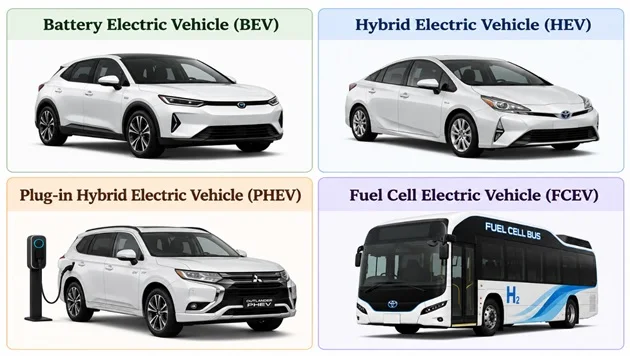
  • Battery Electric Vehicle (BEV): It runs entirely on electricity stored in a rechargeable battery.
  • Hybrid Electric Vehicle (HEV): It combines an internal combustion engine and electric motor. Its battery is generally charged internally through the engine and regenerative braking.
  • Plug-in Hybrid Electric Vehicle (PHEV): It combines an engine with a battery-electric drivetrain. 
  • Fuel Cell Electric Vehicle (FCEV): These vehicles generate electricity through a fuel cell, commonly using hydrogen.

Why World EV Day matters for India?

  • India's EV transition is connected with broader national objectives such as reducing petroleum dependence, improving urban air quality, developing domestic manufacturing, creating new industrial supply chains, promoting battery manufacturing, expanding renewable-energy use, generating employment and achieving long-term climate commitments.
  • In August 2026, CNG, hybrid and electric passenger vehicles together accounted for roughly 42% of Indian passenger-vehicle sales, slightly exceeding petrol vehicles at about 41%, according to FADA data reported by Reuters.

India's Major EV Initiative

  • The PM Electric Drive Revolution in Innovative Vehicle Enhancement (PM E-DRIVE) scheme was originally approved with an outlay of 10,900 crore. 
  • The government originally allocated 4,391 crore for 14,028 electric buses, along with dedicated support for other vehicle categories. 
  • The scheme covers Electric Two-Wheelers (e-2W), Electric Three-Wheelers (e-3W), Electric Buses, Electric Ambulances, Electric Trucks, Public Charging Infrastructure and Upgradation of Vehicle Testing Agencies. 
  • The scheme has been extended until 31 March 2028 for applicable segments, except the e-3W L5 segment, whose incentivisation was closed after achieving its target.

Battery: The Heart of an EV

  • The battery is among the most important and expensive components of an electric vehicle. Modern EVs predominantly use lithium-ion battery technologies, though different chemistries are used depending on requirements relating to cost, energy density, safety and durability.

Environmental Benefits of EVs

  • Reduced Urban Air Pollution: Battery EVs eliminate exhaust emissions of pollutants such as nitrogen oxides and particulate matter from the vehicle tailpipe. 
  • Reduced Greenhouse-Gas Emissions: Lifecycle emissions can fall substantially when EVs are charged with increasingly cleaner electricity.
  • Reduced Noise Pollution: Electric motors generally produce much less drivetrain noise than combustion engines, particularly at lower speeds.
  • Higher Energy Efficiency: Electric motors convert a much larger proportion of input energy into motion compared with conventional combustion engines.

Challenges 

  • High Upfront Cost: Although running costs can be lower, many EVs still have higher initial purchase prices than comparable conventional vehicles, largely because of battery costs.
  • Range Anxiety: Consumers may worry whether the battery will last until the next available charging station.
  • Charging Infrastructure: The number, distribution and reliability of charging stations remain important constraints, especially for long-distance highway travel.
  • Charging Time: Even fast charging generally takes longer than filling a petrol or diesel tank.
  • Critical Mineral Dependency: Battery supply chains depend on minerals whose production and processing are geographically concentrated.
  • Recycling: India will require a large, safe and economically viable battery collection, reuse and recycling ecosystem.

EVs and India's Climate Commitments

  • At COP26, India announced its Panchamrit climate commitments, including a target to achieve net-zero emissions by 2070.
  •  Transport electrification can contribute to this objective, particularly when combined with renewable energy, energy storage, public transport, EVs, green hydrogen and energy efficiency. 

FAQs

When is World EV Day celebrated?

World EV Day is celebrated every year on 9 September.

When was World EV Day first observed?

World EV Day was first observed in 2020.

What is the main objective of World EV Day?

It aims to promote electric mobility, clean transportation and EV awareness worldwide.

What is an Electric Vehicle (EV)?

An EV is a vehicle powered fully or partly by an electric motor.

What are the major types of Electric Vehicles?

The major types are BEV, HEV, PHEV and FCEV.

Australia and India Strengthen Space Cooperation with Five New Partnerships

Prelims: India–Australia relations, space cooperation, satellite infrastructure, Gaganyaan, Indo-Pacific.
GS-II: International Relations; Bilateral relations; Regional and global groupings.
GS-III: Space technology, satellite applications, emerging technologies and strategic space cooperation.
Keywords: India–Australia Relations, India Australia Space Cooperation, India Australia Space Partnership, Space Industry Partnerships, Bengaluru Space Expo 2026, Satellite Cooperation, Gaganyaan, Space Technology, Indo-Pacific Cooperation, Australia India Strategic Partnership.

Why in news?

  • Australia and India expanded cooperation in the space sector on 8 September 2026 with five new industry partnerships announced at the 9th Bengaluru Space Expo in Bengaluru.
  • The partnerships cover satellite infrastructure, spacecraft recovery, spaceport activities, research, education and advanced manufacturing.

Important Points

  • LatConnect 60 partnered with NewSpace India Limited (NSIL) for the SWIRSAT mission to use ground-station infrastructure in India. 
  • Space Angel Group partnered with Andura Expeditions for spaceport activities, spacecraft testing and recovery-related operations. 
  • Space Angel Group also partnered with Inbound Aerospace for the recovery of a reusable capsule and microgravity payloads. 
  • Space Angel Group and Red Balloon Aerospace will cooperate on future commercial space missions, including the safe return of spacecraft and resources from celestial bodies. 
  • University of Western Australia and the Space Industry Association of India will cooperate in education, research and industry engagement
  • Australia is also supporting India’s Gaganyaan mission through spacecraft tracking and module recovery assistance
  • The partnerships strengthen India-Australia cooperation in commercial space activities, satellite services, reusable spacecraft and space research
  • Austrade led a 12-member Australian space-industry delegation to the expo.

Australia-India Space Cooperation

  • The Australian Trade and Investment Commission (Austrade) led a 12-member Australian space industry delegation to the Bengaluru Space Expo 2026.
  • The delegation included Australian companies and institutions working in Earth observation, reusable spacecraft recovery and commercial space operations.

Key Areas of Cooperation

Satellite Infrastructure and Ground Stations

  • Australian Earth-observation company LatConnect 60 signed an agreement with NewSpace India Limited (NSIL), the commercial arm of the Indian Space Research Organisation (ISRO).
  • Under the agreement, the SWIRSAT mission will use NSIL’s ground-station infrastructure in India for mission operations and data downlinks.
  • NSIL supports commercial space activities related to launch services, satellite services and technology transfer.

Reusable Spacecraft and Spaceport Activities

  • Australian company Space Angel Group Pty Ltd signed a Memorandum of Understanding (MoU) with Hyderabad-based Andura Expeditions.
  • The partnership will cover:
    • Spaceport activities
    • Spacecraft testing
    • High-altitude drop-test campaigns
    • Hypersonic recovery
  • Space Angel Group also partnered with Chennai-based Inbound Aerospace for recovery operations involving an autonomous reusable capsule and the return of microgravity payloads.

Future Commercial Space Missions

  • Space Angel Group and Vijayawada-based Red Balloon Aerospace Private Limited entered into another partnership for future commercial space missions.
  • The cooperation will focus on the safe return of spacecraft and resources collected from asteroids and other celestial bodies.

Research, Education and Industry Cooperation

  • The University of Western Australia (UWA) and the Space Industry Association of India announced cooperation through UWA’s Global Engagement Alliance.
  • The partnership will promote cooperation in:
    • Education
    • Research
    • Industry engagement
    • Knowledge exchange

Australia’s Support for Gaganyaan

  • Australian High Commissioner to India Philip Green addressed the Bengaluru Space Expo on 7 September 2026.
  • He highlighted Australia’s support for India’s Gaganyaan human spaceflight programme, including assistance with spacecraft tracking and module recovery.

Significance of the Partnerships

  • The five partnerships are expected to strengthen cooperation between India and Australia in the growing commercial space sector.
  • They can support collaboration in areas such as satellite services, reusable spacecraft, space research, commercial missions and advanced space technologies.

Why Is It Important?

  • India and Australia have increasingly converging strategic and economic interests in the Indo-Pacific
  • Their partnership can help diversify supply chains, strengthen maritime security and promote cooperation in emerging technologies and critical minerals.

Background of India–Australia Relations

India and Australia have maintained diplomatic relations since 1943. Their partnership has gradually expanded from trade and education to defence, security, technology, critical minerals and space cooperation.

  • 2009: Strategic Partnership established. 
  • 2020: Upgraded to a Comprehensive Strategic Partnership
  • 2022: India–Australia Economic Cooperation and Trade Agreement (ECTA) came into force. 
  • Today: Both countries cooperate closely in the Indo-Pacific, Quad, defence, trade, education, critical minerals and space.

Key Challenges

  • Technology and infrastructure: Advanced spacecraft, satellite and recovery technologies require high investment and specialised infrastructure. 
  • Regulatory coordination: Different rules and licensing systems in India and Australia can make cross-border space activities more complex. 
  • Data sharing and security: Satellite data sharing requires strong systems for data protection, cybersecurity and privacy
  • High mission costs: Commercial space missions and reusable spacecraft involve significant development, testing and operational costs. 
  • Technology transfer: Ensuring smooth transfer and joint development of advanced technologies can be challenging. 
  • Space debris: Increasing satellite and spacecraft activity raises the challenge of space debris management and safe operations
  • Skilled workforce: Both countries need highly trained professionals in areas such as space engineering, AI, robotics and advanced manufacturing
  • Mission safety: Spacecraft recovery, re-entry and hypersonic operations involve significant technical and safety challenges.

Way Forward

  • Deepen space-industry partnerships through joint projects and technology development. 
  • Promote private-sector participation in satellite, launch and space applications. 
  • Strengthen research and skill development through universities and space institutions. 
  • Expand cooperation in Gaganyaan, space safety and sustainable space activities.

Conclusion

India and Australia’s growing space cooperation is giving new momentum to their strategic partnership. These partnerships can strengthen space technology, research, private-sector participation, and future space missions, creating new opportunities for both countries.

Prelims Practice Question 

India and Australia’s recent space cooperation primarily aims to strengthen which area?
A. Nuclear weapons development
B. Space technology and industry
C. Agricultural exports
D. Tourism

Mains Practice Question

Q. India and Australia are expanding cooperation in the space sector. Discuss the significance of this partnership for India’s space ambitions and the Indo-Pacific region.

FAQs

Q1. What is the significance of India–Australia space cooperation?

It strengthens cooperation in space technology, research, satellite infrastructure and commercial space activities.

Q2. How many new space partnerships were announced?

Five new space-industry partnerships were announced.

Q3. What are the major areas of cooperation?

Satellite infrastructure, spacecraft recovery, spaceports, research, education and advanced manufacturing.

Q4. How does Australia support India’s Gaganyaan mission?

Australia supports India through spacecraft tracking and recovery-related cooperation.

Q5. Why is India–Australia space cooperation important?

It can boost technological innovation, private-sector participation and future commercial space missions while strengthening the broader strategic partnership.

upsc english
« »
  • SUN
  • MON
  • TUE
  • WED
  • THU
  • FRI
  • SAT
Have any Query?

Our support team will be happy to assist you!

OR