Prelims: Dedicated Freight Corridors, Eastern DFC, Western DFC, DFCCIL, JNPT, Rail Freight, Double-Stack Container Trains
Mains: GS Paper III – Infrastructure, Railways, Logistics, Industrial Development and Economic Growth |
Why in News?
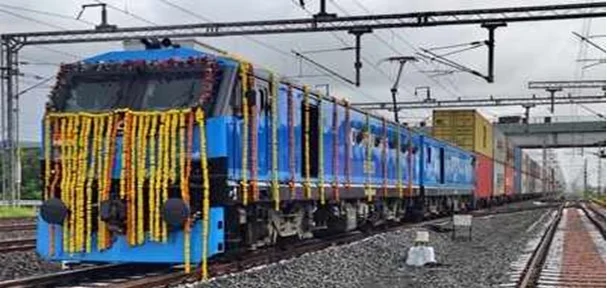
Prime Minister Narendra Modi has described the completion of India’s more than 2,800-km Eastern and Western Dedicated Freight Corridors (DFCs) as a historic milestone for the country’s transport infrastructure.
Background
- India has one of the world’s largest railway networks, but passenger and freight trains have traditionally operated on the same railway tracks. Since passenger trains generally receive operational priority, freight trains often face delays and lower average speeds.
- Rapid industrialisation, growing container traffic and increasing demand for faster movement of goods created the need for a separate high-capacity freight railway network.
- To address this challenge, the Government of India developed the Dedicated Freight Corridor (DFC) programme, implemented through the Dedicated Freight Corridor Corporation of India Limited (DFCCIL) under the Ministry of Railways.
What are Dedicated Freight Corridors?
- Dedicated Freight Corridors are railway routes developed primarily for the movement of goods and freight trains.
- Unlike conventional railway lines, where passenger and freight services share the same tracks, DFCs provide specialised infrastructure for freight transportation. They are designed to accommodate longer and heavier trains, improve freight speeds and provide more reliable movement of cargo.
- The corridors are particularly important for connecting major manufacturing regions, industrial clusters, logistics hubs and ports.
India’s Dedicated Freight Corridor Network
India’s existing DFC network consists of two major corridors — the Eastern Dedicated Freight Corridor (EDFC) and the Western Dedicated Freight Corridor (WDFC). Together, they cover approximately 2,843 km.
Eastern Dedicated Freight Corridor (EDFC)
- The Eastern Dedicated Freight Corridor is approximately 1,337 km long.
- It begins at New Sahnewal near Ludhiana in Punjab and passes through Haryana and Uttar Pradesh before reaching New Sonnagar in Bihar.
- The corridor serves the heavily industrialised and densely populated northern and eastern parts of India. It is particularly important for the movement of bulk commodities and industrial freight.
Western Dedicated Freight Corridor (WDFC)
- The Western Dedicated Freight Corridor is approximately 1,506 km long.
- It starts from New Dadri in Uttar Pradesh and passes through Haryana, Rajasthan and Gujarat before reaching Jawaharlal Nehru Port in Maharashtra.
- The corridor provides a major rail freight connection between the industrial and manufacturing centres of northern and western India and one of the country’s most important container ports.
Importance of Double-Stack Container Trains
- Double-stack container technology is one of the important features of the Western Dedicated Freight Corridor.
- In a double-stack train, containers are placed in two vertical levels on specially designed wagons. This allows substantially more cargo to be transported by a single train.
- Higher carrying capacity means fewer train movements are required for transporting the same amount of freight, helping improve the productivity of railway infrastructure.
Significance for the Indian Economy
- Manufacturing Competitiveness: Reliable and cheaper transportation can reduce the cost of moving raw materials and finished products, making Indian manufacturing more competitive.
- Export Promotion: Improved connectivity between industrial centres and ports can reduce export transit times and strengthen India’s participation in global supply chains.
- Industrial Development: Regions located around DFC stations, logistics parks and industrial corridors can attract new manufacturing, warehousing and logistics investments.
- Multimodal Logistics: DFCs can be integrated with highways, ports, industrial corridors and multimodal logistics parks, creating a more efficient national transportation network.
- Energy and Environmental Benefits: Greater use of railways for long-distance freight transportation can reduce dependence on road-based trucking, potentially lowering fuel consumption and transport-related emissions.
DFCs and India’s Industrial Corridors
- The importance of Dedicated Freight Corridors goes beyond railway transportation. They can act as the transportation backbone for major industrial corridors.
- The Western DFC, for example, supports industrial and logistics development along the Delhi–Mumbai economic region, while the Eastern DFC strengthens connectivity across the industrial and resource-rich regions of northern and eastern India.
- This integration can promote the development of manufacturing clusters, warehouses, logistics parks and new industrial centres around major freight nodes.
What is the Next Dedicated Freight Corridor?
- The government has also announced plans for another Dedicated Freight Corridor connecting Dankuni in West Bengal with western India, passing through important industrial and mineral-producing regions.
- Such expansion would further strengthen the national freight network and improve connectivity between eastern India’s industrial and mineral regions and western ports and manufacturing centres.
- The development of additional corridors would gradually transform the DFC programme from two major railway routes into a broader national freight network.
Challenges
- Despite their potential, the full economic benefits of Dedicated Freight Corridors will depend on several factors.
- Last-mile connectivity between factories, freight terminals and DFC stations needs continuous improvement. DFCs must also be effectively integrated with ports, highways, warehouses and multimodal logistics parks.
- Another challenge is encouraging industries to shift a larger share of freight from roads to railways. Efficient terminal operations, competitive freight tariffs and reliable schedules will therefore remain important.
- Land acquisition, maintenance of specialised infrastructure and development of complementary industrial ecosystems will also influence the long-term success of future corridors.
Way Forward
- India should now focus on maximising the utilisation of the completed Eastern and Western Dedicated Freight Corridors while expanding connectivity to major industrial clusters and ports.
- Greater integration with PM Gati Shakti, industrial corridors, multimodal logistics parks, highways and port infrastructure can multiply the economic impact of DFCs.
Prelims MCQ
Q. Consider the following statements regarding Dedicated Freight Corridors (DFCs) in India:
- The Western Dedicated Freight Corridor connects Dadri with Jawaharlal Nehru Port.
- The Eastern Dedicated Freight Corridor extends up to Sonnagar in Bihar.
- Double-stack container train operations are an important feature of the Western Dedicated Freight Corridor.
Which of the statements given above are correct?
A. 1 and 2 only
B. 2 and 3 only
C. 1 and 3 only
D. 1, 2 and 3
Mains Question
“Dedicated Freight Corridors can transform not only India’s railway freight system but also its wider manufacturing and logistics ecosystem.” Discuss.
|
FAQs
What is a Dedicated Freight Corridor?
A Dedicated Freight Corridor is a railway route developed primarily for freight trains. It provides specialised infrastructure for faster, heavier and more reliable movement of goods.
How many major Dedicated Freight Corridors are operational in India?
India has two major completed corridors — the Eastern Dedicated Freight Corridor and the Western Dedicated Freight Corridor.
What is the total length of the Eastern and Western DFCs?
Together, the two corridors cover approximately 2,843 km.
Why is the Western DFC important?
The Western DFC connects major industrial regions of northern and western India with Jawaharlal Nehru Port and supports high-capacity double-stack container operations.
How will DFCs benefit passenger trains?
By transferring freight traffic to dedicated tracks, DFCs release capacity on conventional railway lines, which can be used for passenger and other railway services.
|






 Contact Us
  New Batch : 9555124124/ 7428085757
  Tech Support : 9555124124/ 7428085757