| (Prelims: Current Affairs) |
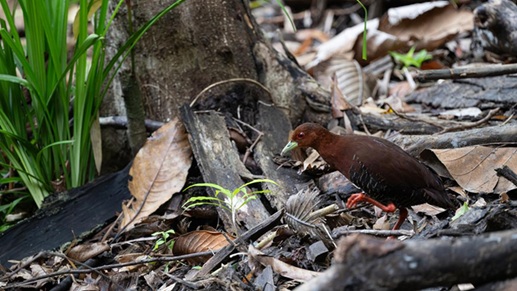
Recently, more than 40 new species, including a new snake and a possible new bird species, have been discovered in the Great Nicobar Mega Infrastructure Project area.
| (Prelims: Current Affairs; Important Reports) |
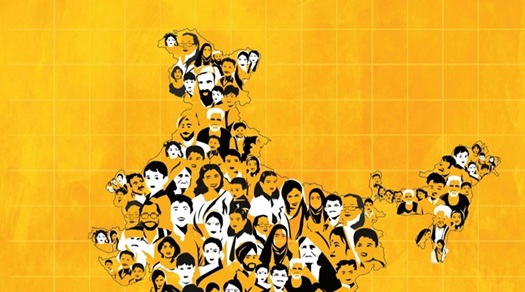
A new national-level report by the International Institute for Migration and Development (IIMAD) and the Population Foundation of India (PFI) provides a detailed analysis of population growth in the Indian island groups of Lakshadweep and Andaman and Nicobar Islands.
| Prelims: (Narco Analysis + CA) Mains: (GS 2 – Governance, Constituion, Ethics; GS 3 – Security) |
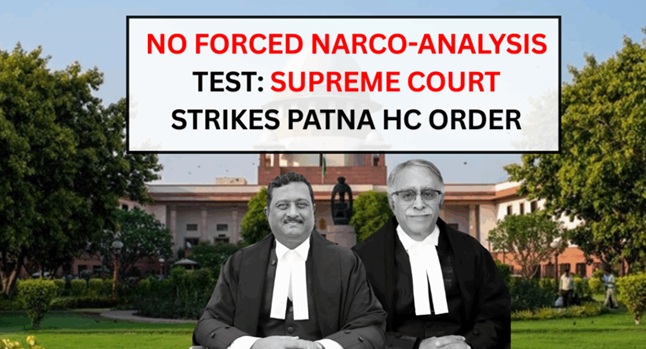
The Supreme Court of India has set aside a Patna High Court order permitting a compulsory narco analysis test in Amlesh Kumar v. State of Bihar (2025). The Court ruled that forced narco tests violate Articles 20(3) and 21, reaffirming earlier constitutional protections upheld in Selvi v. State of Karnataka (2010).
Narco analysis, along with polygraph tests and brain mapping, emerged as investigative tools in the early 2000s to solve complex crimes. However, repeated misuse—including coerced testing, custodial pressure, and lack of transparency—raised alarm regarding violations of personal liberty.
The Supreme Court’s landmark Selvi (2010) judgment attempted to regulate these tests by prohibiting involuntary administration. Despite this, some courts and investigating agencies continued to recommend narco tests in difficult criminal cases, which led to judicial confusion.
The Patna High Court’s 2025 order allowing an involuntary test revived concerns of:
The Supreme Court’s fresh ruling clarifies and reinforces the constitutional safeguards governing investigative procedures.
A narco test uses sedatives such as Sodium Pentothal (a barbiturate) to:
Investigators believe that in such a state, the subject may involuntarily reveal concealed information.
None of these are considered scientifically foolproof, and all raise concerns of testimonial compulsion.
1. Right Against Self-Incrimination – Article 20(3)
2. Personal Liberty & Mental Privacy – Article 21
The Court also invoked the Golden Triangle—Articles 14, 19 & 21, emphasising that investigative actions must be:
1. Selvi v. State of Karnataka (2010) — Landmark Ruling
The Supreme Court held that:
The Patna HC’s order violated these binding directions, leading to its dismissal.
2. Other Supporting Judgments
Manoj Kumar Saini v. State of MP (2023)
Vinobhai v. State of Kerala (2025)
Importance of Informed Consent
Kantian Ethics (Autonomy Principle)
Natural Justice
1. Reinforcing Rights-Based Policing
The judgment strengthens the rule of law and ensures that:
2. Balancing Victim Rights & Due Process
3. Enhancing Judicial Consistency
FAQs1. Is narco analysis completely banned in India ? No. It is allowed only with free, informed consent and strict safeguards. 2. Can narco test results be used as evidence in court ? They cannot be used as standalone evidence; they must be corroborated independently. 3. What happens if an accused refuses a narco test ? Refusal cannot be used against the accused. It is their fundamental right. 4. Does BNSS allow narco tests ? BNSS permits tests only when the accused voluntarily requests them, typically at the defence stage. 5. Are polygraph and brain mapping also covered by this ruling ? Yes. All three techniques require consent and are protected under Article 20(3). |
| Prelims: (Health + CA) Mains: (GS 2: Governance; GS 3 - Public Health, Biotechnology, Ethical Issues in Healthcare) |
Recent data presented by the Union Health Ministry (2020–2024) shows a worsening organ transplant crisis in India, marked by:
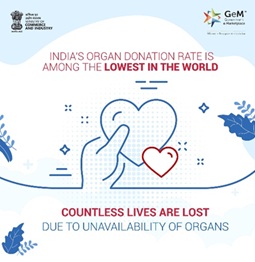
Despite being third globally in the number of transplants, India’s deceased organ donation rate remains among the lowest in the world.
Organ transplantation in India has grown rapidly over the last two decades due to advancements in surgical techniques and private healthcare expansion. However, this progress remains uneven because:
The result is a structurally unequal system, where access to life-saving transplants varies widely based on geography, affordability, and family circumstances.
India ranks third globally with over 18,900 transplants in 2024, yet:
India remains heavily dependent on living donors, especially for kidney and liver transplants.
The gap leads to thousands dying without receiving transplants.
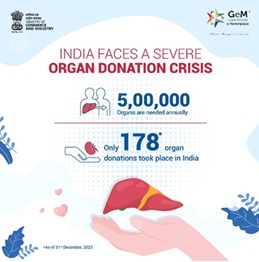
Between 2020–2024, 2,805 people died while awaiting organs.
Top states with highest waitlist deaths:
Despite high transplant volume, Delhi shows the worst mortality, reflecting the mismatch between demand and deceased donor availability.
As of December 2025, 82,285 individuals are on transplant waitlists:
Highest Burden States (2025):
India lacks a uniform national allocation policy. States follow diverse models:
1. State-Specific Criteria (Fragmented Models)
2. Zonal Allocation (Tamil Nadu Model)
3. Priority-Based Allocation (MP, Chhattisgarh)
Preference for:
1. Overreliance on Living Donors
Creates inequity for:
2. Fragmented Allocation Policies
3. Long Waiting Periods
Driven by:
4. Uneven Infrastructure
5. High Mortality on Waitlists
Institutional Reforms
Legal Reforms (2023–2025)
Digital Platforms
1. Toward Uniform National Allocation
NOTTO is developing:
2. Strengthen Deceased Organ Donation
3. Improve Infrastructure
4. Ethical Oversight
FAQs1. Why is India’s deceased donor rate so low ? Low awareness, reluctance to certify brain death, and infrastructural gaps limit organ retrieval. 2. Which organs are most in demand ? Kidneys (60,000+ patients), followed by liver, heart, and lungs. 3. Is organ allocation centralised in India ? Not fully. Allocation varies state-wise, though NOTTO is moving toward a centralised national system. 4. Why do so many people die while waiting ? Severe organ shortage, slow brain death declarations, and long queues lead to high mortality. 5. Which states lead in deceased organ donation ? Tamil Nadu, Telangana, Karnataka, Maharashtra, Kerala, and Gujarat. |
| Prelims: (Economy + CA) Mains: (GS 2 – Governance; GS 3 – Economic Development) |
The Prime Minister has urged citizens to actively participate in the ‘Your Money, Your Right’ movement—an initiative designed to help people reclaim their unclaimed deposits, insurance proceeds, mutual fund payouts, dividends, and other forgotten financial assets.
This nationwide campaign aims to enhance financial awareness, strengthen consumer protection, and ensure that citizens can access funds lying unclaimed for years due to lack of information or procedural hurdles.
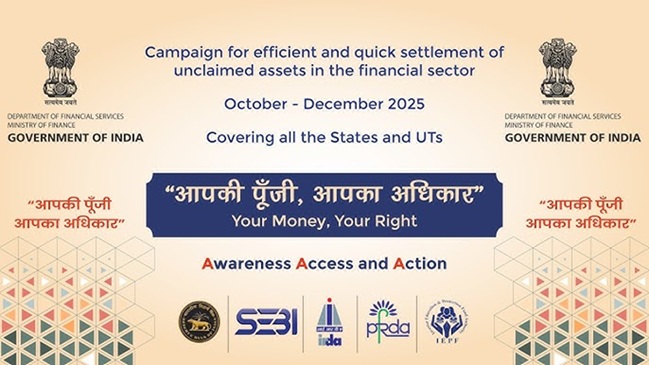
In recent years, India has seen a sharp rise in unclaimed amounts across banks, insurance companies, mutual funds, and corporates.
Key reasons include:
To address this, the government launched a consolidated citizen-centric initiative: “Your Money, Your Right.”
Launched by the Central Government in 2025, the movement is a nationwide financial awareness and reclamation campaign aimed at helping citizens identify and recover:
It involves coordinated participation from:
The central idea is to ensure that citizens regain control over funds that rightfully belong to them.
As per RBI norms, bank accounts not operated for 10 years become "unclaimed." Similar rules apply to:
The government has integrated multiple regulators through dedicated portals to assist people in tracing their unclaimed funds.
1. RBI – UDGAM Portal
Unclaimed Deposits – Gateway to Access Information
2. IRDAI – Bima Bharosa Portal
3. SEBI – MITRA Portal
4. Ministry of Corporate Affairs – IEPFA Portal
Department of Financial Services (DFS), Ministry of Finance.
Coordination Mechanism:
1. Financial Inclusion
Brings forgotten or inaccessible funds back into the banking system, boosting household financial stability.
2. Consumer Protection
Empowers citizens to reclaim their rightful assets through simplified processes.
3. Transparency and Accountability
Strengthens trust between citizens and financial institutions.
4. Digital Governance
Promotes the use of unified digital platforms across regulators.
5. Economic Impact
Unclaimed funds running into thousands of crores get returned to households, enhancing consumption and savings.
The government aims to address these through ongoing awareness campaigns and simplified online claim procedures.
FAQs1. What types of financial assets can be reclaimed ? Unclaimed deposits, insurance proceeds, mutual fund amounts, dividends, unclaimed shares, and other dormant financial assets. 2. Do I need Aadhaar or PAN to search for unclaimed money ? Not always. Most portals allow search using name + date of birth, but Aadhaar/PAN improves accuracy. 3. Can NRIs use the ‘Your Money, Your Right’ portal ? Yes, NRIs can use the portals to trace and claim funds, subject to KYC verification. 4. How long does it take to reclaim unclaimed funds ? Depending on the regulator, it may take 15–90 days after document verification. 5. Can I claim money belonging to my deceased parents or relatives ? Yes. You need:
|
| Prelims: (Polity + CA) Mains: (GS 2 – Governance; GS 3 – Infrastructure, Disaster Management, Environment) |
The year 2025 witnessed major disruptions across India’s transportation systems—severe train overcrowding, widespread flight cancellations, aviation safety concerns, and growing road congestion. These events highlight long-standing structural challenges of underinvestment, market concentration, and weak regulation, putting India’s mobility network under severe stress. These disruptions underscore the mismatch between rising travel demand and inadequate infrastructure capacity, amplified by neoliberal economic policies and fragmented planning.
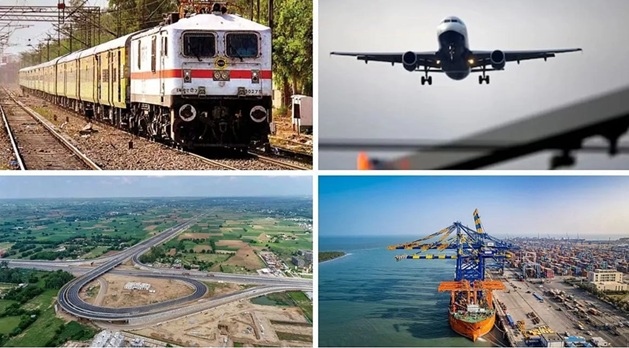
India’s transport network—one of the world’s largest—carries millions daily. However:
The 2025 aviation meltdown, frequent metro breakdowns, and continued rail safety concerns reflect systemic stress in India’s mobility ecosystem.
1. Infrastructure Gaps and Outdated Capacity
2. Neoliberal Constraints & Market Imbalance
India’s economic approach has increasingly favoured private players while restricting large-scale public sector investment.
Consequences include:
3. Persistent Safety Failures
4. Environmental Unsustainability
5. Weak Data-Driven Mobility Management
6. Logistical Inefficiencies
7. Governance & Corruption Challenges
8. Social Equity & Accessibility Gaps
|
Initiative |
Purpose |
|---|---|
|
PM Gati Shakti – National Master Plan |
Unified planning for multimodal infrastructure; reduces logistics costs. |
|
National Infrastructure Pipeline (NIP) |
Long-term funding for large-scale transport projects. |
|
Bharatmala Pariyojana |
Expands highways, builds economic and freight corridors. |
|
Sagarmala Programme |
Enhances port capacity & coastal shipping. |
|
UDAN |
Improves regional air connectivity. |
|
Metro Rail Policy (2017) |
Guides metro expansion and Transit-Oriented Development. |
|
FAME II & PM e-Bus Sewa |
Supports EV adoption and electric buses in cities. |
|
Intelligent Transport Systems (ITS) Policy 2022 |
Promotes digital traffic management and real-time mobility. |
|
Amrit Bharat & Vande Bharat |
Modernizes railway stations and introduces semi-high-speed trains. |
|
Smart Cities Mission |
Focuses on non-motorized transport, pedestrianization, and integrated mobility. |
1. Modernize Public Transport
2. Increase Government Investment
3. Build Safer Mobility Networks
4. Promote Sustainable, Low-Carbon Transport
5. Strengthen Data-Driven Governance
6. Improve Social Equity & Accessibility
FAQs1. Why does India’s transport system face recurring disruptions ? Due to capacity shortages, outdated infrastructure, weak regulation, high demand growth, and underinvestment. 2. Which initiative integrates all transport planning at the national level ? PM Gati Shakti – National Master Plan. 3. What is Kavach 5.0 ? India’s indigenously developed Automatic Train Protection (ATP) system to prevent collisions. 4. Why is India’s logistics cost high ? Dependence on roads, fragmented supply chains, weak multimodal infrastructure, and poor warehousing. 5. What are the biggest safety concerns in India’s transport network ? High road accident deaths, railway derailments, and aviation safety gaps. 6. How does climate change affect transport ? Floods, heatwaves, and storms disrupt roads, rail tracks, airports, and shipping routes. |
| Prelims: (Technology + CA) Mains: GS 2 – Health Governance, Welfare Schemes, Tribal Affairs: GS 3 – Technology) |
The Ministry of Tribal Affairs informed the Rajya Sabha that there is currently no proposal to expand the Swasthya Portal to integrate national health databases, district-level dashboards, or AI-driven analytics. This has renewed attention on the functioning, scope, and limitations of the Swasthya Portal — a key digital platform tracking tribal health and nutrition indicators in India.
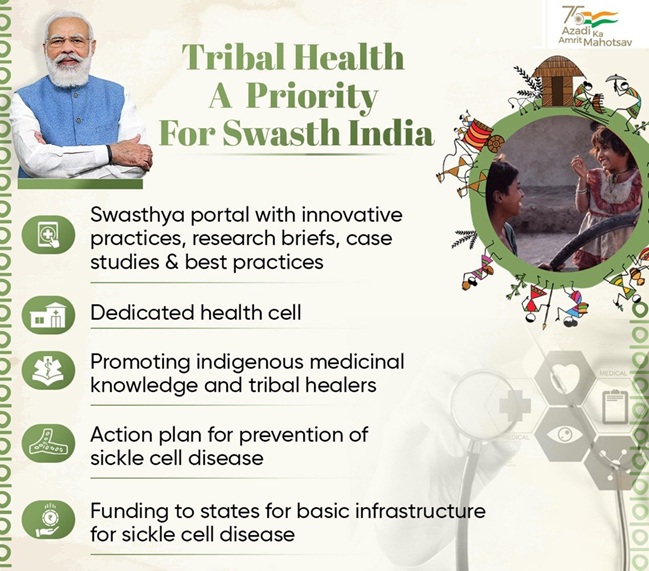
India’s tribal population (over 10.4 crore people, ~8.6% of the population) faces persistent challenges:
To address the information gap, the Ministry of Tribal Affairs launched the Swasthya Portal under the larger digital knowledge initiative TRI-ECE (Tribal Research Information, Education, Communication & Events). The portal aims to consolidate health-related data for tribal communities, serve as a research repository, and support evidence-based policy interventions.
The Swasthya Portal is a centralised digital platform providing real-time information on the health and nutrition status of India’s tribal population.
Key Functions:
1. Unified Tribal Health Dashboard
2. Knowledge Repository
3. Sickle Cell Disease (SCD) Corner
4. Partner & Collaboration Section
5. Hosted and Managed by NIC Ecosystem
1. Bridges Tribal Health Data Gaps
Reliable tribal health statistics are often unavailable — this platform centralises and standardises them.
2. Improves Policymaking
Helps ministries, state departments and district administrations plan targeted interventions.
3. Supports Sickle Cell Disease (SCD) Elimination Mission
Acts as a knowledge base to support the National SCD Elimination Programme.
4. Enhances Transparency & Governance
Digitised dashboards create accountability and encourage inter-state learning.
5. Evidence-Based Decision Making
Researchers and NGOs can design interventions based on verified data.
The government clarified that the Swasthya Portal will not be expanded to include:
This means the platform remains primarily informational, not analytical.
FAQs1. What is the primary objective of the Swasthya Portal ? To provide a comprehensive, centralised platform presenting health and nutrition data of tribal populations, aiding policymakers and researchers. 2. Does the Swasthya Portal collect real-time health data ? No. It curates data from existing national and state sources. 3. Why is Sickle Cell Disease highlighted on the portal ? Because SCD disproportionately affects tribal communities; the portal serves as an awareness and knowledge hub. 4. Will the portal integrate AI analytics ? No. The government clarified that no such expansion is planned currently. 5. Who manages the Swasthya Portal ? It is hosted by NIC and managed by the Centre of Excellence for Knowledge Management in Health and Nutrition under the Ministry of Tribal Affairs. |

Our support team will be happy to assist you!

 Contact Us
  New Batch : 9555124124/ 7428085757
  Tech Support : 9555124124/ 7428085757