New
Hindi Medium: (Delhi) - GS Foundation (P+M) : 6th July 2026, 6:00 PM Hindi Medium: (Prayagraj) - GS Foundation (P+M) : 5th July 2026, 8:00 AM English Medium: (Delhi) - GS Foundation (P+M) : 20th July 2026 English Medium: (Prayagraj) - GS Foundation (P+M) : 15th July 2026, 8:00 AM Hindi Medium: (Delhi) - GS Foundation (P+M) : 6th July 2026, 6:00 PM Hindi Medium: (Prayagraj) - GS Foundation (P+M) : 5th July 2026, 8:00 AM English Medium: (Delhi) - GS Foundation (P+M) : 20th July 2026 English Medium: (Prayagraj) - GS Foundation (P+M) : 15th July 2026, 8:00 AM

Current Affairs for 13 July 2026

Lymphatic Filariasis (Elephantiasis): Causes, Transmission, Treatment, and India's 2030 Elimination Target

Why is it in the News ?

  • The West Bengal Health Department has launched a Mass Drug Administration (MDA) campaign against Lymphatic Filariasis (LF).
  • The campaign is being conducted across 59 blocks and urban local bodies in 10 districts of the state.
  • Its objective is to eliminate filariasis by 2030. During the campaign, health workers are visiting households to provide free preventive medicines to eligible people and encouraging them to consume the medicines under Directly Observed Treatment (DOT).

What is Lymphatic Filariasis?

  • Lymphatic Filariasis (LF), commonly known as Elephantiasis, is a parasitic infection.
  • It is classified by the World Health Organization (WHO) as a Neglected Tropical Disease (NTD).
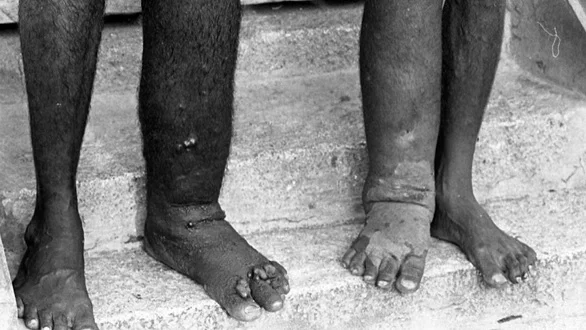
  • The disease affects the lymphatic system, leading to abnormal swelling of various body parts, especially the legs, arms, breasts, and genital organs.
  • If left untreated for a long period, it can cause permanent disability and serious social and economic problems.

What is the Lymphatic System ?

The lymphatic system is an important network in the human body consisting of lymph vessels, lymph nodes, and lymph fluid.

Its major functions include :

  • Removing excess fluid from body tissues.
  • Strengthening the body's immune system.
  • Protecting the body against infections.
  • Helping in the transport of fats and nutrients.

The filarial parasites damage this system, causing lymph fluid to accumulate and resulting in swelling.

What Causes Lymphatic Filariasis ?

The disease is caused by infection with thread-like parasitic roundworms (nematodes) belonging to the Filarioidea family.

The three main parasites are :

1. Wuchereria bancrofti

  • Responsible for about 90% of global cases.
  • Causes the majority of infections in India.

2. Brugia malayi

  • Responsible for most of the remaining cases.
  • Found in some states of India.

3. Brugia timori

  • Comparatively rare.
  • Mainly found in certain parts of Indonesia.

Transmission

  • Lymphatic Filariasis is a vector-borne disease.
  • In India, the principal vector is the female Culex mosquito.
  • In some parts of the world, Anopheles, Aedes, and Mansonia mosquitoes can also transmit the disease.

How Does Filariasis Spread ?

  1. The blood of an infected person contains microfilariae (immature larvae).
  2. When a female mosquito bites the infected person, it ingests these microfilariae.
  3. Inside the mosquito, the larvae develop into the infective stage.
  4. When the infected mosquito later bites a healthy person, the larvae enter the body.
  5. The larvae migrate to the lymphatic vessels, where they develop into adult worms.
  6. Adult worms can survive for years and produce millions of microfilariae.

Can a Single Mosquito Bite Cause Filariasis ?

  • Generally, a single mosquito bite does not cause the disease.
  • Infection usually occurs after repeated bites by infected mosquitoes over several months or even years.

Symptoms of Lymphatic Filariasis

In the early stages, most infected individuals do not show any symptoms.

Over time, the following complications may develop :

  • Severe swelling of the legs (Elephantiasis)
  • Swelling of the arms
  • Hydrocele (swelling of the scrotum)
  • Swelling of the breasts
  • Thickening and hardening of the skin
  • Recurrent fever
  • Inflammation of the lymphatic vessels
  • Pain and difficulty in movement

Why Does Elephantiasis Occur ?

Adult worms block the lymphatic vessels.

As a result :

  • The normal flow of lymph fluid is obstructed.
  • Lymph fluid accumulates in the affected tissues.
  • The affected body parts gradually become enlarged, swollen, and thickened.

This condition is known as Elephantiasis.

Situation in India

  • India is among the countries with the highest burden of Lymphatic Filariasis.
  • The disease is endemic in many districts of Uttar Pradesh, Bihar, Jharkhand, West Bengal, Odisha, Assam, Tamil Nadu, Kerala, Andhra Pradesh, and Telangana.
  • The Government of India aims to eliminate Lymphatic Filariasis by 2030.

Treatment of Lymphatic Filariasis

Treatment is carried out at two levels :

1. Preventing Transmission

  • According to the World Health Organization (WHO), the most effective strategy to prevent transmission is Mass Drug Administration (MDA).

2. Management of Patients

  • Regular care of swollen limbs
  • Prevention of secondary infections
  • Surgery for Hydrocele
  • Proper skin hygiene
  • Exercise and physiotherapy

What is Mass Drug Administration (MDA)?

Mass Drug Administration (MDA) is a public health intervention in which all eligible people living in endemic areas receive anti-filarial medicines once every year, regardless of whether they have symptoms.

Its objectives are :

  • To eliminate microfilariae circulating in the blood.
  • To break the cycle of transmission through mosquitoes.
  • To prevent new infections.
  • To ultimately eliminate the disease.

Which Medicines are Used in MDA ?

According to WHO recommendations, the following medicines are used in different countries :

  • Diethylcarbamazine (DEC)
  • Albendazole
  • Ivermectin (in selected regions)

In India, the standard MDA regimen generally consists of DEC + Albendazole.

West Bengal's New Campaign

Recently, the Government of West Bengal has :

  • Launched the campaign in 10 districts.
  • Covered 59 blocks and urban local bodies.
  • Deployed health workers for door-to-door drug distribution.
  • Urged people to consume the medicines in the presence of health workers.
  • Set the target of eliminating filariasis from the state by 2030.

Preventive Measures Against Filariasis

  • Protect yourself from mosquito bites.
  • Prevent water stagnation around homes.
  • Use mosquito nets.
  • Wear full-sleeved clothing.
  • Take medicines provided during the MDA campaign.
  • Ensure timely treatment of infected individuals.

FAQ (Frequently Asked Questions)

1. What is lymphatic filariasis ?

Answer:- It is a parasitic neglected tropical disease, commonly known as elephantiasis. It affects the body's lymphatic system.

2. Which mosquito is transmitted by this disease in India ?

Answer:- Primarily through the bite of the female Culex mosquito.

3. Which system of the body does filariasis affect ?

Answer:- It affects the lymphatic system.

Centre Launches Amnesty Scheme for Exempted PF Trusts to Regularise Status

Prelims

Economy, Labour & Social Security, EPFO, Government Schemes, Finance Act, Income Tax Act, Code on Social Security, 2020, and Current Affairs.

UPSC GS Paper II : Governance, Government Policies & Interventions, Labour Welfare, Social Security, and Social Sector Management

GS Paper III : Inclusive Growth, Employment, Formalisation of the Economy, Economic Reforms, and Human Resource Development.

Why in news ?

  • The Employees' Provident Fund Organisation (EPFO) has launched the Amnesty Scheme, 2026, giving exempted Provident Fund (PF) Trusts a one-time opportunity to regularise their legal status.
  • The scheme is meant for establishments that have been running PF Trusts but do not have a formal exemption notification from the Central or State Government.

Key Highlights

  • EPFO has invited applications from eligible PF Trusts under the Amnesty Scheme, 2026.
  • The scheme aims to align PF Trusts with the provisions of the Finance Act, 2026, Income Tax Act, 2025, and the Code on Social Security, 2020.
  • It is valid for six months.

Who Can Apply ?

  • The scheme is applicable to establishments that 
    • Operate an exempted Provident Fund Trust.
    • Do not possess an official exemption notification under Section 17 of the Employees' Provident Fund and Miscellaneous Provisions Act, 1952.

Benefits Under the Amnesty Scheme

  • Eligible PF Trusts will receive :
    • Retrospective exemption status from the date the Trust was established up to the notified cut-off date.
    • Recognition under the Income Tax Act.
    • Relaxation of minimum employee strength and corpus size requirements.
    • A one-time opportunity to become fully compliant with EPFO regulations.

Why Was the Scheme Introduced ?

  • The Finance Act, 2026 changed the rules governing recognised Provident Funds. Under the new framework :
    • Recognition under the Income Tax Act, 2025 will be available only to PF Trusts that have obtained exemption under Section 17 of the EPF Act, 1952.
    • The Amnesty Scheme allows existing Trusts without formal exemption to regularise their status without losing recognition.

What Should Eligible Establishments Do ?

  • Eligible establishments should submit a formal application to the Union Government within the six-month window to avail the benefits of the scheme.

EPFO Interest Update

  • Separately, the Union Labour Minister has stated that interest on Employees' Provident Fund (EPF) deposits will be credited to members' accounts by July 15, 2026.

Prelims Question  

Q. Which of the following benefits is provided under the Amnesty Scheme, 2026?

  1. Retrospective exemption status for eligible PF Trusts.
  2. Waiver of minimum employee strength and corpus size requirements.
  3. Automatic merger of PF Trusts with EPFO.

  Select the correct answer using the code below:

  1. 1 and 2 only
  2. 2 and 3 only
  3. 1 and 3 only
  4. 1, 2 and 3

Mains questions 

The Amnesty Scheme, 2026 aims to bring exempted Provident Fund (PF) Trusts into the formal regulatory framework. Discuss the objectives, key features, and significance of the scheme.

FAQs: EPFO Amnesty Scheme, 2026

Q1. What is the EPFO Amnesty Scheme, 2026 ?

Answer : It is a one-time scheme launched by the Employees' Provident Fund Organisation (EPFO) to allow eligible exempted Provident Fund (PF) Trusts to regularise their legal and regulatory status.

Q2. Why has the Amnesty Scheme been introduced ?

Answer : The scheme has been introduced to align PF Trusts with the provisions of the Finance Act, 2026, the Income Tax Act, 2025, and the Code on Social Security, 2020, while improving regulatory compliance.

Q3. Who is eligible to apply under the scheme ?

Answer : Establishments operating an exempted PF Trust without a formal exemption notification from the Central or State Government are eligible to apply.

Q4. How long will the Amnesty Scheme remain open ?

Answer : The scheme is valid for six months from the date of its notification.

India's Hydrogen Train: Working, Advantages, Challenges & National Green Hydrogen Mission

Prelims

Green Hydrogen, Fuel Cells, National Green Hydrogen Mission, Railway Modernisation

GS Paper II: Government Policies, Sustainable Development

GS Paper III: Science & Technology, Infrastructure, Environment, Energy Security, Climate Change

Why is in the news ?

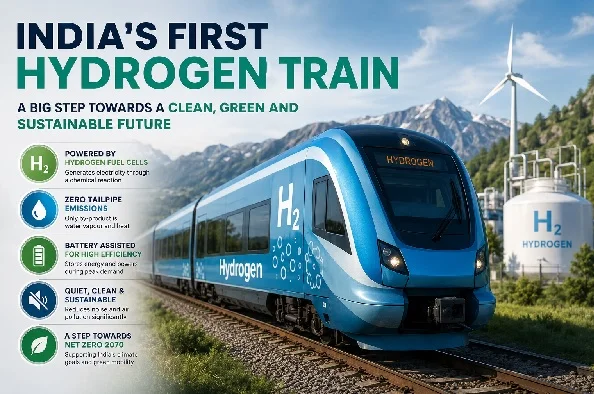
  • India is set to achieve another milestone in its clean energy transition as the Prime Minister is scheduled to flag off the country's first hydrogen-powered train. 
  • The project marks a significant step towards decarbonising Indian Railways and aligns with the Government's vision of achieving Net Zero emissions by 2070.

What is a Hydrogen Train ?

  • A hydrogen train is a railway vehicle powered by hydrogen fuel cell technology, which generates electricity through an electrochemical reaction between hydrogen and oxygen instead of burning fossil fuels.
  • Unlike diesel locomotives that rely on internal combustion engines, hydrogen trains use fuel cells to produce electricity on-board. This electricity powers electric traction motors that drive the train. The only by-products of this process are water vapour and heat. 
  • Since no carbon dioxide, sulphur oxides, or particulate matter are emitted during operation, hydrogen trains are classified as zero tailpipe emission transport systems.

How Does a Hydrogen Train Work ? 

  • A hydrogen train operates using hydrogen fuel cells, batteries, and electric traction motors. 
  • Hydrogen stored in high-pressure tanks reacts with oxygen inside the fuel cell to generate electricity through an electrochemical process. 
  • This electricity powers the train's motors and onboard systems, while lithium-ion batteries store excess energy and assist during acceleration. 
  • The only by-products of this process are water vapour and heat, making hydrogen trains a clean, zero-tailpipe-emission mode of transport.

Major Components of a Hydrogen Train 

  • A hydrogen train comprises high-pressure hydrogen storage tanks, fuel cell stacks, electric traction motors, lithium-ion batteries, power control units, cooling systems, and hydrogen monitoring sensors.
  •  The fuel cell generates electricity, the motors drive the train, and batteries improve efficiency through regenerative braking. 
  • Advanced sensors continuously monitor hydrogen leakage and pressure, ensuring safe operation, while the cooling system maintains the optimal temperature of the fuel cells.

Types of Hydrogen

  • Grey Hydrogen : Produced from natural gas through steam methane reforming, cheapest and most widely used, and releases significant carbon dioxide.
  • Blue Hydrogen : Produced from fossil fuels, carbon emissions are captured and stored using Carbon Capture and Storage (CCS), and cleaner than grey hydrogen but still dependent on fossil fuels.
  • Green Hydrogen : Produced through electrolysis using renewable electricity, generates almost no greenhouse gas emissions, considered the most sustainable form of hydrogen, and forms the foundation of India's National Green Hydrogen Mission.

Why is Hydrogen Considered a Clean Fuel ?

  • Hydrogen itself is not a primary source of energy but an energy carrier. Its environmental impact depends upon the method used to produce it. 
  • When hydrogen is produced through electrolysis using renewable energy such as solar or wind power, it is called Green Hydrogen. Green hydrogen production releases almost no greenhouse gases. 
  • Consequently, hydrogen trains powered by green hydrogen become nearly carbon-neutral throughout their operational life cycle. However, hydrogen produced from natural gas without carbon capture (Grey Hydrogen) still results in significant carbon emissions.

Why are Hydrogen Trains Needed ?

  • Transportation contributes significantly to global greenhouse gas emissions. While railway transport is more energy-efficient than road or air transport, diesel locomotives continue to emit substantial quantities of carbon dioxide and other pollutants.
  • Hydrogen trains provide an alternative by offering clean mobility without requiring extensive electrification infrastructure. For countries like India, where certain railway routes are difficult to electrify due to geographical or financial constraints, hydrogen trains offer a sustainable solution.

Advantages of Hydrogen Trains

  • Zero Tailpipe Emissions : Hydrogen trains emit only water vapour during operation. Unlike diesel locomotives, they do not release carbon dioxide, sulphur oxides, nitrogen oxides and particulate matter. This contributes to cleaner air and reduced greenhouse gas emissions.
  • Energy Efficient : Fuel cells convert chemical energy directly into electricity with much higher efficiency than internal combustion engines.
  • Suitable for Non-Electrified Routes : Installing overhead electric lines on every railway route is expensive. Hydrogen trains eliminate the need for continuous electrification while still providing clean transport. They are especially suitable for hill railways, heritage routes, rural regions, tourist corridors, and remote railway lines.
  • Supports Renewable Energy Integration : Green hydrogen is produced using renewable electricity. Thus, hydrogen trains indirectly promote greater utilisation of solar and wind energy, helping stabilize the renewable energy ecosystem.
  • Environmentally Sustainable : When powered by green hydrogen, hydrogen trains become nearly carbon-neutral throughout their operational life cycle. They support India's transition towards sustainable transportation and renewable energy.

Why is India Investing in Hydrogen Railways ?

  • Decarbonising the Railway Sector : Replacing diesel locomotives with hydrogen-powered trains can significantly reduce carbon dioxide emissions while improving local air quality. This supports India's commitments under the Paris Agreement and the Panchamrit Climate Targets announced at COP26.
  • Achieving Net Zero Emissions by 2070 : Introducing zero-emission technologies like hydrogen trains will contribute significantly towards achieving this long-term climate goal.
  • Reducing Dependence on Imported Fossil Fuels : India imports nearly 85% of its crude oil requirements, making the economy vulnerable to fluctuations in global energy prices. Green hydrogen produced domestically from renewable energy can improve India's energy security by reducing dependence on imported diesel.
  • Supporting Atmanirbhar Bharat : The hydrogen train project promotes indigenous innovation in fuel cell technology, hydrogen storage systems, railway engineering, safety mechanisms, and advanced manufacturing. 

Hydrogen Train vs Diesel Train

Parameter

Hydrogen Train 

Diesel Train 

Fuel

Hydrogen 

Diesel

Tailpipe Emissions

Water vapour 

CO, NOx, SOx, PM

Noise 

Low 

High 

Maintenance

Low mechanical gear 

Higher

Environmental Impact

Very low

High 

Energy Efficiency 

High 

Moderate 

Hydrogen Train vs Electric Train

Parameter 

Hydrogen Train

Electric Train 

Overhead Wires Required

No

Yes 

Suitable for Remote Areas

Yes 

Limited

Infrastructure Cost

Moderate 

High 

Running Cost

Higher (Currently)

Lower

Emissions

Near zero

Depends on electricity source 

National Green Hydrogen Mission

  • The Government of India launched the National Green Hydrogen Mission in January 2023. The mission seeks to position India as a global hub for the production, utilisation, and export of green hydrogen while accelerating the country's transition towards a low-carbon economy.
  • The hydrogen train project is one of the flagship applications of this mission in the transportation sector. By integrating green hydrogen into railway operations, India aims to demonstrate the commercial viability of hydrogen-powered mobility and reduce dependence on imported fossil fuels.

Government Initiatives Supporting Hydrogen Mobility

  • National Rail Plan : Aims to modernise India's railway infrastructure while promoting sustainable and energy-efficient transportation.
  • Mission 100% Railway Electrification: While most broad-gauge routes are being electrified, hydrogen trains will serve as a solution for select heritage, mountainous, and remote sections.
  • Atmanirbhar Bharat : Encourages indigenous development of fuel cell, hydrogen storage system, electrolysers, railway components, safety technologies. This reduces dependence on imported equipment while strengthening domestic manufacturing capabilities.
  • Make in India : Creates opportunities for Indian industries to manufacture advanced railway technologies, promoting exports and enhancing India's position in the global clean energy market.
  • Production Linked Incentive (PLI) Scheme : Supports domestic production of components that can contribute to India's hydrogen economy, including electrolysers and renewable energy equipment.

Environmental Significance

  • Reduction in Greenhouse Gas Emissions
  • Improved Air Quality
  • Supporting Renewable Energy
  • Contribution to Sustainable Development Goals (SDG 7, SDG 9, SDG 11, SDG 12, SDG 13)

Challenges before India

  • High Cost of Green Hydrogen : Green hydrogen remains more expensive than diesel and conventional electricity. Reducing production costs through technological innovation and economies of scale remains a priority.
  • Limited Hydrogen Infrastructure : Hydrogen production plants, transportation networks, storage facilities, and refuelling stations are still in the early stages of development. 
  • Dependence on Renewable Energy : Expanding solar and wind capacity is therefore essential for the long-term success of hydrogen mobility.
  • Safety and Regulatory Framework : Although hydrogen technologies are safe, India needs comprehensive standards for hydrogen storage, transportation, refuelling, emergency response, and railway operations. 

Way Forward

  • Scale up Green Hydrogen Production: Expand renewable energy capacity and reduce the cost of electrolysis.
  • Promote Indigenous Manufacturing: Encourage domestic production of electrolysers, fuel cells, hydrogen tanks, and railway equipment under Make in India.
  • Increase Public-Private Partnerships: Facilitate collaboration between government agencies, research institutions, and private industries for technology development.
  • Invest in Research and Innovation: Strengthen research in fuel cell efficiency, hydrogen storage materials, and safety technologies.
  • Enhance International Cooperation: Collaborate with countries such as Germany, Japan, and France to benefit from global best practices and technological advancements.

PRELIMINARY MCQ

Q. Consider the following statements regarding Hydrogen-Powered Trains:

1. Hydrogen trains generate electricity using hydrogen fuel cells.

2. The only direct by-products of hydrogen fuel cells are water vapour and heat.

3. Hydrogen trains require overhead electric wires for operation.

Which of the statements given above is/are correct?

(a) 1 and 2 only

(b) 2 and 3 only

(c) 1 and 3 only

(d) 1, 2 and 3

MAINS PRACTICE QUESTION 

Q. "Hydrogen-powered trains have the potential to transform India's transport sector by promoting clean energy and reducing carbon emissions. Discuss the opportunities and challenges associated with the adoption of hydrogen rail technology in India."


FAQs

1. Why is India introducing hydrogen-powered trains ?

India aims to reduce diesel consumption, promote green hydrogen, improve energy security, achieve its Net Zero targets, and modernise Indian Railways through clean technology.

2. How are hydrogen trains different from electric trains ?

Hydrogen trains generate electricity on-board using fuel cells and do not require overhead electric wires, whereas electric trains depend on external electrified railway infrastructure.

3. How does the National Green Hydrogen Mission support hydrogen trains ?

The mission promotes domestic production and utilisation of green hydrogen, encourages indigenous manufacturing of hydrogen technologies, and supports clean mobility initiatives such as hydrogen-powered trains, contributing to India's long-term climate and energy security goals.

4. Why haven't hydrogen trains become popular globally ?

High production costs of green hydrogen, expensive fuel cells, limited refuelling infrastructure, and storage challenges have slowed the widespread adoption of hydrogen trains.

5. Which routes are suitable for hydrogen-powered trains ?

Hydrogen trains are ideal for non-electrified, regional, heritage, mountainous, and remote railway routes where installing overhead electric lines is difficult or uneconomical.

upsc english
« »
  • SUN
  • MON
  • TUE
  • WED
  • THU
  • FRI
  • SAT
Have any Query?

Our support team will be happy to assist you!

OR