
- UPSC Exam
- State PCS
- One Day Exam
- Current Affairs
- PT Quiz
- Downlaods
- About Coaching
- Blog
- Videos

PrelimsGreen Hydrogen, Fuel Cells, National Green Hydrogen Mission, Railway Modernisation GS Paper II: Government Policies, Sustainable Development GS Paper III: Science & Technology, Infrastructure, Environment, Energy Security, Climate Change |
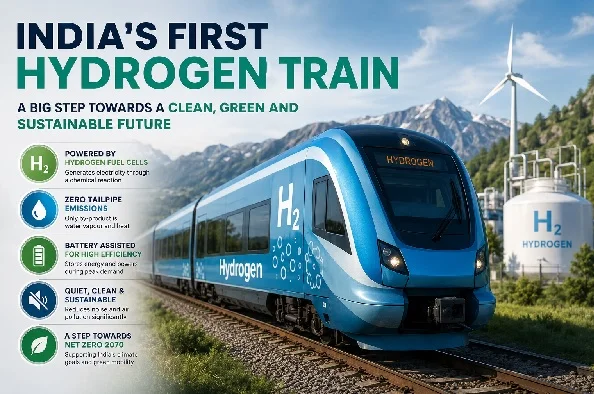
|
Parameter |
Hydrogen Train |
Diesel Train |
|
Fuel |
Hydrogen |
Diesel |
|
Tailpipe Emissions |
Water vapour |
CO₂, NOx, SOx, PM |
|
Noise |
Low |
High |
|
Maintenance |
Low mechanical gear |
Higher |
|
Environmental Impact |
Very low |
High |
|
Energy Efficiency |
High |
Moderate |
|
Parameter |
Hydrogen Train |
Electric Train |
|
Overhead Wires Required |
No |
Yes |
|
Suitable for Remote Areas |
Yes |
Limited |
|
Infrastructure Cost |
Moderate |
High |
|
Running Cost |
Higher (Currently) |
Lower |
|
Emissions |
Near zero |
Depends on electricity source |
PRELIMINARY MCQQ. Consider the following statements regarding Hydrogen-Powered Trains: 1. Hydrogen trains generate electricity using hydrogen fuel cells. 2. The only direct by-products of hydrogen fuel cells are water vapour and heat. 3. Hydrogen trains require overhead electric wires for operation. Which of the statements given above is/are correct? (a) 1 and 2 only (b) 2 and 3 only (c) 1 and 3 only (d) 1, 2 and 3 MAINS PRACTICE QUESTIONQ. "Hydrogen-powered trains have the potential to transform India's transport sector by promoting clean energy and reducing carbon emissions. Discuss the opportunities and challenges associated with the adoption of hydrogen rail technology in India." |
FAQs1. Why is India introducing hydrogen-powered trains ? India aims to reduce diesel consumption, promote green hydrogen, improve energy security, achieve its Net Zero targets, and modernise Indian Railways through clean technology. 2. How are hydrogen trains different from electric trains ? Hydrogen trains generate electricity on-board using fuel cells and do not require overhead electric wires, whereas electric trains depend on external electrified railway infrastructure. 3. How does the National Green Hydrogen Mission support hydrogen trains ? The mission promotes domestic production and utilisation of green hydrogen, encourages indigenous manufacturing of hydrogen technologies, and supports clean mobility initiatives such as hydrogen-powered trains, contributing to India's long-term climate and energy security goals. 4. Why haven't hydrogen trains become popular globally ? High production costs of green hydrogen, expensive fuel cells, limited refuelling infrastructure, and storage challenges have slowed the widespread adoption of hydrogen trains. 5. Which routes are suitable for hydrogen-powered trains ? Hydrogen trains are ideal for non-electrified, regional, heritage, mountainous, and remote railway routes where installing overhead electric lines is difficult or uneconomical. |



Our support team will be happy to assist you!

 Contact Us
  New Batch : 9555124124/ 7428085757
  Tech Support : 9555124124/ 7428085757