Why in News?
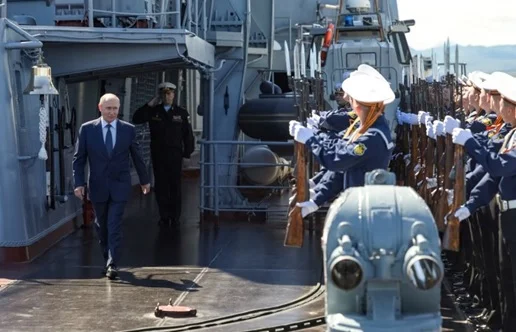
Russian President Vladimir Putin visited Iturup Island in the disputed Kuril Islands on August 13, 2026, triggering strong protests from Japan.
Key Points
- The visit was particularly significant because it was reported as Putin's first in-person visit to the disputed island chain and came amid already strained Russia-Japan relations.
- Japan considers Iturup and three other islands to be its “Northern Territories”, while Russia administers them as part of its Sakhalin Region and calls them the Southern Kuril Islands.
Where are the Kuril Islands Located?
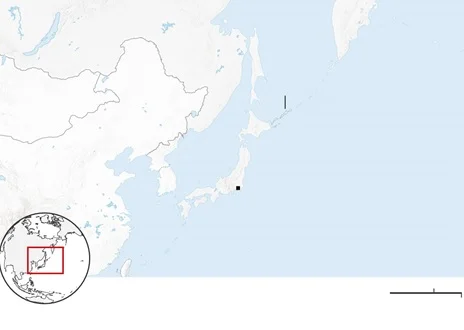
- The Kuril Islands are a volcanic archipelago in the North Pacific Ocean.
Key geographical facts
- The archipelago comprises around 56 major islands and several smaller islets.
- It stretches for approximately 1,200 km.
- It lies between the Sea of Okhotsk and the Pacific Ocean.
- The island chain extends from Russia's Kamchatka Peninsula towards Japan's Hokkaido.
- Russia controls the entire Kuril Island chain.
The Four Disputed Islands
- Japan claims sovereignty over four southern islands:
- Iturup (Etorofu in Japanese) - the largest of the disputed islands
- Kunashir (Kunashiri in Japanese)
- Shikotan
- Habomai Islands
- Japan calls these islands the Northern Territories, whereas Russia refers to them as the Southern Kurils.
What is the Kuril Islands Dispute?
- The dispute is a long-standing territorial conflict between Russia and Japan over the sovereignty of the four southernmost islands.
- The Soviet Union took control of the islands at the end of the Second World War in 1945. Russia has administered them ever since.
- However, Japan maintains that these four islands are historically and legally part of Japan and should not be considered part of the Kuril Islands that Japan renounced after World War II.
Why Are the Islands Important to Russia?
- The Kuril Islands are important to Russia because they have rich fishing resources and potentially valuable mineral deposits.
- They are also strategically located between the Sea of Okhotsk and the Pacific Ocean.
- Russia has strengthened its military presence there because control of the islands provides its navy with year-round access to the Pacific Ocean, as the nearby sea route remains ice-free even in winter.
Historical Background of the Dispute
1. Treaty of Shimoda, 1855
- The treaty established the boundary between Russia and Japan between Iturup and Urup islands.
- Under Japan's interpretation, Iturup, Kunashir, Shikotan and Habomai were recognised as Japanese territory.
2. Treaty of St. Petersburg, 1875
- Under this agreement:
- Japan gave up its claims over Sakhalin.
- In exchange, Russia transferred the Kuril Islands to Japan.
3. Russo-Japanese War and Treaty of Portsmouth, 1905
- Following Japan's victory in the Russo-Japanese War, Japan gained the southern part of Sakhalin.
4. Second World War, 1945
- Towards the end of World War II, the Soviet Union entered the war against Japan and occupied the Kuril Islands.
- The Soviet Union subsequently established control over the islands and Japanese residents were removed.
5. San Francisco Peace Treaty, 1951
- Japan renounced claims to the Kuril Islands under the treaty.
- However, Japan argues that the four disputed islands are not part of the Kuril Island chain referred to in the treaty.
- The Soviet Union did not sign the San Francisco Peace Treaty.
Why Does Russia Claim the Islands?
- Russia argues that its sovereignty over the islands is based on the outcome of World War II and the post-war international settlement.
- Moscow refers to arrangements associated with:
- Yalta Agreement
- Potsdam Declaration
- The broader post-World War II territorial settlement
- Russia maintains that the islands became Soviet territory following Japan's defeat and that the current territorial arrangement is an established historical and legal reality.
Why Did Putin Visit Iturup Island?
Putin's visit had both political and strategic significance.
1. Assertion of Russian Sovereignty
- The visit sent a clear message that Moscow considers the islands an integral part of Russian territory.
- Putin stated that the islands' current status emerged from the outcome of World War II and is reflected in international arrangements.
2. Strategic Importance
- Iturup is the largest and strategically important of the four disputed islands.
- Control over the southern Kurils gives Russia a significant geographical and military presence in the northwestern Pacific region.
3. Domestic Political Messaging
- A presidential visit to the disputed territory also reinforces Russia's position before its domestic audience that Moscow will not compromise on national sovereignty.
4. Demonstrating Effective Control
- During his visit, Putin reportedly visited:
- A fish-processing plant
- A hospital
- A school
- Local residents and regional officials
- Such visits highlight Russia's de facto administration and development activities on the disputed territory.
Why Did Japan React So Strongly?
- Japan described Putin's visit as “absolutely unacceptable” and lodged a strong protest.
- Tokyo's objection is based on its position that:
- The Northern Territories are an inherent part of Japan, both historically and under international law.
- For Japan, a Russian President's visit is not merely a diplomatic event. It represents a high-profile assertion of Russian sovereignty over territory that Tokyo continues to claim.
- The visit is therefore seen as:
- Challenging Japan's territorial claim
- Weakening the atmosphere for diplomatic negotiations
- Increasing anti-Russian sentiment in Japan
- Making a future territorial settlement more difficult
Why is the Dispute Important?
1. No Formal Peace Treaty After World War II
- The territorial dispute is the principal reason why Japan and Russia have not concluded a formal peace treaty ending World War II.
- This makes the dispute one of the most enduring unresolved territorial issues in international relations.
2. Strategic Location
- The islands are located at the intersection of the:
- Sea of Okhotsk
- North Pacific Ocean
- Russian Far East
- Northern approaches to Japan
- Their location gives them significant strategic value.
3. Military Significance
- The island chain is important for Russia's access to and operations in the Pacific.
- Control over the Kurils also has implications for the security of the Sea of Okhotsk, an important maritime area for Russia.
4. Maritime Resources
- The surrounding waters are rich in:
- Fisheries
- Marine resources
- The region may also hold wider economic and resource potential.
5. Wider Indo-Pacific Geopolitics
- The dispute has acquired additional significance because of:
- Russia-West tensions
- Japan's close alliance with the United States
- Growing military competition in the Indo-Pacific
- China's expanding regional role
- North Korean missile activities
Russia-Japan Relations: The Larger Context
The Kuril dispute has repeatedly complicated efforts to normalise relations between Moscow and Tokyo.
The 1956 Soviet-Japanese Declaration
- In 1956, the two countries restored diplomatic relations.
- The Soviet Union indicated the possibility of transferring Shikotan and Habomai to Japan after the conclusion of a peace treaty.
- However, a final agreement could not be reached because of disagreements over:
- The status of Iturup and Kunashir
- The terms of any territorial settlement
- Security concerns and alliance politics
Post-Cold War Developments
- In 1991, the Soviet Union formally acknowledged that a territorial dispute existed.
- However, decades of negotiations have failed to produce a final settlement.
Why Does It Matter for India?
India's Interests
- India has traditionally maintained close strategic relations with Russia.
- India has developed growing economic and strategic ties with Japan.
- Both Russia and Japan are important partners for India.
- Escalating Russia-Japan tensions could further complicate the geopolitical balance in the Indo-Pacific.
Prelims Question
Q. Consider the following statements regarding the Kuril Islands dispute:
- The Kuril Islands are located between the Sea of Okhotsk and the Pacific Ocean.
- Japan claims sovereignty over Iturup, Kunashir, Shikotan and Habomai.
- Russia refers to the disputed islands as the Northern Territories, while Japan calls them the Southern Kurils.
- The territorial dispute has been a major obstacle to the signing of a formal Russia-Japan peace treaty after World War II.
Which of the statements given above are correct?
-
1, 2 and 4 only
-
1 and 3 only
-
2, 3 and 4 only
-
1, 2, 3 and 4
Mains Question
“The Kuril Islands dispute is a legacy of the Second World War that continues to shape Russia-Japan relations and Indo-Pacific geopolitics.” Discuss.
|
FAQs : Kuril Islands Dispute
1. What is the Kuril Islands dispute?
The Kuril Islands dispute is a territorial conflict between Russia and Japan over four southern islands: Iturup, Kunashir, Shikotan and Habomai.
2. Where are the Kuril Islands located?
The Kuril Islands are located in the North Pacific Ocean, between the Sea of Okhotsk and the Pacific Ocean, extending from Russia's Kamchatka Peninsula towards Japan's Hokkaido.
3. Which islands does Japan claim?
Japan claims Iturup, Kunashir, Shikotan and Habomai, collectively calling them the Northern Territories.
4. Who currently controls the disputed islands?
The islands are administered and controlled by Russia and form part of Russia's Sakhalin Region.
5. Why does Japan claim the islands?
Japan argues that the four islands are historically and legally part of Japanese territory and should not be considered part of the Kuril Islands it renounced after World War II.
|






 Contact Us
  New Batch : 9555124124/ 7428085757
  Tech Support : 9555124124/ 7428085757