Why in News?
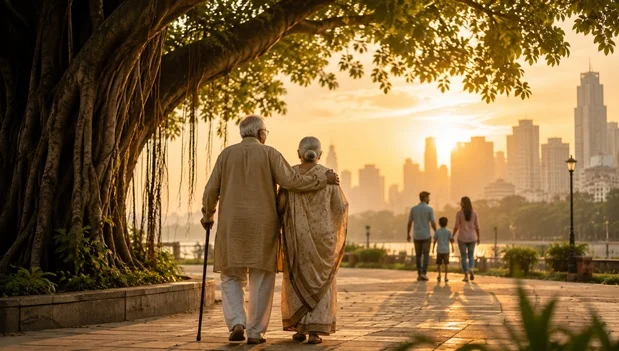
World Senior Citizens' Day is observed every year on 21 August to honour older adults for their achievements and contributions, and to draw attention to the challenges they face in health, financial security, dignity, and social inclusion.
Key Facts
|
Aspect
|
Details
|
|
Observed on
|
21 August every year
|
|
First observed
|
21 August 1988
|
|
Origin
|
United States
|
|
Associated with
|
US President Ronald Reagan
|
|
Purpose
|
Recognising senior citizens and promoting their dignity, welfare and participation
|
|
Senior Citizen in India
|
Generally a person aged 60 years or above
|
|
Key Indian Ministry
|
Ministry of Social Justice and Empowerment
|
|
Major Indian legislation
|
Maintenance and Welfare of Parents and Senior Citizens Act, 2007
|
History and Background
- In 1988, the US Congress designated 21 August 1988 as National Senior Citizens Day. Subsequently, President Ronald Reagan issued Proclamation 5847 on 19 August 1988, formally proclaiming 21 August as National Senior Citizens Day.
- The proclamation recognised the contribution of older citizens to families, communities and the nation and emphasised creating communities where older people could continue to live with independence and dignity.
- The observance gradually moved beyond the United States and is now marked informally in many countries including India, the UK, Australia, and several Asian and African nations through community events, felicitation programmes, health camps, and media campaigns.
Confusion With Other Days
|
International Day of Older Persons
|
1 October
|
UN General Assembly Resolution 45/106 (1990)
|
|
World Elder Abuse Awareness Day
|
15 June
|
UN General Assembly in 2011
|
Why is it important?
- Improvements in healthcare, nutrition and living conditions have increased life expectancy in many parts of the world. At the same time, declining fertility means that older persons are forming an increasingly large proportion of the population.
- This demographic transition affects healthcare systems, pension systems, social security, labour markets, housing and urban planning, family-based care systems, digital accessibility, and long-term and geriatric care.
Major Challenges
- Healthcare Challenges: Older people are more vulnerable to chronic and age-related diseases and may require regular healthcare, rehabilitation and long-term care.
- Financial Insecurity: UNFPA's India Ageing Report noted that more than 40% of elderly persons were in the poorest wealth quintile, while around 18.7% lived without an income.
- Feminisation of Ageing: Women generally have greater longevity than men. However, many elderly women face widowhood, lower lifetime earnings, and limited ownership of assets, financial dependence, and inadequate pension coverage.
- Elder Abuse: Senior citizens may experience physical abuse, emotional abuse, financial exploitation, neglect, abandonment, and property-related disputes. Protection of the life, dignity and property of senior citizens is therefore a significant governance concern.
- Loneliness and Social Isolation: Urbanisation, migration and the shift from joint to nuclear families can leave some elderly persons socially isolated. Loneliness can also affect mental health and overall quality of life.
- Dementia and Mental Health: Age-related cognitive conditions such as dementia and Alzheimer's disease require specialised care and greater social awareness. Stigma surrounding mental-health and cognitive conditions remains a concern.
- Accessibility and Mobility: Public transport, buildings, footpaths, housing and public spaces are often not designed according to the needs of elderly persons or people with reduced mobility.
Constitutional Provisions Related to Senior Citizens
|
Article 21
|
The constitutional guarantee of life and personal liberty has developed through judicial interpretation into a broad protection of life with dignity, which is highly relevant to elderly welfare.
|
|
Article 41
|
This article directs the State, within its economic capacity and development, to make effective provision for public assistance in cases including old age, sickness and disablement.
|
|
Article 47
|
Directs the improvement of public health and nutrition.
|
Maintenance and Welfare of Parents and Senior Citizens Act, 2007
- This is India's principal legislation dealing specifically with the welfare and maintenance of parents and senior citizens. The Act seeks to provide more effective legal provisions for their maintenance and welfare. Some provisions are:
- Maintenance: Parents and eligible senior citizens who cannot maintain themselves can seek maintenance from children or specified relatives.
- Maintenance Tribunals: The Act provides for Maintenance Tribunals to deal with maintenance claims.
- Old-age homes: Section 19 provides for the establishment of old-age homes.
- Medical support: Section 20 deals with medical support for senior citizens.
- Protection of property: Section 23 provides protection in situations involving transfer of property subject to the transferee providing basic amenities and care.
- Abandonment: The Act contains provisions concerning exposure and abandonment of senior citizens.
Global and Institutional Response
- Madrid International Plan of Action on Ageing (MIPAA), 2002: Adopted at the UN's Second World Assembly on Ageing, it remains the primary global policy framework guiding national responses to population ageing, built around three priority directions older persons and development, advancing health and well-being into old age, and ensuring enabling and supportive environments.
- UN Principles for Older Persons (1991): Set out core principles of independence, participation, care, self-fulfilment, and dignity that should guide the treatment of older persons.
- World Health Organization's Decade of Healthy Ageing (2021-2030): A global collaborative launched by the WHO, together with UN partners, to improve the lives of older people, their families, and communities through four pillars-combating ageism, developing age-friendly environments, delivering integrated care, and providing access to long-term care.
India-Specific Framework
- Maintenance and Welfare of Parents and Senior Citizens Act, 2007: Makes it a legal obligation for children and legal heirs to provide maintenance to senior citizens and parents, and establishes Maintenance Tribunals for speedy redress; it also empowers authorities to evict children/relatives who neglect senior citizens residing in properties owned by them.
- National Policy on Older Persons (1999) and National Policy for Senior Citizens (2011): Provide the broad policy framework for state support to income security, healthcare, shelter, welfare, and protection of life and property of older persons.
- Atal Vayo Abhyuday Yojana (AVYAY): An umbrella scheme of the Ministry of Social Justice and Empowerment that consolidates sub-schemes for the welfare of senior citizens, including old-age homes, day-care centres, and the Rashtriya Vayoshri Yojana for distribution of assistive devices to senior citizens from the BPL category.
- Rashtriya Vayoshri Yojana: Provides free aids and assisted-living devices-walking sticks, wheelchairs, hearing aids, spectacles, and artificial dentures-to senior citizens belonging to the Below Poverty Line category.
- Indira Gandhi National Old Age Pension Scheme (IGNOAPS): A component of the National Social Assistance Programme providing a monthly pension to elderly persons living below the poverty line.
- Income-tax and other concessions: Senior and "super senior" citizens in India receive higher income-tax exemption limits, concessional rates on select train and air travel, priority healthcare access, and preferential treatment in various public services.
- Ayushman Bharat PM-JAY (Vay Vandana card, 2024 expansion): Extended free health-insurance coverage to all senior citizens aged 70 and above, regardless of income, marking a significant expansion of elder healthcare Senior Citizens and the Sustainable Development Goals
Links with SDGs:
|
SDG 1 (No Poverty)
|
Social protection and income security for elderly people
|
|
SDG 3 (Good Health and Well-being)
|
Universal access to geriatric and long-term healthcare
|
|
SDG 5 (Gender Equality)
|
Addressing vulnerabilities faced by elderly women
|
|
SDG 10 (Reduced Inequalities)
|
Preventing age-based discrimination and exclusion
|
|
SDG 11 (Sustainable Cities and Communities)
|
Developing accessible and age-friendly cities
|
|
SDG 16 (Peace, Justice and Strong Institutions)
|
Protecting older persons against abuse, exploitation and denial of rights access in India
|
Ageing Population in India
According to UNFPA's India Ageing Report 2023:
- India had around 149 million persons aged 60 years and above in 2022.
- They constituted approximately 10.5% of the population.
- Their share is projected to reach approximately 20.8% by 2050.
- By 2050, India could have around 347 million elderly persons.
- By 2046, India's elderly population is projected to become larger than the population of children aged 0–15 years.
- The report also projects that India's population aged 80 years and above could grow by around 279% between 2022 and 2050, with older women forming an especially vulnerable group.
Prelims MCQ
Q. With reference to World Senior Citizens’ Day, which of the following is correct?
A. It is observed on 21 August
B. It is observed on 1 October
C. It was established by WHO
D. It is observed only in India
Mains Practice Question
Q. Examine the impact of India’s demographic transition on healthcare, social security and family-based elderly care systems.
|
FAQs
Who initiated Senior Citizens’ Day?
It is associated with US President Ronald Reagan, who proclaimed 21 August as National Senior Citizens Day in 1988.
Who is considered a senior citizen in India?
Under the 2007 Act, an Indian citizen aged 60 years or above is a senior citizen.
What is the International Day of Older Persons?
It is a UN-designated observance celebrated on 1 October every year.
What is Elderline?
Elderline 14567 is India's National Helpline for Senior Citizens.
What is AVYAY?
Atal Vayo Abhyuday Yojana is an umbrella scheme aimed at improving senior citizens’ quality of life.
|






 Contact Us
  New Batch : 9555124124/ 7428085757
  Tech Support : 9555124124/ 7428085757