
- UPSC Exam
- State PCS
- One Day Exam
- Current Affairs
- PT Quiz
- Downlaods
- About Coaching
- Blog
- Videos

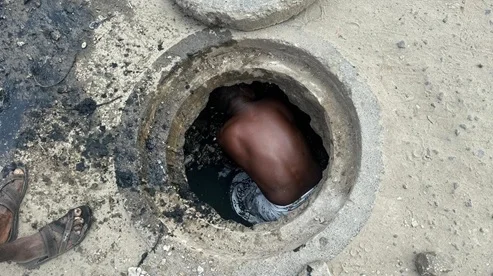
The Union Ministry of Social Justice and Empowerment has submitted a proposal to expand the National Action for Mechanised Sanitation Ecosystem (NAMASTE) scheme beyond urban centers into rural India. The initiative aims to eradicate sewer and septic tank deaths by modernising sanitation work nationwide.
|
Metric / Category |
Profiled / Identified |
Projects / Subsidies Approved |
Funds Disbursed / Received |
|
Sewer & Septic Tank Workers (SSWs) |
90,915 |
810 |
147 |
|
Waste Pickers |
130,000 |
— |
— |
|
Manual Scavengers |
58,000 |
2,652 |
— |
|
Data as of March 31, 2026 (Ministry of Social Justice & Empowerment Annual Report) |
|
Namaste Day is celebrated every year on 14th July |
Prelims QuestionQ. With reference to the National Action for Mechanised Sanitation Ecosystem (NAMASTE) scheme, consider the following statements:
Which of the statements given above are correct?
Mains Question"Despite legislative prohibitions and policy interventions like the NAMASTE scheme, sewer and septic tank deaths continue to undermine the right to dignity under Article 21." |
1. What is the NAMASTE scheme?The NAMASTE (National Action for Mechanised Sanitation Ecosystem) scheme is a joint initiative of the Ministry of Social Justice and Empowerment and the Ministry of Housing and Urban Affairs. 2. What is the primary goal of NAMASTE scheme?Its primary goal is to eradicate manual cleaning of sewers and septic tanks, prevent fatal accidents, and enable sanitation workers to transition into entrepreneurs using mechanised equipment. 3. What financial assistance does the NAMASTE scheme offer to workers?The scheme provides capital subsidies of up to 50% of total project costs to help identified sanitation workers and Private Sanitation Service Organisations (PSSOs) buy modern, mechanised sanitation equipment and set up self-employment ventures. 4. What is an Emergency Response Sanitation Unit (ERSU)?An ERSU is a dedicated administrative unit set up within Urban Local Bodies (ULBs) equipped with safety devices, trained personnel, and mechanised gear to handle high-risk sanitation emergencies without requiring manual entry into confined spaces. |



Our support team will be happy to assist you!

 Contact Us
  New Batch : 9555124124/ 7428085757
  Tech Support : 9555124124/ 7428085757