- UPSC Exam
- State PCS
- One Day Exam
- Current Affairs
- PT Quiz
- Downlaods
- About Coaching
- Blog
- Videos

| Prelims : (Social Issues + CA) Mains : (GS 2 – Issues Relating to Women, Gender Equality, Labour Welfare) |
The Supreme Court of India recently observed that making paid menstrual leave mandatory through legislation may unintentionally harm women’s employment prospects.
The observation came while hearing a petition seeking a uniform nationwide law providing menstrual leave to women workers and female students.
The Court noted that a compulsory legal mandate could discourage employers from hiring women or assigning them key responsibilities, and therefore asked the Government of India to consider the issue and examine possible policy options through consultation with stakeholders.

In recent years, menstrual health and workplace welfare have emerged as important themes in debates around gender equality, labour rights, and inclusive workplaces.
Menstruation can cause severe physical discomfort for some women, including :
Advocates argue that providing menstrual leave can help address these health concerns and promote dignity in workplaces.
However, policymakers also face the challenge of ensuring that such measures do not unintentionally reinforce gender discrimination or reduce employment opportunities for women.
Menstrual leave refers to a form of leave granted to women during their menstrual cycle when they experience significant physical discomfort or health issues.
The concept is linked to broader discussions about :
The aim is to allow women to manage health challenges without compromising their employment or academic participation.
Currently, India does not have a nationwide law mandating menstrual leave.
However, several institutional and regional initiatives exist.
Some educational institutions have introduced menstrual leave policies for students to address menstrual health concerns.
Certain state governments have implemented limited provisions related to menstrual leave in schools or universities.
Several companies in India have voluntarily introduced menstrual leave policies to promote workplace inclusivity and employee well-being.
These policies vary widely in terms of :
Such initiatives reflect growing awareness of menstrual health issues in professional and academic settings.
Many countries have adopted policies related to menstrual leave, though their legal frameworks and implementation models differ significantly.
In 2023, Spain became one of the first European nations to introduce legally guaranteed menstrual leave, allowing women to take three to five days of leave during painful menstrual periods, with the cost borne by the state.
Japan introduced menstrual leave legislation as early as 1947, making it one of the earliest adopters of such policies.
Countries such as :
also allow menstrual leave under varying legal or workplace frameworks.
These examples illustrate diverse global approaches to addressing menstrual health in the workplace.
The issue reached the Supreme Court of India after a petition sought directions for introducing a uniform paid menstrual leave law across India.
The Bench headed by Justice Surya Kant expressed reservations about making menstrual leave mandatory by law.
The Court noted that employers may become reluctant to hire women if they are required to provide additional mandatory leave every month.
There is concern that employers might hesitate to assign critical tasks or leadership roles to women, fearing frequent absence.
Mandatory leave policies could unintentionally create a perception that women are less capable of handling demanding roles, potentially affecting career advancement.Court’s Decision
Instead of issuing direct legal directions, the Court disposed of the petition and requested the Government of India to :
This approach allows the government to evaluate social, economic, and labour market implications before introducing any policy changes.
The Court highlighted an important distinction between voluntary workplace policies and statutory legal mandates.
The judges encouraged organisations to adopt flexible policies voluntarily to support women employees.
Such initiatives allow employers to design policies suited to their workforce.
A nationwide legal mandate could create rigid obligations for employers, potentially affecting hiring practices and labour market dynamics.
Therefore, the Court suggested that voluntary initiatives may be a more balanced approach.
The debate around menstrual leave reflects deeper questions about gender equality and workplace inclusivity.
Supporters argue that menstrual leave :
Critics warn that mandatory leave policies may :
Thus, policymakers must carefully balance health concerns, equality goals, and labour market realities.
1. Gender-Sensitive Labour Policies
The debate highlights the need for workplace policies that address women’s health without reinforcing discrimination.
2. Promoting Workplace Inclusivity
Supportive policies can improve employee well-being, productivity, and workplace culture.
3. Addressing Menstrual Health Stigma
The discussion has helped bring menstrual health into public policy discourse, encouraging greater awareness and acceptance.
4. Balancing Equality and Opportunity
The issue demonstrates the challenge of designing policies that promote gender equality without unintentionally affecting women’s employment prospects.
Experts suggest several balanced approaches :
Such measures can help address menstrual health concerns while safeguarding women’s participation in the workforce.
FAQs1. What is menstrual leave ? Menstrual leave is a policy allowing women to take leave during their menstrual cycle when they experience severe discomfort or health issues. 2. Does India currently have a law mandating menstrual leave ? No, India does not have a nationwide law mandating menstrual leave, though some institutions and companies have voluntary policies. 3. What did the Supreme Court say about mandatory menstrual leave ? The Court observed that making menstrual leave mandatory by law could negatively affect women’s employment opportunities. 4. Which countries provide menstrual leave ? Countries such as Spain, Japan, South Korea, Indonesia, China, and Zambia have policies allowing menstrual leave. 5. What did the Supreme Court direct the government to do ? The Court asked the Government of India to examine the issue and consider policy options after consulting stakeholders. |
| Prelims : (Polity & Governance+ CA) Mains : (GS 2 – Issues Relating to Social Justice, Reservation Policy, Constitutional Equality) |
The Supreme Court of India recently delivered a significant ruling stating that income alone cannot determine the “creamy layer” status among Other Backward Classes (OBCs).
The Court also addressed the equivalence between employees in the private sector, Public Sector Undertakings (PSUs), and government services while determining creamy layer status.
The verdict resolves long-standing confusion arising from a 2004 clarification issued by the Department of Personnel and Training (DoPT) regarding the criteria used to identify creamy layer members among OBCs.
Individuals classified as part of the creamy layer are excluded from reservation benefits, making the criteria for such classification critical for access to public employment and education opportunities.
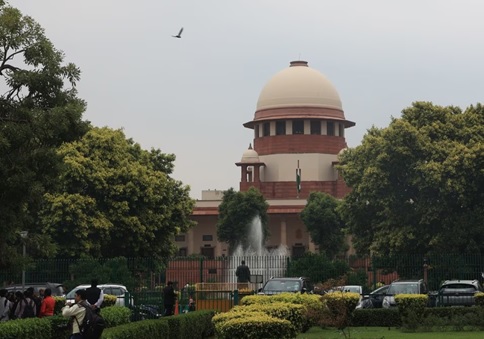
India’s reservation system aims to ensure social justice and equitable representation for historically disadvantaged communities.
Among these groups, Other Backward Classes receive reservations in government jobs and educational institutions.
However, to ensure that benefits reach the most disadvantaged sections, the concept of “creamy layer” was introduced to exclude the relatively affluent and socially advanced members of OBCs from reservation benefits.
Over time, disputes arose regarding how creamy layer status should be determined, particularly regarding the role of income from salaries, agriculture, and other sources.
The recent judgment by the Supreme Court of India addressed petitions challenging a 2004 letter issued by the Department of Personnel and Training interpreting the creamy layer rules.
Background of the Case
The dispute concerned the interpretation of a 1993 Official Memorandum (OM) issued after the landmark Mandal judgment.
The OM had excluded salary income and agricultural income from the income/wealth test used to determine creamy layer status.
However, the 2004 DoPT clarification included salary income for employees in PSUs and private companies, creating unequal treatment compared with government employees.
The Supreme Court observed that excluding candidates from reservation solely based on salary income without considering the nature and level of employment leads to arbitrary distinctions among similarly placed OBC individuals.
The Court ruled that treating children of PSU or private sector employees differently from children of government employees amounts to hostile discrimination.
Such unequal treatment violates constitutional guarantees under :
The concept of creamy layer was introduced by the Supreme Court in the landmark Indra Sawhney vs Union of India, popularly known as the Mandal judgment.
The Court held that the advanced sections of OBCs must be excluded from reservation benefits to ensure that affirmative action reaches genuinely disadvantaged groups.
Following the judgment, the Department of Personnel and Training issued a circular in September 1993 defining criteria for identifying creamy layer families.
The guidelines included individuals holding:
Under the rules :
For the Indian Armed Forces, officers up to the rank of Lieutenant Colonel remain eligible for OBC reservation benefits.
Higher ranks are classified under the creamy layer category.
For individuals outside government employment, the creamy layer is determined based on income.
The 1993 Official Memorandum clearly stated that salary and agricultural income would not be counted when applying the income/wealth test.
However, in October 2004, the Department of Personnel and Training issued a clarification stating that :
Under this interpretation :
Although issued in 2004, this rule began to be actively implemented around 2014, particularly during verification of caste certificates for the Civil Services Examination.
The Court also examined the comparison between the OBC creamy layer income limit and the EWS reservation threshold.
The ₹8 lakh annual income limit applies to both categories but is calculated differently.
For OBC creamy layer determination :
For Economically Weaker Sections Reservation eligibility :
This distinction explains why the same income threshold applies to both categories.
The ruling may enable more OBC candidates to qualify as non-creamy layer, making them eligible for reservation benefits in education and employment.
Candidates already selected in government services may see changes in their service allocation or cadre placement if their OBC status is reinterpreted under the new criteria.
Candidates who previously missed service allocation due to creamy layer classification may now become eligible for placement.
The Supreme Court has directed the government to create supernumerary posts if necessary to accommodate candidates affected by the revised interpretation, provided they meet eligibility requirements.
1. Strengthening Constitutional Equality
The judgment reinforces the principle that similarly placed individuals cannot be treated differently without reasonable justification.
2. Clarifying Reservation Policy
The ruling resolves long-standing confusion regarding the treatment of PSU and private sector employees under creamy layer criteria.
3. Ensuring Fair Access to Affirmative Action
By removing arbitrary distinctions, the decision ensures that reservation benefits reach genuinely disadvantaged OBC candidates.
4. Impact on Competitive Examinations
The ruling may influence future recruitment processes in major examinations such as the Civil Services Examination, potentially altering eligibility for many candidates.
FAQs1. What is the creamy layer in OBC reservations ? The creamy layer refers to the socially and economically advanced members of OBC communities who are excluded from reservation benefits. 2. Which judgment introduced the concept of the creamy layer ? The concept was introduced in the 1992 Indra Sawhney vs Union of India (Mandal) judgment. 3. What did the Supreme Court rule in the latest case ? The Court ruled that income alone cannot determine creamy layer status, and treating PSU or private sector employees differently from government employees is discriminatory. 4. What is the current income limit for determining creamy layer status ? The income limit is currently ₹8 lakh per year, though salary and agricultural income are treated differently depending on the category. 5. Which government department issues guidelines on creamy layer classification ? The Department of Personnel and Training (DoPT) issues official guidelines for identifying creamy layer status among OBCs. |
| Prelims : (Environment & Ecology + CA) Mains : (GS 3 – Biodiversity Conservation, Human–Wildlife Interaction, Urban Ecology) |
A recent study has highlighted the ecological role of the Spotted Hyena as an unexpected “eco-warrior” in the city of Mekelle, the second-largest city in Ethiopia.
Researchers found that the presence of spotted hyenas helps control urban waste and reduce disease risks by scavenging animal carcasses and organic waste in the city.
This finding highlights the important ecological services provided by scavenger species, particularly in urban environments where waste management and sanitation challenges are common.

Urban ecosystems increasingly face challenges such as :
Scavenger animals play a crucial ecological role by removing carcasses and organic waste, thereby limiting the spread of pathogens.
In cities like Mekelle, the Spotted Hyena has adapted to urban environments and contributes to maintaining ecological balance.
The study demonstrates how wildlife species can provide ecosystem services even within densely populated human settlements.
The Spotted Hyena is the largest member of the hyena family and is often referred to as the “laughing hyena” because of its distinctive vocalisations.
Despite its reputation as a scavenger, the species is actually a skilled and powerful hunter capable of capturing large prey.
Although it resembles a dog in appearance, the spotted hyena is more closely related to cats and other feliform mammals such as :
This evolutionary relationship places it within the Feliformia suborder, alongside cats and mongooses.
The spotted hyena has several distinctive physical features that differentiate it from other hyena species.
One of the most unusual features of the species is the presence of a pseudo-penis in females, a rare biological trait among mammals.
The Spotted Hyena is highly adaptable and occupies a wide range of habitats.
These include :
Its adaptability has allowed the species to survive in both wild landscapes and human-dominated environments.
The species is widely distributed across sub-Saharan Africa.
Major countries where it is found include :
The species has a complex social system.
Spotted hyenas live in social groups known as clans, which can include several related individuals.
These clans operate under a matriarchal hierarchy, where :
Hyenas mark their territories by :
This behaviour helps maintain boundaries between neighbouring clans.
The Spotted Hyena is a carnivorous species.
Its diet includes :
Their powerful jaws allow them to consume bones and tough animal tissues, making them highly efficient scavengers.
Spotted hyenas are primarily nocturnal animals.
Behavioural Traits
These traits enable them to avoid human activity and predators while foraging.
The study in Mekelle highlights the ecological role of spotted hyenas in urban environments.
According to the International Union for Conservation of Nature (IUCN) :
Although populations remain relatively stable, threats include :
1. Recognition of Urban Wildlife
The research highlights the role of wildlife species in urban ecosystems.
2. Ecosystem Services
Scavengers like hyenas provide valuable natural sanitation services that help cities manage organic waste.
3. Human–Wildlife Coexistence
The findings demonstrate the possibility of coexistence between humans and wildlife in urban environments.
4. Conservation Awareness
Understanding the ecological role of hyenas may help change negative perceptions and encourage conservation efforts.
FAQs1. What is the scientific name of the spotted hyena ? The scientific name of the spotted hyena is Crocuta crocuta. 2. Why is the spotted hyena called the laughing hyena ? It is known as the laughing hyena because of its distinctive vocalisations that resemble human laughter. 3. Where are spotted hyenas mainly found ? They are widely distributed across sub-Saharan Africa, including countries like Ethiopia, Kenya, Tanzania, and South Africa. 4. What is unique about female spotted hyenas ? Female spotted hyenas possess a pseudo-penis and lack an external vaginal opening, a rare biological feature among mammals. 5. What is the conservation status of the spotted hyena ? According to the IUCN, the species is currently classified as Least Concern. |
| Prelims: (Polity & Governance + CA) Mains: (GS 3 – Infrastructure, Maritime Economy, Shipping Sector) |
The Government of India recently held a high-level interaction with the National Shipping Board to discuss challenges facing the maritime sector amid increasing global uncertainty.
The meeting focused on issues affecting international shipping, maritime trade, and India’s shipping industry, highlighting the importance of strengthening institutional mechanisms to support the country’s maritime economy.
India’s maritime sector plays a crucial role in international trade and economic development, as nearly 90% of India’s trade by volume and around 70% by value is transported through sea routes.
Global maritime trade has recently faced multiple disruptions due to:
In this context, advisory bodies like the National Shipping Board play an important role in guiding government policy and ensuring the sustainable growth of the shipping sector.
The National Shipping Board (NSB) is a permanent statutory body established in 1959 under Section 4 of the Merchant Shipping Act.
It functions as an advisory body to the Government of India on matters related to shipping and maritime development.
Over the decades, the Board has contributed significantly to shaping India’s national maritime policies and regulatory framework.
The primary function of the NSB is to advise the government on policies and matters related to the shipping industry.
Key responsibilities include:
The Board’s deliberations and recommendations have played a significant role in shaping India’s maritime development strategy.
The structure of the National Shipping Board includes representatives from various sectors connected with maritime activities.
The Board consists of a Chairman and multiple members representing different stakeholders in the shipping sector.
Six members are elected by Parliament:
These members are elected from among sitting Members of Parliament.
The Government of India may appoint up to sixteen additional members representing:
This ensures broad representation of interests across the maritime industry.
The Chairman and other members of the Board hold office for a term of two years.
After the completion of their tenure, they may be reappointed as per government decisions.
The Board operates under the administrative supervision of the Ministry of Ports Shipping and Waterways.
This ministry is responsible for:
Since its establishment, the National Shipping Board has played an important role in the evolution of India’s maritime policies.
Its recommendations have contributed to:
These efforts have helped India build a more resilient and competitive maritime sector.
The recent interaction between the government and the NSB highlights the strategic importance of the maritime sector.
Global disruptions in shipping routes and supply chains require policy coordination and sectoral consultation.
The consultation can help identify measures to improve the competitiveness and resilience of Indian shipping companies.
Discussions also address issues related to seafarer welfare, labour rights, and maritime safety.
The shipping sector is an essential component of India’s blue economy strategy, which aims to sustainably utilise ocean resources for economic growth.
To strengthen India’s maritime sector, experts suggest:
Active engagement with advisory bodies like the National Shipping Board will remain essential for evidence-based maritime policymaking.
FAQs1. What is the National Shipping Board (NSB) ? The National Shipping Board is a statutory advisory body established in 1959 under the Merchant Shipping Act, 1958, which advises the Government of India on shipping-related matters. 2. Which ministry oversees the National Shipping Board ? The Board functions under the Ministry of Ports, Shipping and Waterways. 3. What is the main function of the National Shipping Board ? Its primary role is to advise the government on policies, development, and regulation of the shipping sector. 4. How many members of the Board are elected by Parliament ? Six members are elected by Parliament: four from Lok Sabha and two from Rajya Sabha. 5. What is the tenure of the members of the National Shipping Board ? The Chairman and other members of the Board serve a two-year term. |
| Prelims: (International Relations + CA) Mains: (GS 2 – Welfare of Indian Diaspora, International Organisations; GS 3 – Maritime Security, Global Trade) |
The ongoing conflict in West Asia has intensified security risks for merchant vessels operating near critical shipping routes such as the Strait of Hormuz and the Persian Gulf.
Recent attacks on tankers and merchant ships have highlighted the vulnerability of global seafarers, particularly Indian sailors, with reports indicating that at least three Indian seafarers have been killed.
Industry experts are also warning of rising incidents of seafarer abandonment, where shipowners leave crews stranded without wages, food, or means of returning home.
Indians account for about 15% of the global seafarer workforce, yet they represent the largest number of abandoned sailors, with 1,125 cases reported in 2025, nearly 18% of global abandonment incidents.

Global maritime trade depends heavily on seafarers who operate commercial vessels transporting goods and energy resources.
Critical maritime chokepoints like the Strait of Hormuz handle a large share of global oil and trade shipments.
However, geopolitical tensions, regional conflicts, and economic instability in West Asia have increased risks for shipping companies and crews.
These disruptions have also contributed to a rise in abandonment incidents, where shipowners cease support for vessels and their crew due to financial or legal pressures.
Seafarer abandonment occurs when shipowners stop fulfilling their responsibilities toward crew members, leaving them stranded on vessels without:
The Maritime Labour Convention defines abandonment as the failure of shipowners to meet essential obligations such as payment of wages, provision of basic necessities, and arrangements for returning seafarers to their home country.
For many sailors, especially those from developing countries, leaving an abandoned vessel is difficult because:
Shipowners may abandon ships and crews when they face:
In such situations, some owners stop maintaining the vessel or paying crew salaries.
Regional conflicts and maritime security threats increase operational risks for shipping companies.
The ongoing crisis in West Asia has increased financial pressure on shipping companies operating near conflict zones, raising the likelihood of abandonment.
A major factor enabling abandonment is the Flag of Convenience (FOC) system. Under this arrangement, shipowners register vessels in countries offering:
These registrations often hide the true ownership of vessels, making it difficult to hold shipowners accountable.
According to the International Transport Workers’ Federation, about 30% of the global merchant fleet sails under FOCs, and 90% of abandoned ships in 2024 were registered under such flags.
Among these registries, Panama reported the highest number of abandonment cases in 2025.
The ongoing conflict in West Asia has significantly increased risks for global shipping.
Key impacts include:
These factors may further increase abandonment incidents in the future, especially for ships operating near high-risk maritime zones.
Several incidents illustrate the growing problem.
Twenty Indian sailors and two other crew members were stranded aboard the vessel MV Manali near Bandar Abbas in Iran during active bombings in the region.
The sailors appealed for rescue through social media while facing shortages of:
Abandonment incidents are more common in high-traffic or unstable maritime regions, including:
Between 2025 and 2026, more than 100 Indian seafarers were repatriated from 14 abandoned vessels located in ports such as:
Several structural factors make Indian sailors particularly vulnerable to abandonment.
Many individuals from smaller towns and rural areas see seafaring as a pathway to higher earnings and economic mobility.
The presence of fraudulent agents has worsened the situation.
These agents may:
This leaves recruits financially burdened even before starting work.
Experts point to regulatory gaps, including the ease of obtaining a Continuous Discharge Certificate (CDC) through short training programmes.
This has led to:
Abandoned sailors can seek assistance from inspectors of the International Transport Workers’ Federation.
These inspectors help with:
Indian sailors can contact the Directorate General of Shipping, which provides:
Complaints can also be filed through the regulator’s official portal.
Experts advise sailors to:
1. Protection of Indian Workforce Abroad
India is one of the largest suppliers of seafarers globally, making their safety a major national concern.
2. Maritime Labour Rights
The issue highlights gaps in enforcement of international labour standards under the Maritime Labour Convention.
3. Global Shipping Security
Increasing abandonment incidents could disrupt global trade and undermine the welfare of maritime workers.
4. Need for Stronger Regulation
Greater oversight of ship registries, recruitment agents, and labour conditions is essential to prevent exploitation.
Addressing seafarer abandonment requires coordinated action at national and international levels.
Key measures include:
FAQs1. What is seafarer abandonment ? Seafarer abandonment occurs when shipowners stop supporting crew members, leaving them stranded without wages, food, medical care, or arrangements for returning home. 2. Which international convention protects seafarers’ rights ? The Maritime Labour Convention (MLC), 2006 establishes global standards for seafarers’ working and living conditions. 3. Why are Indian seafarers particularly vulnerable ? Factors include economic pressures, fraudulent recruitment agents, oversupply of maritime workers, and employment on poorly regulated vessels. 4. What is the Flag of Convenience system ? It allows ships to register in countries with lenient regulations and lower taxes, often weakening labour protections and enabling shipowners to avoid accountability. 5. Which Indian authority assists abandoned seafarers ? The Directorate General of Shipping provides helplines, embassy assistance, and support for repatriation of stranded sailors. |

Our support team will be happy to assist you!

 Contact Us
  New Batch : 9555124124/ 7428085757
  Tech Support : 9555124124/ 7428085757