
- UPSC Exam
- State PCS
- One Day Exam
- Current Affairs
- PT Quiz
- Downlaods
- About Coaching
- Blog
- Videos

| Prelims : (Polity & Governance+ CA) Mains : (GS 2 – Issues Relating to Social Justice, Reservation Policy, Constitutional Equality) |
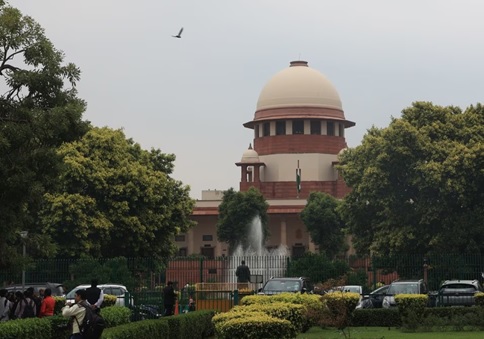
The Supreme Court of India recently delivered a significant ruling stating that income alone cannot determine the “creamy layer” status among Other Backward Classes (OBCs).
The Court also addressed the equivalence between employees in the private sector, Public Sector Undertakings (PSUs), and government services while determining creamy layer status.
The verdict resolves long-standing confusion arising from a 2004 clarification issued by the Department of Personnel and Training (DoPT) regarding the criteria used to identify creamy layer members among OBCs.
Individuals classified as part of the creamy layer are excluded from reservation benefits, making the criteria for such classification critical for access to public employment and education opportunities.
India’s reservation system aims to ensure social justice and equitable representation for historically disadvantaged communities.
Among these groups, Other Backward Classes receive reservations in government jobs and educational institutions.
However, to ensure that benefits reach the most disadvantaged sections, the concept of “creamy layer” was introduced to exclude the relatively affluent and socially advanced members of OBCs from reservation benefits.
Over time, disputes arose regarding how creamy layer status should be determined, particularly regarding the role of income from salaries, agriculture, and other sources.
The recent judgment by the Supreme Court of India addressed petitions challenging a 2004 letter issued by the Department of Personnel and Training interpreting the creamy layer rules.
Background of the Case
The dispute concerned the interpretation of a 1993 Official Memorandum (OM) issued after the landmark Mandal judgment.
The OM had excluded salary income and agricultural income from the income/wealth test used to determine creamy layer status.
However, the 2004 DoPT clarification included salary income for employees in PSUs and private companies, creating unequal treatment compared with government employees.
The Supreme Court observed that excluding candidates from reservation solely based on salary income without considering the nature and level of employment leads to arbitrary distinctions among similarly placed OBC individuals.
The Court ruled that treating children of PSU or private sector employees differently from children of government employees amounts to hostile discrimination.
Such unequal treatment violates constitutional guarantees under :
The concept of creamy layer was introduced by the Supreme Court in the landmark Indra Sawhney vs Union of India, popularly known as the Mandal judgment.
The Court held that the advanced sections of OBCs must be excluded from reservation benefits to ensure that affirmative action reaches genuinely disadvantaged groups.
Following the judgment, the Department of Personnel and Training issued a circular in September 1993 defining criteria for identifying creamy layer families.
The guidelines included individuals holding:
Under the rules :
For the Indian Armed Forces, officers up to the rank of Lieutenant Colonel remain eligible for OBC reservation benefits.
Higher ranks are classified under the creamy layer category.
For individuals outside government employment, the creamy layer is determined based on income.
The 1993 Official Memorandum clearly stated that salary and agricultural income would not be counted when applying the income/wealth test.
However, in October 2004, the Department of Personnel and Training issued a clarification stating that :
Under this interpretation :
Although issued in 2004, this rule began to be actively implemented around 2014, particularly during verification of caste certificates for the Civil Services Examination.
The Court also examined the comparison between the OBC creamy layer income limit and the EWS reservation threshold.
The ₹8 lakh annual income limit applies to both categories but is calculated differently.
For OBC creamy layer determination :
For Economically Weaker Sections Reservation eligibility :
This distinction explains why the same income threshold applies to both categories.
The ruling may enable more OBC candidates to qualify as non-creamy layer, making them eligible for reservation benefits in education and employment.
Candidates already selected in government services may see changes in their service allocation or cadre placement if their OBC status is reinterpreted under the new criteria.
Candidates who previously missed service allocation due to creamy layer classification may now become eligible for placement.
The Supreme Court has directed the government to create supernumerary posts if necessary to accommodate candidates affected by the revised interpretation, provided they meet eligibility requirements.
1. Strengthening Constitutional Equality
The judgment reinforces the principle that similarly placed individuals cannot be treated differently without reasonable justification.
2. Clarifying Reservation Policy
The ruling resolves long-standing confusion regarding the treatment of PSU and private sector employees under creamy layer criteria.
3. Ensuring Fair Access to Affirmative Action
By removing arbitrary distinctions, the decision ensures that reservation benefits reach genuinely disadvantaged OBC candidates.
4. Impact on Competitive Examinations
The ruling may influence future recruitment processes in major examinations such as the Civil Services Examination, potentially altering eligibility for many candidates.
FAQs1. What is the creamy layer in OBC reservations ? The creamy layer refers to the socially and economically advanced members of OBC communities who are excluded from reservation benefits. 2. Which judgment introduced the concept of the creamy layer ? The concept was introduced in the 1992 Indra Sawhney vs Union of India (Mandal) judgment. 3. What did the Supreme Court rule in the latest case ? The Court ruled that income alone cannot determine creamy layer status, and treating PSU or private sector employees differently from government employees is discriminatory. 4. What is the current income limit for determining creamy layer status ? The income limit is currently ₹8 lakh per year, though salary and agricultural income are treated differently depending on the category. 5. Which government department issues guidelines on creamy layer classification ? The Department of Personnel and Training (DoPT) issues official guidelines for identifying creamy layer status among OBCs. |



Our support team will be happy to assist you!

 Contact Us
  New Batch : 9555124124/ 7428085757
  Tech Support : 9555124124/ 7428085757