
- UPSC Exam
- State PCS
- One Day Exam
- Current Affairs
- PT Quiz
- Downlaods
- About Coaching
- Blog
- Videos

| Prelims : (Environment & Ecology + CA) Mains : (GS 3 – Biodiversity Conservation, Human–Wildlife Interaction, Urban Ecology) |
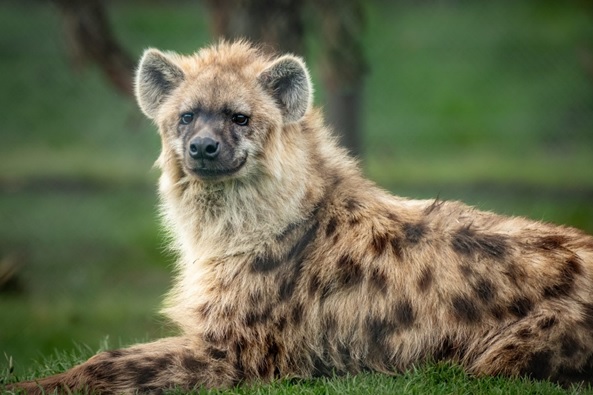
A recent study has highlighted the ecological role of the Spotted Hyena as an unexpected “eco-warrior” in the city of Mekelle, the second-largest city in Ethiopia.
Researchers found that the presence of spotted hyenas helps control urban waste and reduce disease risks by scavenging animal carcasses and organic waste in the city.
This finding highlights the important ecological services provided by scavenger species, particularly in urban environments where waste management and sanitation challenges are common.
Urban ecosystems increasingly face challenges such as :
Scavenger animals play a crucial ecological role by removing carcasses and organic waste, thereby limiting the spread of pathogens.
In cities like Mekelle, the Spotted Hyena has adapted to urban environments and contributes to maintaining ecological balance.
The study demonstrates how wildlife species can provide ecosystem services even within densely populated human settlements.
The Spotted Hyena is the largest member of the hyena family and is often referred to as the “laughing hyena” because of its distinctive vocalisations.
Despite its reputation as a scavenger, the species is actually a skilled and powerful hunter capable of capturing large prey.
Although it resembles a dog in appearance, the spotted hyena is more closely related to cats and other feliform mammals such as :
This evolutionary relationship places it within the Feliformia suborder, alongside cats and mongooses.
The spotted hyena has several distinctive physical features that differentiate it from other hyena species.
One of the most unusual features of the species is the presence of a pseudo-penis in females, a rare biological trait among mammals.
The Spotted Hyena is highly adaptable and occupies a wide range of habitats.
These include :
Its adaptability has allowed the species to survive in both wild landscapes and human-dominated environments.
The species is widely distributed across sub-Saharan Africa.
Major countries where it is found include :
The species has a complex social system.
Spotted hyenas live in social groups known as clans, which can include several related individuals.
These clans operate under a matriarchal hierarchy, where :
Hyenas mark their territories by :
This behaviour helps maintain boundaries between neighbouring clans.
The Spotted Hyena is a carnivorous species.
Its diet includes :
Their powerful jaws allow them to consume bones and tough animal tissues, making them highly efficient scavengers.
Spotted hyenas are primarily nocturnal animals.
Behavioural Traits
These traits enable them to avoid human activity and predators while foraging.
The study in Mekelle highlights the ecological role of spotted hyenas in urban environments.
According to the International Union for Conservation of Nature (IUCN) :
Although populations remain relatively stable, threats include :
1. Recognition of Urban Wildlife
The research highlights the role of wildlife species in urban ecosystems.
2. Ecosystem Services
Scavengers like hyenas provide valuable natural sanitation services that help cities manage organic waste.
3. Human–Wildlife Coexistence
The findings demonstrate the possibility of coexistence between humans and wildlife in urban environments.
4. Conservation Awareness
Understanding the ecological role of hyenas may help change negative perceptions and encourage conservation efforts.
FAQs1. What is the scientific name of the spotted hyena ? The scientific name of the spotted hyena is Crocuta crocuta. 2. Why is the spotted hyena called the laughing hyena ? It is known as the laughing hyena because of its distinctive vocalisations that resemble human laughter. 3. Where are spotted hyenas mainly found ? They are widely distributed across sub-Saharan Africa, including countries like Ethiopia, Kenya, Tanzania, and South Africa. 4. What is unique about female spotted hyenas ? Female spotted hyenas possess a pseudo-penis and lack an external vaginal opening, a rare biological feature among mammals. 5. What is the conservation status of the spotted hyena ? According to the IUCN, the species is currently classified as Least Concern. |



Our support team will be happy to assist you!

 Contact Us
  New Batch : 9555124124/ 7428085757
  Tech Support : 9555124124/ 7428085757