- UPSC Exam
- State PCS
- One Day Exam
- Current Affairs
- PT Quiz
- Downlaods
- About Coaching
- Blog
- Videos

The Government of India has banned sugar exports until September 30, 2026. The decision has been driven mainly by two major concerns :
Although India currently has adequate sugar availability, the government has adopted a precautionary approach to ensure food security, control inflation, and maintain supply stability. Only limited exports under special quota commitments to the European Union and the United States will continue.
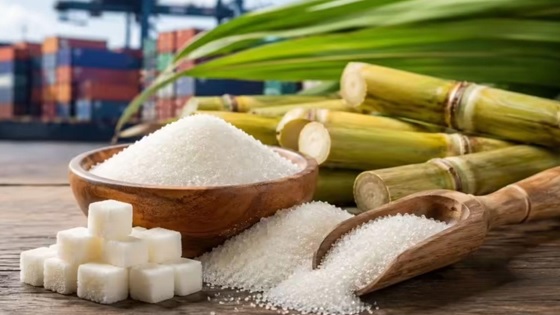
India is the world’s second-largest sugar producer after Brazil and also the largest consumer of sugar globally. The industry supports millions of farmers, labourers, transport workers, and mill employees, making it one of India’s most important agro-based industries.
Sugarcane is the primary raw material for sugar production. Since sugarcane is bulky, highly perishable, and loses sucrose content rapidly after harvesting, sugar mills are generally located close to cane-growing regions.
Sugarcane grows best in tropical and subtropical climatic conditions with :
This naturally concentrates sugar production in fertile plains and coastal belts.
The sugar industry is labour-intensive in both cultivation and processing stages. Availability of agricultural and industrial labour plays an important role in determining mill locations.
Efficient road and rail connectivity are essential for Rapid transportation of sugarcane to mills and Distribution of processed sugar to markets Delay in transportation directly affects sugar recovery and quality.
Sugar mills require large quantities of water for Washing sugarcane ,Crushing and refining processes Reliable electricity and fuel supply are also necessary for continuous mill operations.
India’s large population ensures strong domestic demand for sugar. The government heavily regulates the sector through :
The northern belt includes:Uttar Pradesh ,Bihar ,Punjab ,Haryana ,Uttarakhand .
The southern belt includes:Maharashtra ,Karnataka ,Tamil Nadu ,Andhra Pradesh .
India is expected to produce around 279 lakh tonnes (lt) of sugar during the 2025–26 sugar season.
Initially, the government allowed :
Thus, total permitted exports reached 20 lakh tonnes.
However, only about 6 lakh tonnes have already been exported Another 0.5 lakh tonnes are in transit at ports
Therefore, total exports are expected to remain around 6.5 lakh tonnes.
Sugar mills are required to submit monthly stock declarations to the government through P-II forms.
However, policymakers reportedly fear that :
To avoid supply uncertainty, the government preferred a complete export restriction.
After including:Bagging ,Transportation ,Port handling costs Export profitability became lower than domestic sales.
Thus, the ban mainly shuts an already narrow export window.
India is the world’s second-largest sugar exporter after Brazil.
Sugar exports increased sharply after 2020 and peaked at:₹45,132 crore in 2022 However, exports declined steadily afterward :
This showed weakening export momentum even before the latest ban.
India and the United Arab Emirates (UAE) share a historically, culturally, economically, and strategically significant relationship. Relations between the two countries are not limited to trade, but have expanded to include energy security, defense cooperation, investment, technology, maritime security, and global diplomacy. Over the past decade, India-UAE relations have evolved into a Comprehensive Strategic Partnership.
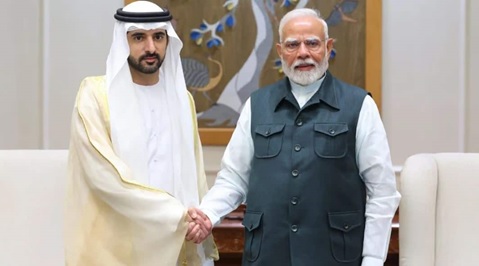
India and the United Arab Emirates signed a Strategic Defence Partnership Framework. This agreement focused on joint military technology development, co-production, intelligence sharing, and strengthening counter-terrorism cooperation.
To strengthen energy security, the two countries signed an MoU on Strategic Petroleum Reserves. This will help ensure India's oil supply during times of crisis. ADNOC will continue to be a key partner in India's oil storage.
Indian Oil Corporation and Abu Dhabi National Oil Company (ADNOC) signed an LPG supply agreement. This will ensure a stable supply of approximately 40 percent of India's domestic LPG needs.
An agreement was reached to establish a ship repair center in Vadinar, Gujarat. This will strengthen India's maritime infrastructure and position India as a regional ship repair hub.
UAE tech company G42 will install eight AI supercomputers in India. This project will promote AI research, large model training, and India-focused technology development.
The UAE announced a $5 billion investment in India. This investment will be made in the infrastructure, banking, and housing finance sectors.
Diplomatic relations between India and the UAE began in the 1970s. Relations between India and the UAE were initially limited to trade and the Indian diaspora. The large presence of Indian workers and businessmen in the Gulf countries strengthened social and economic ties between the two countries.
After the 1990s, India emerged as a major oil and gas supplier due to India's growing energy needs. Today, the UAE is a key partner for India's energy security.
Relations between the two countries expanded rapidly after 2015. Following Narendra Modi's visit to the UAE, defense, counter-terrorism cooperation, cybersecurity, investment, and technology cooperation received new impetus.
The two countries implemented the Comprehensive Economic Partnership Agreement (CEPA), which provided new impetus to bilateral trade and investment. The goal is to reach $100 billion in non-oil trade by 2030. Now, both countries are also supporting each other on global platforms.
Defense and security cooperation between India and the UAE is steadily strengthening. The two countries are working together on issues such as counter-terrorism, maritime security, and cybersecurity. India and the UAE are members of the I2U2 group, which includes India, Israel, the United Arab Emirates, and the United States.
Joint military exercises such as 'Desert Eagle' and 'Gulf Star-1' are conducted between the two countries, which have strengthened defense cooperation and strategic coordination.
The UAE is a major source of crude oil and LPG for India. The UAE plays a vital role in meeting India's energy needs.
The UAE is among India's largest trading partners. Dubai is an important global hub for Indian trade and exports.
Millions of Indians live and work in the UAE. This community sends significant foreign exchange (remittance) to India.
The UAE is an important part of India's strategic policy in West Asia and the Indian Ocean region. Its strategic importance is further enhanced by the Strait of Hormuz.
The two countries are working together against challenges such as terrorism, radicalism, and money laundering.
There is great potential for cooperation between the two countries in the areas of solar energy, green hydrogen, and clean energy.
Joint military exercises, defense production, and maritime security cooperation are growing rapidly.
New opportunities for cooperation are emerging in fintech, artificial intelligence, cybersecurity, and startups.
The UAE is increasing investment in agriculture and food processing sectors in India, which can benefit both countries.
Projects such as the India-Middle East-Europe Economic Corridor (IMEC) can enhance the strategic importance of both countries.
India-UAE relations have the potential to strengthen in the future. Both countries will need to focus on energy, defense, technology, and investment, as well as regional stability and global cooperation. India needs to diversify its energy dependence and advance the strategic partnership in a balanced manner.
For the UAE, India is important as a huge market, a reliable partner, and an emerging global power. In the changing global landscape, India-UAE relations are becoming not just a bilateral partnership but a vital pillar of stability and economic development in Asia and West Asia.
A scientific wildlife census was launched in Binsar Wildlife Sanctuary to study key species population and wildlife corridors.

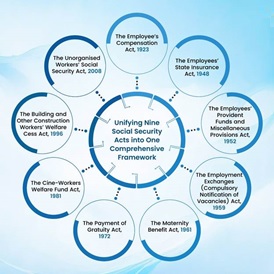
The Centre notified a 1% construction welfare cess under Section 100(1) of the Code on Social Security, 2020.
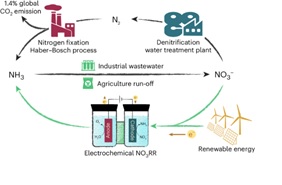
China developed an AI-powered electrochemical technology to convert nitrate-rich wastewater into ammonia (NH3) for fertiliser production.

Our support team will be happy to assist you!

 Contact Us
  New Batch : 9555124124/ 7428085757
  Tech Support : 9555124124/ 7428085757