Current Affairs for 16 October 2026

Ladakh Gets Sankoo as Its Eighth District: Key Facts, Background, Significance and Challenges

Prelims: Sankoo district, Ladakh districts, Union Territory of Ladakh, J&K Reorganisation Act 2019, Lieutenant Governor, Ladakh Autonomous Hill Development Councils (LAHDC), Suru Valley, Land Revenue Act.
Mains: GS Paper II: Governance, Decentralisation, Federalism and Union Territories, Government Policies and Interventions, Regional Development and Aspirations.

Why in news?

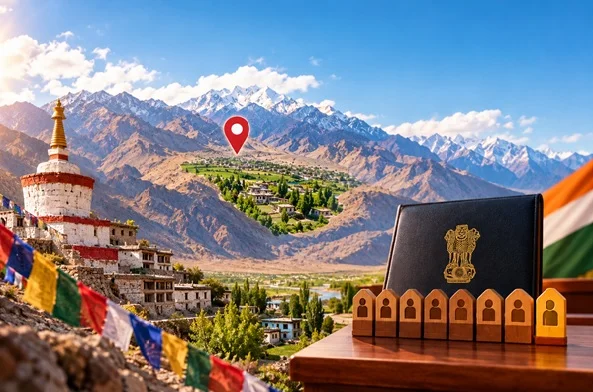
On 16 October 2026, the Ladakh administration notified the creation of Sankoo as a new district, making it the eighth district of the Union Territory (UT) of Ladakh.
Key Facts

Particular

Details

New district

Sankoo (eighth district of Ladakh)

Date of notification

16 October 2026

Notification

S.O. 284 dated 16 October 2026, issued by the Revenue Department

Legal basis

Section 5 of the Jammu and Kashmir Land Revenue Act, 1996

Headquarters

Sankoo

Composition

Four tehsils: Sankoo, GM Pore (Gound Mangal Pore), TSG and Taisuru, along with their revenue villages

Carved out of

Kargil district (its jurisdiction was modified to exclude these tehsils)

Region

Suru Valley, Kargil region

Announced by

Lieutenant Governor of Ladakh, V. K. Saxena

Total districts in Ladakh

Eight: Leh, Kargil, Sham, Nubra, Changthang, Zanskar, Drass and Sankoo

Where is Sankoo?

  • Sankoo lies in the Suru Valley, in the Kargil region of Ladakh, roughly 40 km from Kargil town according to local commentators.
  • Until now it functioned as a sub-division of Kargil district.
  • Local representatives have argued that the area has a large population, several administrative blocks and a number of elected hill council members, and that remote villages such as Parkachik, Umba and Pangbar in Barsoo are far from the earlier district headquarters.

Background: How Ladakh Reached Eight Districts

  • Before 2019: Ladakh was part of the erstwhile State of Jammu and Kashmir and was administered through two districts, Leh and Kargil.
  • 31 October 2019: Ladakh became a separate Union Territory under the Jammu and Kashmir Reorganisation Act, 2019, without a Legislative Assembly.
  • August 2024: The Centre announced the creation of five new districts, namely Zanskar, Drass, Sham, Nubra and Changthang. Sankoo and Shakar-Chiktan were left out, which led to protests and a shutdown in the Sankoo sub-division.
  • 2024-25: A group called the United Movement for Sankoo District Status was formed. Memoranda were submitted to the Union Government and a large protest march was held in Sankoo in February 2025.
  • 27 April 2026: The five districts were formally notified, taking the total to seven.
  • 16 October 2026: Sankoo was notified as the eighth district.

Role of Local Organisations

  • In announcing the decision, the administration credited the constructive approach of Anjuman-e-Sahib Zaman and its leadership, along with elected representatives from Kargil and Leh.
  • It described the move as the culmination of a long-standing local aspiration, in line with the 'Sabka Saath, Sabka Vikas' vision of the Union Government.

Significance of the New District

  • Administrative efficiency: A smaller jurisdiction brings district-level offices closer to people in a terrain of long distances and harsh winters.
  • Service delivery: Improved access to revenue, health, education and welfare services, particularly for remote villages.
  • Decentralised governance: Reflects the principle that governance works better when units are closer to citizens.
  • Regional balance: Addresses the sense of exclusion in Sankoo after the 2024 announcement and helps balance development across the Kargil region.
  • Responsiveness to demand: Shows that a sustained democratic demand through memoranda, representation and peaceful protest can influence policy.
  • Local development: A district headquarters usually attracts offices, staff, infrastructure and economic activity.

Challenges and Concerns

  • Setting up institutions: A new district needs a Deputy Commissioner's office, police, health, education and revenue departments, which takes time and trained staff.
  • Fiscal burden: Additional offices and staff increase administrative expenditure for a small UT.
  • Recruitment and capacity: Filling posts in remote, high-altitude areas is difficult and attracting officials can be a challenge.
  • Infrastructure and connectivity: Roads, buildings, power and internet need to match the new administrative role.
  • Cascading demands: Other areas, such as Shakar-Chiktan, which also sought district status in 2024, may press similar claims.

Prelims MCQ

Q. With reference to the newly created Sankoo district of Ladakh, consider the following statements:

  1.  It is the eighth district of the Union Territory of Ladakh.
  2. It was created from the territory of Kargil district.
  3.  Its creation required an amendment to the Constitution of India.

Which of the statements given above are correct?

(a) 1 and 2 only

(b) 2 and 3 only

(c) 1 and 3 only

(d) 1, 2 and 3

Mains Practice Question

Q. Creation of smaller districts improves governance but also raises new administrative challenges. Discuss with reference to the creation of new districts in Ladakh.

FAQs

Which is the eighth district of Ladakh?

Sankoo.

When was Sankoo notified as a district?

On 16 October 2026.

From which district was Sankoo carved out?

Kargil district.

Which tehsils form Sankoo district?

Sankoo, GM Pore, TSG and Taisuru.

How many districts did Ladakh have before Sankoo?

Seven: Leh, Kargil, Sham, Nubra, Changthang, Zanskar and Drass.

World Food Day 2026: Theme, History, Food Security, FAO, SDG and India’s initiatives

Why in news?

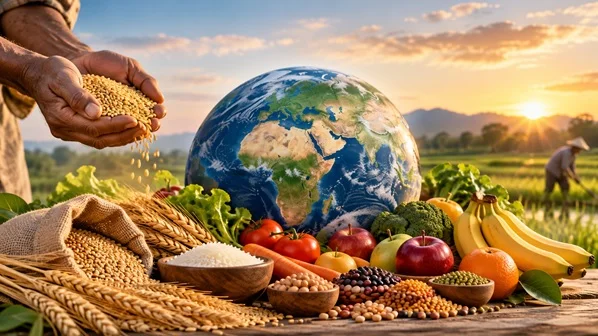
World Food Day is observed annually on 16 October to raise awareness about global hunger, malnutrition, food insecurity and the importance of sustainable agriculture.
Key Facts

Particular

Details

World Food Day

16 October

First celebrated

1981

Established by

FAO Conference in 1979

Commemorates

FAO's establishment

FAO established

16 October 1945

FAO Headquarters

Rome, Italy

FAO parent system

United Nations

World Food Day 2026

81st FAO anniversary

Related SDG

SDG 2-Zero Hunger

Major global report

The State of Food Security and Nutrition in the World (SOFI)

2026 Theme

Innovate today. Nourish tomorrow.

History 

  • The FAO was established on 16 October 1945 in Quebec City, Canada.
  • In November 1979, the 20th Session of the FAO Conference adopted a resolution establishing World Food Day.
  • World Food Day was first observed internationally in 1981.
  • The day promotes global cooperation to address hunger, poverty, malnutrition and agricultural challenges.

Year

Important Development

1945

Establishment of FAO

1979

World Food Day established

1981

First World Food Day celebration

2015

SDG 2-Zero Hunger adopted under the 2030 Agenda

2025

FAO completed 80 years

2026

81st anniversary of FAO

What is the Food and Agriculture Organization (FAO)?

  • A specialised agency of the United Nations that leads international efforts to defeat hunger and improve food security.
  • It was established on 16 October 1945.
  • Its headquarters is located in Rome, Italy.
  • It works to improve agricultural productivity, nutrition, rural livelihoods and sustainable food systems.

Major functions of FAO

  • Food Security: Promotes reliable access to sufficient and nutritious food.
  • Agricultural Development: Supports sustainable crop production, livestock farming and fisheries.
  • Nutrition: Works to reduce under nutrition and micronutrient deficiencies.
  • Climate Resilience: Promotes climate-smart agriculture and resilient food systems.

Global Hunger and Food Security

  • According to FAO's information, approximately 645 million people worldwide face hunger. Around 2.69 billion people cannot afford a healthy diet.
  • Conflict, economic instability, climate shocks and unequal access to resources continue to threaten food security.
  • Innovation in agricultural production, storage, transportation and distribution is essential for reducing hunger. 

What is Food Security?

  • Food security exists when all people, at all times, have physical, social and economic access to sufficient, safe and nutritious food that meets their dietary needs for an active and healthy life.
  • Four Pillars of Food Security are: 

Pillar

Meaning

Availability

Sufficient food production and supply

Access

Physical and economic ability to obtain food

Utilisation

Proper nutrition, food safety and biological use of food

Stability

Reliable access to food over time

Sustainable Development Goal 2: Zero Hunger

  • SDG 2 aims to end hunger, achieve food security, improve nutrition and promote sustainable agriculture by 2030.
    • Target 2.1: End hunger and ensure access to safe, nutritious and sufficient food.
    • Target 2.2: End all forms of malnutrition.
    • Target 2.3: Improve agricultural productivity and incomes of small-scale food producers.
    • Target 2.4: Ensure sustainable food production systems and resilient agricultural practices.
    • Target 2.5: Maintain genetic diversity of seeds, cultivated plants and farmed animals.

Food Security Initiatives in India

Initiative

Main Objective

National Food Security Act, 2013

Provides a legal framework for subsidised foodgrain entitlements

Public Distribution System (PDS)

Distributes essential foodgrains through fair price shops

PM Garib Kalyan Anna Yojana

Provides free foodgrains to eligible NFSA beneficiaries

PM POSHAN

Supports school nutrition through cooked meals

POSHAN Abhiyaan

Improves nutritional outcomes for women, children and adolescents

National Food Security Mission

Promotes increased production of major food crops

PM-KISAN

Provides income support to eligible farmer families

Major Challenges to Global Food Security

  • Climate Change: Droughts, floods and extreme temperatures affect agricultural production.
  • Armed Conflicts: Wars disrupt farming, supply chains and food distribution.
  • Food Price Inflation: Rising prices reduce access to nutritious food.
  • Food Loss and Waste: Losses during harvesting, storage and transportation reduce effective food availability.
  • Poverty and Inequality: Low incomes restrict access to adequate and balanced diets.

Importance of World Food Day

  • Raises awareness about hunger, malnutrition and food insecurity.
  • Encourages sustainable agricultural practices and responsible resource use.
  • Highlights the contribution of farmers and agricultural workers.
  • Promotes international cooperation and innovation in food systems.
  • Supports progress towards SDG 2 and improved global nutrition.

International Organisations and Food Security

Organisation

Major Role

FAO

Agricultural development, food security and global food data

World Food Programme (WFP)

Emergency food assistance and humanitarian response

International Fund for Agricultural Development (IFAD)

Rural development and smallholder farmer support

World Health Organization (WHO)

Nutrition, health and food safety

UNICEF

Child nutrition and prevention of malnutrition

Prelims MCQ

Q. World Food Day is observed annually on which date?

A. 7 June 

B. 16 October 

C. 24 October 

D. 16 November

Mains Practice Question

Q. Discuss the major challenges to global food security and examine the role of agricultural innovation.

FAQs

When is World Food Day celebrated?

16 October.

What is the theme of World Food Day 2026?

Innovate today, Nourish tomorrow.

When was World Food Day first celebrated?

In 1981.

Where is the headquarters of FAO located?

Rome, Italy.

What are the four pillars of food security?

Availability, access, utilisation and stability.

Global Innovation Index (GII) 2026 – India’s Rank, Significance and Challenges

Why in the News?

  • Switzerland, Sweden and the United States have secured the top three positions in the Global Innovation Index (GII) 2026 released by the World Intellectual Property Organization (WIPO).
  • India ranks 38th with a score of 40.1 points.
  • The index assesses the innovation capabilities and performance of economies worldwide.

Global Innovation Index 2026: Top Countries

Rank

Country

Score

1

Switzerland

66.7

2

Sweden

63.2

3

United States

62.3

4

South Korea

61.4

5

Singapore

61.0

6

United Kingdom

59.6

7

Netherlands

58.4

About the Global Innovation Index (GII)

  • Publishing Organisation: World Intellectual Property Organization (WIPO).
  • Headquarters: Geneva, Switzerland.
  • First Published: 2007.
  • 2026 Edition: Assesses the innovation performance of 139 economies.
  • Primary Objective: To evaluate the innovation capabilities of economies, research, technological development, and their ability to transform knowledge into useful products and services.

Major Pillars of Assessment

The GII evaluates different aspects of innovation using approximately 80 indicators, organised into seven major pillars.

S. No.

Assessment Pillar

Major Components

1

Institutions

Governance, regulatory framework and business environment

2

Human Capital and Research

Education, higher education, research and development

3

Infrastructure

ICT, general infrastructure and ecological sustainability

4

Market Sophistication

Credit, investment and trade

5

Business Sophistication

Knowledge-intensive employment and innovation networks

6

Knowledge and Technology Outputs

Patents, scientific publications and technological achievements

7

Creative Outputs

Intangible assets, creative goods and services

India’s Position: Key Facts

S. No.

Category

India’s Rank

Description

1

Overall Ranking

38th

India ranks 38th in the Global Innovation Index 2026.

2

Innovation Outputs

25th

Measures outcomes of innovation, including knowledge and technological achievements.

3

Innovation Inputs

49th

Measures resources and conditions supporting innovation, including institutions, research, human capital and infrastructure.

  • India ranks first globally in ICT services exports.
  • According to WIPO, India has consistently performed above expectations for its level of development for 16 consecutive years, making it an innovation overperformer.

Significance of Innovation for India

  1. Economic Growth: Research and new technologies improve productivity and promote economic growth.
  2. Employment Generation: Startups, digital services and technology-based industries create new employment opportunities.
  3. Self-Reliance: Indigenous technological development can reduce dependence on imports.
  4. Global Competitiveness: Innovation strengthens India’s position in exports of high-technology products and services.
  5. Social Development: New technologies can improve public services in healthcare, agriculture, education and environmental protection.

Major Challenges Facing India

  • Increasing expenditure on Research and Development (R&D).
  • Strengthening collaboration among universities, research institutions and industries.
  • Improving access to funding and venture capital for startups.
  • Enhancing the ability to commercialise research and convert it into marketable products and services.
  • Expanding quality education, technical skills and digital infrastructure.

UPSC Prelims MCQ

Question: With reference to the Global Innovation Index (GII), consider the following statements:

  1. It is published by the World Intellectual Property Organization (WIPO).
  2. It evaluates both innovation inputs and innovation outputs.
  3. India is among the top seven innovative economies in 2026.

Which of the statements given above is/are correct?

(a) 1 and 2 only

(b) 2 and 3 only

(c) 1 and 3 only

(d) 1, 2 and 3

Frequently Asked Questions (FAQs)

Q1. What is India’s rank in the Global Innovation Index 2026?

Answer: 38th.

Q2. Which organisation publishes the Global Innovation Index?

Answer: The World Intellectual Property Organization (WIPO).

Q3. Which country ranks first in the GII 2026?

Answer: Switzerland.

Q4. What is India’s rank in innovation outputs?

Answer: 25th.

Q5. What is India’s rank in innovation inputs?

Answer: 49th.

India’s Ramsar Sites Reach 103: Sukhna Wetland and Sauj Jheel Added to the List

Prelims: Ramsar Convention, Wetlands of International Importance, Sukhna Wetland, Sauj Jheel, Central Asian Flyway, Wise Use of Wetlands.
Mains: GS Paper III – Environmental Conservation, Biodiversity, Wetland Ecosystems, Water Security and Climate Resilience.
Keywords: India Ramsar Sites 2026, 103 Ramsar Sites, Sukhna Wetland Chandigarh, Sauj Jheel Uttar Pradesh, Ramsar Convention, Wetland Conservation, Migratory Birds.

Why in News?

  • On 15 October 2026, Union Environment Minister Bhupender Yadav announced that India’s number of Ramsar sites had increased to 103.
  • The latest additions are Sukhna Wetland in Chandigarh and Sauj Jheel in Uttar Pradesh.
  • The announcement highlights the contribution of wetlands to biodiversity conservation, water and climate security, and local livelihoods. 

What Is the Ramsar Convention?

The Ramsar Convention, also known as the Convention on Wetlands, is an international agreement promoting the conservation and wise use of wetlands.

  • It was adopted on 2 February 1971 in Ramsar, Iran.
  • The Convention entered into force for India on 1 February 1982.
  • Wetlands recognised under it are designated as Wetlands of International Importance, commonly called Ramsar sites. 

Its three main commitments are:

  1. Promoting the wise use of all wetlands.
  2. Designating suitable wetlands for the Ramsar List and ensuring their effective management.
  3. Cooperating internationally on shared wetlands, water systems and species. 

Latest Additions to India’s Ramsar Network

Wetland

State/Union Territory

Key geographical feature

Sukhna Wetland

Chandigarh

A reservoir near the city, at the base of the Outer Himalayas

Sauj Jheel

Uttar Pradesh

A shallow lake surrounded by farmland in the Ganga floodplain

Both wetlands support important bird habitats and strengthen India’s network of internationally recognised wetlands. 

Sukhna Wetland: An Important Urban Wetland

  • Sukhna helps regulate water and sediment flows from its catchment.
  • It provides habitat for resident birds and migratory birds travelling along the Central Asian Flyway.
  • Notable species include the common pochard, Pallas’s fish eagle and black pond turtle.
  • It also offers opportunities for recreation and environmental education. 

Sauj Jheel: A Significant Waterbird Habitat

  • Sauj Jheel forms part of a wider wetland network and lies close to Saman Bird Sanctuary.
  • It regularly supports more than 30,000 waterbirds.
  • Recorded species include the sarus crane and greater spotted eagle.
  • Its aquatic and surrounding vegetation provides feeding, shelter and breeding habitats.

How Are Ramsar Sites Selected?

The Ramsar framework provides nine criteria for identifying internationally important wetlands. These recognise ecological significance, including representative wetland types, threatened species and important populations of waterbirds, fish and other wetland-dependent species. 

What Does “Wise Use” Mean?

  • Wise use means maintaining a wetland’s ecological character through ecosystem-based approaches within the context of sustainable development.
  • It connects conservation with sustainable use of wetland resources. Implementation involves planning, management, research, monitoring and public awareness. 

Significance of Wetland Conservation

  • Biodiversity Protection: Wetlands provide feeding, breeding and shelter habitats for numerous species. Their conservation also helps maintain links between habitats used by migratory birds.
  • Water Security: Wetlands can improve water quality, store water and support groundwater recharge, depending on their ecological and hydrological characteristics.
  • Disaster Risk Reduction: By storing and regulating water, healthy wetlands can help reduce the impacts of floods and droughts.
  • Climate Resilience: Wetlands contribute to climate regulation and carbon storage. Their protection and restoration can support adaptation to climate change.
  • Livelihood Support: Wetlands sustain activities such as fishing, tourism and the collection of biological resources. Their continued ecological health supports communities dependent on these benefits. 

Conclusion

The inclusion of Sukhna Wetland and Sauj Jheel takes India’s Ramsar tally to 103. Sustaining this achievement requires effective management that protects ecological functions while supporting water security, biodiversity and local livelihoods.

Prelims Practice MCQ

Sukhna Wetland and Sauj Jheel, recently added to the Ramsar List, are located respectively in:

(a) Punjab and Rajasthan
(b) Chandigarh and Uttar Pradesh
(c) Haryana and Bihar
(d) Himachal Pradesh and Uttarakhand 

Mains Practice Question

“International recognition of wetlands must be supported by effective local management.” Discuss with reference to the ecological and livelihood significance of wetlands in India.

FAQs

1. How many Ramsar sites does India have?

As announced on 15 October 2026, India has 103 Ramsar sites, following the addition of Sukhna Wetland and Sauj Jheel.

2. Which are India’s latest Ramsar sites?

The latest additions are Sukhna Wetland in Chandigarh and Sauj Jheel in Uttar Pradesh. 

3. What is a Ramsar site?

A Ramsar site is a wetland designated as internationally important under the Convention on Wetlands. Designation carries a commitment to its effective management. 

4. When did India join the Ramsar Convention?

The Ramsar Convention entered into force for India on 1 February 1982. 

5. Why are wetlands important?

Wetlands support biodiversity, water supply, water purification, flood regulation and livelihoods. Their conservation also contributes to climate resilience. 

upsc english
« »
  • SUN
  • MON
  • TUE
  • WED
  • THU
  • FRI
  • SAT