New
Hindi Medium: (Delhi) - GS Foundation (P+M) : 14th Oct. 2026, 06:00 PM Hindi Medium: (Prayagraj) - GS Foundation (P+M) : 23rd Oct. 2026, 11:00 AM English Medium: (Delhi) - GS Foundation (P+M) : 12th Oct. 2026, 5:30PM English Medium: (Prayagraj) - GS Foundation (P+M) : 19th Aug 2026, 11:00 AM Hindi Medium: (Delhi) - GS Foundation (P+M) : 14th Oct. 2026, 06:00 PM Hindi Medium: (Prayagraj) - GS Foundation (P+M) : 23rd Oct. 2026, 11:00 AM English Medium: (Delhi) - GS Foundation (P+M) : 12th Oct. 2026, 5:30PM English Medium: (Prayagraj) - GS Foundation (P+M) : 19th Aug 2026, 11:00 AM

India’s Ramsar Sites Reach 103: Sukhna Wetland and Sauj Jheel Added to the List

Prelims: Ramsar Convention, Wetlands of International Importance, Sukhna Wetland, Sauj Jheel, Central Asian Flyway, Wise Use of Wetlands.
Mains: GS Paper III – Environmental Conservation, Biodiversity, Wetland Ecosystems, Water Security and Climate Resilience.
Keywords: India Ramsar Sites 2026, 103 Ramsar Sites, Sukhna Wetland Chandigarh, Sauj Jheel Uttar Pradesh, Ramsar Convention, Wetland Conservation, Migratory Birds.

Why in News?

  • On 15 October 2026, Union Environment Minister Bhupender Yadav announced that India’s number of Ramsar sites had increased to 103.
  • The latest additions are Sukhna Wetland in Chandigarh and Sauj Jheel in Uttar Pradesh.
  • The announcement highlights the contribution of wetlands to biodiversity conservation, water and climate security, and local livelihoods. 

What Is the Ramsar Convention?

The Ramsar Convention, also known as the Convention on Wetlands, is an international agreement promoting the conservation and wise use of wetlands.

  • It was adopted on 2 February 1971 in Ramsar, Iran.
  • The Convention entered into force for India on 1 February 1982.
  • Wetlands recognised under it are designated as Wetlands of International Importance, commonly called Ramsar sites. 

Its three main commitments are:

  1. Promoting the wise use of all wetlands.
  2. Designating suitable wetlands for the Ramsar List and ensuring their effective management.
  3. Cooperating internationally on shared wetlands, water systems and species. 

Latest Additions to India’s Ramsar Network

Wetland

State/Union Territory

Key geographical feature

Sukhna Wetland

Chandigarh

A reservoir near the city, at the base of the Outer Himalayas

Sauj Jheel

Uttar Pradesh

A shallow lake surrounded by farmland in the Ganga floodplain

Both wetlands support important bird habitats and strengthen India’s network of internationally recognised wetlands. 

Sukhna Wetland: An Important Urban Wetland

  • Sukhna helps regulate water and sediment flows from its catchment.
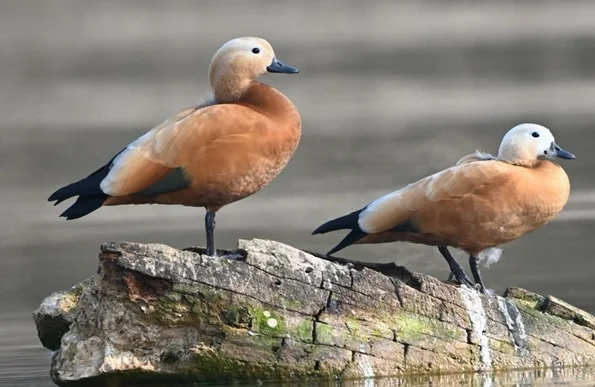
  • It provides habitat for resident birds and migratory birds travelling along the Central Asian Flyway.
  • Notable species include the common pochard, Pallas’s fish eagle and black pond turtle.
  • It also offers opportunities for recreation and environmental education. 

Sauj Jheel: A Significant Waterbird Habitat

  • Sauj Jheel forms part of a wider wetland network and lies close to Saman Bird Sanctuary.
  • It regularly supports more than 30,000 waterbirds.
  • Recorded species include the sarus crane and greater spotted eagle.
  • Its aquatic and surrounding vegetation provides feeding, shelter and breeding habitats.

How Are Ramsar Sites Selected?

The Ramsar framework provides nine criteria for identifying internationally important wetlands. These recognise ecological significance, including representative wetland types, threatened species and important populations of waterbirds, fish and other wetland-dependent species. 

What Does “Wise Use” Mean?

  • Wise use means maintaining a wetland’s ecological character through ecosystem-based approaches within the context of sustainable development.
  • It connects conservation with sustainable use of wetland resources. Implementation involves planning, management, research, monitoring and public awareness. 

Significance of Wetland Conservation

  • Biodiversity Protection: Wetlands provide feeding, breeding and shelter habitats for numerous species. Their conservation also helps maintain links between habitats used by migratory birds.
  • Water Security: Wetlands can improve water quality, store water and support groundwater recharge, depending on their ecological and hydrological characteristics.
  • Disaster Risk Reduction: By storing and regulating water, healthy wetlands can help reduce the impacts of floods and droughts.
  • Climate Resilience: Wetlands contribute to climate regulation and carbon storage. Their protection and restoration can support adaptation to climate change.
  • Livelihood Support: Wetlands sustain activities such as fishing, tourism and the collection of biological resources. Their continued ecological health supports communities dependent on these benefits. 

Conclusion

The inclusion of Sukhna Wetland and Sauj Jheel takes India’s Ramsar tally to 103. Sustaining this achievement requires effective management that protects ecological functions while supporting water security, biodiversity and local livelihoods.

Prelims Practice MCQ

Sukhna Wetland and Sauj Jheel, recently added to the Ramsar List, are located respectively in:

(a) Punjab and Rajasthan
(b) Chandigarh and Uttar Pradesh
(c) Haryana and Bihar
(d) Himachal Pradesh and Uttarakhand 

Mains Practice Question

“International recognition of wetlands must be supported by effective local management.” Discuss with reference to the ecological and livelihood significance of wetlands in India.

FAQs

1. How many Ramsar sites does India have?

As announced on 15 October 2026, India has 103 Ramsar sites, following the addition of Sukhna Wetland and Sauj Jheel.

2. Which are India’s latest Ramsar sites?

The latest additions are Sukhna Wetland in Chandigarh and Sauj Jheel in Uttar Pradesh. 

3. What is a Ramsar site?

A Ramsar site is a wetland designated as internationally important under the Convention on Wetlands. Designation carries a commitment to its effective management. 

4. When did India join the Ramsar Convention?

The Ramsar Convention entered into force for India on 1 February 1982. 

5. Why are wetlands important?

Wetlands support biodiversity, water supply, water purification, flood regulation and livelihoods. Their conservation also contributes to climate resilience. 

Have any Query?

Our support team will be happy to assist you!

OR
X