Why in News?
- Sikkim’s Soreng district has become India’s first notified Organic Fisheries Cluster under the Pradhan Mantri Matsya Sampada Yojana (PMMSY). The initiative aims to promote chemical-free fish farming, improve farmers’ incomes and expand market opportunities for organic fish products.
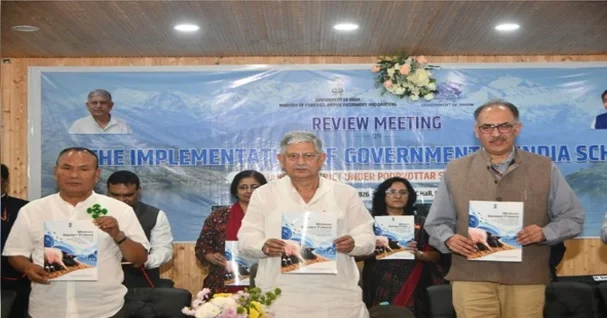
- The Union Government has also introduced a Standard Operating Procedure (SOP) for the organic certification of fisheries in the Northeast.
- It will provide a structured framework for organic fish production, certification and traceability.
What Is the Organic Fisheries Cluster Initiative?
- The initiative aims to promote environmentally sustainable fish farming by reducing the use of harmful chemicals, antibiotics and pesticides.
- The Soreng cluster will focus on the production of three major fish varieties:
- Amur Carp
- Indian Major Carps
- Trout
- The initiative will use Sikkim’s existing organic farming ecosystem to promote organic fish production and help farmers access premium domestic and international markets.
Key Features of the Initiative
1. SOP for Organic Fisheries Certification
- The Centre has launched an SOP to guide organic fish production and certification in the Northeastern region.
- Its major objectives include:
- Establishing a standard framework for organic fish production.
- Facilitating organic certification of fisheries.
- Ensuring traceability across the fisheries value chain.
- Improving consumer confidence in organic fish products.
- Helping farmers access high-value markets.
2. Fisheries Projects Worth ₹3.75 Crore
- During his visit to Sikkim, Union Fisheries Minister Rajiv Ranjan Singh inaugurated fisheries development projects worth ₹3.75 crore.
- These projects include infrastructure and modern production facilities such as:
- Fish hatcheries.
- Fish feed mills.
- Cold storage facilities.
- Biofloc technology.
- Recirculatory Aquaculture Systems (RAS).
- These facilities are expected to strengthen the fisheries value chain, from fish production to processing and marketing.
3. Support for Fish Farmers
- During the visit, the Union Minister also inspected a live fish vending centre supported under PMMSY and interacted with members of fish farmers’ cooperative societies.
- Other support measures included:
- Distribution of fish feed to 15 farmers from two cooperative societies.
- Distribution of Kisan Credit Cards (KCCs) to improve access to institutional credit.
- Financial assistance through cheques to five farmers under the Mukhya Mantri Matsya Uthpadhan Yojana (MMMUY).
India’s Cluster-Based Fisheries Development Approach
- The Government has notified 34 fisheries production and processing clusters across the country.
- These clusters aim to bring different stages of fisheries development together within identified geographical areas. This includes:
- Fish production.
- Processing and storage.
- Value addition.
- Marketing and distribution.
- Organic fisheries clusters have been notified in Sikkim and Meghalaya. The cluster-based approach is expected to improve coordination, infrastructure and market access in the fisheries sector.
Sikkim Signs MoU with ITBP to Promote Rainbow Trout
- To strengthen market linkages, the Sikkim Government has signed a Memorandum of Understanding (MoU) with the Indo-Tibetan Border Police (ITBP) for the institutional procurement of locally produced Rainbow Trout.
- Under this arrangement, ITBP establishments will procure Rainbow Trout from local fish farmers.
- The agreement covers important aspects such as:
- Quality standards.
- Pricing arrangements.
- Supply capacity.
- Inspection mechanisms.
- Delivery schedules.
- This arrangement is expected to provide a more stable and reliable market for trout farmers in Sikkim.
Significance of the Initiative
- Promotion of Sustainable Fisheries: Organic fish farming will encourage environmentally responsible production practices and reduce dependence on harmful chemicals.
- Higher Farmers’ Income: Access to premium domestic and export markets can improve the income opportunities of fish farmers.
- Better Market Access: The SOP and ITBP procurement agreement will help strengthen certification, traceability and institutional market linkages.
- Development of Fisheries Infrastructure: Investments in hatcheries, feed mills, cold storage and modern aquaculture technologies will strengthen the fisheries value chain.
- Promotion of Organic Agriculture and Fisheries: The initiative will build on Sikkim’s organic farming ecosystem and support the development of organic fisheries.
What Is PM Matsya Sampada Yojana (PMMSY)?
- The Pradhan Mantri Matsya Sampada Yojana (PMMSY) is a flagship scheme of the Government of India launched in September 2020.
- It aims to bring about a sustainable and responsible development of the fisheries sector and increase fish production, productivity and farmers’ incomes.
- Its key objectives include:
- Increasing fish production and productivity.
- Strengthening fisheries infrastructure and post-harvest management.
- Reducing post-harvest losses.
- Improving market access and value addition.
- Promoting the welfare of fishers and fish farmers.
Conclusion
The notification of Soreng as India’s first Organic Fisheries Cluster marks an important step towards sustainable fisheries development. By combining organic certification, modern infrastructure, farmer support and assured market linkages, the initiative can help strengthen Sikkim’s fisheries sector and create new opportunities for fish farmers.
Prelims Practice Question
1. Consider the following statements about Soreng Organic Fisheries Cluster:
- Soreng is located in Sikkim.
- It is India’s first notified Organic Fisheries Cluster.
- It has been notified under the Pradhan Mantri Matsya Sampada Yojana.
Which of the statements given above is/are correct?
(a) 1 and 2 only
(b) 2 and 3 only
(c) 1 and 3 only
(d) 1, 2 and 3
Mains Practice Question
Q. Discuss the role of organic and sustainable aquaculture in strengthening India’s fisheries sector. Examine the importance of infrastructure, certification and market linkages in improving fish farmers’ incomes.
|
FAQs
1. Which state has India’s first notified Organic Fisheries Cluster?
Sikkim. Soreng district has been notified as India’s first Organic Fisheries Cluster.
2. Under which scheme has the Soreng Organic Fisheries Cluster been notified?
It has been notified under the Pradhan Mantri Matsya Sampada Yojana (PMMSY).
3. Which fish varieties are the focus of the Soreng cluster?
The cluster focuses on Amur Carp, Indian Major Carps and trout.
4. What is the purpose of the SOP for organic fisheries in Northeast India?
It aims to establish a framework for organic fish production, certification and traceability, while improving market access and consumer confidence.
5. What is the objective of the Sikkim Government’s MoU with ITBP?
The MoU aims to facilitate the institutional procurement of locally produced Rainbow Trout by ITBP establishments, providing a stable market for fish farmers.
|