Why in News?
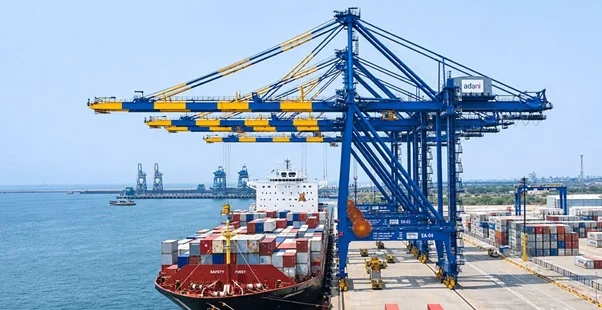
On 25 November 2026, the Cabinet Committee on Economic Affairs (CCEA), chaired by Prime Minister Narendra Modi, approved the construction of a Second Container Terminal at Kamarajar Port Limited in Tamil Nadu, with an estimated investment of ₹4,288.26 crore under the Public-Private Partnership (PPP) model. The project will add an annual container-handling capacity of 2 million TEUs.
Important Points
- Approval: 25 November 2026 by CCEA.
- Location: Kamarajar Port, Tamil Nadu.
- Project Cost: ₹4,288.26 crore.
- Model: PPP (DBFOT).
- Former Name: Ennore Port Limited.
- Related Initiatives: Maritime India Vision 2030 and Maritime Amrit Kaal Vision 2047.
Major Features of the Second Container Terminal
The proposed terminal will enhance the container-handling capacity of Kamarajar Port and enable it to accommodate larger container vessels.
Its major features include:
- 900-metre-long berth: The terminal will have a 900-metre-long berth to facilitate the handling of large container ships.
- 18-metre draft depth: This will allow bigger vessels to enter and operate at the port.
- Large vessel handling: The terminal will be capable of handling ships with a capacity of up to 24,346 TEUs and a maximum length of 400 metres.
- Annual capacity of 2 million TEUs: The additional capacity will help meet the growing demand for container transportation.
- Modern maritime infrastructure: The project will improve port efficiency and strengthen India's connectivity with international shipping routes.
Development of the Project in Two Phases
The Second Container Terminal will be developed in two phases, with a combined annual handling capacity of 2 million TEUs.
|
Particulars
|
Phase I
|
Phase II
|
|
Container Handling Capacity
|
1.1 million TEUs
|
0.9 million TEUs
|
|
Estimated Cost
|
₹2,429.32 crore
|
₹1,858.94 crore
|
|
Construction Period
|
First 24 months
|
25th–48th month
|
|
Commercial Operations
|
25th month
|
49th month
|
- Phase I: Construction will be completed within the first 24 months from the date of award of the concession. Commercial operations are expected to begin in the 25th month.
- Phase II: The second phase will be completed by the 48th month, with commercial operations expected to commence in the 49th month.
Project Implementation and Funding Model
The project will be implemented through the Public-Private Partnership (PPP) model under the Design, Build, Finance, Operate and Transfer (DBFOT) framework.
Under this arrangement:
- A private-sector concessionaire will be selected through an open, competitive international bidding process.
- The selected concessionaire will finance, construct and operate the terminal.
- Kamarajar Port Limited (KPL) will separately bear the estimated dredging cost of ₹450 crore.
- The private concessionaire will recover its investment through fees and charges as specified in the Concession Agreement and applicable tariff framework.
- The concession period will be 40 years, including the 48-month construction period.
- No Government of India funding will be provided for the PPP component of the project.
Why Does Kamarajar Port Need a Second Container Terminal?
- The expansion of industrial and manufacturing activities in southern India has increased the demand for container transportation and port services.
- Kamarajar Port has witnessed significant growth in cargo and container traffic. Its existing container terminal is operating at nearly 88% utilisation, indicating the need for additional capacity.
According to the project-related figures:
|
Indicator
|
Details
|
|
Total Cargo Throughput (FY 2025–26)
|
49.08 million tonnes
|
|
Number of Vessels Handled
|
1,008
|
|
Container Throughput
|
More than 7 lakh TEUs
|
|
Existing Container Terminal Capacity
|
0.8 million TEUs annually
|
|
Existing Terminal Utilisation
|
Approximately 88%
|
|
India's Average Annual Container Growth (5-year average)
|
Approximately 7%
|
|
KPL's Average Annual Container Growth (5-year average)
|
Approximately 9.9%
|
|
KPL's Average Annual Cargo Growth (5-year average)
|
13.64%
|
The new terminal will address the growing demand for container-handling services and reduce pressure on existing port infrastructure.
Economic and Strategic Significance of the Project
The proposed terminal is expected to strengthen India's maritime trade network, improve logistics efficiency and support industrial development across southern India.
1. Strengthening International Trade Connectivity
- The terminal's 18-metre draft depth will enable large mainline container vessels to directly visit Kamarajar Port.
- This will reduce dependence on overseas deep-sea transshipment hubs and help lower feedering and transportation costs.
2. Boost to Industrial and Manufacturing Sectors
- The project will support the transportation of containerised goods produced by major industries, including:
- Automobile and automobile components.
- Engineering products.
- Electronics.
- Chemicals.
- Other manufacturing sectors.
- It will improve trade and logistics connectivity for industrial regions across Tamil Nadu, Karnataka, Andhra Pradesh and Telangana, along with neighbouring states.
3. Employment Generation
- The project is expected to create employment opportunities during both construction and operational phases.
- Construction phase: Around 750 direct and indirect jobs.
- Operational phase: Around 800 employment opportunities.
- This will contribute to regional economic development and livelihood generation.
4. Strengthening India's Maritime Infrastructure
- The additional container-handling capacity will improve port efficiency, maritime logistics and cargo movement.
- It will also enhance Kamarajar Port's ability to attract international shipping lines and support India's growing EXIM (Export-Import) trade.
5. Supporting Long-Term Maritime Development
- The project is aligned with India's broader maritime development objectives under:
- Maritime India Vision 2030.
- Maritime Amrit Kaal Vision 2047.
- These initiatives aim to strengthen port infrastructure, improve logistics efficiency and enhance India's position in global maritime trade.
About Kamarajar Port Limited
- Kamarajar Port Limited, formerly known as Ennore Port Limited, is one of India's major ports. It is located on the eastern coast of Tamil Nadu, near Chennai, and serves the industrial and economic regions of southern India.
- The port is fully owned by the Chennai Port Authority and functions under the administrative control of the Ministry of Ports, Shipping and Waterways.
Conclusion
The approval of the Second Container Terminal at Kamarajar Port marks an important step towards strengthening India's maritime infrastructure. With an investment of ₹4,288.26 crore and an additional capacity of 2 million TEUs annually, the project is expected to improve international trade connectivity, reduce logistics costs and support industrial growth across southern India.
It will also contribute to India's long-term objective of becoming a major global maritime and logistics hub.
Prelims Practice Question
Q1. With reference to the Second Container Terminal at Kamarajar Port, consider the following statements:
- The project will be developed under the Public-Private Partnership (PPP) model.
- The proposed terminal will have an annual handling capacity of 2 million TEUs.
- Kamarajar Port is located on the western coast of India.
Which of the statements given above is/are correct?
(a) 1 and 2 only
(b) 2 and 3 only
(c) 1 and 3 only
(d) 1, 2 and 3
Mains Practice Questions
Q1. Discuss the role of port infrastructure development in strengthening India's international trade and economic growth, with reference to the Second Container Terminal at Kamarajar Port.
|
FAQs
Q1. Why was the Second Container Terminal at Kamarajar Port in the news?
On 25 November 2026, the Union Cabinet approved the development of a Second Container Terminal at Kamarajar Port in Tamil Nadu at an estimated cost of ₹4,288.26 crore.
Q2. Where is Kamarajar Port located?
Kamarajar Port is located in Tamil Nadu on the eastern coast of India, near Chennai.
Q3. What was the former name of Kamarajar Port?
It was formerly known as Ennore Port Limited.
Q4. What is the annual container-handling capacity of the proposed terminal?
The proposed terminal will have an additional annual handling capacity of 2 million TEUs.
Q5. What is the DBFOT model?
DBFOT stands for Design, Build, Finance, Operate and Transfer. Under this model, a private concessionaire develops and operates the project before transferring it to the designated authority.
|