Why in news?
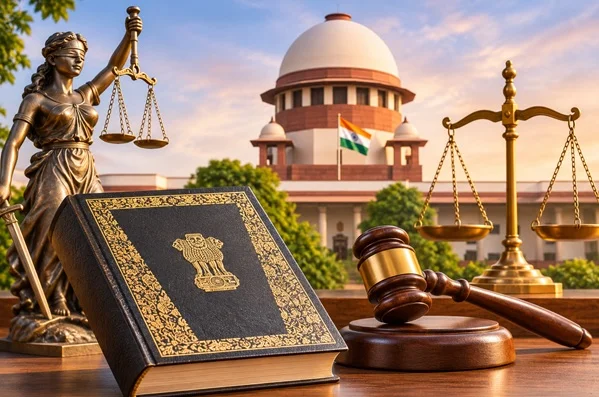
National Law Day is observed every year on 26 November to recognise the importance of the rule of law, an independent judiciary and the legal profession in India's democracy.
Key Facts
|
Particular
|
Details
|
|
Name
|
National Law Day
|
|
Also Associated With
|
Constitution Day / Samvidhan Diwas
|
|
Observed On
|
26 November
|
|
First Observed As Law Day
|
1979
|
|
Associated With
|
Dr. L.M. Singhvi
|
|
Historical Significance
|
Adoption of the Indian Constitution
|
|
Constitution Adopted
|
26 November 1949
|
|
Constitution Came into Force
|
26 January 1950
|
|
Official Constitution Day Declaration
|
2015
|
|
Important Institution
|
Supreme Court of India
|
|
Associated Organisation
|
Supreme Court Bar Association
|
|
Core Principles
|
Rule of Law, Judicial Independence and Independence of Legal Profession
|
What is National Law Day?
- National Law Day is an occasion dedicated to recognising the importance of law, justice and constitutional governance in India.
- It highlights the role of the Constitution as the supreme legal framework governing the country.
- It emphasises that every individual and institution, including the government, is subject to the law.
- It recognises the importance of an independent judiciary in protecting constitutional rights and ensuring justice.
- It promotes awareness about the legal system, citizens' rights and responsibilities.
- It encourages members of the legal profession to uphold professional ethics, fairness and judicial independence.
Historical Background: Why is 26 November Observed?
- The Constituent Assembly of India was established in 1946 under the Cabinet Mission Plan. It held its first meeting on 9 December 1946.
- The Drafting Committee was constituted on 29 August 1947 under the chairmanship of Dr. B.R. Ambedkar.
- After extensive debates and discussions, the Constituent Assembly adopted the Constitution on 26 November 1949.
- The Constitution came into force on 26 January 1950, marking the establishment of India as a Republic.
- For several years, 26 November was particularly recognised by the legal fraternity as an important constitutional occasion.
- In 1979, eminent jurist and constitutional expert Dr. L.M. Singhvi initiated the observance of Law Day to reaffirm the fundamental principles of constitutional governance.
- The occasion became associated with the Supreme Court and the legal fraternity.
- In 2015, the Government of India officially declared 26 November as Constitution Day in honour of the 125th birth anniversary year of Dr. B.R. Ambedkar.
- Since then, the day has been observed nationally as Constitution Day while continuing its significance as Law Day within the legal community.
Why is National Law Day Important?
- Rule of Law
- Rule of Law means that no individual or authority is above the law.
- Every citizen, public official and government institution is subject to the legal framework.
- It prevents arbitrary exercise of power.
- It ensures equality before law and equal protection of laws.
- It promotes transparency, accountability and fairness in governance.
- Independence of the Judiciary
- Judicial independence means that courts must function without improper influence from the executive, legislature or other external authorities.
- It enables judges to deliver impartial judgments.
- It protects Fundamental Rights and constitutional principles.
- It strengthens public confidence in the justice delivery system.
- It acts as a safeguard against the misuse of governmental power.
- Independence of the Legal Profession
- An independent legal profession enables lawyers to represent clients without improper interference.
- It protects the right to legal representation.
- It ensures that lawyers can assist courts in the fair administration of justice.
- It promotes professional ethics, accountability and the integrity of the legal system.
Rule of Law in India
- Supremacy of Law: No person can be punished except for a violation of law established through proper legal procedures.
- Equality Before Law: Every individual is equal before the law, irrespective of position or status.
- Legal Protection: Citizens are protected against arbitrary governmental action.
- Independent Judiciary: Courts function as guardians of the Constitution and protect individual rights.
- Accountability: Public authorities must exercise their powers within constitutional and legal limits.
Constitutional Provisions Supporting Rule of Law
|
Article
|
Constitutional Provision
|
|
Article 13
|
Laws inconsistent with Fundamental Rights are void to the extent of inconsistency
|
|
Article 14
|
Equality before law and equal protection of laws
|
|
Article 19
|
Protection of specified freedoms
|
|
Article 21
|
Protection of life and personal liberty
|
|
Article 32
|
Right to constitutional remedies through the Supreme Court
|
|
Article 226
|
Power of High Courts to issue writs
|
|
Article 50
|
Separation of judiciary from executive in public services of the State
|
Constitutional Framework of the Indian Judiciary
|
Level
|
Institution
|
Major Role
|
|
National Level
|
Supreme Court of India
|
Highest court and final constitutional interpreter
|
|
State Level
|
High Courts
|
Highest judicial authority in a state or group of states
|
|
District Level
|
District and Sessions Courts
|
Handle civil and criminal cases at district level
|
|
Subordinate Level
|
Civil and Judicial Magistrate Courts
|
Deal with cases within their respective jurisdictions
|
Important Constitutional Safeguards for Judicial Independence
|
Provision
|
Safeguard
|
|
Article 124
|
Appointment and removal-related provisions for Supreme Court judges
|
|
Article 125
|
Salaries and allowances of Supreme Court judges
|
|
Article 129
|
Supreme Court as a Court of Record
|
|
Article 211
|
Restriction on discussion of judges' conduct in State Legislatures
|
|
Article 215
|
High Courts as Courts of Record
|
|
Article 217
|
Appointment and conditions of office of High Court judges
|
|
Article 218
|
Application of specified provisions relating to Supreme Court judges to High Court judges
|
|
Article 221
|
Salaries and allowances of High Court judges
|
|
Article 50
|
Separation of judiciary from executive
|
Important Landmark Judgments Strengthening Rule of Law
|
Case
|
Year
|
Major Principle
|
|
Kesavananda Bharati v. State of Kerala
|
1973
|
Basic Structure Doctrine
|
|
Maneka Gandhi v. Union of India
|
1978
|
Expanded interpretation of Article 21
|
|
Minerva Mills v. Union of India
|
1980
|
Limited amending power and constitutional balance
|
|
S.P. Gupta v. Union of India
|
1981
|
Judicial appointments and independence
|
|
Supreme Court Advocates-on-Record Association v. Union of India
|
1993
|
First Judges Case reconsidered; Collegium system established
|
|
K.S. Puttaswamy v. Union of India
|
2017
|
Right to Privacy recognised as a Fundamental Right
|
|
Supreme Court Advocates-on-Record Association v. Union of India
|
2015
|
NJAC Amendment struck down
|
Important Judicial Doctrines
- Basic Structure Doctrine
- Established in the Kesavananda Bharati case, 1973.
- Parliament can amend the Constitution under Article 368.
- However, it cannot destroy or alter the Constitution's basic structure.
- It protects fundamental constitutional principles from arbitrary amendment.
- Judicial Review
- Allows courts to examine the constitutional validity of legislative and executive actions.
- Ensures that governmental authorities function within constitutional limits.
- Acts as an important safeguard against arbitrary exercise of power.
- Separation of Powers
- Refers to the distribution of governmental powers among the Legislature, Executive and Judiciary.
- Prevents excessive concentration of authority in one institution.
- Promotes checks and balances within the constitutional system.
Major Laws and Legal Reforms in India
|
Legislation
|
Year
|
Main Objective
|
|
Advocates Act
|
1961
|
Regulates the legal profession and Bar Councils
|
|
Legal Services Authorities Act
|
1987
|
Provides free and competent legal services to eligible persons
|
|
Protection of Human Rights Act
|
1993
|
Provides for the National Human Rights Commission and State Human Rights Commissions
|
|
Right to Information Act
|
2005
|
Promotes transparency and accountability
|
|
Commercial Courts Act
|
2015
|
Provides a framework for speedy resolution of commercial disputes
|
|
Mediation Act
|
2023
|
Provides a statutory framework for mediation
|
|
Bharatiya Nyaya Sanhita
|
2023
|
Replaced the Indian Penal Code
|
|
Bharatiya Nagarik Suraksha Sanhita
|
2023
|
Replaced the Code of Criminal Procedure
|
|
Bharatiya Sakshya Adhiniyam
|
2023
|
Replaced the Indian Evidence Act
|
New Criminal Laws in India
|
New Law
|
Replaced
|
Main Area
|
|
Bharatiya Nyaya Sanhita (BNS), 2023
|
Indian Penal Code, 1860
|
Substantive criminal law
|
|
Bharatiya Nagarik Suraksha Sanhita (BNSS), 2023
|
Code of Criminal Procedure, 1973
|
Criminal procedure
|
|
Bharatiya Sakshya Adhiniyam (BSA), 2023
|
Indian Evidence Act, 1872
|
Law of evidence
|
Government Initiatives to Strengthen the Justice Delivery System
- e-Courts Project
- A centrally sponsored initiative under the Department of Justice, Ministry of Law and Justice.
- Aims to modernise the Indian judiciary through information and communication technology.
- Promotes digital case management, online access to judgments and electronic filing.
- Phase III focuses on digital transformation and improved accessibility of courts.
- National Legal Services Authority (NALSA)
- Established under the Legal Services Authorities Act, 1987.
- Provides free legal services to eligible sections of society.
- Organises Lok Adalats for amicable settlement of disputes.
- Promotes equal access to justice, particularly for disadvantaged communities.
- Tele-Law Programme
- Implemented by the Department of Justice.
- Connects citizens with lawyers through Common Service Centres and digital platforms.
- Provides pre-litigation legal advice.
- Particularly benefits people living in rural and remote areas.
- Nyaya Bandhu Programme
- A pro bono legal services initiative of the Department of Justice.
- Connects marginalised and disadvantaged individuals with volunteer lawyers.
- Encourages the legal fraternity to contribute towards access to justice.
- Legal Aid Defence Counsel System
- Implemented by NALSA.
- Provides dedicated legal representation to eligible accused persons in criminal cases.
- Aims to strengthen the quality of legal aid and ensure fair representation.
- National Mission for Justice Delivery and Legal Reforms
- Focuses on reducing judicial delays and improving access to justice.
- Promotes infrastructure development, judicial capacity and process reforms.
- Encourages the use of technology to improve court administration.
National Law Day 2026: Major Observances
|
Initiative
|
Details
|
|
77th Constitution Day Celebrations
|
Organised on 26 November 2026
|
|
Venue
|
Vigyan Bhavan, New Delhi
|
|
Main Programme
|
Release of Constitution in 22 regional languages
|
|
Online Preamble Reading
|
Through MyGov in 23 languages, including English
|
|
Constitution Quiz
|
MyGov and MyBharat portals
|
|
Youth Engagement
|
Viksit Bharat Yuva Samvad
|
|
Dr. Ambedkar Foundation Programme
|
Constitution Day lecture on constitutional governance and Dr. B.R. Ambedkar's legacy
|
Significance of National Law Day
- Constitutional Supremacy: Reinforces the principle that the Constitution is the supreme law of the country.
- Democratic Governance: Strengthens democratic institutions and constitutional accountability.
- Judicial Independence: Highlights the importance of an impartial judiciary.
- Protection of Rights: Promotes awareness of Fundamental Rights and constitutional remedies.
- Equality Before Law: Reinforces the principle that every individual is equal before the law.
- Access to Justice: Encourages affordable and accessible legal services for all sections of society.
- Legal Awareness: Promotes understanding of laws, legal procedures and citizens' responsibilities.
Major Challenges Facing the Indian Legal System
- Judicial Pendency: A large number of pending cases create delays in justice delivery.
- Access to Justice: Financial constraints and geographical barriers prevent many people from accessing legal services.
- Judicial Vacancies: Vacancies in courts can increase the workload of serving judges.
- Infrastructure Gaps: Several subordinate courts require improved infrastructure and digital facilities.
- Undertrial Prisoners: Delays in trials can result in prolonged detention of undertrial prisoners.
- Legal Awareness: Many citizens remain unaware of their rights and available legal remedies.
Prelims MCQ
Q. With reference to National Law Day in India, consider the following statements:
- National Law Day is observed on 26 November.
- The observance of Law Day began in 1979 on the initiative of Dr. L.M. Singhvi.
- The Constitution of India came into force on 26 November 1949.
- The Government of India officially declared 26 November as Constitution Day in 2015.
Which of the statements given above are correct?
(a) 1 and 2 only
(b) 1, 2 and 4 only
(c) 2, 3 and 4 only
(d) 1, 2, 3 and 4
Mains Practice Question
Q. "The Rule of Law and judicial independence are essential pillars of constitutional democracy." Discuss.
|
FAQs
When is National Law Day observed in India?
26 November every year.
When did the observance of National Law Day begin?
1979.
Who initiated the observance of National Law Day?
Dr. L.M. Singhvi, an eminent jurist and constitutional expert.
Why is 26 November significant?
The Constituent Assembly adopted the Constitution of India on 26 November 1949.
When did the Indian Constitution come into force?
26 January 1950.
|