Why in news?
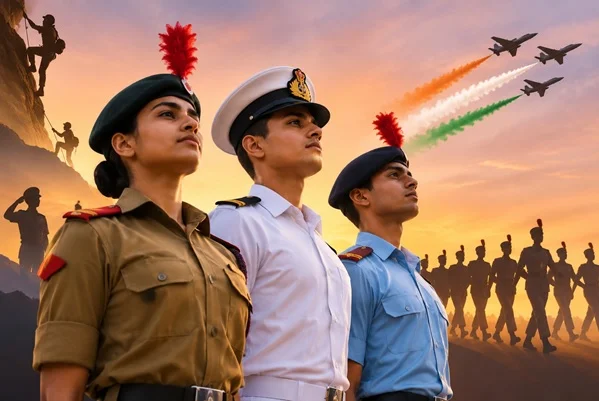
The National Cadet Corps (NCC) Raising Day is observed every year on the last Sunday of November. In 2026, it will be observed on 29 November.
Key Facts
|
Particular
|
Details
|
|
Official Name
|
National Cadet Corps
|
|
Abbreviation
|
NCC
|
|
Established
|
1948
|
|
NCC Act
|
National Cadet Corps Act, 1948
|
|
Act Passed
|
16 April 1948
|
|
Formal Inauguration
|
15 July 1948
|
|
NCC Day
|
Last Sunday of November
|
|
NCC Day 2026
|
29 November
|
|
Headquarters
|
New Delhi
|
|
Administrative Ministry
|
Ministry of Defence
|
|
Nature
|
Tri-services youth organisation
|
|
Motto
|
Unity and Discipline
|
|
First NCC Director
|
Colonel G.G. Bewoor
|
|
Girls Division
|
1949
|
|
Air Wing
|
1950
|
|
Naval Wing
|
1952
|
What is the National Cadet Corps (NCC)?
- The National Cadet Corps is a voluntary youth organisation functioning under the Ministry of Defence, Government of India.
- It provides opportunities to school and college students for their all-round development through discipline, leadership, military training and social service.
- It is a tri-services organisation comprising the Indian Army, Indian Navy and Indian Air Force.
- It aims to develop responsible, disciplined and patriotic citizens who can contribute to national development.
Historical Background: Establishment of NCC
- The origin of NCC can be traced back to the University Corps, established under the Indian Defence Act, 1917.
- Its objective was to create a reserve of trained young people who could support the Armed Forces.
- In 1920, the University Corps was replaced by the University Training Corps (UTC).
- In 1942, the UTC was renamed the University Officers' Training Corps (UOTC).
- In 1946, a committee headed by Pandit H.N. Kunzru recommended establishing a national-level cadet organisation.
- Following independence, the need for a disciplined and trained youth organisation became more important.
- The National Cadet Corps Act was passed on 16 April 1948.
- The NCC was formally inaugurated on 15 July 1948.
- The first NCC unit was raised in Delhi on the last Sunday of November 1948, in the presence of Prime Minister Jawaharlal Nehru.
Important Timeline
|
Year
|
Major Development
|
|
1917
|
Establishment of University Corps
|
|
1920
|
University Training Corps introduced
|
|
1942
|
UTC renamed UOTC
|
|
1946
|
Kunzru Committee formed
|
|
1948
|
NCC Act passed and NCC established
|
|
1948
|
Formal inauguration on 15 July
|
|
1948
|
First NCC unit raised in Delhi in November
|
|
1949
|
Girls Division introduced
|
|
1950
|
Air Wing introduced
|
|
1952
|
Naval Wing introduced
|
|
1963
|
NCC training made compulsory
|
|
1968
|
NCC training made voluntary again
|
|
1980
|
Motto 'Unity and Discipline' finalised
|
Aims and Objectives of NCC
- Character Building: Develop character, confidence and moral values.
- Discipline: Promote punctuality, responsibility and respect for authority.
- Leadership: Create organised and motivated youth capable of leading in different fields.
- National Integration: Encourage unity among people belonging to different religions, languages and cultures.
- Spirit of Adventure: Promote adventure activities, sportsmanship and courage.
- Selfless Service: Encourage participation in social service and community development.
- Defence Awareness: Motivate young people to consider careers in the Armed Forces.
Three Wings of NCC
|
Wing
|
Major Activities
|
|
Army Wing
|
Drill, weapon training, map reading, field craft and physical training
|
|
Naval Wing
|
Seamanship, sailing, boat pulling and maritime activities
|
|
Air Wing
|
Aviation awareness, aero-modelling, gliding and flying-related exposure
|
Motto of NCC
- The motto of NCC is "Unity and Discipline".
- The need for a common motto was discussed during the 11th Central Advisory Committee meeting on 11 August 1978.
- The final decision was taken during the 12th Central Advisory Committee meeting on 12 October 1980.
- The motto reflects the importance of unity, discipline and collective responsibility.
Organisational Structure of NCC
- The NCC functions under the Ministry of Defence and is headed by a Director General at its national headquarters in New Delhi.
- Its organisational structure extends across states and Union Territories to ensure the implementation of training programmes.
Training and Activities of NCC
- Institutional Training: Regular parades, drill, classroom instruction and practical training.
- Physical Training: Exercise, sports and fitness activities.
- Military Training: Weapon training, map reading, field craft and basic military knowledge.
- Adventure Training: Trekking, mountaineering, sailing, cycling and other adventure activities.
- Social Service: Blood donation, cleanliness drives, tree plantation and awareness campaigns.
- Disaster Management: Participation in community assistance and disaster-related activities.
Important NCC Camps
|
Camp
|
Major Objective
|
|
Republic Day Camp
|
Participation in Republic Day celebrations & national-level activities
|
|
National Integration Camp
|
Promotes national unity and cultural exchange
|
|
Annual Training Camp
|
Provides basic and practical training
|
|
Thal Sainik Camp (TSC)
|
Focuses on land-based military skills
|
|
Nau Sainik Camp (NSC)
|
Promotes naval training and maritime skills
|
|
Vayu Sainik Camp (VSC)
|
Focuses on Air Wing activities
|
|
Leadership Camps
|
Develops leadership and decision-making abilities
|
NCC Certificates: A, B and C
|
Certificate
|
Eligible Division
|
Significance
|
|
A Certificate
|
Junior Division / Junior Wing
|
Recognises basic NCC training
|
|
B Certificate
|
Senior Division / Senior Wing
|
Recognises further training
|
|
C Certificate
|
Senior Division / Senior Wing
|
Highest NCC certificate
|
Major Government Initiatives to Strengthen NCC
- NCC Expansion Scheme
- Focuses on expanding NCC coverage to more educational institutions.
- Aims to increase opportunities for students, especially in underserved and border areas.
- Supports the expansion of youth training infrastructure.
- NCC as Part of the National Education Framework
- Encourages the integration of NCC-related training and activities into educational institutions.
- Promotes experiential learning, discipline and personality development.
- Provides opportunities for students to participate in structured training beyond classroom education.
- NCC Expansion in Border and Coastal Areas
- The government has taken steps to expand NCC coverage in border and coastal regions.
- Encourages students living in strategically important areas to participate in NCC activities.
- Promotes awareness about national security and local community responsibilities.
- Measures to Promote Girls' Participation: According to the Ministry of Defence, measures include:
- Upgradation of training infrastructure.
- Standardisation of NCC curriculum and drill modules.
- Increased induction of women Associate NCC Officers.
- Improved availability of women instructors and medical staff.
- Equal training opportunities for female cadets.
Significance of NCC
- National Integration: Promotes unity and understanding among India's diverse population.
- Youth Empowerment: Develops confidence, leadership and decision-making abilities.
- Defence Awareness: Introduces young citizens to the traditions and functioning of the Armed Forces.
- Disaster Management: Encourages youth participation in community assistance and relief activities.
- Social Responsibility: Promotes blood donation, cleanliness and environmental protection.
Prelims MCQ
Q. With reference to the National Cadet Corps (NCC), consider the following statements:
- The NCC was established under the National Cadet Corps Act, 1948.
- The NCC was formally inaugurated on 15 July 1948.
- The Air Wing was introduced before the Girls Division.
- The motto of NCC is "Unity and Discipline".
Which of the statements given above are correct?
(a) 1 and 2 only
(b) 1, 2 and 4 only
(c) 2, 3 and 4 only
(d) 1, 2, 3 and 4
Mains Practice Question
Q. Discuss the role of the National Cadet Corps in youth empowerment, national integration and nation-building in India.
|
FAQs
When is NCC Raising Day observed?
Last Sunday of November every year.
When was the National Cadet Corps established?
In 1948 under the National Cadet Corps Act, 1948.
What is the motto of NCC?
Unity and Discipline.
Who was the first Director of NCC?
Colonel G.G. Bewoor.
Which ministry administers the NCC?
Ministry of Defence, Government of India.
|