Prelims: Exercise SURYAKIRAN, India–Nepal Relations, Joint Military Exercises, Treaty of Peace and Friendship 1950.
Mains: GS Paper II – India and Its Neighbourhood Relations; GS Paper III – Border Management, Internal Security and Defence Cooperation.
Keywords: SURYAKIRAN 2026, India–Nepal Military Exercise, Defence Diplomacy, Military Interoperability, Neighbourhood First Policy, Himalayan Security, Counter-Terrorism. |
Why in News?
India and Nepal are scheduled to conduct the 20th edition of their bilateral joint military exercise, SURYAKIRAN, from 25 November to 8 December 2026 at the Nepali Army Battle School in Saljhandi, Rupandehi district, Nepal.
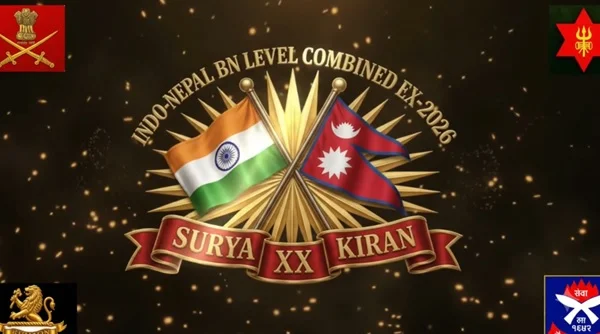
About Exercise SURYAKIRAN
- Exercise SURYAKIRAN is a bilateral military training exercise conducted between the Indian Army and the Nepali Army. It is hosted alternately by India and Nepal.
- The exercise provides a platform for both armies to exchange professional experiences, improve military interoperability and develop a coordinated approach towards common security challenges.
|
Particulars
|
Details
|
|
Exercise
|
SURYAKIRAN
|
|
Edition
|
20th
|
|
Participating countries
|
India and Nepal
|
|
Duration
|
25 November–8 December 2026
|
|
Host country
|
Nepal
|
|
Location
|
Saljhandi, Rupandehi district
|
|
Venue
|
Nepali Army Battle School
|
|
Indian Army contingent
|
12 KUMAON
|
|
Nepali Army contingent
|
Jwala Dal Battalion
|
|
Nature
|
Bilateral military exercise
|
|
Frequency
|
Annual
|
|
Primary objective
|
Military cooperation and interoperability
|
|
Previous edition
|
Pithoragarh, Uttarakhand, India
|
Previous Editions of Exercise SURYAKIRAN
|
Edition
|
Year
|
Location
|
|
15th
|
2021
|
Pithoragarh, India
|
|
16th
|
2022
|
Saljhandi, Nepal
|
|
17th
|
2023
|
Pithoragarh, India
|
|
18th
|
2024–25
|
Saljhandi, Nepal
|
|
19th
|
2025
|
Pithoragarh, India
|
|
20th
|
2026
|
Saljhandi, Nepal
|
Major Objectives of Exercise SURYAKIRAN
Based on the established training objectives of previous editions, Exercise SURYAKIRAN focuses on the following areas:
- Military Interoperability: Improving the ability of both armies to coordinate and operate effectively during joint missions.
- Counter-Terrorism: Enhancing preparedness to address terrorism and other non-conventional security threats.
- Mountain Warfare: Strengthening military preparedness in challenging Himalayan geographical conditions.
- Jungle Warfare: Developing operational understanding in forested and difficult terrain.
- Humanitarian Assistance and Disaster Relief (HADR): Improving coordination during earthquakes, landslides, floods and other natural disasters.
- Professional Military Exchange: Sharing operational experiences, training practices and institutional knowledge.
- United Nations Peacekeeping: Strengthening capabilities relevant to international peacekeeping and humanitarian operations.
India–Nepal Defence Relations
Defence cooperation is an important pillar of India–Nepal bilateral relations. Both countries maintain military exchanges, joint training programmes and institutional security cooperation.
Treaty of Peace and Friendship, 1950
- India and Nepal signed the Treaty of Peace and Friendship on 31 July 1950.
- It established an important framework for bilateral relations and security cooperation.
- The broader bilateral relationship facilitates the movement of people across the India–Nepal open border.
Historical Gorkha Connection
- Nepali Gorkhas have a longstanding association with the Indian Army.
- Gorkha soldiers have contributed to various Indian military operations and international peacekeeping missions.
- This historical connection remains an important foundation of military and people-to-people relations.
India–Nepal Border: Geographical Significance
India and Nepal share an approximately 1,750-km-long open international border.
Nepal shares its boundary with five Indian states:
- Uttarakhand
- Uttar Pradesh
- Bihar
- West Bengal
- Sikkim
The open border facilitates trade, tourism, employment and cultural exchanges. However, it also requires effective bilateral coordination to prevent human trafficking, smuggling and other transnational crimes.
Strategic Significance of Exercise SURYAKIRAN
- Strengthening Neighbourhood First Policy: The exercise supports India's Neighbourhood First Policy by promoting institutional cooperation, mutual trust and regional stability.
- Himalayan Security: Nepal occupies a strategically important geographical position between India and China. Stable and cooperative relations with Nepal are important for maintaining peace and security in the Himalayan region.
- Defence Diplomacy: Joint military exercises serve as instruments of defence diplomacy by strengthening institutional relationships without relying on coercive measures.
- Countering Non-Traditional Security Threats: Military cooperation can contribute to addressing terrorism, organised crime and other emerging security challenges through better coordination and capacity building.
Relevance for India
- Strengthens India's northern neighbourhood security.
- Promotes military preparedness in mountainous regions.
- Enhances India's defence diplomacy in South Asia.
- Supports bilateral disaster response capabilities.
- Encourages cooperation against transnational security threats.
- Strengthens historical and institutional ties with Nepal.
- Contributes to India's vision of a peaceful and stable neighbourhood.
Challenges in India–Nepal Defence Relations
- Boundary Disputes: Differences concerning Kalapani, Lipulekh and Limpiyadhura occasionally affect bilateral relations.
- Geopolitical Competition: Growing competition among major powers creates additional diplomatic complexities in the Himalayan region.
- Open Border Management: Ensuring security without restricting legitimate cross-border movement remains a significant challenge.
- Gorkha Recruitment: Issues concerning the recruitment of Nepali Gorkhas under India's Agnipath Scheme require bilateral dialogue.
- Political Uncertainty: Domestic political developments can influence the continuity of bilateral security cooperation.
- Emerging Security Threats: Cybercrime, technological challenges and climate-induced disasters require new forms of institutional cooperation.
Way Forward
- Expand joint military training to address emerging security challenges.
- Strengthen bilateral intelligence and information-sharing mechanisms.
- Promote regular dialogue between defence and security institutions.
- Resolve outstanding boundary issues through diplomatic negotiations.
- Develop joint disaster management and humanitarian response capabilities.
- Address Gorkha recruitment-related concerns through mutual consultation.
- Maintain bilateral relations based on sovereign equality, mutual respect and shared interests.
Conclusion
- Exercise SURYAKIRAN 2026 reflects the enduring defence partnership between India and Nepal. Beyond conventional military training, the exercise contributes to mutual trust, humanitarian preparedness and regional security.
- A stable India–Nepal relationship, supported by institutional military cooperation and constructive diplomacy, remains essential for peace, prosperity and strategic stability in the Himalayan region.
Prelims Practice Questions
Q. With reference to Exercise SURYAKIRAN 2026, consider the following statements:
- It is the 20th edition of the bilateral military exercise.
- It is being hosted by Nepal.
- It is a joint naval exercise.
Which of the statements given above are correct?
(a) 1 and 2 only
(b) 2 and 3 only
(c) 1 and 3 only
(d) 1, 2 and 3
Mains Practice Question
Discuss the role of bilateral military exercises such as SURYAKIRAN in strengthening India–Nepal relations and ensuring strategic stability in the Himalayan region.
|
FAQs
1. What is Exercise SURYAKIRAN?
An annual bilateral military exercise between India and Nepal.
2. Where is SURYAKIRAN 2026 being conducted?
At the Nepali Army Battle School, Saljhandi, Nepal.
3. Which edition of SURYAKIRAN is being held in 2026?
It is the twentieth edition of the exercise.
4. What is the duration of Exercise SURYAKIRAN 2026?
Fourteen days, from November 25 to December 8.
5. Which Indian Army unit is participating in SURYAKIRAN 2026?
Personnel from the Indian Army's 12 KUMAON unit.
|