
- UPSC Exam
- State PCS
- One Day Exam
- Current Affairs
- PT Quiz
- Downlaods
- About Coaching
- Blog
- Videos

| Prelims : Polity + Governance + CA Mains : GS Paper 2 – Freedom of Speech; Government Policies; Digital Governance |
The proposed amendments to the Information Technology (IT) Rules, 2021 have triggered widespread debate over their potential to introduce pre-censorship in India’s digital ecosystem.
The government seeks to expand regulatory oversight over online content, including content created by individuals such as independent journalists, influencers, and users engaging with news and current affairs. However, several experts and civil society organisations have raised concerns that such expanded control could lead to excessive restrictions on freedom of expression and may create a “chilling effect” on online speech.

The Information Technology (Intermediary Guidelines and Digital Media Ethics Code) Rules, 2021 were introduced to regulate digital platforms, intermediaries, and online content in India.
Over time, these rules have been amended to address emerging challenges such as misinformation, fake news, and the rise of artificial intelligence-driven content.
The proposed amendments aim to significantly broaden the scope of regulation by bringing a wider category of actors under compliance requirements.
This includes :
This marks a shift from a platform-centric regulatory model to a more expansive content-centric framework, where even individuals could be subject to regulatory scrutiny.
The amendments propose strengthening the powers of government bodies, including mechanisms such as the Inter-Departmental Committee (IDC), enabling them to review and act upon digital content more proactively.
Government advisories and directions may also become more binding in nature, thereby increasing the degree of executive control over online platforms and content moderation decisions.
Recent regulatory changes have already reduced the time available for content removal in certain cases to a very short duration, reflecting a move toward faster enforcement.
While such measures are intended to curb misinformation and harmful content, they may also limit the ability of platforms to conduct thorough assessments before removing content, leading to potential overreach.
The amendments also seek to address challenges posed by emerging technologies such as artificial intelligence by introducing provisions for:
This reflects the government’s attempt to proactively regulate new forms of digital risks such as deepfakes.
Traditionally, content regulation in democratic systems operates after publication, where unlawful content is addressed post-facto. However, the current framework may encourage platforms to proactively filter or remove content to avoid penalties.
This creates a system of indirect pre-censorship, where content may be restricted even before it reaches the public domain.
The fear of regulatory action, penalties, or account suspension may discourage individuals from expressing opinions, especially on sensitive political or social issues.
This could lead to :
Digital platforms, in an attempt to avoid legal consequences, may adopt a risk-averse approach and remove content excessively, even when it does not violate any law.
This phenomenon, often described as collateral censorship, results in the suppression of legitimate expression.
Treating individual creators and independent journalists at par with large media organisations imposes compliance burdens that may be difficult for them to meet.
This could discourage smaller voices and reduce the inclusivity of the digital media landscape.
The Indian Constitution guarantees freedom of speech and expression, which is essential for a functioning democracy.
However, this right is subject to reasonable restrictions under Article 19(2) on grounds such as public order, security of the state, and decency.
The key challenge lies in ensuring that regulatory measures remain within the bounds of reasonableness and do not undermine the core of this fundamental right.
Any restriction on fundamental rights must satisfy the test of proportionality, meaning that the measure should be :
Concerns have been raised that overly broad or vague provisions may fail this test.
Previous amendments to IT Rules have been challenged in courts on grounds such as lack of clarity, excessive delegation of power, and potential misuse.
This suggests that the current amendments may also undergo judicial scrutiny to ensure their constitutional validity.
The internet has emerged as a critical platform for public discourse, enabling citizens to participate in governance, express opinions, and access information.
Any restrictions on digital expression directly affect democratic engagement.
The issue highlights the need to strike a balance between :
An imbalance in either direction could have serious consequences.
The inclusion of individual content creators under regulatory frameworks could significantly alter the digital media landscape by:
India’s approach to regulating digital platforms is closely observed worldwide, as countries grapple with similar challenges related to content moderation, misinformation, and platform accountability.
Broad regulatory powers without adequate checks and balances may lead to misuse or arbitrary enforcement.
Lack of clarity in defining terms such as “news and current affairs content” may lead to inconsistent interpretation and enforcement.
Strict timelines and obligations may push platforms to prioritise compliance over fairness, potentially affecting due process.
Users may have limited mechanisms to challenge content removal or censorship decisions, raising concerns about accountability.
The government should engage in broader consultations with stakeholders, including industry experts, civil society, and digital rights groups.
Clear procedural safeguards must be incorporated to prevent arbitrary censorship and protect fundamental rights.
Regulation should be targeted and proportionate, addressing specific harms without imposing blanket restrictions.
Establishing independent bodies for content regulation can enhance accountability and reduce the risk of excessive executive control.
Prelims
Q. The Information Technology Rules, 2021 primarily deal with :
(a) Taxation of digital services
(b) Regulation of online content and intermediaries
(c) Cyber warfare policies
(d) Data localisation only
Mains
“Regulation of digital platforms is essential, but excessive control may lead to pre-censorship and undermine democratic freedoms.” Examine in the context of recent IT Rules amendments.
FAQsQ1. What are the IT Rules amendments about? They aim to expand regulation of online content and digital platforms. Q2. Why are they controversial? Due to concerns over censorship and impact on free speech. Q3. What is pre-censorship? It refers to restricting content before it is published or accessed. Q4. What is the main concern? A potential chilling effect on freedom of expression. Q5. What is the government’s objective? To curb misinformation and ensure accountability in the digital ecosystem. |
| Prelims : Geography + Environment + CA Mains : GS Paper 3 – Infrastructure; Energy; Water Resources; Environmental Impact |
The Lakhwar Hydroelectric Project, a long-pending multipurpose river valley project on the Yamuna River in Uttarakhand, has gained renewed attention due to progress in construction, improved inter-state cooperation, and financial commitments by participating states.
The project is significant as it seeks to address multiple objectives simultaneously, including renewable energy generation, irrigation support, drinking water supply, and flood control, thereby contributing to both regional development and national resource security.
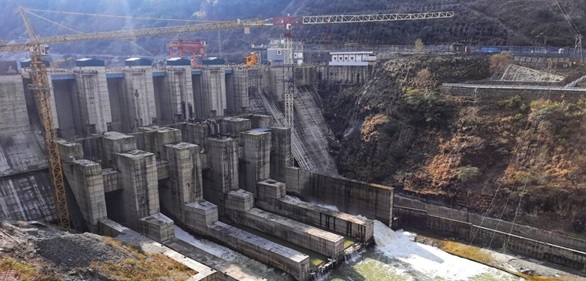
The Lakhwar Project is a multipurpose hydroelectric and river valley development project located on the Yamuna River near Lohari village in Dehradun district of Uttarakhand.
The Lakhwar Project is designed as an integrated development project with multiple benefits :
This multipurpose nature enhances efficiency and maximises the utility of water resources.
The project involves participation and benefit-sharing among multiple states, including:
This makes it an important example of cooperative federalism, where states collaborate for shared resource management.
The project includes a large storage component that enables :
This is particularly important in regions dependent on monsoon rainfall.
The project contributes to renewable energy generation by :
By controlling water discharge, the project helps :
The project was initially conceptualised several decades ago but faced prolonged delays due to :
As a result, it remained stalled for a long time despite its strategic importance.
In recent years, the project has been revived through :
This has led to renewed momentum in its implementation.
The Lakhwar Project is part of a broader Lakhwar–Vyasi hydroelectric system, which includes interconnected infrastructure to optimise energy generation and water management.
The project enhances energy security by :
It plays a crucial role in improving water availability for :
This is particularly important in water-stressed regions.
The project is expected to :
By regulating river flow, the project can :
The participation of multiple states highlights the importance of collaborative governance in managing shared natural resources.
Large hydroelectric projects can lead to :
These impacts necessitate careful environmental planning and mitigation.
The project may result in :
Ensuring proper rehabilitation and compensation is essential for social justice.
Prolonged delays have led to :
Sharing of water and benefits among multiple states requires effective coordination and dispute resolution mechanisms.
The project is located in a Himalayan region, which is prone to :
These risks raise concerns regarding safety and long-term sustainability.
Strict adherence to environmental safeguards is necessary to minimise ecological damage.
Affected communities must be provided with adequate compensation, resettlement, and livelihood support.
Robust mechanisms should be established to ensure smooth cooperation among participating states.
Efforts must be made to complete the project within stipulated timelines to avoid further cost escalation.
Modern engineering solutions and monitoring systems should be employed to enhance safety and efficiency.
Prelims
Q. The Lakhwar Hydroelectric Project is located on which river ?
(a) Ganga
(b) Yamuna
(c) Sutlej
(d) Brahmaputra
Mains
“Multipurpose river valley projects are essential for development but raise serious environmental and social concerns.” Discuss with reference to the Lakhwar Project.
FAQsQ1. What is the Lakhwar Project ? It is a multipurpose hydroelectric project on the Yamuna River. Q2. What are its objectives ? Power generation, irrigation, water supply, and flood control. Q3. Why is it important ? It enhances energy and water security and promotes regional development. Q4. What are the major concerns ? Environmental impact and displacement of people. Q5. Which states benefit from it ? Uttarakhand, Uttar Pradesh, Haryana, Rajasthan, Delhi, and Himachal Pradesh. |
|
Prelims : Economy + International Relations + CA |
The United States has initiated a Section 301 investigation against several major trading partners, including India, citing concerns related to unfair trade practices, forced labour issues, and structural excess manufacturing capacity.
India has expressed strong reservations regarding this unilateral move, emphasising that trade disputes should be resolved through bilateral negotiations or within multilateral frameworks such as the World Trade Organization (WTO). The development is significant as it has the potential to affect ongoing trade negotiations and alter the dynamics of India–US economic relations.
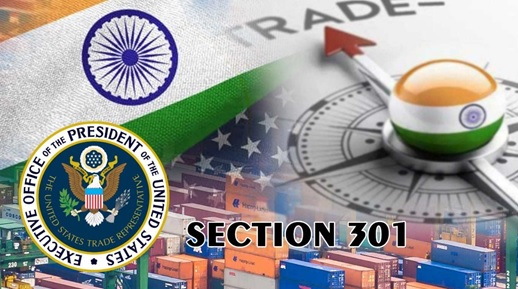
Section 301 is a provision under the US Trade Act of 1974, which empowers the United States Trade Representative (USTR) to investigate and take action against foreign trade practices deemed unfair or harmful to US commerce.
Thus, Section 301 serves as a powerful instrument of US trade policy, allowing it to exert pressure on trading partners.
The United States has raised concerns that countries like India are engaging in policies that promote excessive industrial production beyond global demand, leading to distortions in international markets.
Such overcapacity is perceived to :
These concerns have prompted the US to initiate investigations into sectors such as steel, electronics, and machinery.
Another dimension of the probe relates to allegations that certain countries have not taken adequate steps to prevent the use of forced labour in global supply chains.
The US is increasingly emphasising ethical trade practices and labour standards, and the probe seeks to evaluate whether imports linked to such practices are entering international markets.
The use of Section 301 reflects a broader shift in US trade policy toward :
This approach has been used previously in trade disputes with countries like China and is now being extended to multiple trading partners.
The investigation is initiated by the US Trade Representative, either based on complaints from domestic industries or on its own initiative.
The probe evaluates whether specific policies, such as :
are harming US commercial interests.
Stakeholders, including governments, businesses, and experts, are invited to submit comments and participate in hearings as part of the investigation process.
If the investigation concludes that unfair practices exist, the US may impose :
These measures aim to compel the concerned country to modify its policies.
Section 301 investigations represent a shift away from multilateral dispute resolution mechanisms toward unilateral action, which can undermine the rules-based global trading system.
The probe introduces uncertainty in bilateral trade relations at a time when both countries are negotiating trade agreements.
It may :
If the investigation leads to tariffs, it could result in :
Sectors such as :
may face direct impact, as they are often targeted in such investigations due to their role in global trade.
India has strongly opposed the use of Section 301, arguing that such unilateral measures violate the spirit of multilateral trade rules.
India has highlighted that trade concerns should be addressed through :
rather than through coercive measures.
India maintains that its policies are consistent with international norms and has called for a constructive and dialogue-based approach to resolving disputes.
The increasing use of unilateral trade measures like Section 301 weakens the authority of the World Trade Organization, which is designed to resolve disputes through a rules-based system.
The probe reflects a broader trend of protectionism, where countries prioritise domestic industries over global trade cooperation.
Frequent investigations and potential tariffs create uncertainty for businesses, affecting investment decisions and supply chains.
If multiple countries respond with retaliatory measures, it could escalate into wider trade conflicts, negatively impacting global economic stability.
Indian exporters may face higher tariffs and stricter regulations, affecting their access to the US market.
India may need to review its trade and industrial policies to address concerns while safeguarding domestic interests.
The situation may encourage India to diversify its export markets and reduce dependence on any single country.
The probe could push India to improve efficiency, competitiveness, and compliance in its manufacturing sector.
India and the US should prioritise dialogue to resolve trade disputes and maintain stable economic relations.
Both countries should work within the WTO framework to ensure fair and transparent dispute resolution.
India should focus on improving productivity, innovation, and quality standards in its industries.
Expanding trade relations with other regions can reduce vulnerability to unilateral actions by any single country.
Prelims
Q. Section 301 of the US Trade Act is related to :
(a) Environmental protection
(b) Trade dispute resolution and retaliatory tariffs
(c) Monetary policy regulation
(d) Labour welfare standards
Mains
“Unilateral trade measures such as Section 301 investigations challenge the principles of a rules-based global trading system.” Analyse in the context of India–US trade relations.
FAQsQ1. What is Section 301 ? It is a US law that allows investigation and action against unfair trade practices. Q2. Why has India been targeted ? Due to concerns over manufacturing capacity, trade practices, and labour issues. Q3. What actions can the US take ? It can impose tariffs or trade restrictions. Q4. Why is it controversial? Because it is a unilateral measure that may bypass WTO rules. Q5. What is the impact on India ? It may affect exports, trade relations, and economic policy. |
| Prelims : Environment + Economy + Current Affairs Mains : GS Paper 3 – Environmental Pollution; Energy Security; Government Policies & Interventions |
The Corporate Average Fuel Efficiency (CAFE) norms have come into renewed focus due to ongoing discussions between the government and automobile industry regarding the implementation of stricter CAFE-III standards, aimed at improving fuel efficiency and reducing vehicular emissions in India.
The debate highlights the tension between environmental sustainability goals and the practical challenges faced by automobile manufacturers in meeting increasingly stringent emission and fuel efficiency targets. These developments are significant as India seeks to balance economic growth, mobility needs, and climate commitments.

Corporate Average Fuel Efficiency (CAFE) norms are regulatory standards that require automobile manufacturers to meet a specified average fuel efficiency target across their entire fleet of vehicles, rather than on individual models.
Thus, CAFE norms act as a systemic regulatory mechanism to push the automobile industry toward cleaner and more efficient technologies.
The first phase of CAFE norms marked India’s initial step toward regulating vehicular fuel efficiency, setting limits on carbon dioxide emissions and fuel consumption.
This phase aimed to create a baseline for manufacturers and initiate a transition toward cleaner mobility systems.
The second phase introduced more stringent emission limits, requiring manufacturers to adopt improved engine technologies, lightweight materials, and better fuel management systems.
This phase significantly pushed the industry toward innovation and efficiency improvements.
The upcoming CAFE-III norms aim to further tighten fuel efficiency targets, requiring a substantial reduction in fuel consumption and emissions by 2032.
CAFE norms aim to improve the fuel efficiency of vehicles, thereby reducing overall fuel consumption in the transport sector, which is one of the largest consumers of fossil fuels.
By setting limits on average emissions, these norms contribute to reducing greenhouse gases such as carbon dioxide, thereby helping India meet its climate commitments under international agreements.
India imports a significant portion of its crude oil requirements. By improving fuel efficiency, CAFE norms help reduce dependence on imports, thereby strengthening energy security and reducing the current account deficit.
The norms incentivise automobile manufacturers to invest in cleaner technologies such as electric vehicles (EVs), hybrid engines, and alternative fuels, thereby accelerating the transition to sustainable mobility.
Manufacturers are required to meet fuel efficiency targets based on the average performance of all vehicles sold, rather than individual models.
This allows flexibility, as companies can balance less efficient vehicles with highly efficient ones to meet overall targets.
If a manufacturer fails to meet the prescribed fuel efficiency standards, it may face penalties or regulatory consequences, thereby ensuring accountability.
The framework indirectly promotes the production and sale of fuel-efficient vehicles by making inefficient models less viable from a regulatory and economic perspective.
The transport sector is a major contributor to air pollution and greenhouse gas emissions. CAFE norms play a crucial role in reducing the environmental footprint of vehicles.
India has committed to reducing emission intensity under global agreements such as the Paris Agreement. CAFE norms contribute significantly toward achieving these targets.
The norms are driving a structural shift in the automobile sector by encouraging the adoption of cleaner technologies, thereby reshaping production patterns and market dynamics.
Improved fuel efficiency leads to lower fuel costs for consumers and reduces the national expenditure on fuel imports, contributing to macroeconomic stability.
Automobile manufacturers have raised concerns regarding the feasibility of meeting stringent targets, as compliance requires significant investment in new technologies, which may increase production costs.
There are concerns that stricter norms may disproportionately affect small and affordable cars, as achieving higher efficiency standards may increase their costs, potentially impacting affordability and demand.
The transition toward electric and hybrid vehicles requires adequate infrastructure, such as charging stations, which is still developing in India.
Ambiguities regarding penalty mechanisms and enforcement have raised concerns about the effectiveness of the regulatory framework.
CAFE norms are expected to accelerate the adoption of electric vehicles and hybrid technologies, contributing to cleaner urban environments.
Consumers may gradually shift toward more fuel-efficient and environmentally friendly vehicles due to regulatory and cost considerations.
The automobile industry will undergo significant transformation, with increased focus on research, innovation, and sustainable technologies.
Stricter norms will help India align with global standards in fuel efficiency and emissions, enhancing its credibility in international climate negotiations.
The government should ensure that environmental goals are achieved without imposing excessive burdens on the automobile industry.
Incentives for research and development, along with subsidies for clean technologies, can help manufacturers adapt to new norms.
Developing adequate EV infrastructure and alternative fuel ecosystems is essential for the success of fuel efficiency norms.
Clear guidelines on compliance, penalties, and implementation timelines will improve industry confidence and ensure effective enforcement.
Prelims
Q. Corporate Average Fuel Efficiency (CAFE) norms in India are related to :
(a) Industrial production standards
(b) Fuel efficiency of vehicles
(c) Agricultural productivity
(d) Renewable energy subsidies
Mains
“CAFE norms represent a crucial policy instrument for balancing environmental sustainability with economic growth.” Discuss.
FAQsQ1. What are CAFE norms ? They are fuel efficiency standards for automobile manufacturers. Q2. When were they introduced in India ? In 2017 under the Energy Conservation Act. Q3. What is their main objective ? To reduce fuel consumption and carbon emissions. Q4. Why are they important ? They help improve energy security and reduce pollution. Q5. What is the major challenge ? Balancing strict environmental targets with industry feasibility. |
| Prelims : Polity + Constitution + CA Mains : GS Paper 2 – Governance; Representation of Women; Constitutional Amendments |
The Union Government has formally brought into force the Women’s Quota Act, 2023, also known as the Nari Shakti Vandan Adhiniyam, marking a historic step toward institutionalising gender-based political representation in India.
Although the Act has now been notified, its operationalisation in terms of actual seat reservation in the Lok Sabha and State Legislative Assemblies will take place only after the completion of the next Census and the subsequent delimitation exercise. This means that while the legal framework is now in place, its tangible impact on electoral politics is expected to be visible only from the 2029 general elections onward.
This development assumes significance in the context of India’s relatively low representation of women in legislative bodies, despite being the world’s largest democracy, and highlights the state’s commitment to improving inclusivity in governance.
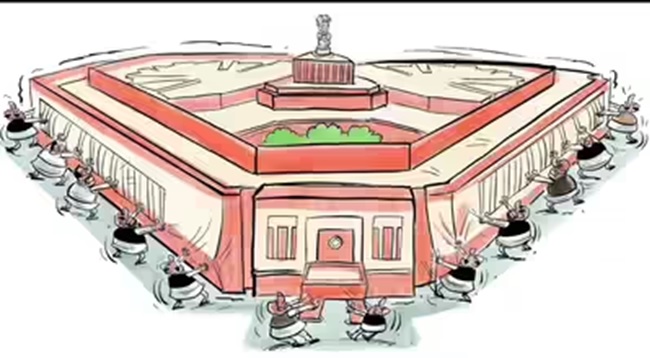
The Women’s Quota Act, formally enacted as the Constitution (106th Amendment) Act, 2023, introduces a structural reform aimed at correcting gender imbalances in political representation.
Overall, the Act represents a shift from voluntary political inclusion to a legally enforceable framework for gender representation.
The demand for reservation of seats for women in legislatures has been a persistent feature of India’s political discourse since the early 1990s. Multiple attempts were made to pass similar legislation, but these efforts were repeatedly stalled due to lack of political consensus, disagreements over sub-quotas, and concerns regarding the impact on existing power structures.
The passage of the 2023 Act, therefore, marks the culmination of decades of advocacy by women’s groups, civil society organisations, and policymakers who have argued that structural barriers prevent women from entering politics on equal footing with men.
The Act was passed by both Houses of Parliament with an overwhelming majority, reflecting a rare moment of political consensus on a significant reform measure. As a constitutional amendment, it required ratification by at least half of the state legislatures, which was subsequently achieved.
The amendment introduced new constitutional provisions to institutionalise the reservation framework, thereby giving it a strong legal and structural foundation that cannot be easily altered without further constitutional changes.
A key feature of the Act is that its implementation is contingent upon the completion of the next Census and the delimitation of constituencies. Delimitation refers to the process of redrawing electoral boundaries to reflect population changes.
This condition has resulted in a time lag between the enactment of the law and its actual implementation. While this approach is intended to ensure fairness and proportional representation, it has also attracted criticism for potentially delaying the benefits of the reform.
The Act provides for reservation of seats for women in both national and state-level legislatures, thereby ensuring a comprehensive impact across different tiers of governance. This is significant because it goes beyond local bodies, where reservation for women already exists, and extends it to higher levels of political decision-making.
By incorporating reservation within SC and ST quotas, the Act acknowledges the intersectionality of gender and caste-based disadvantage. This ensures that women from historically oppressed communities are not excluded from the benefits of political reservation.
The Act предусматривает rotation of reserved constituencies after each delimitation exercise. While this is intended to distribute opportunities across different regions, it also introduces complexities in terms of continuity of representation and political accountability.
The introduction of specific constitutional provisions ensures that the reservation framework is not merely a policy decision but a legally enforceable right. This enhances the durability and legitimacy of the reform.
Women remain significantly underrepresented in India’s legislatures, often due to socio-cultural barriers, lack of resources, and limited access to political networks. The Act directly addresses this imbalance by guaranteeing a minimum level of representation.
A representative democracy must reflect the diversity of its population. By ensuring greater participation of women, the Act enhances the inclusivity and legitimacy of democratic institutions, making them more responsive to the needs of all sections of society.
Empirical evidence from local governance suggests that increased participation of women leads to greater emphasis on issues such as health, education, nutrition, and social welfare. Extending this representation to higher levels of governance could result in more balanced and inclusive policymaking.
The Act aligns with the fundamental principles of equality and social justice enshrined in the Constitution. It operationalises the idea that formal equality must be complemented by substantive measures to address structural disadvantages.
The requirement of linking implementation to Census and delimitation has raised concerns that the actual benefits of the Act may be deferred for several years, thereby diluting its immediate impact.
There is a possibility that reservation alone may not ensure meaningful participation if women representatives are not given real decision-making authority within political parties and legislative bodies.
Frequent rotation of reserved constituencies may discourage representatives from investing in long-term development of their constituencies, as they may not have the opportunity to contest from the same seat again.
Some stakeholders have raised concerns about the absence of specific provisions for Other Backward Classes (OBCs), arguing that without such measures, the benefits may not be equitably distributed.
The Act has the potential to significantly alter the composition of legislative bodies, leading to a more gender-balanced political system and creating new opportunities for leadership.
Political parties will need to adapt their strategies, including candidate selection, leadership development, and organisational structures, to accommodate increased participation of women.
Greater visibility of women in positions of power can challenge traditional gender norms and inspire more women to participate in public life, thereby creating a virtuous cycle of empowerment.
The implementation of such a large-scale reservation policy enhances India’s standing in global discussions on gender equality and democratic governance.
The government should ensure timely completion of these processes to avoid unnecessary delays in implementing the reservation provisions.
Efforts must be made to equip women with the necessary skills, resources, and institutional support to effectively participate in legislative processes.
Political parties and institutions must go beyond formal reservation to ensure that women have meaningful roles in decision-making and leadership positions.
Further reforms may be required to ensure that the benefits of reservation reach all sections of women, including those from backward and marginalised communities.
Prelims
Q. The Women’s Reservation Act, 2023 provides for reservation in:
(a) Panchayats only
(b) Lok Sabha only
(c) Lok Sabha and State Assemblies
(d) Judiciary
Mains
“While the Women’s Reservation Act is a landmark step towards gender equality, its effectiveness will depend on addressing structural and institutional challenges.” Discuss.
FAQsQ1. What does the Women’s Quota Act provide ? It provides 33% reservation for women in legislatures. Q2. When will it be implemented ? After the next Census and delimitation exercise, likely from 2029. Q3. Does it include SC/ST women ? Yes, through horizontal reservation within existing quotas. Q4. What is the key challenge ? Delay in implementation and concerns over effective participation. Q5. Why is it important ? It promotes gender equality and strengthens democratic representation. |

Our support team will be happy to assist you!


 Contact Us
  New Batch : 9555124124/ 7428085757
  Tech Support : 9555124124/ 7428085757

