
- UPSC Exam
- State PCS
- One Day Exam
- Current Affairs
- PT Quiz
- Downlaods
- About Coaching
- Blog
- Videos

| Prelims : Geography + Environment + CA Mains : GS Paper 3 – Infrastructure; Energy; Water Resources; Environmental Impact |
The Lakhwar Hydroelectric Project, a long-pending multipurpose river valley project on the Yamuna River in Uttarakhand, has gained renewed attention due to progress in construction, improved inter-state cooperation, and financial commitments by participating states.
The project is significant as it seeks to address multiple objectives simultaneously, including renewable energy generation, irrigation support, drinking water supply, and flood control, thereby contributing to both regional development and national resource security.
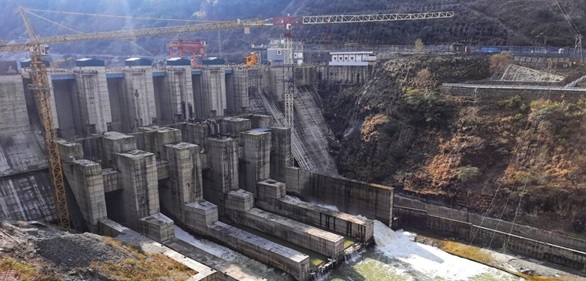
The Lakhwar Project is a multipurpose hydroelectric and river valley development project located on the Yamuna River near Lohari village in Dehradun district of Uttarakhand.
The Lakhwar Project is designed as an integrated development project with multiple benefits :
This multipurpose nature enhances efficiency and maximises the utility of water resources.
The project involves participation and benefit-sharing among multiple states, including:
This makes it an important example of cooperative federalism, where states collaborate for shared resource management.
The project includes a large storage component that enables :
This is particularly important in regions dependent on monsoon rainfall.
The project contributes to renewable energy generation by :
By controlling water discharge, the project helps :
The project was initially conceptualised several decades ago but faced prolonged delays due to :
As a result, it remained stalled for a long time despite its strategic importance.
In recent years, the project has been revived through :
This has led to renewed momentum in its implementation.
The Lakhwar Project is part of a broader Lakhwar–Vyasi hydroelectric system, which includes interconnected infrastructure to optimise energy generation and water management.
The project enhances energy security by :
It plays a crucial role in improving water availability for :
This is particularly important in water-stressed regions.
The project is expected to :
By regulating river flow, the project can :
The participation of multiple states highlights the importance of collaborative governance in managing shared natural resources.
Large hydroelectric projects can lead to :
These impacts necessitate careful environmental planning and mitigation.
The project may result in :
Ensuring proper rehabilitation and compensation is essential for social justice.
Prolonged delays have led to :
Sharing of water and benefits among multiple states requires effective coordination and dispute resolution mechanisms.
The project is located in a Himalayan region, which is prone to :
These risks raise concerns regarding safety and long-term sustainability.
Strict adherence to environmental safeguards is necessary to minimise ecological damage.
Affected communities must be provided with adequate compensation, resettlement, and livelihood support.
Robust mechanisms should be established to ensure smooth cooperation among participating states.
Efforts must be made to complete the project within stipulated timelines to avoid further cost escalation.
Modern engineering solutions and monitoring systems should be employed to enhance safety and efficiency.
Prelims
Q. The Lakhwar Hydroelectric Project is located on which river ?
(a) Ganga
(b) Yamuna
(c) Sutlej
(d) Brahmaputra
Mains
“Multipurpose river valley projects are essential for development but raise serious environmental and social concerns.” Discuss with reference to the Lakhwar Project.
FAQsQ1. What is the Lakhwar Project ? It is a multipurpose hydroelectric project on the Yamuna River. Q2. What are its objectives ? Power generation, irrigation, water supply, and flood control. Q3. Why is it important ? It enhances energy and water security and promotes regional development. Q4. What are the major concerns ? Environmental impact and displacement of people. Q5. Which states benefit from it ? Uttarakhand, Uttar Pradesh, Haryana, Rajasthan, Delhi, and Himachal Pradesh. |



Our support team will be happy to assist you!

 Contact Us
  New Batch : 9555124124/ 7428085757
  Tech Support : 9555124124/ 7428085757