- UPSC Exam
- State PCS
- One Day Exam
- Current Affairs
- PT Quiz
- Downlaods
- About Coaching
- Blog
- Videos

| (Preliminary Examination: Current Events of National Importance) (Main Examination, General Studies Paper 3: Major Crops and Related Topics and Constraints; Conservation, Environmental Impact Assessment) |
The Forest College and Research Institute (FCRI) in Mulugu, Telangana, has recently been compelled to initiate a comprehensive scientific investigation into the devastating dieback disease following the death of thousands of neem trees. There is virtually no known cure for this disease, posing a serious threat to India's ecosystem and rural economy.

This disease thrives in warm and humid conditions and spreads rapidly, making it difficult to control:
| (Prelims: National Events, Environmental Ecology) (Mains, General Studies Paper 3: Conservation, Environmental Pollution and Degradation, Environmental Impact Assessment) |
Air pollution in India is no longer a seasonal phenomenon confined to the northern plains; it has become a persistent and widespread national public health emergency. From the Indo-Gangetic plains to rapidly growing urban centers, concentrations of hazardous particulate matter (PM 2.5) in the air are affecting every demographic group, impacting child development and invisibly reducing life expectancy in the country.
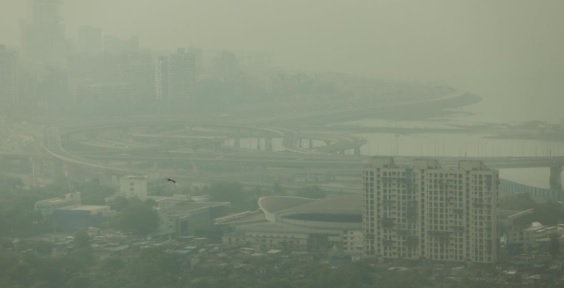
The devastating health impact of toxic air directly impacts life expectancy.
Cardiovascular Problems
Respiratory Illnesses
Effects on the Nervous System
Maternal and Newborn Health
High PM 2.5 exposure increases preterm birth, low birth weight, and neonatal mortality, deepening intergenerational health inequalities.
While the National Clean Air Programme (NCAP) is pushing for improvements, its targets are not relevant and implementation is weak. However, what is needed now is a multi-sectoral, health-focused strategy that can address air pollution at the grassroots level.
Transportation Overhaul
Large-scale electrification of buses, taxis, and two-wheelers and shifting freight transport to rail and electric fleets
Strict Industrial Regulation
Strict enforcement of pollution control technologies and phasing out coal-based processes
Building Regulation and Waste Management Reforms
Mandating dust-control protocols and ensuring the implementation of decentralized treatment systems to eliminate open waste burning
Health System Integration
Clean air standards should be integrated into routine health care. This should include district-level health advisories based on real-time AQI, lung function testing within school health programs, and proactive screening for COPD and cognitive impairment.
Promoting Clean Air as a Fundamental Right
Clean air, as a fundamental right in India, is essential for inclusive development. Scientific evidence and its irreversible impact on health demand that the protection of clean air now be an unwavering national priority.
| Prelims: (Defence & Security + CA) Mains: (GS 2: Governance, Constitution; GS 3: Internal Security, Inclusive Development) |
As Maoist influence recedes across large parts of central and eastern India, policy discussions are shifting from counter-insurgency to post-Maoist governance. Recent analyses argue that while poverty and underdevelopment were long emphasised, deep governance failures, weak institutions, and poor grievance redressal played a decisive role in sustaining Maoist insurgency—and remain critical challenges even today.
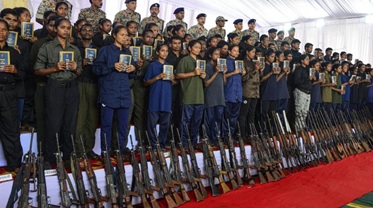
The Maoist movement peaked during the 1990s and early 2000s across India’s Red Corridor, spanning tribal-dominated regions of Chhattisgarh, Jharkhand, Odisha, Andhra Pradesh, Telangana, and parts of Maharashtra and Madhya Pradesh.
The State’s response traditionally followed a two-pronged approach:
However, this framework often overlooked how systemic governance failures—especially in constitutionally protected tribal areas—created conditions for long-term alienation and insurgent mobilisation. As violence declines, the focus is now on whether governance reforms can prevent a relapse and deliver durable peace.
Concentration in Fifth Schedule Areas
The Fifth Schedule provides:
Reality: Persistent Neglect
Dispossession Despite Protection
Colonial Administrative Continuity
Outsider-Dominated Administration
Institutional Failure of Safeguards
PESA: Promise vs Practice
From Grievance to Insurgency
Parallel Governance Structures
Recent Improvements
Persisting Institutional Weakness
Under-Representation Paradox
FAQsQ1. Why are Maoist insurgencies concentrated in Fifth Schedule areas? Because these regions combine tribal marginalisation, land alienation, weak institutions, and poor justice delivery. Q2. What role did governance failures play in Maoist mobilisation? They created grievances, alienation, and distrust, allowing Maoists to present themselves as alternative providers of justice and welfare. Q3. What is PESA and why is it important? PESA empowers Gram Sabhas in Scheduled Areas over land and resources, but weak implementation has limited its impact. Q4. Why is land alienation central to Adivasi discontent? Land and forests are core to tribal livelihoods, culture, and identity; dispossession undermines economic and social security. Q5. What is the way forward for post-Maoist governance? Strengthening local self-governance, restoring rights-based laws, ensuring representation with real power, and rebuilding state legitimacy. |
| Prelims: (Economy + CA) Mains: (GS 2 - Government Policies & Interventions; GS 3 - Economy) |
India is fast-tracking negotiations and signings of Free Trade Agreements (FTAs) with partners such as New Zealand, Russia, Oman, the EU, and others, despite evidence that earlier FTAs yielded limited trade benefits.
This renewed push reflects a strategic reorientation, where FTAs are increasingly used as instruments of geopolitics, supply-chain security, and diplomatic alignment, rather than purely as trade-liberalisation tools.

For much of the post-1991 period, India approached FTAs cautiously, prioritising protection of domestic industry and agriculture. Experiences with agreements such as ASEAN-India FTA exposed structural weaknesses—limited export growth, widening trade deficits, and pressure on MSMEs and farmers.
However, the global trading system is undergoing a transformation:
In this context, India’s FTA strategy is being repurposed—from market access to strategic insurance in a multipolar world.
1. Strategic Realignment in a Multipolar World
2. Decline of Multilateral Trade Architecture
3. Diversifying Trade and Supply Chains
4. Unlocking Services and Investment Potential
5. Supporting Domestic Manufacturing and Value Chains
6. Correcting Past Asymmetries
What is an FTA?
An FTA is a negotiated agreement between two or more countries to reduce or eliminate trade barriers and promote economic cooperation.
Coverage Includes:
Types:
India and FTAs:
1. Trade Deficits and Asymmetric Gains
2. Non-Tariff Barriers (NTBs)
3. Impact on Domestic Sectors
4. Risk of Third-Country Routing
FAQsQ1. Why is India pursuing FTAs despite limited past gains? FTAs are now used for strategic alignment, supply-chain security, and geopolitical insurance, not just trade expansion. Q2. What is the main risk of India’s FTAs? Widening trade deficits, harm to domestic sectors, and low utilisation rates. Q3. How are new FTAs different from earlier ones? They focus more on services, investment, digital trade, and safeguards. Q4. Which FTAs are strategically most significant for India? India-UAE CEPA, India-Australia ECTA, India-EFTA TEPA, and proposed India-EU and India-US FTAs. |
| Prelims: (Polity & Governance + CA) Mains: (GS 2 - Government Policies & Interventions, Welfare Schemes, Rural Development; GS 3 - Agriculture, Inclusive Growth) |
The proposed Viksit Bharat–Guarantee for Rozgar and Ajeevika Mission Gramin (VB-G RAM G) Bill seeks to replace the MGNREGS and introduces a 60-day suspension of rural employment works during peak sowing and harvesting seasons, to be notified in advance by States.
The move is justified on the grounds that MGNREGS allegedly creates shortages of agricultural labour during peak farm operations—a concern raised periodically by farmers and policymakers, including former Union Agriculture Ministers.
However, recent wage and labour market data challenge this narrative, raising important questions about rural employment, wage dynamics, and the real causes of farm labour shortages.
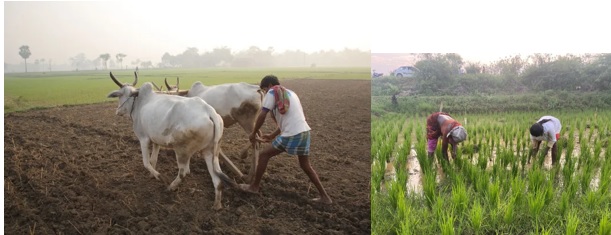
Since its launch in 2006, the Mahatma Gandhi National Rural Employment Guarantee Scheme (MGNREGS) has acted as a rights-based social security programme, guaranteeing 100 days of wage employment to rural households.
Its objectives include:
Over the years, critics have argued that MGNREGS diverts labour away from farms, especially during agricultural peak seasons. The VB-G RAM G Bill marks the first formal legislative attempt to structurally align rural employment guarantees with agricultural cycles.
MGNREGS is often credited with tightening rural labour markets and improving workers’ bargaining power. However, this has not translated into sustained real wage growth.
Key Findings from Labour Bureau Data
Key Insight
Even agricultural wages have largely stagnated in real terms, indicating that MGNREGS has not triggered an inflationary wage spiral.
1. Surge in Female Labour Force Participation
A critical but often overlooked factor is the sharp rise in women’s workforce participation.
LFPR measures the proportion of the population (15+ years) that is working or actively seeking work.
2. Role of Welfare Infrastructure
The Economic Survey 2023–24 attributes rising female participation to welfare schemes that reduced unpaid care burdens:
By freeing time previously spent on household chores, these schemes enabled women to enter paid work—expanding labour supply rather than shrinking it.
The data weakens the argument that MGNREGS is the primary driver of farm labour shortages:
Thus, imposing blanket employment suspensions during peak seasons may be policy overreach without granular evidence.
1. Low Farm Wages
2. Harsh Working Conditions
3. Rural–Urban Migration
4. Increased Bargaining Power
FAQsQ1. What is MGNREGS? It is a rights-based rural employment scheme guaranteeing 100 days of wage employment to rural households under the Mahatma Gandhi National Rural Employment Guarantee Act, 2005. Q2. What does the VB-G RAM G Bill propose? It proposes replacing MGNREGS and introducing a 60-day suspension of rural works during peak agricultural seasons to ensure farm labour availability. Q3. Has MGNREGS caused a rise in rural wages? Data shows rural wage growth has been modest and often below inflation, indicating no sustained wage surge due to MGNREGS. Q4. Why is female labour participation rising in rural India? Improved access to LPG, water, sanitation, and electricity has reduced unpaid care work, enabling women to join the workforce. Q5. What is the real cause of farm labour shortages? Low farm wages, harsh working conditions, migration, and rising worker bargaining power are more significant factors than MGNREGS. |
| Prelims: (Polity & Governance + CA) Mains: (GS 1 – Indian Culture & Heritage; GS 2 – International Relations, Soft Power Diplomacy) |
The Archaeological Survey of India (ASI) recently organised a National Workshop on Project Mausam, titled “Islands at the Crossroads of Maritime Networks within the Indian Ocean Region”, highlighting India’s renewed focus on maritime heritage and cultural diplomacy.
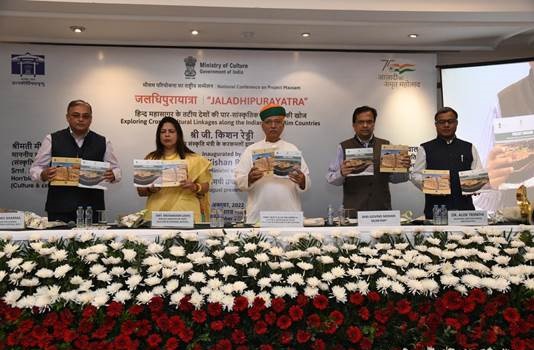
For centuries, the Indian Ocean functioned as a vibrant space of exchange—connecting South Asia with Africa, the Middle East, Southeast Asia, and East Asia through trade, religion, ideas, art, and technology. India, with its long coastline and maritime traditions, played a pivotal role in shaping these networks.
Recognising the need to systematically document and project this shared heritage, Project Mausam was launched in 2014 as part of India’s broader effort to:
Project Mausam is a government-led cultural and maritime heritage initiative of India, launched in 2014 by the Ministry of Culture.
Key Objectives
Two Major Units
Cultural Diplomacy
Academic and Research Value
UNESCO Engagement
It is important not to confuse Project Mausam with Mission Mausam.
Mission Mausam
Project Mausam deals with heritage and diplomacy, while Mission Mausam focuses on meteorology and climate science.
FAQsQ1. Why is Project Mausam important for India’s foreign policy? It strengthens India’s soft power by using shared maritime heritage to deepen ties with Indian Ocean Region countries. Q2. How many countries are covered under Project Mausam? A total of 39 Indian Ocean countries have been identified. Q3. Who implements Project Mausam? The Archaeological Survey of India (ASI) is the nodal agency, supported by IGNCA and the National Museum. Q4. What is meant by transnational World Heritage nomination? It refers to heritage sites spread across multiple countries that are jointly nominated to UNESCO, highlighting shared history. Q5. Is Project Mausam related to weather forecasting? No. That function is covered under Mission Mausam, a separate initiative by the Ministry of Earth Sciences. |
| Prelims: (Defence Exercise + CA) Mains: (GS 2 – International Relations; GS 3 – Internal Security, Maritime Security) |
The Deputy Chief of the Naval Staff (DCNS), Indian Navy, is on an official visit to the Maldives to attend the closing ceremony of Exercise Ekatha 2025, the latest edition of the annual bilateral maritime exercise between India and the Maldives.

India and the Maldives share deep-rooted historical, cultural, and maritime ties, anchored in their shared location in the Indian Ocean Region (IOR). Given the Maldives’ strategic position astride key sea lanes of communication, maritime cooperation has emerged as a central pillar of bilateral relations.
In this context, Exercise Ekatha, launched in 2017, serves as a key mechanism to:
Objectives
Exercise Ekatha 2025 involved a wide range of complex and high-intensity maritime drills, including:
These activities were designed to sharpen tactical skills, improve joint planning, and ensure seamless coordination during real-world contingencies.
Maritime Security Cooperation
Capacity Building
Diplomatic and Strategic Signalling
FAQsQ1. What is Exercise Ekatha? It is an annual bilateral maritime exercise between the Indian Navy and the Maldives National Defence Force, launched in 2017. Q2. Which edition of Exercise Ekatha was held in 2025? The 8th edition. Q3. What are the key focus areas of Exercise Ekatha? Maritime security, interoperability, combat readiness, and response to asymmetric and non-traditional threats. Q4. Why is Maldives strategically important to India? Its location near major sea lanes in the Indian Ocean makes it crucial for maritime security and regional stability. Q5. How does Exercise Ekatha align with India’s regional vision? It supports India’s SAGAR vision by promoting cooperative maritime security and regional partnerships. |

Our support team will be happy to assist you!

 Contact Us
  New Batch : 9555124124/ 7428085757
  Tech Support : 9555124124/ 7428085757