
New
GS Foundation (P+M) - Delhi : 23rd March 2026, 11:30 AM GS Foundation (P+M) - Prayagraj : 15th March 2026 GS Foundation (P+M) - Delhi : 23rd March 2026, 11:30 AM GS Foundation (P+M) - Prayagraj : 15th March 2026

Current Affairs for 17 February 2026

UNEP FI Impact Center

The United Nations Environment Programme Finance Initiative (UNEP FI) has launched the UNEP FI Impact Center, which consolidates its SDG and impact workstreams into a dedicated center of expertise.

About the UNEP FI Impact Center

  • The UNEP FI Impact Center is a specialized center of expertise within the United Nations Environment Programme Finance Initiative (UNEP FI) focused on advancing impact management in financial institutions.
  • It brings together UNEP FI's work on aligning financial portfolios with internationally recognized environmental and social standards through a holistic impact methodology.

Objectives

  • To integrate impact management into the business strategies and operations of financial institutions
  • To help align financial flows with the Sustainable Development Goals (SDGs)
  • To enable organizations to manage environmental and social risks while achieving business objectives

Key Features

  • Holistic Impact Methodology: Provides a structured framework for aligning portfolios with global sustainability standards.
  • Five dedicated work areas: Includes impact methodology, interoperability, implementation support, advisory services, and consensus building.
  • Member Implementation Support: UNEP provides technical assistance and tools to FI members.
  • Interoperability Solutions: Enhances harmonization between various sustainability frameworks and reporting standards.
  • Convening Platform: Facilitates collaboration and consensus building among mainstream financial sector stakeholders.
  • Positive Impact Finance Legacy: This builds on UNEP FI's leadership since defining Positive Impact Finance in 2017.

The Need for an Indian Scientific Service

Context

The proposal for the Indian Scientific Service (ISS) has been under discussion following the Economic Survey 2025-26 and recent high-level meetings of the Empowered Technology Group. These highlighted the need for a specialized cadre to manage India's transition to a deep-tech and AI-first administration.

About the Indian Scientific Service (ISS)

  • The ISS is envisioned as a permanent, all-India specialized cadre of scientists and technologists.
  • Unlike the general Indian Administrative Service (IAS), the ISS will perform the following functions:
    • Directly integrate scientific expertise into the decision-making process of ministries
    • Operate under specific service rules that prioritize scientific integrity and peer review over traditional administrative neutrality
    • Provide researchers with a structured career path to contribute to policymaking, so they are not constrained by colonial-era conduct rules.

Key Trends in Science and Technology in India (2025-26):

  • Advances in Innovation: India has risen to 38th place in the Global Innovation Index (GII) 2025 and has been a leader in the lower-middle income category for 15 consecutive years.
  • Stagnation in Research and Development: Despite growth, India's Gross Research and Development Expenditure (GERD) remains at 0.64% of GDP, significantly lower than the US (3.48%) or South Korea (4.91%).
  • Surge in Patents: The number of patent applications has nearly doubled between 2020 and 2025, and India now ranks 6th globally in terms of total patents filed.
  • Deep-tech focus: The government is pursuing mega-missions, including the National Quantum Mission (₹6,003 crore) and the IndiaAI Mission, which have shifted the focus from services to high-end hardware and IP creation.

Need for a dedicated ISS

  • Complexity of modern administration: General experts often lack the technical knowledge to regulate emerging areas such as biotechnology or artificial intelligence. For example, the rapid drafting of the Digital India Act 2025 required a deep understanding of algorithmic bias, which is not included in standard administrative training.
  • Bridging the gap: India faces difficulty converting laboratory research (TRL 1-3) into market-ready products (TRL 7-9). For example, despite world-class research in the field of green hydrogen, large-scale implementation of this technology for industrial use has been delayed due to fragmented technical oversight.
  • Scientific integrity and independence: Current rules (CCS Conduct Rules 1964) can penalize scientists for speaking truth to power if it is contrary to policy. For example, during the recent ecological crises in the Himalayas, scientists often faced bureaucratic hurdles in officially documenting environmental warnings challenging infrastructure projects.
  • Global competitiveness: India needs scientist-diplomats to become a leader in global standards (G2G certification). For example, negotiating semiconductor supply chains with the US and EU requires negotiators who understand lithography and materials science at a micro level.
  • Long-term vision: Administrative roles are often volatile and short-term, while scientific challenges require decades of continuity. For example, the National Supercomputing Mission requires a decade-long action plan, far longer than the typical 3-year tenure of a Joint Secretary.

Global Best Practices

  • United States (Scientific Integrity Policies): US federal agencies have formal policies that protect scientists from political interference and ensure that data is not altered for political convenience.
  • United Kingdom (Government Science and Engineering Profession): The UK has established a dedicated GSEP cadre with over 10,000 members in the government and has ensured that the Chief Scientific Adviser in each ministry has a structured team of experts.

Challenges Related to the ISS

  • Conflict between generalists and specialists: Integration could lead to a power struggle between IAS and ISS officers over seniority and authority. For example, differences between medical professionals and administrative secretaries in the Ministry of Health often slow down the implementation of health policy.
  • Barriers to Lateral Entry: Bringing in high-potential scientists at mid-career levels faces resistance from traditional service unions. For example, the limited success of lateral entry initiatives in the early 2020s reflects significant internal systemic resistance.
  • Pay Parity: Given government pay scales, it is difficult to attract top-level scientists from the private sector or Silicon Valley. For example, instead of going to ISRO and DRDO, the country's talent often goes to global tech giants that offer up to five times higher salaries for specialized roles in AI and rocketry.
  • Rigidity in promotion structures: Scientific merit is often overlooked in favor of seniority-based promotions. For example, senior scientists in CSIR laboratories have expressed frustration with administrative roles often being prioritized over active research for career development.
  • Setting boundaries: A sensitive balance is required between scientific advice and political policymaking, otherwise it can lead to conflict. For example, in climate change negotiations, a scientist may argue for "zero emissions," but the government must balance this with economic development goals.

Way Forward

  • Pilot cadres: Starting with high-impact sectors like the Indian Environment and Ecology Service and the Indian Public Health Service.
  • Structural protection: Recording scientific assessments in official records should be legally mandated, even if the final policy differs.
  • Dynamic pay scales: To prevent brain drain, the ISS should be implemented. Implement performance-based incentives and market-competitive salaries for IAS officers.
  • Collaborative training: Organize joint training programs for IAS and ISS officers at the Lal Bahadur Shastri National Academy of Administration (Mussoorie) to promote a holistic approach to government.
  • Fund-style grants: Provide financial autonomy to ISS officers to fund high-risk, high-yield indigenous research without multi-level approvals.

Conclusion

The creation of the Indian Scientific Service is the final step in India's transformation from a colonial administrative state to a modern, technology-based power. By institutionalizing expertise, India can ensure that its policies are not only efficient, but also scientifically sound and future-ready. The time has come to consider science as the foundation of governance, not just an accessory.

Yuva AI for All: Building a Nationwide AI-Literate India

Prelims: (Science & Technology + CA)
Mains: (GS 2 – Governance, Education; GS 3 – Science & Technology, Digital Economy)

Why in News ?

The Ministry of Electronics and Information Technology (MeitY) has launched Kaushal Rath under the National AI Literacy programme titled “Yuva AI for All”, aimed at expanding AI awareness and foundational skills across India.

The initiative is part of the broader IndiaAI Mission, reflecting India’s push toward building a digitally empowered and AI-ready workforce.

Background and Context

Artificial Intelligence (AI) is rapidly transforming sectors such as governance, healthcare, education, agriculture, and industry. As India positions itself as a global digital power, ensuring AI literacy among citizens has become a strategic priority.

India’s digital transformation journey — from Aadhaar to UPI — demonstrates how technology can scale inclusively. However, widespread AI adoption requires:

  • Foundational awareness
  • Basic technical understanding
  • Responsible and ethical AI usage

Recognising this, MeitY launched Yuva AI for All as a national AI literacy programme focused especially on youth.

About Yuva AI for All Initiative

Yuva AI for All is:

  • A first-of-its-kind free AI course
  • Designed to introduce Artificial Intelligence in simple terms
  • Open to students, professionals, and curious learners
  • Fully online and self-paced

Aim: To empower citizens with foundational AI skills and prepare India’s youth for the emerging AI-driven economy.

Key Features

1. Simple and Practical Curriculum

  • Uses real-life examples
  • Focuses on relatable, everyday AI applications
  • Avoids heavy technical jargon
  • Designed to make learning engaging and accessible

2. Multi-Platform Availability

The course is available free of cost on major learning platforms such as:

  • FutureSkills Prime
  • iGOT Karmayogi
  • Other leading ed-tech portals

This ensures accessibility across diverse learner groups.

3. Certification

Learners who complete the programme receive an official Government of India certificate, enhancing employability and skill credentials.

4. Fully Free and Inclusive

  • 100% free of cost
  • Open to all age groups
  • No prior technical background required
  • Learn anytime, anywhere

Role of Kaushal Rath

Kaushal Rath is designed as an outreach mechanism under Yuva AI for All, aimed at:

  • Expanding AI awareness at grassroots levels
  • Promoting digital inclusion
  • Encouraging youth participation in AI learning

It symbolises mobility and accessibility in digital skill dissemination.

Significance of the Initiative

1. Democratisation of AI Knowledge

Moves AI from elite technical domains to mass public understanding.

2. Workforce Preparedness

Prepares India’s large youth population for:

  • AI-enabled jobs
  • Automation-driven sectors
  • Emerging digital entrepreneurship

3. Digital Inclusion

Bridges the digital skill divide between:

  • Urban and rural populations
  • Technical and non-technical backgrounds

4. Strengthening India’s AI Ecosystem

Supports the IndiaAI Mission by creating:

  • A large base of AI-aware citizens
  • Future innovators and entrepreneurs
  • Responsible AI users

5. Global Competitiveness

AI literacy at scale can:

  • Improve productivity
  • Enhance innovation capacity
  • Position India as a global AI talent hub

Broader Policy Context

The initiative complements:

  • Digital India
  • Skill India
  • Capacity-building efforts in governance and industry

It aligns with India’s ambition to become a leading AI innovation and deployment hub in the Global South.

Challenges

  • Ensuring deep learning beyond basic literacy
  • Addressing digital infrastructure gaps
  • Maintaining updated curriculum in a fast-evolving AI landscape
  • Promoting responsible and ethical AI usage

Way Forward

  • Integration of AI literacy into school and college curricula
  • Expansion to regional languages
  • Collaboration with industry and startups
  • Linking AI literacy with advanced skill development pathways

FAQs

1. What is Yuva AI for All ?

It is a free national AI literacy programme launched by MeitY to provide foundational AI knowledge to all citizens.

2. Who can enroll in the programme ?

Students, professionals, and any interested learners—no prior technical background is required.

3. Is the course free ?

Yes, it is completely free and open to everyone.

4. What certification is provided ?

Learners receive an official certificate from the Government of India upon completion.

5. How is it different from other AI courses ?

Unlike advanced technical courses, Yuva AI for All focuses on basic awareness, practical understanding, and inclusive access for mass participation.

AI-Driven Distributed Renewable Energy: Powering India’s Citizen-Centric Energy Transition

Prelims: (Economics + CA)
Mains: (GS 3 – Infrastructure, Energy, Technology, Climate Change)

Why in News ?

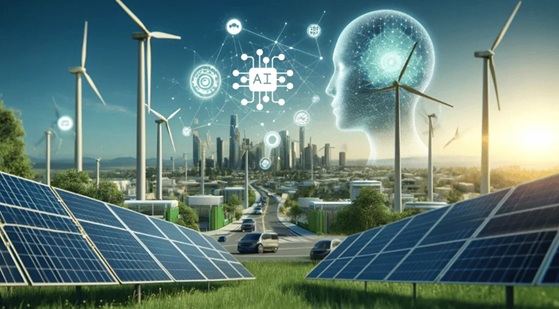
At the India AI Impact Summit held at Bharat Mandapam, policymakers and global experts deliberated on the theme ‘Global Mission on AI for Energy Scaling through Citizen-Centric India Energy Stack’.The government highlighted Artificial Intelligence (AI) as a transformative force for scaling Distributed Renewable Energy (DRE) and modernising India’s power sector.
Background and Context

India is undergoing a dual transformation:

  • Energy Transition (towards renewables),
  • Digital Transformation (AI and Digital Public Infrastructure).

With rising rooftop solar, solar pumps, and decentralised energy systems, traditional grids face structural stress. AI integration is now viewed as critical to managing this complexity and enabling predictive governance.

Understanding Distributed Renewable Energy (DRE)

DRE refers to decentralised, small-scale renewable systems (kW to MW scale) located near consumption points.

Examples include:

  • Rooftop solar installations
  • Small wind turbines
  • Biomass units
  • Solar irrigation pumps

Unlike centralised power plants, DRE promotes:

  • Local generation
  • Reduced transmission losses
  • Consumer participation (rise of “prosumers”)

India’s Renewable Energy Landscape

Key Data:

  • 52% (≈272 GW) of total installed capacity from non-fossil sources.
    • Solar capacity: ~140 GW.
    • DRE capacity: 38 GW.
  • Nearly 18 GW added in DRE segment in last 15 months.

Major Schemes:

  • Pradhan Mantri Surya Ghar Muft Bijli Yojana
  • Pradhan Mantri KUSUM Yojana

Public investment:

  • ~$9 billion for rooftop solarisation
  • ~$4 billion for PM-KUSUM

Why AI is Crucial for the Next Phase ?

Structural Challenges:

  • Transformers designed for one-way power flow.
  • Emergence of prosumers feeding power into grids.
  • Stress on distribution networks.
  • Need for real-time balancing and predictive maintenance.

AI Applications in DRE:

  • Weather forecasting for solar prediction
  • Asset performance monitoring
  • Predictive load management
  • Peer benchmarking
  • Grid stability optimisation
  • B2B electricity trading enablement

Government vision: Shift from reactive governance to predictive governance.

AI as Development Infrastructure

AI is being conceptualised as core infrastructure—similar to:

  • Power grids
  • DISCOM networks
  • Smart meters

This aligns with India’s Digital Public Infrastructure (DPI) model. The proposed India Energy Stack aims to replicate the success of the India Stack in fintech.

Strategic Vision:

  • Scale AI beyond pilot projects
  • Develop interoperable digital architecture
  • Position India as a global AI-energy solutions leader

Governance and Regulatory Dimensions

Energy transition increases system complexity. AI integration raises concerns about:

  • Data sovereignty
  • Cybersecurity
  • Big Tech monopolisation
  • Algorithmic concentration

Governance Principles Proposed:

  • Open standards (similar to TCP/IP model)
  • Open-source AI systems
  • Anti-monopoly safeguards
  • Promotion of domestic innovation (Atmanirbhar Bharat)

What Success May Look Like (Next 2–3 Years)

  • Reduction in consumer power costs
  • Enhanced industrial competitiveness
  • Transition from consumer to prosumer empowerment
  • Grid readiness for high renewable penetration
  • Improved energy access and reliability

Key Challenges 

1. Legacy Grid Infrastructure

Transformers and feeders require modernisation.

2. DISCOM Financial Stress

AI deployment requires financial viability of utilities.

3. Data Governance Risks

AI systems require robust regulatory oversight.

4. Digital Divide

Unequal access to smart infrastructure may widen disparities.

Way Forward

  • Build interoperable India Energy Stack
  • Invest in AI-driven grid modernisation
  • Strengthen data privacy and cybersecurity frameworks
  • Encourage startup ecosystem participation
  • Align AI integration with India’s Net Zero 2070 and NDC commitments

Significance

AI-powered DRE convergence is not merely technological—it is strategic.

It determines whether India:

  • Becomes a passive technology importer, or
  • Emerges as a global architect of citizen-centric, decentralised energy systems.

The AI–Energy nexus sits at the heart of:

  • Climate action
  • Economic competitiveness
  • Energy security
  • Digital sovereignty

FAQs

1. What is Distributed Renewable Energy (DRE) ?

Small-scale renewable systems located near consumption points, such as rooftop solar and solar pumps.

2. Why is AI needed in the renewable energy sector ?

To manage grid complexity, predict demand, optimise performance, and ensure stability with rising decentralised generation.

3. What is the India Energy Stack ?

A proposed interoperable digital framework for energy markets, inspired by India’s digital public infrastructure model.

4. How does AI help consumers ?

It can reduce costs, improve reliability, and empower consumers to become electricity producers (prosumers).

5. What are the risks of AI integration in energy ?

Data privacy concerns, cybersecurity threats, and risk of monopolisation by large technology firms.

African Union Summit in Ethiopia: Renewed Focus on Unity, Security and Development

Prelims: (International Organisations + CA)
Mains: (GS 2 – International Relations; GS 3 – Regional Groupings, Global Governance)

Why in News ?

The African Union recently hosted its annual summit in Addis Ababa, Ethiopia, bringing together leaders of its 55 member states to deliberate on regional security, economic integration, climate resilience, and Africa’s role in global governance.

The summit gains importance amid global geopolitical shifts, debt crises in several African nations, and Africa’s growing voice in multilateral forums.

Background and Evolution

The African Union (AU) is a continental body comprising all 55 countries of Africa.

  • It was officially launched in 2002.
  • It replaced the Organization of African Unity, which was founded in 1963.

While the OAU primarily focused on decolonisation and ending apartheid, the AU expanded its mandate to include economic integration, peace and security, democratic governance, and sustainable development.

Primary Objectives of the African Union

  • Promote unity and solidarity among African states
  • Accelerate political and socio-economic integration
  • Defend sovereignty and territorial integrity of member states
  • Promote peace, security, and stability
  • Advance Africa’s collective interests globally

Headquarters: Addis Ababa, Ethiopia

Governance Structure of the African Union

1. Assembly

  • Highest decision-making body
  • Composed of Heads of State and Government
  • Determines overall policy direction

2. Executive Council

  • Comprises Foreign Affairs Ministers
  • Prepares agenda and recommendations for the Assembly
  • Coordinates sectoral policies

3. AU Commission

  • Administrative and executive arm
  • Implements decisions of the Assembly and Executive Council
  • Headquartered in Addis Ababa

4. Peace and Security Council (PSC)

  • Responsible for conflict prevention, management, and resolution
  • Oversees peacekeeping missions and crisis response
  • Plays a key role in addressing civil wars, coups, and terrorism

5. Participatory Bodies

The AU encourages citizen participation through:

  • Pan-African Parliament
  • Economic, Social and Cultural Council (ECOSOCC)

These bodies aim to strengthen democratic governance and civil society engagement.

Contemporary Significance of the AU Summit

1. Peace and Security Challenges

Africa continues to face:

  • Military coups in the Sahel region
  • Terrorism and insurgency
  • Civil conflicts and humanitarian crises

The AU’s Peace and Security Council is central to stabilisation efforts.

2. Economic Integration and AFCFTA

The AU is driving the implementation of the African Continental Free Trade Area (AfCFTA), aimed at creating the world’s largest free trade area by number of countries.

Economic integration is viewed as essential for:

  • Reducing intra-African trade barriers
  • Strengthening regional supply chains
  • Enhancing bargaining power globally

3. Africa’s Global Voice

  • Africa’s growing demographic and economic importance has strengthened its claim for greater representation in global institutions.
  • The AU’s inclusion as a permanent member of the G20 in 2023 marked a milestone in global governance reforms.

4. Climate and Development Agenda

African countries are among the most vulnerable to climate change despite contributing minimally to global emissions.

The AU advocates:

  • Climate finance
  • Debt restructuring
  • Just energy transition

Significance for India

India maintains strong diplomatic and developmental ties with Africa through:

  • Capacity-building initiatives
  • Lines of credit
  • South-South cooperation

Engagement with the AU enhances:

  • India’s strategic presence in the Global South
  • Cooperation in multilateral forums
  • Trade and energy partnerships

Challenges Facing the African Union

  • Limited financial autonomy (heavy dependence on external funding)
  • Political instability and unconstitutional changes of government
  • Implementation gaps between policy and ground realities
  • Coordination challenges among diverse member states

Way Forward

  • Strengthening institutional capacity
  • Enhancing financial self-reliance
  • Deepening continental economic integration
  • Reforming global institutions to reflect Africa’s demographic and geopolitical weight

FAQs

1. When was the African Union established ?

The AU was officially launched in 2002, replacing the Organization of African Unity.

2. Where is the headquarters of the African Union located ?

The headquarters is in Addis Ababa, Ethiopia.

3. What is the primary objective of the AU ?

To promote unity, cooperation, peace, and development among African nations.

4. Which body handles peace and security issues within the AU ?

The Peace and Security Council is responsible for maintaining peace and stability.

5. Why is the African Union significant globally ?

The AU represents 55 African nations and plays a crucial role in global governance, economic integration, and climate negotiations.

India’s Fertiliser Sector Under Scrutiny: Regulation, Subsidies and the Uttar Pradesh Ban

Prelims: (Economics + CA)
Mains: (GS 3 – Agriculture, Subsidies, Food Security, Industrial Policy)

Why in News ?

The Uttar Pradesh government has banned the sale of non-subsidised fertilisers by urea manufacturers and suppliers, citing concerns over alleged “tagging” practices. The move has reignited debate over excessive regulatory controls in India’s fertiliser sector and their implications for nutrient use efficiency, private investment, and long-term agricultural sustainability.

Background and Context

India’s fertiliser industry plays a critical role in ensuring food security, supporting one of the world’s largest agricultural economies.

Key fertilisers used in India include:

  • Urea (Nitrogen-based),
  • Di-Ammonium Phosphate (DAP),
  • Muriate of Potash (MOP),
  • NPK complexes.

Given the political and economic sensitivity of agriculture, the sector remains one of the most tightly regulated industries in India.

Structure of the Fertiliser Industry in India

Price Regulation

  • The Maximum Retail Price (MRP) of urea is fixed at ₹266.5 per 45-kg bag (unchanged since 2012).
  • Urea is fully subsidised and price-controlled.

Although DAP and other fertilisers are officially “decontrolled,” they operate under subsidy-linked pricing:

  • Companies receive fixed subsidies but must maintain capped MRPs.
  • “Unreasonable profits” can be recovered from subsidy claims.

Thus, partial decontrol exists on paper, but effective price control continues in practice.

Distribution and Movement Controls

The Department of Fertilisers regulates:

  • State-wise allocation,
  • Seasonal distribution,
  • Railway rake movement plans,
  • Dealer-level stock allocation.

Even private companies must comply with:

  • Government-approved dispatch plans,
  • District-level allocation mechanisms.

Hence, pricing, quantity, location, and timing of fertiliser sales are heavily regulated.

Non-Subsidised and Speciality Fertilisers

Apart from subsidised fertilisers, companies sell speciality nutrients such as:

  • Water-soluble fertilisers,
  • Calcium nitrate,
  • Zinc sulphate,
  • Bentonite sulphur,
  • Micronutrients and bio-stimulants.

These are notified under the Fertiliser Control Order, 1985.

Key Features:

  • Used in high-value crops (fruits, vegetables, sugarcane).
  • Higher cost (₹60–90/kg compared to ₹5.9/kg for urea).
  • Small market size (~0.4 million tonnes vs 67 million tonnes of subsidised fertilisers).

The Uttar Pradesh Ban

In January 2026, the state prohibited urea manufacturers and suppliers from selling non-subsidised fertilisers.

Reason Cited:

  • Allegations of “tagging” — forcing farmers to purchase speciality fertilisers along with subsidised urea.

Industry’s Argument:

  • Both products are sold through the same dealer networks.
  • Cross-selling is a common business practice.
  • Speciality fertiliser market in UP is relatively small.

Implications of the Ban

1. Nutrient Imbalance

India already faces excessive nitrogen application due to cheap urea.

Restricting speciality fertilisers may:

  • Worsen NPK imbalance,
  • Discourage balanced nutrient application.

2. Investor Sentiment

Frequent regulatory intervention may:

  • Discourage private investment,
  • Reduce innovation in efficiency-enhancing products,
  • Create policy uncertainty.

3. Market Distortions

Banning organised players may:

  • Encourage unregulated operators,
  • Increase risk of substandard products,
  • Undermine farmer awareness.

4. Fiscal Burden

India’s fertiliser subsidy bill remains substantial. Overdependence on subsidies strains public finances.

5. Structural Policy Concerns

Layered controls on:

  • Price,
  • Movement,
  • Allocation,
  • Sales practices,

limit market flexibility and long-term efficiency.

Broader Structural Challenges

1. Imbalanced Nutrient Use

Artificially low urea prices distort fertiliser consumption patterns.

2. Supply Constraints

Reports of urea selling above MRP reflect:

  • Demand-supply gaps,
  • Production constraints.

3. Policy Overreach

Heavy administrative control restricts private sector dynamism.

Way Forward

1. Gradual Subsidy Rationalisation

Encourage balanced nutrient pricing.

2. Promote Soil Health Management

Strengthen implementation of Soil Health Card schemes.

3. Encourage Speciality Fertilisers

Promote nutrient-efficient products to reduce environmental degradation.

4. Predictable Regulatory Framework

Ensure policy stability to attract investment.

5. Strengthen Monitoring Mechanisms

Address tagging concerns without blanket bans.

Significance

The fertiliser sector lies at the intersection of:

  • Food security,
  • Fiscal management,
  • Agricultural sustainability,
  • Industrial policy.

While regulation ensures affordability, excessive controls may hinder innovation, nutrient efficiency, and long-term agricultural resilience.

FAQs

1. Why is the fertiliser industry highly regulated in India ?

To ensure affordable fertilisers for farmers and safeguard food security.

2. What is the issue with urea pricing ?

Its heavily subsidised price leads to overuse of nitrogen and nutrient imbalance.

3. What are speciality fertilisers ?

Non-subsidised nutrient products used for high-value crops that improve nutrient efficiency.

4. Why did Uttar Pradesh impose the ban ?

Due to allegations of forced tagging of non-subsidised fertilisers with subsidised urea.

5. What are the long-term concerns ?

Policy overreach, investor uncertainty, nutrient imbalance, and fiscal burden.

Bharat EduAI Stack: Reshaping India’s AI-Driven Education Ecosystem

Prelims: (Social Issues + CA)
Mains: (GS 2 – Education, Governance, Digital Public Infrastructure; GS 3 – Science & Technology)

Why in News ?

The Union Government has announced the integration of Artificial Intelligence (AI) tools into classrooms from the next academic session. The initiative is backed by the launch of Bodhan AI and the development of the Bharat EduAI Stack, marking a major step toward AI-enabled public education.

Background and Policy Context

Artificial Intelligence is transforming sectors such as healthcare, agriculture, governance, and education. In education, AI enables:

  • Personalised learning pathways
  • Real-time assessment
  • Automated grading and feedback
  • Multilingual content delivery
  • Intelligent tutoring systems

India’s policy push aligns with National Education Policy 2020, which emphasises:

  • Foundational literacy and numeracy
  • Technology-enabled learning
  • Multilingual education
  • Adaptive and competency-based systems

However, most global AI platforms are English-centric, limiting their applicability in India’s linguistically diverse education system.

Institutional Framework

  • The initiative is anchored at the Indian Institute of Technology Madras, where a Centre of Excellence in AI for Education was established with a ₹500 crore allocation in the Union Budget.
  • To operationalise this vision, the government has launched Bodhan AI as a not-for-profit entity to build foundational AI infrastructure tailored for Indian educational needs.

Bharat EduAI Stack as Digital Public Infrastructure (DPI)

The Bharat EduAI Stack will function as a Digital Public Infrastructure (DPI) for education—similar in philosophy to India Stack in fintech.

Core Components:

  • AI models trained in Indian languages
  • Automatic speech recognition
  • Speech synthesis tools
  • Diagnostic and language understanding systems

Instead of building classroom apps directly, the Stack will provide “building blocks.” EdTech companies and state governments can integrate their applications on this sovereign AI backbone.

Objectives:

  • Reduce dependence on foreign AI platforms
  • Promote indigenous AI innovation
  • Enable scalable, multilingual deployment

Likely AI Applications

1. Personalised Learning

  • Concept explanation in mother tongue
  • Voice-based exercises
  • Instant feedback
  • Targeted worksheets

Particularly critical for foundational literacy and numeracy.

2. Teacher and Parent Support

  • AI-generated student performance reports
  • Learning gap diagnostics
  • Remedial strategy suggestions
  • Parent dashboards for progress tracking

AI is envisioned as an assistive tool—not a replacement for teachers.

3. Administrative and Policy Planning

At district/state levels, AI can:

  • Analyse learning outcome data
  • Identify performance gaps
  • Support evidence-based resource allocation

This enhances data-driven governance in education.

Funding and Operational Model

Initial funding comes from Union Budget allocations. Over time, sustainability may be achieved through:

  • State government maintenance contributions
  • Equity participation by start-ups
  • Public-private partnerships

The long-term goal is to evolve into a collaborative, open ecosystem similar to open-source platforms.

Data Protection and Ethical Considerations

1. Data Privacy

Student voice recordings and written responses constitute personal data. Safeguards are expected to align with the Digital Personal Data Protection Act.

2. Screen Time Concerns

Voice-first tools are being prioritised to minimise excessive screen exposure.

3. Digital Divide

Challenges remain in:

  • Rural connectivity
  • Device availability
  • Teacher training

Effective implementation requires infrastructure strengthening alongside AI deployment.

Significance

The Bharat EduAI Stack marks a structural shift in India’s education system.

Strategic Importance:

  • Builds sovereign AI capability
  • Strengthens multilingual inclusion
  • Improves foundational learning outcomes
  • Creates scalable Digital Public Infrastructure
  • Reduces technological dependency

If implemented effectively, it can:

  • Narrow regional disparities
  • Enhance teacher effectiveness
  • Improve learning outcomes at scale
  • Position India as a global leader in AI-enabled public education

Broader Context

The initiative complements India’s broader DPI model and reflects the government’s push toward technology-enabled governance.

It represents a convergence of:

  • Education reform
  • Digital sovereignty
  • AI innovation
  • Public service delivery

FAQs

1. What is the Bharat EduAI Stack ?

It is a Digital Public Infrastructure designed to provide foundational AI tools for education in Indian languages.

2. What is the role of Bodhan AI ?

Bodhan AI is a not-for-profit entity tasked with building and maintaining the core AI infrastructure.

3. How does AI benefit students ?

Through personalised learning, instant feedback, multilingual support, and targeted remedial assistance.

4. How is student data protected ?

Data handling will align with the Digital Personal Data Protection Act and emphasise secure storage practices.

5. Will AI replace teachers ?

No. The system is designed to assist teachers with diagnostics, planning, and performance tracking—not replace classroom instruction.

« »
  • SUN
  • MON
  • TUE
  • WED
  • THU
  • FRI
  • SAT
Have any Query?

Our support team will be happy to assist you!

OR
X


