New
Hindi Medium: (Delhi) - GS Foundation (P+M) : 14th Oct. 2026, 06:00 PM Hindi Medium: (Prayagraj) - GS Foundation (P+M) : 23rd Oct. 2026, 11:00 AM English Medium: (Delhi) - GS Foundation (P+M) : 12th Oct. 2026, 5:30PM English Medium: (Prayagraj) - GS Foundation (P+M) : 19th Aug 2026, 11:00 AM Hindi Medium: (Delhi) - GS Foundation (P+M) : 14th Oct. 2026, 06:00 PM Hindi Medium: (Prayagraj) - GS Foundation (P+M) : 23rd Oct. 2026, 11:00 AM English Medium: (Delhi) - GS Foundation (P+M) : 12th Oct. 2026, 5:30PM English Medium: (Prayagraj) - GS Foundation (P+M) : 19th Aug 2026, 11:00 AM

Current Affairs for 19 September 2026

HAL Delivers Tejas Trainers and HTT-40 ‘Ankur’: Significance for India’s Aerospace Sector

Prelims: LCA Tejas, HTT-40, Dhruv-NG, Hindustan Aeronautics Limited, Final Operational Clearance.
Mains: GS Paper III: Indigenisation of defence technology, industrial capacity, aviation infrastructure and strategic self-reliance.

Why in News?

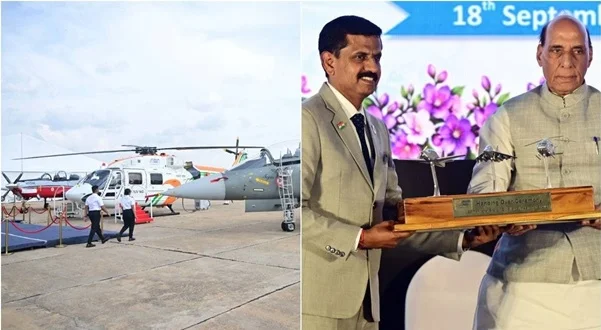
  • Hindustan Aeronautics Limited (HAL) handed over two LCA Tejas twin-seat trainers in Final Operational Clearance (FOC) configuration to the Indian Air Force in Bengaluru. 
  • The event also marked the start of HTT-40 “Ankur” deliveries and the handover of four Dhruv-NG helicopters to Pawan Hans Limited.

Background

  • Aircraft acquisition must be accompanied by the capacity to train pilots, maintain equipment and support operations throughout an aircraft’s service life. A growing fleet therefore needs a dependable training and maintenance system.
  • This development brings together basic flying instruction, training for fighter operations and civilian helicopter services. The following analysis examines how these functions contribute to a broader domestic aerospace capability.

Key Points

Platform

Recipient

Main role

LCA Tejas twin-seat trainer

Indian Air Force

Tejas pilot training; fighter operations when required

HTT-40 “Ankur”

Indian Air Force

Basic pilot training

Dhruv-NG

Pawan Hans Limited

Civil helicopter operations

The Tejas handover completes the four-trainer component of the FOC contract. HTT-40 deliveries begin against a 70-aircraft order. The Dhruv-NG is a 5.5-tonne, twin-engine helicopter with configurable civilian roles.

Significance

1. Training capacity supports operational readiness

A modern aircraft fleet requires a steady supply of proficient pilots. Training platforms allow instructors to develop flying skills, assess performance and prepare personnel for demanding operational responsibilities. Their availability should therefore be considered alongside combat-aircraft procurement.

2. Domestic support can improve fleet availability

Manufacturing within India can make it easier to coordinate repairs, incorporate user feedback and plan spares. These advantages depend on reliable suppliers and maintenance arrangements; a delivery ceremony alone does not establish sustained serviceability.

3. Military and civil aviation can share industrial capabilities

Skills in manufacturing, quality assurance, software integration and aircraft maintenance can serve multiple aviation markets. A wider customer base could help suppliers sustain investment and build experience beyond individual defence orders.

India Relevance

  • For India, the strategic value lies in greater control over the lifecycle of an aircraft. Domestic capacity to repair, modify and support a platform can improve flexibility when external supplies are disrupted.
  • The economic opportunity includes skilled employment and business for component manufacturers, engineering firms and maintenance providers. However, these benefits depend on consistent orders, competitive costs and dependable production.
  • Civil aviation provides another avenue for applying aerospace expertise. The reported roles of Dhruv-NG include passenger transport, air ambulance services, offshore operations and disaster response.

Challenges

  • Timely production: Manufacturing schedules must align with training requirements and fleet expansion.
  • Critical-component dependence: Domestic assembly does not automatically provide control over every essential technology.
  • Lifecycle costs: Procurement decisions must account for maintenance, spares, upgrades and operating expenditure.
  • Training infrastructure: Aircraft require qualified instructors, simulators, ground equipment and suitable facilities.
  • Civil-market competitiveness: Operators need dependable availability, safety performance and responsive after-sales support.

These are broader implementation considerations, rather than findings of specific defects in the aircraft delivered.

Way Forward

  • India should assess aerospace programmes through measurable outcomes such as delivery performance, aircraft availability and maintenance turnaround time.
  • Procurement planning should integrate aircraft, training infrastructure and long-term support. Suppliers need predictable demand and clear quality requirements to invest in capacity.
  • Research priorities should focus on technologies whose unavailability could interrupt production or operations. Collaboration between manufacturers, research institutions and users can help translate operational feedback into practical improvements.
  • For civilian platforms, a strong maintenance network and transparent lifecycle costs will be essential to building operator confidence.

Conclusion

HAL’s handover offers an opportunity to strengthen the connection between aircraft production, pilot preparation and aviation services. Its lasting value will depend on timely follow-on deliveries, reliable support and deeper domestic technological capability.

Prelims MCQs

Q. HTT-40 “Ankur” is primarily associated with:

A. Basic pilot training
B. Maritime surveillance
C. Strategic airlift
D. Aerial refuelling

Mains Question

“Self-reliance in aerospace requires control over the entire aircraft lifecycle.” Discuss with reference to India’s indigenous aviation programmes.

FAQs

1. What does FOC stand for?

Final Operational Clearance.

2. Why do trainer aircraft matter?

They help develop the skills and proficiency needed to operate aircraft safely and effectively.

3. Does domestic production guarantee complete self-reliance?

No. Self-reliance also depends on critical technologies, supplier resilience, maintenance capacity and the ability to upgrade equipment.

4. Why is lifecycle support important for aircraft?

It keeps aircraft serviceable through timely maintenance, repairs, spare parts and upgrades throughout their operational life.

5. How can domestic aerospace manufacturing benefit India’s economy?

It can create skilled jobs and opportunities for component suppliers, engineering firms and maintenance providers, supported by consistent demand and competitive production.

World Alzheimer's Day 2026: Theme, Key Facts, History, Significance and Challenges

Why in news?

World Alzheimer's Day is observed every year on 21 September to raise awareness about Alzheimer's disease and other forms of dementia.

Key Facts

Observed on

21 September every year

First observed

1994

2026 Theme

The Earlier You Know, The More You Can Do: A Dementia Diagnosis Matters

Organising body

Alzheimer's Disease International (ADI)

Main objective

Dementia awareness, early diagnosis and caregiver support

Disease type

Progressive neurodegenerative disorder

Most affected group

Older adults particularly those above 65

Associated proteins

Amyloid-beta and Tau

Relevant SDG

SDG 3: Good Health and Well-being

What is World Alzheimer's Day?

  • World Alzheimer's Day is an international awareness observance dedicated to improving public understanding of Alzheimer's disease and dementia. 
  • It encourages people to recognise early symptoms, seek medical assessment and support individuals living with dementia.

History

  • World Alzheimer's Day was first observed on 21 September 1994, during the tenth anniversary of Alzheimer's Disease International.
  • Alzheimer's Disease International was established in 1984 as an international federation of Alzheimer and dementia associations.
  • The organisation works to improve awareness, support national Alzheimer associations, promote dementia-friendly policies and encourage international cooperation.

What is Alzheimer's Disease?

  • Alzheimer's disease is a progressive neurodegenerative disorder in which nerve cells in the brain gradually become damaged and lose their ability to function normally.
  • It primarily affects memory and cognitive functions, including learning, reasoning, communication and decision-making.
  • The disease generally begins with mild memory problems and progresses over several years.
  • In advanced stages, individuals may require assistance with basic activities such as eating, dressing, bathing and mobility.

Alzheimer's Disease and Dementia

Alzheimer's 

Dementia

A specific neurological disease

A general term for a group of symptoms

Causes progressive brain-cell damage

Can result from several diseases

Associated with amyloid-beta and tau pathology

May have different underlying mechanisms

Most common cause of dementia

Includes Alzheimer's and other forms

Usually progressive

Course depends on the underlying cause

What causes Alzheimer's Disease?

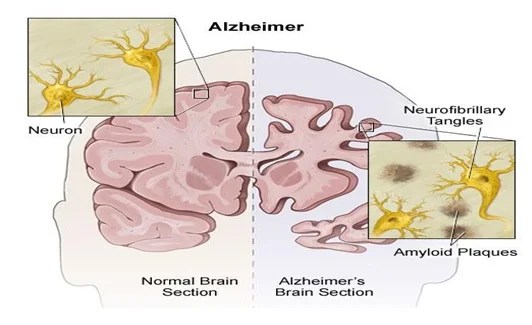
  • Amyloid-beta plaques: Amyloid-beta protein fragments accumulate outside neurons, forming plaques that are associated with disruption of normal cellular functioning.

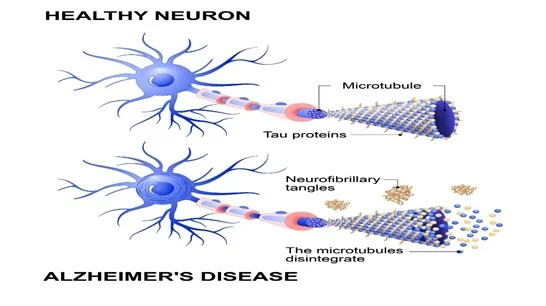
  • Tau tangles: Abnormal tau proteins accumulate inside neurons and interfere with their internal transport systems, contributing to neuronal damage.

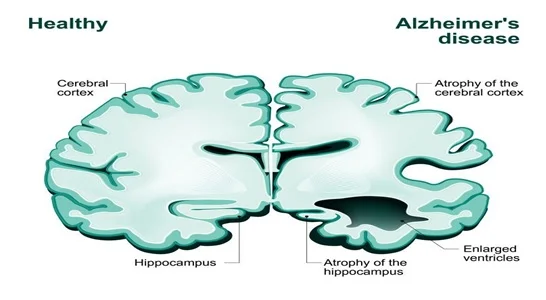
  • Brain-cell damage: As neuronal damage progresses, brain regions involved in learning and memory, particularly the hippocampus, become affected.

Major Symptoms 

  • Memory loss: Frequently forgetting recent conversations, appointments or important events.
  • Confusion and disorientation: Difficulty recognising familiar places or understanding time and location.
  • Language problems: Trouble finding words, following conversations or expressing thoughts.
  • Behavioural changes: Increased anxiety, irritability, withdrawal or changes in personality.
  • Difficulty performing daily activities: Problems managing finances, preparing meals or following familiar routines.
  • Advanced symptoms: Severe memory impairment, loss of independence and increasing dependence on caregivers.

Major Risk Factors

Risk factor

Explanation

Increasing age

Strongest known risk factor

Family history

May increase susceptibility

Cardiovascular conditions

Hypertension and diabetes can contribute to dementia risk

Smoking

Associated with vascular and neurological damage

Physical inactivity

Linked with poorer overall brain health

Social isolation

Associated with increased dementia risk

Hearing loss

Untreated hearing loss is a potentially modifiable risk factor

Global Burden of Alzheimer's Disease

  • According to WHO, approximately 57 million people worldwide were living with dementia in 2021.
  • Nearly 10 million new dementia cases occur globally each year.
  • Alzheimer's disease accounts for approximately 60-70% of dementia cases.
  • More than 60% of people living with dementia reside in low- and middle-income countries.

Alzheimer's Disease in India

  • India's growing elderly population makes Alzheimer's disease and other forms of dementia an increasingly important public-health concern.
  • Limited awareness and stigma can delay diagnosis, particularly in rural and underserved areas.
  • Many patients depend on family members for long-term care because specialised dementia-care facilities are not widely accessible.
  • The shortage of trained geriatric specialists, neurologists and caregivers can affect timely diagnosis and treatment.
  • Strengthening geriatric healthcare, primary-care screening and community-based support is essential to address the country's dementia burden.

Diagnosis and Treatment

  • Alzheimer's disease is diagnosed through medical history, cognitive assessment, neurological examination and appropriate investigations.
  • Brain imaging and specialised biomarker tests may be used in selected cases to support diagnosis.
  • There is currently no cure for Alzheimer's disease, but treatment can help manage symptoms and, in selected patients, slow disease progression.
  • Medicines such as donepezil, rivastigmine, galantamine and memantine may be prescribed according to the patient's condition.
  • Disease-modifying anti-amyloid therapies, including lecanemab and donanemab, are available in certain jurisdictions for selected patients with early Alzheimer's disease. They require specialist evaluation and monitoring.

Can Alzheimer's disease be prevented?

  • There is no guaranteed method of preventing Alzheimer's disease. However, reducing modifiable dementia risk factors may help lower the risk or delay its onset.
  • Regular physical activity and a balanced diet support cardiovascular and brain health.
  • Controlling hypertension, diabetes and cholesterol may help reduce vascular contributions to cognitive decline.
  • Avoiding tobacco and harmful alcohol consumption can reduce preventable health risks.
  • Maintaining social connections, treating depression and addressing hearing or vision impairment may support cognitive health.
  • Lifelong learning, mentally stimulating activities and adequate sleep are also beneficial for overall well-being.

Significance 

  • Public awareness: Encourages people to recognise early symptoms and understand that dementia is not a normal part of ageing.
  • Early diagnosis: Promotes timely medical assessment and access to appropriate treatment and care.
  • Reducing stigma: Challenges misconceptions and discrimination faced by people living with dementia.
  • Caregiver support: Recognises the emotional, physical and financial burden on families and caregivers.
  • Healthcare preparedness: Highlights the need for dementia-responsive health systems and specialised geriatric services.
  • Research and innovation: Encourages investment in neurological research, diagnostic tools and new treatments.

Challenges in Alzheimer's Care

  • Delayed diagnosis due to low awareness and social stigma.
  • Limited availability of specialised diagnostic facilities.
  • High costs associated with long-term care and certain treatments.
  • Shortage of trained healthcare professionals and caregivers.
  • Emotional and financial burden on families.
  • Unequal access to healthcare between urban and rural populations.
  • Absence of a cure and the need for continued research.

Government Initiatives and Public-Health Response in India

National Programme for Health Care of the Elderly (NPHCE)

Strengthens geriatric healthcare services

National Mental Health Programme (NMHP)

Supports mental-health services and awareness

Ayushman Bharat

Improves access to eligible healthcare services

National Programme for Prevention and Control of Non-Communicable Diseases (NP-NCD)

Addresses conditions such as hypertension and diabetes that are associated with dementia risk

WHO Global Action Plan on Dementia 2017–2025

Provided an international framework for dementia awareness, diagnosis, care and research

Prelims MCQ

Q. With reference to Alzheimer's disease, consider the following statements:

  1. Alzheimer's disease is the most common cause of dementia.
  2. Amyloid-beta plaques and tau tangles are associated with the disease.
  3. Alzheimer's disease is an inevitable consequence of normal ageing.

Which of the statements given above are correct?

A. 1 and 2 only

B. 2 and 3 only

C. 1 and 3 only

D. 1, 2 and 3

Mains Practice Question

Q. “Alzheimer's disease is emerging as a significant public-health challenge in ageing societies.” Discuss. 

FAQs

When is World Alzheimer's Day observed?

It is observed every year on 21 September.

When World Alzheimer’s Day was first observed?

It was first observed in 1994.

Which organisation coordinates World Alzheimer's Day?

Alzheimer's Disease International (ADI).

What is the main objective of World Alzheimer's Day?

To raise dementia awareness, promote early diagnosis and support patients and caregivers.

Who first described Alzheimer's disease?

German psychiatrist Alois Alzheimer described the condition in 1906.

India Tops Business Climate Ranking Among 40+ Global Markets

Prelims: Global Business Climate Survey 2026, Swedish Chamber of Commerce in India, Asia-Pacific region, investment outlook.
Mains: GS Paper III: Indian economy, ease of doing business, foreign investment, global economic trends and India's position in the world economy.
Keywords: Global Business Climate Survey 2026, Swedish Chamber of Commerce in India, India Business Climate Ranking, India Business Environment, Swedish Companies in India, Foreign Investment in India, India Growth Prospects, Ease of Doing Business, India Investment Outlook, Asia-Pacific Business Climate, Global Business Markets

Why in News?

  • India has been ranked first in business climate among 41 global markets in the Global Business Climate Survey 2026 conducted by the Swedish Chamber of Commerce in India (SCCI).
  • Union Commerce and Industry Minister Piyush Goyal highlighted the ranking, noting India's strong business environment amid global economic uncertainty.

Important Points

  • India was identified among the markets with the highest growth and investment expectations. 
  • It reflects the views and experiences of Swedish companies across international markets. 
  • India and Vietnam were among the highest-rated markets in the Asia-Pacific region. 
  • 64% of Swedish companies reported profitability across the surveyed markets. 
  • 44% of companies planned to increase investments in 2026, compared with 45% in 2025. 
  • The survey noted that global geopolitical developments affected business sentiment and investment plans.

About the Global Business Climate Survey 2026

  • The Global Business Climate Survey 2026 presents the views of Swedish companies operating in or evaluating 41 international markets.
  • The survey compares different markets on factors such as:
    • Economic performance
    • Business outlook
    • Operating conditions
    • Investment prospects
  • Opportunities and challenges for companies

It is designed to help understand how Swedish businesses view their current and future business environment in different countries.

India Among the Highest-Rated Markets

  • The survey places India among the highest-rated markets globally, with the Asia-Pacific (APAC) region remaining the most optimistic.
  • India and Vietnam received particularly positive assessments. The survey also identified India, the Philippines and Poland as markets with some of the highest growth expectations.
  • India was also among the leading markets for investment plans in 2026.

Investment Outlook

  • According to the survey, 44% of Swedish companies across the surveyed markets plan to increase investments in 2026, compared with 45% in 2025.
  • The APAC region remained relatively stable, with India and the Philippines among the leading investment markets. Europe recorded comparatively weaker investment sentiment.

Profitability of Swedish Companies

  • Despite differences in business conditions across regions, 64% of Swedish companies surveyed reported profitability in the markets covered by the survey. 
  • This indicates continued business confidence across the surveyed global markets.

Regional Business Sentiment

  • Business sentiment varied across regions.
  • The Americas recorded the strongest growth expectations, while the APAC region continued to show high optimism.
  • In the Middle East and Africa, companies expressed more cautious sentiment. Saudi Arabia saw a significant decline in the share of companies reporting a positive outlook, from 90% in 2025 to 44% in 2026.
  • In Europe and the Americas, perceptions were somewhat more positive than in 2025.

Impact of Global Conflicts

  • The survey noted that its findings should be interpreted with caution because data collection coincided with the beginning of the war in the Middle East on February 28, 2026.
  • Around 75% of responses were collected before February 28, while the remaining 25% were collected after the conflict began.
  • The survey found that the conflict particularly influenced companies' views on:
    • Business climate
    • Expected industry turnover
    • Investment plans

Significance of India’s Ranking

  • India's first-place ranking among 41 global markets indicates that Swedish companies view India’s business environment particularly positively compared with the other markets covered by the survey. 
  • India also stands among the markets with the highest growth expectations and investment prospects, strengthening its position as an important destination for international businesses.

Conclusion 

The survey indicates strong confidence among Swedish companies in India's business environment. India received a top ranking among the 41 markets covered and was also identified as one of the leading markets for expected growth and investment. Overall, the findings highlight India's position as an important market for international businesses, particularly amid continuing global economic and geopolitical uncertainty.

Prelims Practice Question 

Q. According to the Global Business Climate Survey 2026, India was ranked first in business climate among how many global markets?

A. 31
B. 35
C. 41
D. 50

Mains practice Question

Q. Discuss the significance of India’s first-place ranking in the Global Business Climate Survey 2026 and examine the factors that can strengthen India’s position as a preferred destination for international businesses.

FAQs

Q1. What is the Global Business Climate Survey 2026?

The Global Business Climate Survey 2026 assesses the business environment across 41 global markets based on the views of Swedish companies.

Q2. Which country ranked first in business climate?

India ranked first among the 41 markets covered by the survey.

Q3. Who conducted the survey?

The survey was conducted by the Swedish Chamber of Commerce in India (SCCI).

Q4. What does India’s ranking indicate?

It indicates that Swedish companies participating in the survey gave India a particularly positive assessment of its business environment compared with the other markets covered.

Q5. What was the profitability finding of the survey?

Overall, 64% of Swedish companies reported profitability across the surveyed markets.

US–Denmark–Greenland Security Agreement: Key Features and Arctic Significance

Prelims: Greenland, Arctic Region, NATO, Sovereignty and Self-Determination
Mains: GS Paper II International Relations; GS Paper III Security and Environmental Concerns
Keywords: Arctic Security, Sovereignty, Self-Determination, Basing Rights, Over flight Rights

Why in News?

  • US President Donald Trump announced an agreement involving the United States, Denmark and Greenland, describing it as providing permanent American control over Greenland’s security. The announcement comes after prolonged tensions over his demands to acquire the island.
  • According to the supplied news report, formal signing is expected the following week on the side-lines of the United Nations General Assembly. The announcement should therefore be distinguished from a signed and fully implemented agreement.

Background

  • Greenland is a self-governing territory within the Kingdom of Denmark. Its location between the Arctic and North Atlantic makes it strategically important for North American and European security.
  • The United States already maintains a military presence on the island. The proposed arrangement builds on longstanding defence cooperation, including the 1951 agreement that provided extensive American military access. 
  • Trump’s earlier demands to purchase Greenland, along with threats of using force, generated opposition from Denmark and Greenland. Both have consistently rejected the idea that the island is for sale.

Key Features of the Announced Arrangement

The following provisions reflect the statements described in the supplied report; their precise scope will depend on the final agreement.

  • Permanent military access: US officials described permanent access, basing and over flight rights to support the defence of Greenland and the American continent.
  • Expanded military presence: Trump announced plans to begin increasing the American military presence on the island.
  • Restrictions on adversaries: According to the US State Department, the arrangement would prevent China and Russia from establishing military bases or deploying troops in Greenland.
  • Sensitive-sector investment safeguards: US officials also referred to mechanisms to restrict investment in sensitive sectors.
  • Recognition of sovereignty: Denmark and Greenland emphasised respect for the Kingdom of Denmark’s sovereignty and territorial integrity, alongside the Greenlandic people’s right to self-determination.

Does the Agreement Transfer Greenland to the United States?

  • The reported arrangement does not establish a transfer of Greenland’s ownership to the United States.
  • Trump’s description of permanent security control concerns the American defence role. Danish and Greenlandic statements emphasise the continuation of sovereignty and self-determination.
  • Military access allows a country to undertake specified defence activities in another territory. Sovereignty concerns ultimate authority over that territory. These concepts must be kept distinct when interpreting the announcement.

Strategic Significance

  • Strengthening Arctic Defence: Greenland’s position gives it an important role in security across the Arctic and North Atlantic. Greater American access could strengthen surveillance, military logistics and coordination with European allies.
  • Limiting Rival Powers’ Presence: The announced restrictions indicate Washington’s intention to prevent competing powers from developing a military foothold close to North America. Investment screening could also become a tool for protecting strategically sensitive infrastructure.
  • Managing Differences within NATO: The arrangement could reduce tensions between the United States and Denmark by accommodating American security concerns while recognising Danish sovereignty. Its success will depend on how the final provisions are interpreted and implemented.
  • Linking Security with Self-Determination: Greenland’s participation highlights the importance of local political consent. A durable security arrangement must account for the interests of Greenland’s population as well as the priorities of larger powers.

Relevance for India

Although India is not a party to the arrangement, the development has wider implications:

  • Arctic stability: Intensifying competition could affect the environment for international scientific and diplomatic cooperation.
  • Maritime interests: Security developments in the Arctic matter for assessing the long-term prospects of northern shipping routes.
  • Strategic autonomy: India would benefit from following regional developments while maintaining an independent assessment of competing powers’ interests.
  • International principles: The debate reinforces the importance of sovereignty, territorial integrity and the consent of affected populations.

These are analytical implications, rather than benefits or obligations created for India by the announced arrangement.

Challenges

  • Unclear operational limits: Broad language about security control requires clarification regarding permitted activities and decision-making.
  • Implementation requirements: Political announcements must be translated into agreed procedures, oversight and domestic approvals. Reporting indicates parliamentary processes remain relevant in Denmark and Greenland.
  • Local consent: Military expansion must accommodate Greenlandic political aspirations and community interests.
  • Environmental protection: Additional infrastructure could place pressure on a fragile Arctic environment.
  • Regional competition: Measures intended to strengthen defence could also deepen rivalry among major powers.

Way Forward

  • The parties should clarify the geographical scope, operational limits and oversight mechanisms of the arrangement. Transparent procedures for military expansion and sensitive investment screening would help reduce conflicting interpretations.
  • Greenlandic participation, environmental assessment and continued diplomatic engagement should guide implementation. Security cooperation will be more sustainable if it respects sovereignty and delivers meaningful benefits to local communities.

Prelims MCQs

Q. Greenland is a self-governing territory within which country’s kingdom?

(a) Norway
(b) Denmark
(c) Canada
(d) Iceland

Mains Question

“Arctic security cooperation must balance strategic interests with sovereignty, self-determination and environmental protection.” Discuss in the context of the announced US–Denmark–Greenland security arrangement.

FAQs

1. Has the United States purchased Greenland?

No purchase or transfer of sovereignty is established by the reported security arrangement.

2. What rights does Washington say the arrangement provides?

US officials describe permanent military access, basing and over flight rights, together with restrictions on adversarial military activities and sensitive investments.

3. Has the agreement already been signed?

The supplied report describes an announcement, with signing expected the following week at the UN General Assembly.

upsc english
« »
  • SUN
  • MON
  • TUE
  • WED
  • THU
  • FRI
  • SAT
Have any Query?

Our support team will be happy to assist you!

OR