
- UPSC Exam
- State PCS
- One Day Exam
- Current Affairs
- PT Quiz
- Downlaods
- About Coaching
- Blog
- Videos

| Prelims: LCA Tejas, HTT-40, Dhruv-NG, Hindustan Aeronautics Limited, Final Operational Clearance. Mains: GS Paper III: Indigenisation of defence technology, industrial capacity, aviation infrastructure and strategic self-reliance. |
|
Platform |
Recipient |
Main role |
|
LCA Tejas twin-seat trainer |
Indian Air Force |
Tejas pilot training; fighter operations when required |
|
HTT-40 “Ankur” |
Indian Air Force |
Basic pilot training |
|
Dhruv-NG |
Pawan Hans Limited |
Civil helicopter operations |
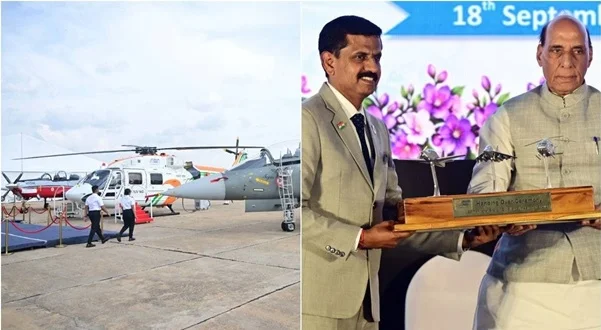
The Tejas handover completes the four-trainer component of the FOC contract. HTT-40 deliveries begin against a 70-aircraft order. The Dhruv-NG is a 5.5-tonne, twin-engine helicopter with configurable civilian roles.
A modern aircraft fleet requires a steady supply of proficient pilots. Training platforms allow instructors to develop flying skills, assess performance and prepare personnel for demanding operational responsibilities. Their availability should therefore be considered alongside combat-aircraft procurement.
Manufacturing within India can make it easier to coordinate repairs, incorporate user feedback and plan spares. These advantages depend on reliable suppliers and maintenance arrangements; a delivery ceremony alone does not establish sustained serviceability.
Skills in manufacturing, quality assurance, software integration and aircraft maintenance can serve multiple aviation markets. A wider customer base could help suppliers sustain investment and build experience beyond individual defence orders.
These are broader implementation considerations, rather than findings of specific defects in the aircraft delivered.
HAL’s handover offers an opportunity to strengthen the connection between aircraft production, pilot preparation and aviation services. Its lasting value will depend on timely follow-on deliveries, reliable support and deeper domestic technological capability.
Prelims MCQsQ. HTT-40 “Ankur” is primarily associated with: A. Basic pilot training Mains Question“Self-reliance in aerospace requires control over the entire aircraft lifecycle.” Discuss with reference to India’s indigenous aviation programmes. |
1. What does FOC stand for?Final Operational Clearance. 2. Why do trainer aircraft matter?They help develop the skills and proficiency needed to operate aircraft safely and effectively. 3. Does domestic production guarantee complete self-reliance?No. Self-reliance also depends on critical technologies, supplier resilience, maintenance capacity and the ability to upgrade equipment. 4. Why is lifecycle support important for aircraft?It keeps aircraft serviceable through timely maintenance, repairs, spare parts and upgrades throughout their operational life. 5. How can domestic aerospace manufacturing benefit India’s economy?It can create skilled jobs and opportunities for component suppliers, engineering firms and maintenance providers, supported by consistent demand and competitive production. |



Our support team will be happy to assist you!

 Contact Us
  New Batch : 9555124124/ 7428085757
  Tech Support : 9555124124/ 7428085757