Why in news?
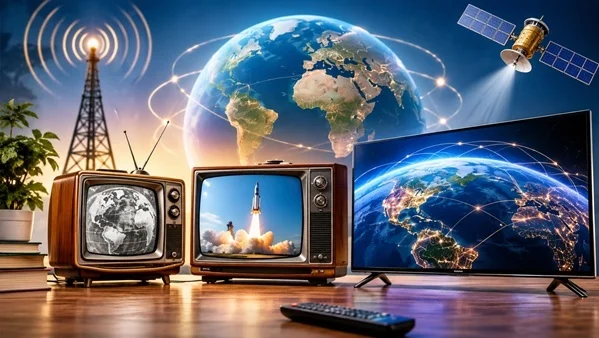
World Television Day is observed every year on 21 November to recognise the importance of television as a powerful medium of communication, information dissemination, education and entertainment.
Key Facts
|
Particulars
|
Details
|
|
Observed on
|
21 November
|
|
First World Television Forum
|
21-22 November 1996
|
|
Proclaimed in
|
December 1996
|
|
Proclaimed by
|
UN General Assembly
|
|
Resolution
|
A/RES/51/205
|
|
Main focus
|
Communication, information and cultural exchange
|
|
Headquarters of the first forum
|
United Nations Headquarters, New York
|
|
Nature of observance
|
International observance
|
History and Background
- The United Nations General Assembly proclaimed 21 November as World Television Day through Resolution 51/205 on 17 December 1996.
- The decision followed the first World Television Forum, held at the United Nations Headquarters in New York on 21-22 November 1996.
- During the forum, leading media personalities and representatives discussed the growing importance of television in a rapidly changing world.
- The United Nations recognised that television could play an important role in drawing attention to major global issues, promoting peace and strengthening international cooperation.
- The first World Television Day was observed in 1997.
Evolution of Television Technology
|
Stage
|
Development
|
Significance
|
|
Early Television
|
Mechanical and electronic television systems
|
Beginning of television technology
|
|
Black-and-White TV
|
Monochrome broadcasting
|
Made television accessible to households
|
|
Colour Television
|
Introduction of colour broadcasting
|
Improved viewing experience
|
|
Satellite Television
|
Satellite-based broadcasting
|
Expanded international coverage
|
|
Digital Television
|
Digital transmission technology
|
Better picture and sound quality
|
|
Smart Television
|
Internet-connected televisions
|
Integration of streaming and interactive services
|
Importance of Television in Society
- Information and News Dissemination: Television provides information about national and international developments, government policies, elections, economic issues and public affairs.
- Education and Learning: Educational television programmes help students and learners access knowledge, particularly in areas where conventional educational facilities may be limited.
- Cultural Exchange: Television promotes cultural understanding by showcasing different languages, traditions, festivals, art forms and lifestyles.
- Disaster Management: Television plays an important role in disseminating early warnings, weather alerts, emergency instructions and information during natural disasters.
- Democracy and Public Awareness: Television debates, interviews and news programmes encourage public discussion and help citizens understand important democratic and governance-related issues.
Television in India: Historical Background
|
Year
|
Important Development
|
|
1959
|
Experimental television broadcasting began in Delhi on 15 September.
|
|
1965
|
Regular daily television service started in Delhi.
|
|
1972
|
Television services were extended to Mumbai.
|
|
1975-76
|
Satellite Instructional Television Experiment (SITE) was conducted.
|
|
1976
|
Doordarshan was separated from All India Radio (AIR).
|
|
1982
|
Colour television broadcasting was introduced in India during the Asian Games.
|
|
1984
|
National television network expansion accelerated.
|
|
1990
|
Prasar Bharati Act was enacted.
|
|
1997
|
Prasar Bharati began functioning as an autonomous statutory body.
|
Important Institutions Related to Television in India
- Doordarshan (DD)
- India's public service television broadcaster.
- Established as an experimental television service in 1959.
- Operates under Prasar Bharati.
- Provides educational, cultural, news and entertainment programmes.
- Prasar Bharati
- India's public service broadcasting corporation.
- Established under the Prasar Bharati (Broadcasting Corporation of India) Act, 1990.
- Started functioning on 23 November 1997.
- It is a statutory autonomous body.
- Doordarshan and All India Radio are its principal broadcasting services.
- All India Radio (AIR)
- India's national public radio broadcaster.
- Also known as Akashvani.
- Along with Doordarshan, it forms part of India's public service broadcasting system under Prasar Bharati.
Important Milestones in Indian Television
- Krishi Darshan (1967): One of India's earliest television programmes focused on agricultural education and information for farmers.
- SITE (1975-76): A major experiment using satellite technology to deliver educational and development-oriented programmes to rural communities.
- Colour Television (1982): Colour telecasting began on 15 August 1982, with the Asian Games in Delhi further popularising colour television.
Challenges Associated with Television
- Fake News and Misinformation: Unverified information can mislead viewers and influence public opinion.
- Sensationalism: Excessive focus on TRP ratings may affect the quality of news reporting.
- Media Bias: One-sided reporting can influence democratic discourse.
- Digital Divide: Unequal access to technology limits information accessibility.
- Commercialisation: Excessive dependence on advertising may affect editorial independence.
- Privacy Concerns: Media coverage may sometimes compromise individual privacy.
Television in the Digital Age
- OTT Platforms: Services such as Netflix and Amazon Prime Video have changed the way audiences consume entertainment.
- Smart Television: Internet connectivity allows viewers to access streaming applications and online content.
- Digital Broadcasting: Digital technology improves transmission quality and spectrum efficiency.
- Interactive Media: Viewers can access on-demand content and participate in digital discussions.
- Convergence of Media: Television, internet and social media increasingly operate together.
Prelims MCQs
Q. Which organisation operates Doordarshan and Akashvani?
A. TRAI
B. Prasar Bharati
C. Press Council of India
D. PIB
Mains Practice Questions
Discuss the role of television in strengthening democracy and promoting informed citizenship in India.
|
FAQs
When is World Television Day celebrated?
World Television Day is celebrated on 21 November every year.
Who proclaimed World Television Day?
The United Nations General Assembly proclaimed it in 1996.
What is the UN Resolution number for World Television Day?
A/RES/51/205.
When did television broadcasting begin in India?
Experimental television broadcasting began on 15 September 1959 in New Delhi.
When was colour television introduced in India?
Colour television broadcasting began on 15 August 1982.
|