- UPSC Exam
- State PCS
- One Day Exam
- Current Affairs
- PT Quiz
- Downlaods
- About Coaching
- Blog
- Videos

Recently, the Union Minister for Culture informed the Lok Sabha about the implementation of the Kala Sanskriti Vikas Yojana (KSVY), highlighting its role in promoting India's cultural heritage, supporting artists, preserving traditional art forms, and strengthening the country's cultural and creative economy.
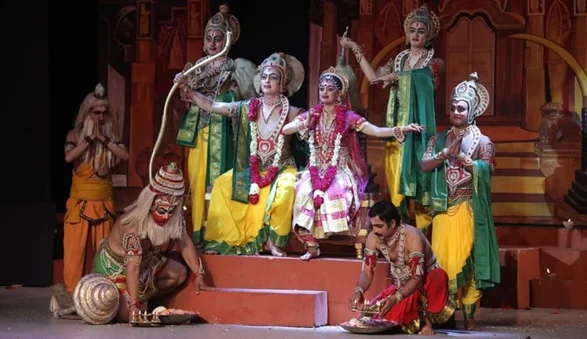
The Kala Sanskriti Vikas Yojana (KSVY) is a Central Sector Scheme implemented by the Ministry of Culture for the promotion, preservation, and development of India's rich cultural heritage.
Under the scheme, financial assistance is provided to eligible:
The scheme covers all States and Union Territories, including remote, tribal, and rural regions.
The scheme aims to:
Objective
To preserve traditional knowledge by supporting continuous training in performing arts under the Guru-Shishya tradition.
Coverage
Supports:
Financial Assistance
This component has six major sub-schemes.
Supports organizations that:
Grant Amount :-Up to ₹1 crore ,Exceptional cases: ₹5 crore
Supports:
Eligible Institutions
Grant :-Up to ₹5 lakh ,Exceptional cases: ₹20 lakh
Supports research, training and dissemination of Himalayan culture.
Applicable States
Grant
Supports:
Purpose:
Grant :-₹30 lakh annually ,Exceptional cases: ₹1 crore
Supports development of:
Grant
Supports organization of:
Implemented through:
Purpose:
Development of major cultural infrastructure such as:
Supports cultural research.
Eligibility
Fellowships
Financial Assistance
Duration: 2 years
Supports advanced training in:
Eligibility
Scholarships
Financial Assistance
Purpose:-Promote research in museums, archives, libraries and cultural institutions.
Financial Assistance
|
Category |
Assistance |
|
Fellowship |
₹80,000/month + Contingency |
|
Scholarship |
₹50,000/month + Contingency |
Duration: -Up to 2 years
Objective
Provide financial support to senior artists who have made significant contributions to art and culture.
Eligibility
Assistance
In case of the artist's death, assistance may be transferred to the spouse.
To preserve folk and tribal culture, the Government has established seven Zonal Cultural Centres.
|
Headquarters |
Zone |
|
Patiala |
North Zone |
|
Nagpur |
South Central Zone |
|
Udaipur |
West Zone |
|
Prayagraj |
North Central Zone |
|
Kolkata |
East Zone |
|
Dimapur |
North East Zone |
|
Thanjavur |
South Zone |
The Ministry of Culture has also formulated Rachnatmak Bharat, a cultural and creative economy initiative.
Q1. What is the Kala Sanskriti Vikas Yojana (KSVY)?Answer: Kala Sanskriti Vikas Yojana (KSVY) is a Central Sector Scheme implemented by the Ministry of Culture to promote, preserve, and develop India's rich art and cultural heritage by providing financial assistance to artists, cultural organizations, and institutions. Q2. Which ministry implements the Kala Sanskriti Vikas Yojana?Answer: The Ministry of Culture, Government of India, is the nodal ministry responsible for implementing the Kala Sanskriti Vikas Yojana. Q3. What are the main objectives of KSVY?Answer: The scheme aims to:
Q4. Who are the beneficiaries of the Kala Sanskriti Vikas Yojana?Answer: Beneficiaries include:
|
| Prelims: Government Schemes, Labour & Employment, Social Security, Current Affairs. GS Paper II: Welfare Schemes for Vulnerable Sections, Social Justice, Governance, Digital Governance. GS Paper III: Employment, Labour Reforms, Inclusive Growth, Financial Inclusion and Informal Economy. |
Registered workers can access:
Prelims Question: e-Shram PortalQ. With reference to the e-Shram Portal, consider the following statements:
Which of the statements given above is/are correct?
Mains Practice QuestionQ. Discuss the significance of the e-Shram Portal in extending social security coverage to India's unorganised workforce. |
Q1. What is the e-Shram Portal?Answer: The e-Shram Portal is a national digital platform launched by the Ministry of Labour and Employment to create a National Database of Unorganised Workers (NDUW) and facilitate access to social security and welfare schemes. Q2. When was the e-Shram Portal launched?Answer: The e-Shram Portal was launched on 26 August 2021. Q3. Who can register on the e-Shram Portal?Answer: Any unorganised worker aged 16–59 years, who is not a member of EPFO, ESIC, or the government-funded National Pension System (NPS), can register on the portal. Q4. What is the Universal Account Number (UAN)?Answer: The Universal Account Number (UAN) is a 12-digit unique identification number issued to every registered worker on the e-Shram Portal, enabling seamless access to government welfare schemes. |
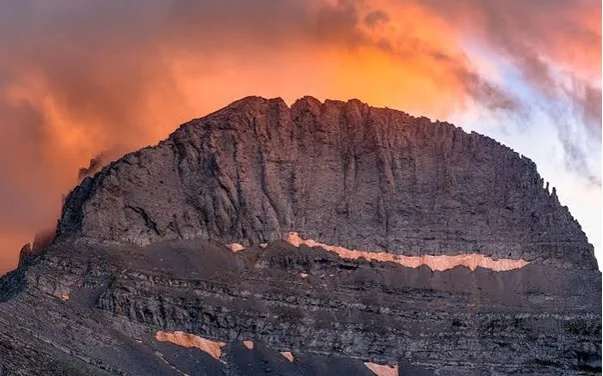
Mount Olympus, the legendary home of Zeus and the Twelve Olympian Gods, is under consideration for inscription on the UNESCO World Heritage List as a Mixed Heritage Site (Cultural + Natural). The proposal is being discussed by the World Heritage Committee in Busan, South Korea.
|
Aspect |
Details |
|---|---|
|
Country |
Greece |
|
Mountain Height |
2,918 m (9,573 ft) |
|
Highest Peak |
Mytikas |
|
UNESCO Status Sought |
Mixed World Heritage Site (Cultural & Natural) |
|
Committee Meeting |
Busan, South Korea |
|
Tentative List Since |
2014 |
|
Protected Area |
Mount Olympus National Park |
Greece wants Mount Olympus recognized as a Mixed Heritage Site because it possesses both:
|
Step |
Description |
|---|---|
|
1 |
Country places the site on its Tentative List |
|
2 |
Preliminary assessment |
|
3 |
Submission of a detailed nomination dossier |
|
4 |
Evaluation by ICOMOS (culture) & IUCN (nature) |
|
5 |
Decision by the 21-member World Heritage Committee |
The United Nations Educational, Scientific and Cultural Organization (UNESCO) identifies and protects sites of outstanding universal value.
UNESCO evaluates sites based on 10 criteria:
Prelims MCQQ. Mount Olympus, recently in the news for its proposed UNESCO World Heritage inscription, is best known for which of the following? A. It is believed in Greek mythology to be the home of Zeus and the Twelve Olympian Gods. UPSC Mains Practice Question (10 Marks)"Mount Olympus reflects the convergence of mythology, cultural heritage and biodiversity. Discuss the significance of UNESCO's Mixed World Heritage Sites in preserving both cultural traditions and natural ecosystems." |
1. Why is Mount Olympus in the news?It is being considered for inscription on UNESCO's World Heritage List as a Mixed Heritage Site. 2. Why is Mount Olympus famous?It is regarded in Greek mythology as the home of Zeus and the Twelve Olympian Gods. 3. Why is it considered a Mixed Heritage Site?Because it combines exceptional cultural heritage (mythology, archaeological sites, monasteries) with rich natural biodiversity. 4. What challenges does Mount Olympus face?Over-tourism, environmental degradation, visitor safety, and conservation of fragile ecosystems. 5. Which is India's only UNESCO Mixed World Heritage Site?Khangchendzonga National Park in Sikkim. |
| Prelims: WTO, Trade Policy Review (TPR), Trade Policy Review Body (TPRB), FTAs, GST, UPI, Global Trade Mains (GS II & GS III): International Institutions, WTO Reforms, India's Trade Policy, External Trade, Economic Reforms, Global Trade Governance Keywords: WTO 8th Trade Policy Review of India, WTO Trade Policy Review 2026, India WTO Review, Trade Policy Review Body (TPRB), Rajesh Agarwal, WTO, Free Trade Agreements (FTAs), GST Reforms, UPI, Trade Facilitation, Merchandise Exports, Services Exports, Viksit Bharat, Atmanirbhar Bharat, WTO Current Affairs, UPSC Economy |
India's 8th Trade Policy Review (TPR) at the World Trade Organization (WTO) is being held on 21 and 23 July 2026 in Geneva. The review examines India's trade policies and economic reforms undertaken during 1 January 2021 to 31 December 2025. The Indian delegation is led by Commerce Secretary Rajesh Agarwal. The review provides an opportunity for India to present its trade policy achievements, economic reforms, and future vision before WTO members.
The Trade Policy Review (TPR) is a transparency mechanism established by the WTO to periodically assess the trade policies and practices of its members.
Unlike the WTO's dispute settlement system, the TPR is not a legal or punitive mechanism. It is a peer-review process designed to improve transparency and policy understanding.
The Trade Policy Review is based on two principal documents:
Prepared by the Government of India, highlighting:
Prepared independently by the WTO Secretariat based on consultations and policy analysis.
Both reports are discussed by all WTO members during the Trade Policy Review Body (TPRB) meeting.
During the review period (2021–2025), India demonstrated remarkable economic resilience.
The review highlights several landmark reforms undertaken by India, including:
These reforms improve India's competitiveness in global trade.
India demonstrated strong economic resilience despite global economic uncertainties.
|
Year |
Merchandise & Services Exports |
|---|---|
|
2021–22 |
US$ 676.5 Billion |
|
2025–26 |
US$ 863.1 Billion |
India highlighted several reforms, including:
As of 20 July 2026, WTO members submitted more than 900 questions, reflecting global interest in India's growing economy.
Major themes include:
The review enables India to:
The Trade Policy Review Body (TPRB) consists of all WTO member countries.
The frequency of review depends on a member's share in world trade. India is reviewed once every five years.
|
Feature |
Details |
|---|---|
|
Established |
1 January 1995 |
|
Headquarters |
Geneva, Switzerland |
|
Successor |
General Agreement on Tariffs and Trade (GATT), 1947 |
|
Members |
166 |
|
Highest Decision-Making Body |
Ministerial Conference |
|
Daily Functioning |
General Council |
|
Transparency Mechanism |
Trade Policy Review Body (TPRB) |
|
Objective |
Promote rules-based, predictable and non-discriminatory global trade |
Many trading partners continue to impose:
These can restrict India's exports in sectors like:
UPSC Link: WTO Agreement on SPS & TBT
India's digital economy policies, including data localisation and digital governance frameworks, may attract discussions regarding:
UPSC Link: WTO E-Commerce Moratorium
Schemes such as the Production Linked Incentive (PLI) programme may be examined from the perspective of WTO subsidy disciplines.
Similarly, India's agricultural support policies often remain an important issue in WTO discussions.
UPSC Link:
Global trade is increasingly linked with:
Mechanisms such as the EU Carbon Border Adjustment Mechanism (CBAM) may influence India's future export competitiveness.
UPSC Link: WTO and Sustainable Development Goals (SDGs)
Ongoing geopolitical tensions and shifting supply chains continue to reshape global trade.
India must balance:
While protecting its export interests.
|
Particular |
Details |
|---|---|
|
Event |
WTO 8th Trade Policy Review of India |
|
Dates |
21 & 23 July 2026 |
|
Venue |
WTO Headquarters, Geneva, Switzerland |
|
Review Period |
1 January 2021 – 31 December 2025 |
|
Head of Indian Delegation |
Commerce Secretary Rajesh Agarwal |
|
Reviewing Body |
WTO Trade Policy Review Body (TPRB) |
|
Frequency of India's Review |
Once every 5 years |
|
Questions Received |
More than 900 from WTO Members |
|
Participating Members |
Over 40 WTO Members expected to deliver statements |
India's 8th WTO Trade Policy Review reflects the country's growing role in the global trading system and provides an opportunity to showcase its economic resilience, export performance, digital governance, and trade reforms. Going forward, deeper integration with global value chains, expansion of Free Trade Agreements, continued digitalisation of trade processes, and active participation in WTO reforms will strengthen India's position as a leading global trading nation while advancing the vision of Viksit Bharat.
|
Which of the following statements regarding the WTO Trade Policy Review (TPR) is/are correct?
Select the correct answer using the code below: (a) 1 and 2 only Practice Mains Question"The WTO Trade Policy Review strengthens transparency rather than enforcing trade rules. Discuss its significance for India's trade diplomacy and economic reforms." |
Q1. What is the WTO Trade Policy Review (TPR)?The TPR is a WTO mechanism that periodically reviews members' trade policies to improve transparency, predictability, and understanding of trade measures. Q2. How often is India's Trade Policy Review conducted?India's Trade Policy Review is conducted once every five years based on its share in global trade. Q3. Which period does India's 8th Trade Policy Review cover?It covers the period from 1 January 2021 to 31 December 2025. Q4. Who is leading India's delegation for the 8th Trade Policy Review?The Indian delegation is led by Commerce Secretary Rajesh Agarwal. Q5. Why is the WTO Trade Policy Review important?It enhances transparency, allows peer review of trade policies, builds investor confidence, and strengthens cooperation among WTO members. |

Our support team will be happy to assist you!

 Contact Us
  New Batch : 9555124124/ 7428085757
  Tech Support : 9555124124/ 7428085757