Why in News?
Mount Olympus, the legendary home of Zeus and the Twelve Olympian Gods, is under consideration for inscription on the UNESCO World Heritage List as a Mixed Heritage Site (Cultural + Natural). The proposal is being discussed by the World Heritage Committee in Busan, South Korea.
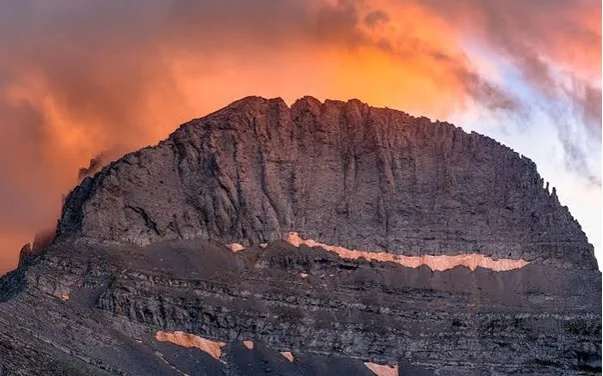
Key Highlights
|
Aspect
|
Details
|
|
Country
|
Greece
|
|
Mountain Height
|
2,918 m (9,573 ft)
|
|
Highest Peak
|
Mytikas
|
|
UNESCO Status Sought
|
Mixed World Heritage Site (Cultural & Natural)
|
|
Committee Meeting
|
Busan, South Korea
|
|
Tentative List Since
|
2014
|
|
Protected Area
|
Mount Olympus National Park
|
Why is Mount Olympus Important?
1. Birthplace of Greek Mythology
- Ancient Greeks believed Mount Olympus was the home of Zeus and the Twelve Olympian Gods.
- According to mythology, Zeus established his divine court here after defeating the Titans led by Cronus.
- The mountain became the symbolic center of Greek civilization and mythology.
2. A Sacred Religious Landscape
- Archaeologists discovered an open-air sanctuary dating to the Hellenistic Period (323–30 BC).
- Ancient worshippers climbed the mountain to offer sacrifices to Zeus.
- Later, Christianity added another spiritual layer:
- Prophet Elias Chapel (2,803 m)—believed to be the world's highest Greek Orthodox chapel.
- Monastery of St. Dionysios (1542).
- Holy Cave of St. Dionysios, an important pilgrimage site.
3. Extraordinary Biodiversity
- Olympus rises almost directly from the Aegean Sea, creating unique ecosystems.
- Home to:
- Endemic plant species.
- Rare wildlife.
- Alpine forests.
- Rocky peaks and diverse habitats.
- The mountain is already protected as Greece's first National Park (1938).
Why is Greece Seeking UNESCO Status?
Greece wants Mount Olympus recognized as a Mixed Heritage Site because it possesses both:
Cultural Value
- Greek mythology.
- Ancient sanctuaries.
- Byzantine monasteries.
- Orthodox religious heritage.
Natural Value
- Exceptional biodiversity.
- Unique mountain ecosystems.
- Rare endemic flora and fauna.
- Outstanding scenic beauty.
UNESCO World Heritage Nomination Process
|
Step
|
Description
|
|
1
|
Country places the site on its Tentative List
|
|
2
|
Preliminary assessment
|
|
3
|
Submission of a detailed nomination dossier
|
|
4
|
Evaluation by ICOMOS (culture) & IUCN (nature)
|
|
5
|
Decision by the 21-member World Heritage Committee
|
Challenges before Approval
- UNESCO may ask Greece to provide additional information before granting final approval.
- Increased tourism could:
- Damage fragile ecosystems.
- Increase pollution.
- Pressure local infrastructure.
- Authorities are considering:
- Visitor registration.
- Entry regulations.
- Better conservation measures.
Mount Olympus: Tourism Vs Conservation
Benefits
- International recognition.
- Increased tourism revenue.
- Better conservation funding.
- Preservation of cultural heritage.
- Greater global awareness.
Concerns
- Over-tourism.
- Environmental degradation.
- Waste management.
- Pressure on biodiversity.
- Safety risks for hikers.
Interesting Facts about Mount Olympus
- Highest mountain in Greece.
- Highest peak: Mytikas (2,918 m).
- Home of Zeus according to Greek mythology.
- Greece's first National Park.
- Contains one of the world's highest Orthodox chapels.
- Mentioned in Homer's Iliad and Odyssey.
- Receives thousands of trekkers every year.
About UNESCO World Heritage Sites
What is UNESCO?
The United Nations Educational, Scientific and Cultural Organization (UNESCO) identifies and protects sites of outstanding universal value.
Types of World Heritage Sites
- Cultural Heritage
- Natural Heritage
- Mixed Heritage (both cultural and natural)
Selection Criteria
UNESCO evaluates sites based on 10 criteria:
- First 6 relate to cultural importance.
- Last 4 relate to natural significance.
- A site must satisfy at least one criterion.
Way Forward
- Strengthen Conservation: Implement stricter measures to protect Mount Olympus' fragile ecosystems, endemic species, and archaeological sites.
- Promote Sustainable Tourism: Introduce visitor management systems such as regulated entry, online permits, designated trekking routes, and carrying-capacity limits to prevent over-tourism.
- Preserve Cultural Heritage: Conserve ancient sanctuaries, monasteries, chapels, and other historical monuments through scientific restoration and regular monitoring.
- Enhance Community Participation: Involve local communities, trekking associations, and conservation groups in heritage management and eco-tourism initiatives.
- Improve Visitor Awareness: Conduct educational campaigns on responsible trekking, waste management, and respect for both natural and cultural heritage.
- Strengthen UNESCO Compliance: Continue research, documentation, and management planning to address UNESCO's recommendations and improve the chances of inscription as a Mixed World Heritage Site.
Prelims MCQ
Q. Mount Olympus, recently in the news for its proposed UNESCO World Heritage inscription, is best known for which of the following?
A. It is believed in Greek mythology to be the home of Zeus and the Twelve Olympian Gods.
B. It is the highest mountain in Europe and lies in the Alps.
C. It is a UNESCO Biosphere Reserve located in Italy.
D. It is the birthplace of the Olympic Games.
UPSC Mains Practice Question (10 Marks)
"Mount Olympus reflects the convergence of mythology, cultural heritage and biodiversity. Discuss the significance of UNESCO's Mixed World Heritage Sites in preserving both cultural traditions and natural ecosystems."
|
FAQs
1. Why is Mount Olympus in the news?
It is being considered for inscription on UNESCO's World Heritage List as a Mixed Heritage Site.
2. Why is Mount Olympus famous?
It is regarded in Greek mythology as the home of Zeus and the Twelve Olympian Gods.
3. Why is it considered a Mixed Heritage Site?
Because it combines exceptional cultural heritage (mythology, archaeological sites, monasteries) with rich natural biodiversity.
4. What challenges does Mount Olympus face?
Over-tourism, environmental degradation, visitor safety, and conservation of fragile ecosystems.
5. Which is India's only UNESCO Mixed World Heritage Site?
Khangchendzonga National Park in Sikkim.
|






 Contact Us
  New Batch : 9555124124/ 7428085757
  Tech Support : 9555124124/ 7428085757