Why in News?
Recently, the Union Minister for Culture informed the Lok Sabha about the implementation of the Kala Sanskriti Vikas Yojana (KSVY), highlighting its role in promoting India's cultural heritage, supporting artists, preserving traditional art forms, and strengthening the country's cultural and creative economy.
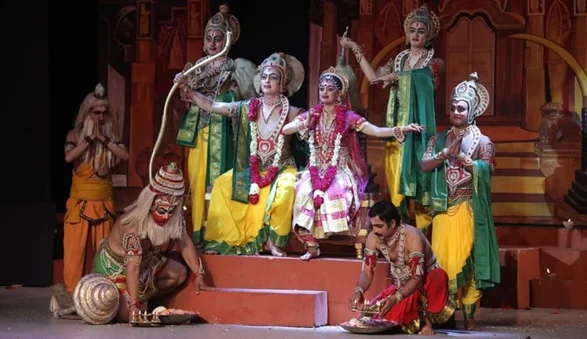
Kala Sanskriti Vikas Yojana (KSVY)
The Kala Sanskriti Vikas Yojana (KSVY) is a Central Sector Scheme implemented by the Ministry of Culture for the promotion, preservation, and development of India's rich cultural heritage.
Under the scheme, financial assistance is provided to eligible:
- Individual artists
- Cultural organizations
- NGOs
- Trusts
- Universities
- Performing arts groups
- Tribal and folk artists
- Cultural institutions
The scheme covers all States and Union Territories, including remote, tribal, and rural regions.
Objectives of KSVY
The scheme aims to:
- Preserve India's tangible and intangible cultural heritage.
- Promote performing, visual, literary, folk, and tribal arts.
- Strengthen the Guru-Shishya tradition.
- Provide financial support to artists and cultural institutions.
- Develop cultural infrastructure.
- Encourage research and documentation of cultural heritage.
- Improve access to cultural opportunities across India.
- Generate sustainable livelihoods for artists.
- Promote India's cultural diversity nationally and internationally.
Funding Pattern
- Type of Scheme: Central Sector Scheme
- Nodal Ministry: Ministry of Culture
- Funding Source: Consolidated Fund of India
- Financial assistance is released through annual budgetary allocations.
Major Components of Kala Sanskriti Vikas Yojana
1. Financial Assistance for Promotion of Guru-Shishya Parampara (Repertory Grant)
Objective
To preserve traditional knowledge by supporting continuous training in performing arts under the Guru-Shishya tradition.
Coverage
Supports:
- Theatre groups
- Dance academies
- Music ensembles
- Children's theatre
- Performing arts institutions
Financial Assistance
- Guru: ₹15,000 per month
- Up to 18 Shishyas
- Shishyas: ₹2,000–₹10,000 per month (depending on age)
2. Financial Assistance for Promotion of Art and Culture
This component has six major sub-schemes.
(a) Financial Assistance to Cultural Organizations with National Presence
Supports organizations that:
- Have pan-India operations
- Are registered in India
- Have spent ₹1 crore or more on cultural activities in at least three of the previous five years
Grant Amount :-Up to ₹1 crore ,Exceptional cases: ₹5 crore
(b) Cultural Function and Production Grant (CFPG)
Supports:
- Seminars
- Conferences
- Workshops
- Festivals
- Exhibitions
- Dance productions
- Theatre
- Music programmes
- Research projects
Eligible Institutions
- NGOs
- Societies
- Trusts
- Universities
Grant :-Up to ₹5 lakh ,Exceptional cases: ₹20 lakh
(c) Financial Assistance for Preservation & Development of Cultural Heritage of the Himalayas
Supports research, training and dissemination of Himalayan culture.
Applicable States
- Jammu & Kashmir
- Himachal Pradesh
- Uttarakhand
- Sikkim
- Arunachal Pradesh
Grant
- ₹10 lakh annually
- Exceptional cases: ₹30 lakh
(d) Financial Assistance for Buddhist/Tibetan Organizations
Supports:
- Buddhist monasteries
- Tibetan cultural organizations
- Research institutions
Purpose:
- Preservation of Buddhist and Tibetan traditions
- Research
- Cultural propagation
Grant :-₹30 lakh annually ,Exceptional cases: ₹1 crore
(e) Financial Assistance for Building Grants (Including Studio Theatres)
Supports development of:
- Auditoriums
- Studio theatres
- Rehearsal halls
- Classrooms
- Sound and lighting systems
- Air-conditioning
- Acoustics
Grant
- Metro cities: Up to ₹50 lakh
- Non-metro cities: Up to ₹25 lakh
(f) Domestic Festivals and Fairs
Supports organization of:
- Rashtriya Sanskriti Mahotsav (RSM)
Implemented through:
- Seven Zonal Cultural Centres (ZCCs)
Purpose:
- Showcase India's diverse cultural traditions.
- Provide platforms to artists nationwide.
3. Financial Assistance for Construction of Tagore Cultural Complexes (TCC)
Objective
Development of major cultural infrastructure such as:
- Auditoriums
- Exhibition halls
- Seminar halls
- Green rooms
- Cultural centres
- Rabindra Bhawans
- Rangshalas
Eligible Institutions
- State Governments
- UT Administrations
- Universities
- Municipal Corporations
- NGOs
- Trusts
- Government bodies
Financial Assistance
- Maximum project support: ₹15 crore
Funding Pattern
- North Eastern Region (NER): 90:10 (Centre : State/Institution)
- Other States: 60:40 (Centre : State/Institution)
4. Scholarship and Fellowship for Promotion of Art and Culture
(a) Fellowship to Outstanding Persons
Supports cultural research.
Eligibility
- Junior Fellowship: 25–40 years
- Senior Fellowship: Above 40 years
Fellowships
Financial Assistance
- Junior: ₹10,000/month
- Senior: ₹20,000/month
Duration: 2 years
(b) Scholarships to Young Artists
Supports advanced training in:
- Classical Music
- Classical Dance
- Theatre
- Mime
- Folk Arts
- Indigenous Arts
- Visual Arts
- Light Classical Music
Eligibility
Scholarships
Financial Assistance
(c) Tagore National Fellowship for Cultural Research
Purpose:-Promote research in museums, archives, libraries and cultural institutions.
Financial Assistance
|
Category
|
Assistance
|
|
Fellowship
|
₹80,000/month + Contingency
|
|
Scholarship
|
₹50,000/month + Contingency
|
Duration: -Up to 2 years
5. Financial Assistance for Veteran Artists
Objective
Provide financial support to senior artists who have made significant contributions to art and culture.
Eligibility
- Age: 60 years or above
- Annual income: Not exceeding ₹72,000
Assistance
In case of the artist's death, assistance may be transferred to the spouse.
Other Components under KSVY
- Seva Bhoj Yojana
- National Gandhi Heritage Site Mission
- National Award Scheme
Key Features of KSVY
- Financial assistance to artists and institutions.
- Promotion of Guru-Shishya Parampara.
- Preservation of tribal and folk culture.
- Promotion of performing and visual arts.
- Cultural infrastructure development.
- Scholarships and fellowships.
- Protection of intangible cultural heritage.
- Pan-India implementation.
- Inclusive support for women, tribal and rural artists.
- Promotion of cultural research and documentation.
Zonal Cultural Centres (ZCCs)
To preserve folk and tribal culture, the Government has established seven Zonal Cultural Centres.
|
Headquarters
|
Zone
|
|
Patiala
|
North Zone
|
|
Nagpur
|
South Central Zone
|
|
Udaipur
|
West Zone
|
|
Prayagraj
|
North Central Zone
|
|
Kolkata
|
East Zone
|
|
Dimapur
|
North East Zone
|
|
Thanjavur
|
South Zone
|
Functions
- Organize festivals
- Workshops
- Exhibitions
- Cultural exchange programmes
- Folk performances
- Artist promotion
Rachnatmak Bharat Initiative
The Ministry of Culture has also formulated Rachnatmak Bharat, a cultural and creative economy initiative.
Objectives
- Capacity building
- Digital enablement
- Market access
- Innovation
- Institutional strengthening
- Support for emerging artists
- Sustainable creative economy
Significance of KSVY
- Preserves India's cultural heritage.
- Strengthens traditional knowledge systems.
- Promotes tribal and folk art forms.
- Generates employment for artists.
- Encourages cultural tourism.
- Supports research and innovation in culture.
- Develops world-class cultural infrastructure.
- Promotes cultural diplomacy and India's soft power.
- Enhances the creative economy.
- Ensures inclusive cultural development across the country.
Challenges
- Limited awareness among grassroots artists.
- Delays in fund disbursement.
- Uneven regional participation.
- Difficulty in monitoring outcomes.
- Need for greater digital outreach.
- Inadequate documentation of traditional art forms.
Way Forward
- Increase awareness through digital campaigns.
- Simplify application and grant procedures.
- Strengthen monitoring and evaluation.
- Expand support for tribal and rural artists.
- Promote public-private partnerships.
- Digitally archive endangered art forms.
- Integrate KSVY with tourism, education, and the creative economy.
- Encourage international cultural collaborations.
FAQs: Kala Sanskriti Vikas Yojana (KSVY)
Q1. What is the Kala Sanskriti Vikas Yojana (KSVY)?
Answer: Kala Sanskriti Vikas Yojana (KSVY) is a Central Sector Scheme implemented by the Ministry of Culture to promote, preserve, and develop India's rich art and cultural heritage by providing financial assistance to artists, cultural organizations, and institutions.
Q2. Which ministry implements the Kala Sanskriti Vikas Yojana?
Answer: The Ministry of Culture, Government of India, is the nodal ministry responsible for implementing the Kala Sanskriti Vikas Yojana.
Q3. What are the main objectives of KSVY?
Answer: The scheme aims to:
- Preserve India's cultural heritage.
- Promote performing, visual, folk, and tribal arts.
- Strengthen the Guru-Shishya Parampara.
- Develop cultural infrastructure.
- Support artists and cultural organizations through financial assistance.
Q4. Who are the beneficiaries of the Kala Sanskriti Vikas Yojana?
Answer: Beneficiaries include:
- Individual artists
- Cultural organizations
- NGOs and Trusts
- Universities
- Folk and tribal artists
- Performing arts groups
- Cultural institutions across India
|







 Contact Us
  New Batch : 9555124124/ 7428085757
  Tech Support : 9555124124/ 7428085757