Current Affairs for 21 October 2026

SCO Civilisational Dialogue Forum 2026: India’s Initiative for Cultural Cooperation and People-to-People Ties

Prelims: Shanghai Cooperation Organisation (SCO), Civilisational Dialogue Forum, Council of Heads of State, Council of Heads of Government, Cultural Diplomacy.
Mains: GS Paper II International Relations, Regional Groupings and India’s Foreign Policy; GS Paper I Indian Culture and Civilisational Linkages.
Keywords: SCO Civilisational Dialogue Forum 2026, India–SCO Relations, Rajnath Singh, Dushanbe Meeting, Cultural Diplomacy, People-to-People Ties, Security, Connectivity and Opportunity.

Why in News?

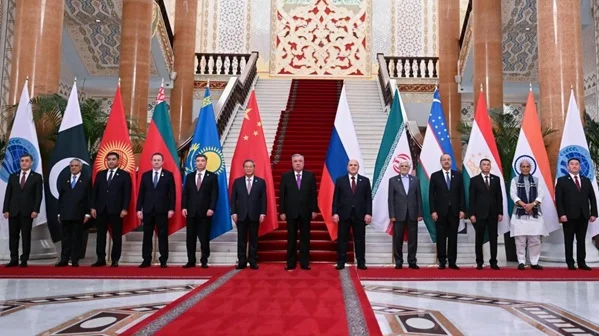
  • On 20 October 2026, Defence Minister Rajnath Singh announced that India would host the first SCO Civilisational Dialogue Forum by the end of 2026.
  • He invited member countries to participate while addressing the 25th SCO Council of Heads of Government meeting in Dushanbe, Tajikistan.
  • The initiative aims to strengthen cultural engagement and people-to-people ties among SCO countries.
  • This is an announcement of a forthcoming event; the cited release does not specify its exact dates or host city. 

How Did the Initiative Emerge?

  • Prime Minister Narendra Modi proposed establishing a Civilisational Dialogue Forum under the SCO at the Tianjin Summit in 2025.
  • The proposal envisaged a platform to showcase the richness of ancient civilisations, art, literature and traditions.
  • It builds on India’s emphasis on connecting SCO cooperation with scholars, young scientists, start-ups and wider society.
  • During India’s SCO presidency in 2023, areas such as shared Buddhist heritage, traditional medicine, innovation and youth engagement received greater attention.

What Is the SCO Civilisational Dialogue Forum?

The forum is an Indian initiative under the SCO framework intended to deepen mutual understanding through cultural and civilisational exchanges.

Its central objectives include:

  • People-to-people engagement: Strengthening connections beyond government-level interaction.
  • Cultural understanding: Encouraging appreciation of different histories, traditions and ways of life.
  • Heritage exchange: Providing visibility to the region’s ancient civilisations, literature and artistic traditions.
  • Dialogue and cooperation: Using shared cultural interests to support sustained engagement among societies.

Specific activities and institutional arrangements will depend on the programme announced for the inaugural edition.

About the Shanghai Cooperation Organisation

Aspect

Details

Nature

An intergovernmental organisation promoting regional cooperation

Established

15 June 2001, in Shanghai, China

Origins

Evolved from the Shanghai Five mechanism

Secretariat

Beijing, China

India’s membership

Full member since 2017

Major areas of cooperation

Security, economic cooperation, connectivity and cultural exchanges

The SCO provides an institutional framework for cooperation across a substantial part of Eurasia. 

Two Important SCO Councils

SCO body

Principal role

Council of Heads of State

Determines the organisation’s priorities and overall direction

Council of Heads of Government

Discusses economic cooperation and approves the organisation’s budget

Key Outcomes of the Dushanbe Meeting

Alongside the cultural initiative, the meeting addressed practical cooperation among member countries.

  • Joint communiqué: Heads of delegations adopted the communiqué of the 25th Council of Heads of Government meeting.
  • SCO budget: Decisions included approval of the organisation’s budget for 2027 and related financial and administrative measures.
  • Economic cooperation: The meeting adopted the PMTEC Action Plan for 2026–2030, concerning the Programme of Multilateral Trade and Economic Cooperation.
  • Sectoral engagement: Discussions covered transport, finance, the digital economy and social development. 

India’s Vision: Security, Connectivity and Opportunity

India’s approach to SCO cooperation rests on three mutually reinforcing priorities:

Pillar

Focus

Importance

Security

Peace, stability and action against terrorism

Creates conditions for investment and development

Connectivity

Transport links, trade facilitation and regional access

Connects markets and reduces barriers to economic exchange

Opportunity

Benefits for youth, entrepreneurs, farmers and small businesses

Makes regional cooperation relevant to everyday life

The Civilisational Dialogue Forum complements this approach by strengthening the social and cultural relationships that can sustain cooperation.

Significance of the Civilisational Dialogue Forum

  1. Strengthening Cultural Diplomacy: Cultural diplomacy uses heritage, art, language and intellectual exchanges to improve understanding between societies. The forum could provide a sustained platform for these interactions.
  2. Building Mutual Understanding: Exchanges among scholars, artists and young people can help reduce stereotypes and improve familiarity with neighbouring societies.
  3. Expanding the SCO’s Public Reach: The initiative could make the organisation more visible to citizens by connecting diplomatic engagement with cultural participation.
  4. Supporting Heritage Cooperation: Joint research, translations, museum collaborations and heritage documentation could become useful areas of future cooperation.

Challenges

  • Political differences: Disagreements among member countries may affect participation and continuity.
  • Symbolic outcomes: A single event may have limited impact without follow-up projects.
  • Language barriers: Meaningful exchanges require translation and accessible communication.
  • Uneven participation: Smaller institutions and less-resourced cultural communities may struggle to participate.
  • Competing historical narratives: Discussions must accommodate diverse interpretations of shared history.

Way Forward

  • Develop a continuing programme: Link the inaugural forum with regular exchanges and follow-up meetings.
  • Promote joint projects: Encourage translations, collaborative research and digital heritage collections.
  • Prioritise youth participation: Include students, early-career researchers and young cultural practitioners.
  • Ensure diversity: Represent different languages, regions, communities and cultural traditions.
  • Measure practical outcomes: Track sustained partnerships, completed projects and public participation.

Conclusion

The SCO Civilisational Dialogue Forum offers India an opportunity to strengthen cultural cooperation across Eurasia. Its lasting value will depend on turning dialogue into sustained exchanges, inclusive participation and practical partnerships that connect people across national boundaries.

Prelims MCQ

Which country will host the first SCO Civilisational Dialogue Forum announced for 2026?

(a) China
(b) India
(c) Tajikistan
(d) Russia 

Mains Practice Question

“Cultural diplomacy can complement strategic and economic cooperation within regional organisations.” Discuss with reference to India’s proposed SCO Civilisational Dialogue Forum.

FAQs

1. What is the SCO Civilisational Dialogue Forum?

It is an initiative under the SCO framework to promote cultural understanding and strengthen people-to-people ties through civilisational exchanges.

2. Which country will host its inaugural edition?

India will host the inaugural edition by the end of 2026, according to the announcement.

3. Who proposed the forum?

Prime Minister Narendra Modi proposed it at the SCO Summit in Tianjin in 2025.

4. Where was the hosting announcement made?

Rajnath Singh made the announcement at the SCO Council of Heads of Government meeting in Dushanbe, Tajikistan, on 20 October 2026.

5. What are India’s three key priorities for SCO cooperation?

India emphasises Security, Connectivity and Opportunity, with cooperation delivering tangible benefits to people.

Delhi Winter Action Plan 2026–27: 10-Point Strategy to Curb Air Pollution

Prelims: BS-VI Emission Standards, Pollution Under Control Certificate (PUCC), CAQM, CPCB, PM2.5, PM10, Temperature Inversion.
Mains: GS Paper II—Governance and Intergovernmental Coordination; GS Paper III—Environmental Pollution, Urban Transport and Sustainable Development.
Keywords: Delhi Winter Action Plan 2026–27, Delhi Air Pollution, No PUC No Fuel, BS-VI Vehicles, Construction Restrictions, Work from Home, Clean Mobility.

Why in News?

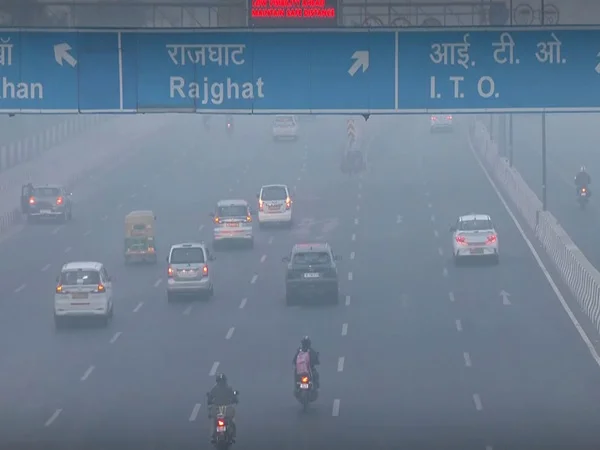
  • On 20 October 2026, Chief Minister Rekha Gupta announced Delhi’s 10-point Winter Action Plan for 2026–27.
  • The plan covers 1 November 2026 to 28 February 2027, with different implementation periods for specific measures.
  • Major interventions include restrictions on polluting vehicles, ‘No PUC, No Fuel’, work-from-home arrangements, higher parking charges and construction controls.
  • Implementation will involve the Centre, Delhi government, CAQM, CPCB, local bodies, Delhi Police and DMRC.

Why Does Delhi’s Air Pollution Worsen in Winter?

Delhi’s winter pollution results from the interaction of emissions and unfavourable weather conditions.

  • Temperature inversion: A layer of warmer air above cooler surface air restricts vertical mixing, allowing pollutants to accumulate near the ground.
  • Low wind speed: Weak winds reduce the dispersion of pollutants.
  • Shallow mixing layer: Pollutants become concentrated within a smaller volume of air.
  • Multiple emission sources: Vehicles, industries, construction dust, road dust, waste burning and seasonal agricultural burning contribute to pollution.

Key Points: Major Measures under the Plan

The announced measures can be understood under the following ten broad heads:

Measure

Main provision

1. Restrictions on polluting vehicles

Entry restrictions on vehicles registered outside Delhi that fall below BS-VI standards, with exemptions for CNG and electric vehicles.

2. ‘No PUC, No Fuel’

Denial of fuel to vehicles without a valid Pollution Under Control Certificate.

3. Construction and demolition controls

Restrictions on dust-generating activities, followed by a broader construction ban during the peak winter period.

4. Technology-based monitoring

AI-enabled monitoring and CCTV surveillance to strengthen compliance at construction sites.

5. Work-from-home arrangements

A 50% work-from-home arrangement to reduce commuting and vehicular emissions.

6. Staggered office timings

Different office schedules to distribute traffic demand and reduce congestion.

7. Higher parking charges

Doubling charges at authorised parking facilities, with Metro parking excluded.

8. Promotion of public transport

Greater emphasis on electric buses, Metro services, last-mile connectivity and carpooling.

9. Road-dust management

Mechanised sweeping, water sprinkling, road improvements and intensive cleaning.

10. Control of other pollution sources

Action against waste burning and polluting industrial units, supported by hotspot monitoring and public participation.

These measures combine restrictions on emissions with cleaner transport alternatives and stronger enforcement.

Important Implementation Dates

Component

Announced period

Overall Winter Action Plan

1 November 2026–28 February 2027

Entry restrictions on specified non-Delhi vehicles

1 November 2026–31 January 2027, according to the Chief Minister’s announcement

Ban on dust-generating demolition and outdoor civil construction

1 November 2026–31 January 2027

Broader ban on construction and demolition

10 December 2026–20 January 2027

The overall plan and individual restrictions have different timelines. Applicable exemptions and operational requirements must be read alongside the relevant implementation orders.

Understanding the Key Terms

Bharat Stage VI: BS-VI

  • Bharat Stage standards prescribe permissible limits for pollutants emitted by motor vehicles.
  • BS-VI imposes tighter emission requirements than earlier Bharat Stage norms.
  • Compliance does not mean that a vehicle produces no pollution.

Pollution under Control Certificate: PUCC

  • A PUCC records whether a vehicle meets prescribed emission limits during testing.
  • A valid certificate supports the monitoring of vehicles already in use.
  • BS-VI compliance and a valid PUCC serve different purposes: one concerns emission standards, while the other checks in-use emission compliance.

PM2.5 and PM10

  • PM2.5: Particulate matter with an aerodynamic diameter of 2.5 micrometres or less.
  • PM10: Particulate matter with an aerodynamic diameter of 10 micrometres or less.
  • Combustion emissions and dust are important contributors to particulate pollution.

Significance of the Plan

  1. Advance Preparation: Announcing restrictions before peak winter creates time for agencies, businesses and residents to prepare.
  2. Integrated Pollution Management: The plan addresses transport emissions, construction dust, road dust, waste burning and industrial pollution together.
  3. Cleaner Urban Mobility: Public transport, carpooling and flexible working arrangements can reduce dependence on private vehicles.
  4. Stronger Accountability: Technology-supported monitoring and inter-agency coordination can improve the detection of violations and follow-up action.

Relevance for India

  • Urban governance: Delhi’s experience can inform pollution-control strategies in other Indian cities.
  • Regional cooperation: Air pollution crosses administrative boundaries, making coordination across the National Capital Region essential.
  • Sustainable development: Cleaner transport and better waste management support long-term urban sustainability.
  • Policy integration: Air-quality planning needs to be connected with transport, housing, energy and industrial policies.

Major Challenges

  • Enforcement gaps: Restrictions require reliable inspections, functioning monitoring systems and consistent action.
  • Public transport capacity: Commuters need affordable and accessible alternatives before reducing private vehicle use.
  • Livelihood concerns: Construction restrictions can affect daily-wage workers and small contractors.
  • Unequal feasibility of remote work: Manufacturing, retail, transport and essential services cannot readily adopt work from home.
  • Regional pollution sources: Measures within Delhi alone cannot control emissions across the wider airshed.
  • Seasonal dependence: Temporary winter restrictions cannot replace year-round emission reduction.

Way Forward

  • Adopt an airshed-based approach, coordinating action across Delhi and neighbouring states.
  • Strengthen bus services, Metro connectivity and safe walking access to public transport.
  • Improve the reliability of emission testing and digital compliance systems.
  • Combine construction restrictions with worker support and better dust-management practices.
  • Publish measurable outcomes, including compliance levels and changes in pollution concentrations.
  • Maintain year-round action against industrial emissions, waste burning and road dust.

Conclusion

Delhi’s Winter Action Plan 2026–27 brings together preventive restrictions, cleaner mobility and coordinated enforcement. Its effectiveness will depend on timely implementation, public cooperation and adequate alternatives for affected commuters and workers. Lasting improvement requires these seasonal measures to form part of a broader, year-round regional clean-air strategy.

Prelims MCQ

Which atmospheric condition commonly aggravates winter air pollution in Delhi?

(a) Strong surface winds
(b) Temperature inversion
(c) Intense vertical mixing
(d) Frequent heavy rainfall

Mains Question

“Seasonal restrictions alone cannot resolve Delhi’s air pollution crisis.” Discuss the need for an integrated, airshed-based approach to urban air-quality management.

FAQs

1. What is Delhi’s Winter Action Plan 2026–27?

It is a seasonal pollution-control programme combining vehicle restrictions, construction controls, cleaner transport, flexible working arrangements and stronger enforcement.

2. When will the plan operate?

The overall plan covers 1 November 2026 to 28 February 2027, although individual restrictions have separate timelines.

3. What does ‘No PUC, No Fuel’ mean?

It means vehicles without a valid Pollution Under Control Certificate will be denied fuel under the announced policy.

4. Are CNG and electric vehicles covered by the announced entry restriction?

CNG and electric vehicles are exempt from the announced restriction targeting vehicles registered outside Delhi that fall below BS-VI standards.

5. Why does the plan include work from home?

Work from home is intended to reduce daily commuting, traffic congestion and associated vehicular emissions.

UNESCO Adds Three Indian Sites to Its Tentative World Heritage List in 2026

Prelims: UNESCO Tentative List 2026
Mains: GS Paper I: Indian Heritage, Culture, Ancient History and Archaeological Sites.GS Paper III: Biodiversity Conservation, Environmental Conservation and Protection of Natural Resources.
Keywords: Three New Indian Sites in UNESCO Tentative List, UNESCO World Heritage Sites India, Baratang Mud Volcano, Andaman Subduction Volcanoes, Sirpur Archaeological Site, UNESCO Tentative List India.

Why in News?

  • UNESCO’s World Heritage Centre has added three Indian sites to its Tentative List in September 2026: the Baratang Karst-Mud-Volcano Complex and Andaman Subduction Volcanoes in the Andaman and Nicobar Islands, and the Sirpur Cultural and Archaeological Landscape in Chhattisgarh. 
  • This inclusion is an initial step toward their possible nomination for UNESCO World Heritage status.
  • The announcement was made on October 20, 2026, according to recent reports.

Which Three Indian Sites Have Been Added to UNESCO’s Tentative List?

The Permanent Delegation of India to UNESCO proposed these three sites on September 28, 2026.

1. Baratang Karst-Mud-Volcano Complex

Location: Andaman and Nicobar Islands

Category: Natural Heritage

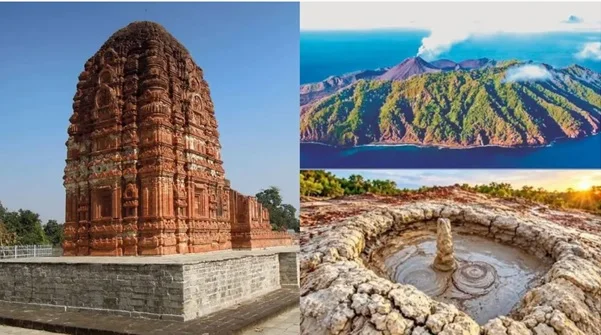
Baratang Island, located in the Bay of Bengal, is known for its limestone caves, karst formations and mud volcanoes.

  • Limestone caves: Formed when water dissolves soluble rocks over long periods.
  • Karst landscape: Includes underground caves, cracks and distinctive rock formations.
  • Mud volcanoes: Release mud, water and gases instead of molten lava.

The mud volcanoes are associated with underground sediment and geological processes. According to the information provided in the nomination document, these mud volcanoes became active again in 2025 after a long period of inactivity.

2. Andaman Subduction Volcanoes

Location: Andaman and Nicobar Islands

Category: Natural Heritage

This proposed site includes Barren Island and Narcondam Island, two volcanic islands in the Andaman Sea. They help explain volcanic activity associated with the movement of tectonic plates in the region.

  • Barren Island: Known for its active volcano, lava formations and volcanic caldera.
  • Narcondam Island: Known for its distinctive volcanic geology and rich biodiversity. It is also recognised as an Important Bird Area and a Key Biodiversity Area.

The site is significant for understanding tectonic activity, volcanic processes and the relationship between geological features and biodiversity.

3. Sirpur Cultural and Archaeological Landscape

Location: Mahasamund district, Chhattisgarh

Category: Cultural Heritage

Sirpur is a historic settlement located on the eastern bank of the Mahanadi River, approximately 78 kilometres from Raipur. It is known for its archaeological remains and evidence of ancient urban life, trade and religious traditions.

Key features of Sirpur include:

  • Religious heritage: Historical monuments associated with Hinduism and Buddhism.
  • Trade and urbanisation: Archaeological evidence of historic trade networks and settlement development.
  • Cultural diversity: Evidence of interactions among different religious traditions.
  • Historical landscape: The relationship between the settlement, the Mahanadi River and its natural surroundings.

Sirpur provides valuable insights into the region’s historical development, religious interactions and cultural heritage.

What Is UNESCO’s Tentative List?

  • UNESCO’s Tentative List is an inventory of natural and cultural sites that a country considers suitable for possible nomination to the World Heritage List.
  • Inclusion in this list is an important preliminary step, but it does not mean that a site has received World Heritage status.

How Does a Site Become a UNESCO World Heritage Site?

The process generally involves four stages:

  1. Tentative List: The country identifies sites that may qualify for World Heritage status.
  2. Nomination: The country submits a detailed nomination dossier.
  3. Evaluation: The nomination is assessed by the relevant advisory bodies.
  4. Inscription: The UNESCO World Heritage Committee decides whether to include the site in the World Heritage List.

A site must demonstrate Outstanding Universal Value and meet the applicable criteria to be inscribed on the World Heritage List.

Why Are These Three Sites Important?

The inclusion of these sites highlights different aspects of India’s natural and cultural heritage.

  • Geological significance: Baratang and the Andaman volcanic islands offer insights into caves, mud volcanoes and tectonic processes.
  • Biodiversity conservation: The Andaman volcanic landscape supports distinctive ecosystems and wildlife.
  • Cultural heritage: Sirpur reflects ancient trade, urban development and religious diversity.
  • International recognition: The Tentative List provides a pathway for India to seek global recognition for these sites.

Conclusion

The addition of the three sites to UNESCO’s Tentative List highlights India’s diverse geological formations and historical heritage. Baratang and the Andaman Subduction Volcanoes represent the country’s natural heritage, while Sirpur reflects its rich archaeological and cultural traditions. Their inclusion is an initial step toward possible World Heritage recognition and may help strengthen awareness of their conservation needs.

Prelims Practice Question 

Q. Consider the following statements regarding the three Indian sites added to UNESCO’s Tentative List in 2026:

  1. The Baratang Karst-Mud-Volcano Complex is located in the Andaman and Nicobar Islands.
  2. The Andaman Subduction Volcanoes include Barren Island and Narcondam Island.
  3. The Sirpur Cultural and Archaeological Landscape is located in Odisha.

Which of the statements given above is/are correct?

(a) 1 and 2 only

(b) 2 and 3 only

(c) 1 and 3 only

(d) 1, 2 and 3

Mains Practice Question

“India’s natural and cultural heritage reflects its geological diversity and historical richness.” Discuss the significance of UNESCO’s Tentative List in promoting heritage conservation in India.

FAQs

1. Which three Indian sites were added to UNESCO’s Tentative List in 2026?

The Baratang Karst-Mud-Volcano Complex, Andaman Subduction Volcanoes and Sirpur Cultural and Archaeological Landscape.

2. Which of the three sites are natural heritage sites?

The Baratang Karst-Mud-Volcano Complex and Andaman Subduction Volcanoes are proposed as natural heritage sites.

3. Where is the Sirpur Cultural and Archaeological Landscape located?

It is located in Mahasamund district of Chhattisgarh, near the Mahanadi River.

4. Does inclusion in UNESCO’s Tentative List mean a site is a World Heritage Site?

No. It is a preliminary step toward possible nomination and inscription on the World Heritage List.

5. What is the importance of UNESCO’s Tentative List?

It identifies sites that a country may nominate for World Heritage status and forms part of the nomination process.

upsc english
« »
  • SUN
  • MON
  • TUE
  • WED
  • THU
  • FRI
  • SAT