New
Civil Services Day Offer - Valid Till : 23rd April GS Foundation (P+M) - Delhi : 4th May 2026, 6:30 AM GS Foundation (P+M) - Prayagraj : 1st May 2026, 8:30PM Civil Services Day Offer - Valid Till : 23rd April GS Foundation (P+M) - Delhi : 4th May 2026, 6:30 AM GS Foundation (P+M) - Prayagraj : 1st May 2026, 8:30PM

Current Affairs for 24 April 2026

What are Safer Fireworks Alternatives and How Can They Reduce Environmental and Health Risks?

Prelims : Environment; Science & Technology + CA
Mains : GS Paper 3 – Environmental Pollution; Public Health; Sustainable Development

Why in News ?

Growing concerns over air pollution, noise pollution, and firecracker-related accidents have intensified the demand for safer and eco-friendly alternatives to traditional fireworks.

  • Increasing incidents of :
    • Fire accidents
    • Injuries
    • Environmental degradation

have prompted calls for :

  • Regulation of conventional fireworks
  • Adoption of safer celebration methods
  • Public health experts and environmental groups are advocating :
    • A shift toward sustainable alternatives
    • Reduced reliance on explosive, chemical-based fireworks

This reflects a broader transition toward environmentally responsible and safety-oriented celebration practices.

Why are Traditional Fireworks a Concern ?

1. Severe Air Pollution and Toxic Emissions

  • Conventional fireworks release :
    • Particulate matter (PM2.5 and PM10)
    • Toxic gases such as sulphur dioxide and nitrogen oxides
  • They also contain harmful metals like :
    • Barium
    • Lead
    • Arsenic
  • These pollutants :
    • Degrade air quality
    • Trigger respiratory diseases

2. Noise Pollution and Health Impacts

  • Firecrackers often produce sound levels exceeding safe limits
  • This leads to :
    • Hearing damage
    • Stress and anxiety
    • Disturbance to infants, elderly, and animals

3. Fire Hazards and Accidents

  • Fireworks involve :
    • Combustible chemicals and explosive reactions
  • This increases risks of :
    • Burns
    • Property damage
    • Fatal accidents

4. Environmental Degradation

  • Residue from fireworks contributes to :
    • Soil and water pollution
  • Smoke leads to :
    • Smog formation
    • Reduced visibility

5. Public Health Burden

  • Exposure to pollutants can :
    • Aggravate asthma
    • Affect cardiovascular health
  • Hospitals often report :
    • Increased emergency cases during festive seasons

What are Safer Fireworks Alternatives?

1. Green Crackers (Eco-Friendly Fireworks)

  • Developed by Council of Scientific and Industrial Research (CSIR) through its laboratory National Environmental Engineering Research Institute (NEERI)
  • Key features :
    • Use less harmful chemicals
    • Avoid toxic compounds like barium nitrate
    • Reduce emissions by approximately 30–50%
    • Produce comparatively lower noise levels
  • Types include :
    • SWAS (Safe Water Releaser)
    • STAR (Safe Thermite Cracker)
    • SAFAL (Safe Minimal Aluminium)
  • Significance :
    • Provide a transitional solution between traditional fireworks and completely non-polluting alternatives

2. Cold Pyrotechnics (Cold Spark Technology)

  • Produces visual spark effects without :
    • High temperatures
    • Explosive reactions
  • Advantages :
    • Minimal smoke
    • Low fire risk
    • Safer for indoor and public events
  • Increasingly used in :
    • Stage performances
    • Public celebrations

3. Laser and Light Shows

  • Use :
    • Laser projections
    • LED lighting systems
  • Benefits :
    • Completely emission-free
    • Customisable patterns and designs
    • No noise pollution
  • Widely adopted in :
    • Urban celebrations
    • Public events

4. Drone Light Shows

  • Involve :
    • Coordinated fleets of drones equipped with LED lights
  • Capabilities :
    • Create complex patterns, animations, and storytelling displays
  • Advantages :
    • Zero pollution
    • High visual appeal
    • Reusable and sustainable

5. Digital or Virtual Fireworks

  • Use :
    • Projection mapping
    • Augmented reality (AR) and virtual reality (VR)
  • Benefits :
    • Completely safe
    • No environmental impact
  • Suitable for :
    • Large-scale events
    • Smart city celebrations

6. Non-Explosive Celebration Alternatives

  • Includes :
    • Glow sticks and LED wands
    • Confetti cannons
    • Decorative lighting
  • These alternatives :
    • Mimic festive excitement
    • Eliminate fire and explosion risks

Advantages of Safer Alternatives

1. Reduction in Air Pollution

  • Lower emissions help :
    • Improve air quality
    • Reduce smog formation
  • Particularly important for :
    • Urban areas with already high pollution levels

2. Improved Public Health Outcomes

  • Reduced exposure to pollutants leads to :
    • Fewer respiratory and cardiovascular issues
  • Minimises :
    • Health burden on healthcare systems

3. Enhanced Safety

  • Non-explosive alternatives significantly reduce :
    • Risk of burns and injuries
  • Safer for :
    • Children and elderly

4. Environmental Sustainability

  • Minimises :
    • Chemical residue
    • Waste generation
  • Supports :
    • Sustainable celebration practices

5. Noise Reduction

  • Lower noise levels reduce :
    • Stress on humans and animals

Challenges in Adoption

1. Cultural and Traditional Preferences

  • Firecrackers are deeply associated with: Festivals and celebrations
  • Resistance to change: Slows adoption of alternatives

2. Cost and Accessibility

  • Advanced alternatives like :
    • Drone shows
    • Laser displays

may be expensive

3. Awareness Gaps

  • Many people are unaware of: Safer options
  • Lack of information limits: Behavioural change

4. Regulatory and Enforcement Issues

  • Weak enforcement of rules: Leads to continued use of harmful fireworks

5. Limitations of Green Crackers

  • Although less harmful: They still produce pollution
  • Not a complete solution

Way Forward

1. Promoting Behavioural Change

  • Encourage: Eco-friendly celebration practices
  • Conduct: Awareness campaigns

2. Strengthening Regulations

  • Enforce: Strict safety and pollution norms

3. Incentivising Safer Alternatives

  • Provide: Subsidies for eco-friendly options

4. Encouraging Innovation

  • Invest in: New technologies for sustainable celebrations

5. Community-Based Celebrations

  • Promote: Organised public events using safer alternatives

Practice Questions

Prelims

Q. Green crackers are considered safer because :
(a) They produce more sound
(b) They contain more chemicals
(c) They reduce emissions and avoid harmful substances
(d) They are completely pollution-free

Mains

“Transition to safer alternatives to firecrackers is essential for sustainable celebrations in India.” Discuss.

FAQs

Q1. What are green crackers ?

Eco-friendly fireworks with reduced pollution.

Q2. Are green crackers completely safe ?

No, they are less harmful but still polluting.

Q3. What is the best alternative ?

Non-explosive options like drone or laser shows.

Q4. Why are fireworks harmful ?

They cause pollution and health risks.

Q5. What is the key solution ?

Shift toward sustainable and safe celebration methods.

What is the Informal Sector in India and What Challenges Does It Pose for Inclusive Growth?

Prelims : Economy + CA
Mains : GS Paper 3 – Inclusive Growth; Employment; Poverty; Economic Development

Why in News ?

Recent surveys such as the Annual Survey of Unincorporated Enterprises (ASUSE) have once again brought attention to the structural realities of India’s informal sector, particularly highlighting issues such as stagnant productivity, employment vulnerability, and uneven recovery from economic shocks.

  • The informal sector continues to absorb the overwhelming majority of India’s workforce, making it indispensable for livelihood generation, especially among low-skilled and marginalised populations
  • However, the sector is simultaneously characterised by precarious working conditions, lack of institutional support, and limited upward mobility, which restrict its ability to contribute effectively to long-term economic transformation
  • The post-pandemic recovery phase has further exposed structural fragilities, including job losses, income instability, and reduced enterprise viability
  • These developments have renewed policy focus on :
    • Formalisation of enterprises
    • Expansion of social security coverage
    • Enhancing productivity and resilience

Thus, the informal sector lies at the intersection of India’s growth story and its developmental challenges, making it central to the discourse on inclusive growth.
What is the Informal Sector ?

The informal sector refers to all economic activities that operate outside the formal legal, regulatory, and institutional framework of the state, often characterised by lack of registration, taxation, and compliance with labour laws.

  • It includes :
    • Unregistered micro and small enterprises
    • Household-based production units
    • Self-employed individuals and casual labour
  • Key characteristics :
    • Absence of written contracts and job security
    • Lack of employer-provided benefits such as insurance, pensions, or paid leave
    • Limited or no access to institutional finance and formal credit systems
  • Typical examples :
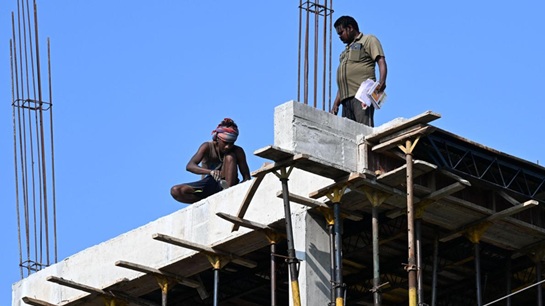
    • Street vendors, domestic workers, construction labourers, small shopkeepers, artisans

The informal sector is not merely a residual category but a structurally embedded component of India’s economy, supporting both consumption and production across regions.

Key Features of the Informal Sector in India

1. Overwhelming Dominance in Employment Structure

  • The informal sector accounts for nearly nine out of every ten workers in India, making it the primary source of employment across rural and urban areas
  • It performs a critical absorptive function by :
    • Providing employment to surplus labour from agriculture
    • Accommodating migrants and low-skilled workers who are unable to access formal jobs
  • This dominance reflects :
    • Limited capacity of the formal sector to generate sufficient employment
    • Structural constraints in labour-intensive industrialisation

Thus, the informal sector acts as a shock absorber in the labour market, albeit at the cost of job quality and security.

2. Significant Yet Underestimated Contribution to the Economy

  • The informal sector contributes a substantial share to :
    • Gross Value Added (GVA)
    • Overall economic output
  • However, due to :
    • Lack of proper documentation
    • Limited data collection mechanisms

its contribution is often underestimated in official statistics, leading to policy blind spots

  • Informal activities are deeply integrated into :
    • Supply chains
    • Local markets
    • Service delivery systems

This duality—high contribution but low visibility—makes the sector economically vital yet institutionally neglected.

3. Prevalence of Self-Employment and Casual Work

  • A large proportion of workers in the informal sector are :
    • Self-employed
    • Engaged in casual or daily wage labour
  • This reflects :
    • Lack of stable, salaried employment opportunities
    • Low entry barriers into informal occupations
  • While self-employment can indicate entrepreneurship, in many cases it is :
    • A form of “disguised unemployment”
    • Driven by necessity rather than opportunity

This highlights the distress-driven nature of employment in the informal economy.

4. Low Productivity and Limited Scale of Operations

  • Informal enterprises typically :
    • Operate at a very small scale
    • Use labour-intensive and low-technology methods
  • They face constraints such as :
    • Limited access to capital
    • Lack of technological know-how
    • Poor infrastructure
  • As a result :
    • Productivity remains low
    • Income levels are stagnant

This creates a vicious cycle of low investment and low returns, inhibiting growth and competitiveness.

5. High Vulnerability to Economic and Policy Shocks

  • Informal sector workers and enterprises are extremely sensitive to :
    • Economic downturns
    • Policy changes
    • External shocks
  • Events such as :
    • Demonetisation
    • Implementation of GST
    • COVID-19 pandemic

have disproportionately affected them due to :

  • Lack of savings
  • Absence of safety nets
  • Informal nature of operations

This vulnerability underscores the sector’s lack of resilience and institutional protection.

Importance of the Informal Sector

1. Crucial Source of Employment and Livelihoods

  • The informal sector provides livelihood opportunities to millions who would otherwise remain unemployed, particularly :
    • Rural migrants
    • Women
    • Marginalised communities
  • It plays a key role in :
    • Preventing extreme poverty
    • Maintaining social stability

2. Supporting Local and Regional Economies

  • Informal enterprises cater to :
    • Local demand for goods and services
  • They contribute to :
    • Rural non-farm economy
    • Urban informal markets
  • Their presence ensures :
    • Accessibility and affordability of services

3. Promoting Entrepreneurship and Economic Participation

  • Low entry barriers allow individuals to :
    • Start small businesses with minimal capital
  • This encourages :
    • Grassroots entrepreneurship
    • Economic participation

4. Complementing the Formal Sector

  • Informal enterprises often :
    • Act as suppliers, subcontractors, or service providers to formal industries
  • They form an integral part of :
    • Production and distribution networks

5. Flexibility and Adaptability

  • The informal sector is highly flexible, enabling :
    • Quick adaptation to changing market conditions
  • This flexibility supports :
    • Economic resilience at the grassroots level

Challenges Faced by the Informal Sector

1. Lack of Social Security and Institutional Protection

  • Workers do not have access to :
    • Health insurance
    • Pension schemes
    • Maternity benefits
  • This exposes them to :
    • Income shocks
    • Health-related financial distress

2. Job Insecurity and Irregular Income

  • Employment is :
    • Seasonal
    • Unstable
  • Workers face :
    • Uncertain earnings
    • Lack of job continuity

3. Poor Working Conditions and Exploitation

  • Many workers operate in :
    • Unsafe environments
    • Unregulated workplaces
  • Absence of labour laws leads to :
    • Exploitation
    • Low wages

4. Limited Access to Credit and Technology

  • Informal enterprises lack :
    • Collateral for loans
    • Financial literacy
  • This restricts :
    • Investment in technology
    • Business expansion

5. Barriers to Formalisation

  • Complex regulatory requirements discourage :
    • Registration
  • Fear of taxation and compliance costs :
    • Keeps enterprises informal

6. Gender and Social Inequality

  • Women and marginalised groups are :
    • Overrepresented in low-paying informal jobs
  • This perpetuates :
    • Inequality
    • Social exclusion

Government Measures

1. Expansion of Social Security Coverage

  • Policies aim to include :
    • Informal and gig workers

2. Financial Inclusion Initiatives

  • Schemes promote :
    • Bank accounts
    • Access to credit

3. Formalisation Policies

  • Measures like :
    • GST
    • Digital payments

encourage integration into formal economy

4. Targeted Welfare Schemes

  • Support vulnerable groups through :
    • Direct benefit transfers
    • Livelihood programmes

5. Skill Development and Digital Inclusion

  • Focus on :
    • Enhancing employability
    • Improving productivity

Way Forward

1. Gradual and Inclusive Formalisation

  • Avoid sudden disruptions
  • Ensure transition does not:
    • Harm livelihoods

2. Universal Social Security

  • Extend :
    • Basic protections to all workers

3. Simplification of Regulations

  • Reduce :
    • Compliance burden

4. Enhancing Productivity

  • Invest in :
    • Technology
    • Infrastructure

5. Strengthening Data Systems

  • Improve :
    • Measurement of informal activities

Practice Questions

Prelims

Q. The informal sector in India is characterised by :
(a) High job security
(b) Formal contracts
(c) Lack of regulation and social protection
(d) High capital intensity

Mains

“India’s informal sector is both a strength and a constraint for its economic development.” Analyse.

FAQs

Q1. What is the informal sector ?

Economic activities outside formal regulation.

Q2. Why is it important ?

It provides employment and supports livelihoods.

Q3. What is the biggest challenge ?

Lack of social security.

Q4. Why is formalisation difficult ?

High compliance costs and structural constraints.

Q5. What is the solution ?

Gradual formalisation with social protection.

What are the Online Gaming Rules, 2026 and How Do They Reshape India’s Digital Gaming Ecosystem?

Prelims : Governance; Science & Technology + CA
Mains : GS Paper 2 – Government Policies; GS Paper 3 – Digital Economy; Regulation of Emerging Technologies

Why in News ?

The Government of India has introduced a comprehensive regulatory framework for the online gaming sector through the Online Gaming Rules, 2026, marking a significant shift from a fragmented and ambiguous regulatory environment to a structured, centralised governance model.

  • The rapid expansion of online gaming in India, driven by increased smartphone penetration, affordable internet access, and digital payment systems, has transformed gaming from a recreational activity into a large-scale digital industry with significant economic implications
  • However, this rapid growth has also been accompanied by serious concerns such as rising instances of gaming addiction, financial losses due to real-money gaming, lack of consumer protection, and misuse of platforms for illegal betting and gambling activities
  • The absence of a uniform regulatory framework earlier led to inconsistent state-level regulations, legal uncertainties, and operational challenges for gaming companies
  • In this context, the new rules aim to strike a balance between promoting innovation and growth in the gaming sector while safeguarding user interests, ensuring transparency, and preventing misuse of gaming platforms

Thus, the rules represent an important step towards building a safe, transparent, and accountable digital gaming ecosystem in India.

What are the Online Gaming Rules, 2026?

The Online Gaming Rules, 2026 provide a comprehensive institutional, legal, and regulatory framework to govern all forms of online gaming activities in India, covering both non-monetised and monetised gaming platforms.

  • The rules seek to :
    • Clearly define different categories of online games
    • Establish mechanisms for classification and oversight
    • Introduce accountability for gaming platforms
    • Protect users from potential harms associated with gaming
  • They apply to :
    • Social and casual games
    • Competitive esports
    • Online real-money gaming platforms
  • The overarching objective is to create a well-regulated ecosystem that encourages responsible gaming while curbing illegal and harmful practices, particularly those involving financial risks

Key Provisions of the Rules

1. Establishment of a Centralised Regulatory Framework

  • The rules propose the creation of a central regulatory authority to oversee the online gaming ecosystem, ensuring a uniform and consistent approach across the country
  • This authority is expected to :
    • Classify different types of games based on their nature and risk profile
    • Monitor compliance by gaming platforms with regulatory standards
    • Address user grievances through a structured redressal mechanism
    • Enforce penalties in cases of violations
  • The centralisation of regulation addresses the earlier issue of fragmented governance across states, which created legal uncertainty and hindered industry growth
  • It also strengthens regulatory capacity by enabling coordinated enforcement and policy implementation

2. Classification of Games Based on Risk and Nature

  • One of the most critical aspects of the rules is the classification of games into categories based on whether they involve financial risk or elements of chance
  • Games are broadly categorised into :
    • Skill-based and permissible games, including esports and social gaming
    • High-risk or restricted games, particularly those involving monetary stakes or gambling-like features
  • This classification is essential because :
    • It determines the level of regulatory oversight required
    • It provides clarity to both users and developers regarding the legal status of games
  • The distinction between skill and chance, although complex, is central to ensuring that legitimate gaming activities are promoted while harmful or exploitative practices are curbed

3. Regulation of Real-Money Gaming and Financial Risk

  • The rules impose stringent restrictions on online games that involve real-money transactions, recognising the potential for financial harm and addiction
  • Platforms offering such games are subject to :
    • Strict scrutiny and compliance requirements
    • Possible prohibition if found to violate regulatory norms
  • The objective is to :
    • Prevent financial exploitation of users
    • Reduce the risk of addiction linked to monetary incentives
    • Eliminate illegal betting and gambling activities disguised as gaming
  • By regulating monetary aspects, the rules aim to protect users from economic risks while ensuring integrity in digital transactions

4. Strong User Protection and Safety Mechanisms

  • The rules place significant emphasis on safeguarding users, particularly vulnerable groups such as minors
  • Platforms are required to implement :
    • Robust age verification systems to prevent access by underage users
    • Parental control features to monitor and regulate gaming activity
    • Transparent disclosure of game rules, risks, and financial implications
  • Additionally, platforms must :
    • Ensure fair gameplay
    • Prevent misleading practices
  • These measures are designed to promote responsible gaming behaviour and build trust in the digital gaming ecosystem

5. Integration of Financial Intermediaries for Monitoring

  • Banks, payment gateways, and other financial intermediaries are integrated into the regulatory framework to monitor financial flows associated with online gaming
  • Their role includes :
    • Tracking transactions linked to gaming platforms
    • Blocking payments to illegal or non-compliant entities
  • This integration enhances :
    • Financial transparency
    • Prevention of money laundering and fraud
  • It reflects a holistic regulatory approach that goes beyond platform-level oversight to include the broader financial ecosystem

6. Flexible Compliance and Ease of Doing Business

  • The rules adopt a balanced approach by avoiding overly stringent compliance requirements for low-risk gaming platforms
  • Registration and compliance obligations are :
    • Proportionate to the level of risk associated with the game
  • This ensures :
    • Ease of entry and operation for startups and smaller companies
    • Encouragement of innovation and creativity in the gaming industry
  • By balancing regulation with flexibility, the framework seeks to avoid stifling growth while ensuring accountability

7. Grievance Redressal and Accountability Framework

  • Gaming platforms are mandated to establish effective grievance redressal systems to address user complaints
  • The regulatory authority provides an appellate mechanism for :
    • Resolving disputes
    • Ensuring fair treatment of users
  • This enhances :
    • Transparency in operations
    • Accountability of platforms
  • A structured grievance mechanism is essential for building consumer confidence and ensuring justice in the digital ecosystem

8. Data Protection and Localisation Requirements

  • The rules mandate that gaming platforms :
    • Store user data within India
    • Comply with data protection norms
  • This ensures :
    • Protection of user privacy
    • Prevention of misuse of sensitive data
  • Data localisation also supports :
    • National security
    • Regulatory oversight
  • In the context of increasing digitalisation, these provisions are crucial for ensuring safe and secure handling of user information

9. Enforcement and Penalty Mechanisms

  • The rules provide for strict enforcement measures in case of non-compliance, including :
    • Financial penalties
    • Blocking of platforms
    • Legal action
  • These measures act as a deterrent against :
    • Violations
    • Malpractices
  • Effective enforcement is critical for ensuring that the regulatory framework is not merely symbolic but practically effective

Significance of the Rules

1. Formalisation and Institutionalisation of the Gaming Sector

  • The rules bring the online gaming industry within a formal regulatory framework, reducing ambiguity and ensuring clarity in operations
  • This enhances :
    • Legitimacy of the sector
    • Investor confidence

2. Promotion of Skill-Based Gaming and Esports

  • By recognising and supporting skill-based games, the rules encourage :
    • Growth of esports
    • Development of professional gaming careers
  • This positions India as a potential :
    • Global hub for esports

3. Protection of Users and Public Interest

  • Strong safeguards protect users from :
    • Addiction
    • Financial exploitation
    • Fraudulent practices
  • This aligns with broader objectives of :
    • Consumer protection
    • Social welfare

4. Strengthening the Digital Economy

  • The gaming sector contributes to :
    • Innovation
    • Employment
    • Economic growth
  • Regulation ensures :
    • Sustainable and responsible expansion

5. Ensuring Financial Integrity and Security

  • Monitoring of transactions helps :
    • Prevent illegal financial flows
    • Enhance transparency

Challenges

1. Complexity in Distinguishing Skill and Chance

  • Many games involve a mix of :
    • Skill
    • Luck
  • This creates :
    • Legal ambiguity
    • Enforcement challenges

2. Regulation of Cross-Border Platforms

  • Many gaming companies operate from :
    • Outside India
  • Enforcing rules on such platforms is :
    • Difficult

3. Risk of Over-Regulation

  • Excessive controls may :
    • Discourage innovation
    • Increase compliance burden

4. Technological and Monitoring Constraints

  • Effective regulation requires :
    • Advanced monitoring systems

5. Industry Resistance

  • Real-money gaming platforms may :
    • Oppose strict regulations

Way Forward

1. Balanced and Adaptive Regulation

  • Ensure: Growth without compromising safety

2. Clear Legal Definitions

  • Reduce ambiguity in: Game classification

3. Strengthening Enforcement Capacity

  • Improve: Monitoring of digital platforms

4. Promoting Responsible Gaming

  • Conduct: Awareness campaigns

5. Supporting Innovation

  • Encourage: Startups and new technologies

Practice Questions

Prelims

Q. The Online Gaming Rules, 2026 aim to :
(a) Promote gambling
(b) Ban all online games
(c) Regulate gaming and restrict high-risk monetary games
(d) Eliminate esports

Mains

“Regulation of online gaming is essential to balance innovation with user protection.” Discuss.

FAQs

Q1. What are the Online Gaming Rules, 2026 ?

A regulatory framework for online gaming in India.

Q2. What is their main objective ?

To ensure safe and responsible gaming.

Q3. What is restricted ?

High-risk real-money gaming.

Q4. What is promoted ?

Skill-based gaming and esports.

Q5. Why are these rules important ?

They protect users and regulate the industry.

What is the Lower Arun Hydroelectric Project and What is Its Strategic Significance for India–Nepal Energy Cooperation?

Prelims : Geography; Energy; International Relations
Mains : GS Paper 2 – India and its Neighbourhood; GS Paper 3 – Infrastructure; Energy Security

Why in News ?

The Lower Arun Hydroelectric Project has emerged as a significant example of deepening India–Nepal cooperation in the hydropower sector, reflecting a broader trend of regional energy integration and strategic infrastructure collaboration in South Asia.

  • The project underscores India’s growing involvement in harnessing Nepal’s vast hydropower potential, which remains largely untapped despite the country’s favourable river systems and topography
  • It represents a shift from traditional aid-based cooperation to investment-driven, mutually beneficial economic partnerships, where both countries derive long-term strategic and economic gains
  • The initiative aligns with India’s larger objective of enhancing regional energy security, cross-border electricity trade, and clean energy transition, while simultaneously strengthening diplomatic ties with its neighbouring countries
  • In the context of increasing geopolitical competition in the Himalayan region, such projects also acquire strategic importance by reinforcing India’s presence and influence through infrastructure and economic engagement

Thus, the project is not merely an energy initiative but a multi-dimensional instrument of economic diplomacy, sustainable development, and regional cooperation.
What is the Lower Arun Hydroelectric Project ?

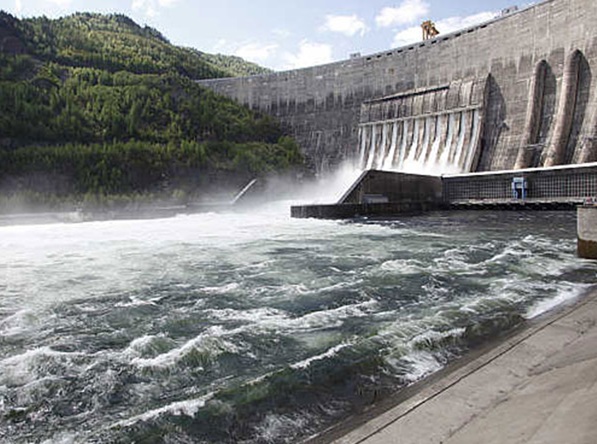
The Lower Arun Hydroelectric Project is a run-of-the-river (RoR) hydropower project located on the Arun River in eastern Nepal, designed to generate electricity by utilising the natural flow of the river without the need for large-scale water storage.

  • It has an installed capacity of approximately 670 MW, making it one of the prominent hydropower projects in Nepal’s energy landscape
  • The project is situated in the Sankhuwasabha and Bhojpur districts and forms part of the broader Arun river basin development strategy
  • It is conceived as a downstream project of the Arun-III Hydropower Project, meaning it will utilise water discharged from the upstream plant to generate additional electricity, thereby maximising energy extraction from the same river system
  • The project is being developed by Satluj Jal Vidyut Nigam (SJVN), an Indian public sector undertaking, under a bilateral agreement with the Government of Nepal

Overall, the project represents an effort to optimally harness river resources through integrated and sequential hydropower development.

Key Features of the Project

1. Run-of-the-River (RoR) Design with Reduced Ecological Footprint

  • The project adopts a run-of-the-river model, which avoids the construction of large reservoirs and instead relies on the natural flow and gradient of the river to generate electricity
  • This design significantly reduces :
    • Large-scale submergence of land
    • Displacement of local communities
    • Ecological disruption compared to traditional dam-based projects
  • However, it still requires careful management of :
    • Environmental flows to sustain downstream ecosystems
    • Seasonal variability in river discharge, which directly affects power generation

Thus, while relatively environment-friendly, the RoR model demands balanced ecological planning and efficient hydrological management.

2. Tandem Development with Arun-III for Optimal Resource Utilisation

  • The Lower Arun project is strategically designed to function in tandem with the upstream Arun-III Hydropower Project, enabling cascading utilisation of water resources
  • Water released after electricity generation at Arun-III is reused downstream, allowing :
    • Multiple stages of energy generation from the same volume of water
    • Enhanced overall efficiency of the river basin
  • This approach reflects a modern trend in hydropower planning where river systems are developed in an integrated manner rather than through isolated projects
  • It ensures :
    • Higher energy output
    • Better economic viability
    • Reduced wastage of natural resources

3. Implementation under Build-Own-Operate-Transfer (BOOT) Model

  • The project is being implemented under the BOOT model, wherein the developer :
    • Finances and constructs the project
    • Operates it for a specified concession period
    • Transfers ownership to the host country after completion of the term
  • This model benefits Nepal by :
    • Reducing upfront financial burden
    • Enabling access to foreign investment and expertise
  • For India, it provides :
    • Long-term returns on investment
    • Strategic economic presence in the region
  • The BOOT model thus represents a win-win framework combining infrastructure development with international economic cooperation.

4. Advanced Engineering and High-Capacity Infrastructure

  • The project incorporates modern engineering features such as :
    • Long headrace tunnels to channel water efficiently
    • Underground powerhouse facilities to optimise land use and safety
    • High-efficiency turbines designed for variable water flow conditions
  • These technological components ensure :
    • Improved energy efficiency
    • Reduced operational losses
    • Long-term sustainability of the project
  • The use of advanced engineering also reflects India’s growing capabilities in executing complex hydropower projects in challenging terrains like the Himalayas

5. Significant Power Generation Capacity and Export Potential

  • With an installed capacity of around 670 MW, the project is expected to :
    • Substantially augment Nepal’s electricity generation capacity
    • Generate surplus power for export to India
  • Cross-border electricity trade enables :
    • Revenue generation for Nepal
    • Reliable supply of clean energy for India
  • This creates a mutually beneficial energy partnership, strengthening regional power connectivity and economic interdependence.

Strategic Significance

1. Strengthening India–Nepal Bilateral Relations through Economic Cooperation

  • Hydropower projects like Lower Arun act as pillars of India–Nepal relations by fostering :
    • Long-term economic collaboration
    • Mutual trust and interdependence
  • Such projects shift the bilateral relationship toward :
    • Development-oriented engagement
    • Shared infrastructure growth

2. Enhancing Regional Energy Security and Integration

  • Nepal possesses vast hydropower potential, while India has :
    • High and growing energy demand
  • The project facilitates :
    • Efficient utilisation of regional energy resources
    • Development of cross-border electricity markets
  • This contributes to :
    • Stable and diversified energy supply in South Asia

3. Promoting Clean and Renewable Energy Transition

  • Hydropower is a renewable and low-carbon energy source, making the project important for :
    • Reducing greenhouse gas emissions
    • Meeting climate commitments
  • It aligns with global efforts toward :
    • Sustainable energy systems
    • Transition away from fossil fuels

4. Expanding India’s Strategic Footprint in the Himalayan Region

  • Infrastructure investments in Nepal enhance India’s :
    • Strategic presence
    • Economic influence
  • This is particularly important in the context of :
    • Competing external interests in the region

5. Strengthening Water Resource Diplomacy

  • Shared river systems between India and Nepal require :
    • Cooperative management
  • Hydropower projects serve as tools for :
    • Building trust
    • Managing transboundary water resources effectively

Challenges

1. Environmental and Ecological Concerns

  • Even with RoR design, projects can :
    • Alter river flow patterns
    • Impact aquatic biodiversity
  • Requires :
    • Strong environmental safeguards

2. Geological and Seismic Risks

  • The Himalayan region is :
    • Geologically fragile
    • Prone to earthquakes and landslides
  • These risks complicate :
    • Construction and maintenance

3. Social Impact and Local Concerns

  • Issues such as:
    • Land acquisition
    • Livelihood disruption

must be addressed through :

  • Inclusive rehabilitation policies

4. Project Delays and Financial Constraints

  • Large infrastructure projects often face :
    • Cost overruns
    • Implementation delays

5. Hydrological Dependence

  • Seasonal variation in river flow affects :
    • Power generation consistency

Way Forward

1. Strengthening Environmental Governance

  • Ensure sustainable practices and ecological balance

2. Enhancing Bilateral Coordination

  • Improve policy and institutional cooperation

3. Investing in Advanced Technology

  • Use modern techniques for :
    • Efficiency and safety

4. Promoting Regional Power Integration

  • Expand cross-border electricity trade

5. Ensuring Inclusive Development

  • Address local community concerns effectively

Practice Questions

Prelims

Q. The Lower Arun Hydroelectric Project is :
(a) A thermal project in India
(b) A run-of-the-river hydropower project in Nepal
(c) A nuclear project
(d) A solar project

Mains

“Cross-border hydropower projects are key instruments of regional cooperation and energy security.” Discuss with reference to the Lower Arun Hydroelectric Project.

FAQs

Q1. Where is the project located ?

On the Arun River in Nepal.

Q2. What type of project is it ?

Run-of-the-river hydropower project.

Q3. Who is developing it ?

Satluj Jal Vidyut Nigam (SJVN).

Q4. What is its capacity ?

Around 670 MW.

Q5. Why is it important ?

It strengthens India–Nepal energy cooperation.

What is the NAMASTE Scheme and How Does It Aim to Eliminate Hazardous Sanitation Practices in India?

Prelims : Government Schemes; Social Justice + CA
Mains : GS Paper 2 – Welfare Schemes; Vulnerable Sections; GS Paper 3 – Inclusive Development

Why in News?

The NAMASTE (National Action for Mechanised Sanitation Ecosystem) Scheme has gained attention as part of the government’s broader efforts to eliminate hazardous sanitation practices and ensure dignity, safety, and livelihood security for sanitation workers.
  • Despite legal prohibitions, manual scavenging and unsafe sewer cleaning practices continue to exist in parts of India, leading to :
    • Frequent fatalities
    • Severe health hazards
    • Social discrimination
  • The scheme represents a paradigm shift from welfare-based rehabilitation to a rights-based and technology-driven approach, focusing on :
    • Mechanisation of sanitation work
    • Skill development
    • Social and economic empowerment
  • It aligns with constitutional values of :
    • Dignity of labour
    • Equality and social justice

What is the NAMASTE Scheme?

The NAMASTE Scheme is a Central Sector Scheme aimed at formalising and mechanising sanitation work, particularly the cleaning of sewers and septic tanks, to eliminate manual scavenging and ensure worker safety.

  • It is jointly implemented by :
    • Ministry of Social Justice and Empowerment
    • Ministry of Housing and Urban Affairs
  • The scheme focuses on :
    • Sewer and septic tank workers (SSWs)
    • Waste pickers in urban areas
  • It is implemented through :
    • National Safai Karamcharis Finance and Development Corporation (NSKFDC)
  • Duration :
    • Multi-year implementation phase (2023–2026)

The scheme reflects a transition toward institutionalising sanitation work within a formal, safe, and dignified framework.

Objectives of the NAMASTE Scheme

1. Elimination of Hazardous Manual Scavenging Practices

  • The primary objective is to completely eliminate manual entry into sewers and septic tanks, which exposes workers to toxic gases, infections, and fatal accidents
  • The scheme aims to ensure that :
    • No worker is required to manually handle human waste
    • All sanitation operations are performed using mechanised equipment
  • This is critical for :
    • Upholding human dignity
    • Enforcing legal prohibitions on manual scavenging

2. Ensuring Zero Fatalities in Sanitation Work

  • The scheme adopts a zero-fatality approach, recognising that sanitation work should not result in loss of life
  • Measures include :
    • Provision of safety gear
    • Use of protective equipment
    • Mechanisation of hazardous tasks
  • This reflects a shift toward :
    • Occupational safety standards
    • Worker-centric policy design

3. Formalisation and Professionalisation of Sanitation Workforce

  • The scheme seeks to transform sanitation work from an informal, stigmatized occupation into a formal and skilled profession
  • It involves :
    • Identification and registration of workers
    • Skill development and certification
    • Integration into organised sanitation services
  • This helps in :
    • Improving job security
    • Enhancing income opportunities

4. Promotion of Mechanised Cleaning Systems

  • A key pillar of the scheme is the introduction of :
    • Modern sanitation machinery
    • Technological solutions for sewer cleaning
  • Mechanisation reduces :
    • Human exposure to hazardous environments
    • Dependence on manual labour
  • It also improves :
    • Efficiency and speed of sanitation operations

5. Livelihood Diversification and Economic Empowerment

  • The scheme provides opportunities for sanitation workers to :
    • Transition into alternative livelihoods
    • Become entrepreneurs in sanitation services
  • Workers are encouraged to :
    • Form Self-Help Groups (SHGs)
    • Establish sanitation enterprises
  • Financial support includes :
    • Subsidies
    • Access to credit
  • This ensures long-term :
    • Economic independence
    • Social mobility

6. Social Security and Welfare Coverage

  • The scheme aims to provide comprehensive social protection to workers and their families, including :
    • Health insurance coverage
    • Access to welfare schemes
    • Financial assistance
  • This reduces :
    • Vulnerability to health and income shocks

Key Components of the Scheme

1. Identification and Profiling of Workers

  • A systematic process is undertaken to :
    • Identify all sewer and septic tank workers
    • Create a comprehensive database
  • This enables :
    • Targeted delivery of benefits
    • Effective policy implementation

2. Capacity Building and Skill Development

  • Workers are provided :
    • Training in mechanised sanitation techniques
    • Skill enhancement programs
  • This ensures :
    • Safe handling of equipment
    • Professional competency

3. Provision of Safety Equipment and PPE Kits

  • Workers receive :
    • Personal Protective Equipment (PPE)
    • Safety devices
  • This minimises :
    • Health risks
    • Occupational hazards

4. Financial Assistance and Subsidies

  • The scheme provides :
    • Capital subsidies for purchasing sanitation machinery
    • Interest subsidies on loans
  • This promotes :
    • Entrepreneurship
    • Mechanisation

5. Health and Insurance Coverage

  • Workers are covered under schemes like :
    • Public health insurance programs
  • This ensures :
    • Access to healthcare
    • Financial protection

6. Convergence with Other Welfare Schemes

  • The scheme integrates with :
    • Skill development programs
    • Social security initiatives
  • This ensures :
    • Holistic development

Significance of the Scheme

1. Advancing Social Justice and Human Dignity

  • The scheme addresses :
    • Historical discrimination faced by sanitation workers
  • It promotes :
    • Equality and dignity

2. Eliminating Manual Scavenging

  • Mechanisation is a sustainable solution to :
    • End hazardous practices

3. Improving Public Health and Safety

  • Safer sanitation practices reduce :
    • Health risks
    • Environmental contamination

4. Empowering Marginalised Communities

  • Provides :
    • Economic opportunities
    • Social mobility

5. Modernising Urban Sanitation Systems

  • Encourages :
    • Use of technology
    • Efficient service delivery

Challenges

1. Persistent Social Stigma

  • Sanitation work is still associated with: Caste-based discrimination

2. Implementation Gaps

  • Identifying all workers and ensuring coverage: Remains difficult

3. Limited Awareness

  • Workers may not be fully aware of: Scheme benefits

4. High Cost of Mechanisation

  • Machinery and technology: Require significant investment

5. Institutional Coordination Issues

  • Multiple agencies involved may lead to: Coordination challenges

Way Forward

1. Strengthening Monitoring and Enforcement

  • Ensure: Strict implementation of laws

2. Promoting Awareness and Outreach

  • Educate workers about: Rights and benefits

3. Expanding Mechanisation Infrastructure

  • Increase: Availability of equipment

4. Addressing Social Discrimination

  • Promote: Social inclusion and dignity

5. Enhancing Financial Support

  • Provide: Affordable credit and subsidies

Practice Questions

Prelims

Q. The NAMASTE Scheme aims to :
(a) Promote tourism
(b) Mechanise sanitation and eliminate manual scavenging
(c) Provide agricultural subsidies
(d) Develop smart cities

Mains

“Mechanisation of sanitation work is essential for ensuring dignity and safety of workers.” Discuss in the context of the NAMASTE Scheme.

FAQs

Q1. What does NAMASTE stand for?

National Action for Mechanised Sanitation Ecosystem.

Q2. What is its main goal?

Eliminate hazardous sanitation practices.

Q3. Who are the beneficiaries?

Sanitation workers and waste pickers.

Q4. What is a key feature?

Mechanisation of sewer cleaning.

Q5. Why is it important?

Ensures dignity, safety, and livelihood security.

« »
  • SUN
  • MON
  • TUE
  • WED
  • THU
  • FRI
  • SAT
Have any Query?

Our support team will be happy to assist you!

OR